
To get the blood moving in your legs again, it really comes down to three things: regular movement, targeted self-massage, and building supportive habits like staying properly hydrated. Simple actions that you can weave into your day—like a daily walk, a few stretches at your desk, or even just putting your feet up—can make a huge difference in boosting that blood flow and kicking discomfort to the curb.
Recognising the Signs of Poor Leg Circulation
Before we jump into the solutions, it’s important to know what you’re actually looking for. What does poor circulation in the legs even feel like? Often, the signs are subtle and easy to brush off as just a minor ache or a bit of temporary stiffness. But these little signals are your body’s way of telling you that blood flow is being compromised.
And it’s a bigger issue than many people think. In Australia, the prevalence of poor circulation has been on the rise, with now over one million Australians living with conditions tied to impaired blood flow. The potential consequences can be serious, which is why catching those early signs is so crucial for your long-term health. The team at Podfit Adelaide have some great insights from Aussie health experts if you want to dive deeper.
Common Warning Signs You Shouldn't Ignore
Think of your circulatory system like a busy highway. When traffic is flowing smoothly, all the good stuff—nutrients and oxygen—gets to where it needs to go, no problem. But when there's a traffic jam, things start to back up and problems appear.
Some of the most common signs that your leg's 'highway' is congested include:
- Persistent Tingling or Numbness: That classic 'pins and needles' feeling, but it just doesn't seem to go away quickly.
- Cold Hands and Feet: Your hands and feet feel like ice blocks, even when the rest of your body is perfectly warm. This can be a major red flag.
- Swelling in Ankles and Feet: Known as oedema, this happens when fluid gets trapped in your tissues because your circulation isn't doing its job properly.
- Unexpected Muscle Cramps: You get a sudden aching or cramping in your calves, especially during light activity like walking. It's a real tell-tale symptom.
- Slow-Healing Sores: If little cuts or sores on your legs or feet are taking forever to heal, it might be because not enough oxygen-rich blood is reaching the area.
Understanding the Everyday Causes
So, what’s causing these circulatory slowdowns in the first place? For a lot of us, the culprits are woven right into our modern lifestyles. Long hours parked at an office desk, standing on your feet all day, or being crammed into a long-haul flight from Sydney to London can all put the brakes on healthy blood flow.
The human body is designed for movement. When we stay still for too long, our calf muscles—often called our 'second heart'—can't effectively pump blood back up towards the heart. This leads to pooling and that heavy, achy feeling in the lower legs.
Once you start connecting these subtle symptoms with their daily causes, you can stop just putting up with the discomfort and start being proactive. Recognising these warnings is your first and most important move towards improving your circulation and overall wellbeing, whether you're working in a high-rise office, relaxing in a hotel, or unwinding on a yacht.
Simple Daily Movements for Better Blood Flow
Consistent movement is, without a doubt, the most powerful tool you have for boosting leg circulation. You don’t need a gym membership or fancy equipment, either. Simple, low-impact movements woven into your day are incredibly effective at getting blood pumping and keeping your legs feeling light and energised.
The real goal here is to build sustainable habits. Think of it less as a "workout" and more as a natural part of your routine. These small actions are what prevent blood from pooling in your lower legs, which is a common complaint if you spend long hours sitting at a desk in a Sydney high-rise or relaxing in a hotel room after a long flight.
Desk and Couch-Friendly Exercises
You can make a huge difference to the circulation in your legs without even standing up. The following movements are perfect for doing during a conference call, while watching TV, or any time you find yourself seated for a while. They act like a mini-pump for your lower limbs.
Give these a try throughout your day:
- Ankle Pumps: Simply point your toes away from you, hold for a moment, and then flex them back towards your shins. Aim for about 10-15 repetitions on each foot. This little movement engages your calf muscles—often called the body's "second heart"—to push blood back up towards your torso.
- Leg Lifts: While you're sitting, straighten one leg out in front of you until it's parallel to the floor. Hold it there for a few seconds, feeling the muscles in your thigh switch on, then slowly lower it back down. Alternate legs for 10 repetitions each.
- Calf Raises (Seated or Standing): If you're standing, hold onto a chair for balance and lift your heels off the floor, rising onto the balls of your feet. If you're seated, just lift your heels while keeping the balls of your feet on the ground. This is a fantastic, discreet exercise you can do absolutely anywhere.
The secret is frequency, not intensity. Setting an hourly reminder on your phone or watch to do a few of these simple movements can make a profound difference over time, helping to prevent that familiar stiffness and achiness that comes with being static.
Here’s a quick guide to some simple movements you can do almost anywhere to get your blood flowing.
Easy Movements to Boost Leg Circulation Anywhere
| Movement | How to Perform It | Ideal for |
|---|---|---|
| Ankle Circles | Lift your feet slightly off the floor and rotate each ankle clockwise 10 times, then anti-clockwise 10 times. | Office workers, frequent flyers, anyone sitting for long periods. |
| Heel-Toe Taps | Keeping your heels on the floor, tap your toes up and down 20 times. Then, keep your toes down and tap your heels. | Watching TV, during a long meeting, or in a car (as a passenger!). |
| Marching on the Spot | Whether seated or standing, lift your knees up one at a time as if you're marching. Keep it going for 30-60 seconds. | Breaking up long periods of sitting at home or in a hotel room. |
These small but consistent actions are what keep your circulation system active and healthy, even when your daily routine involves a lot of sitting.
The Power of a Daily Walk
Never, ever underestimate the circulatory benefits of a brisk daily walk. It’s a foundational habit for your entire cardiovascular system. Walking contracts and relaxes the large muscles in your legs, which is the primary way your body returns blood to the heart. It doesn't have to be a marathon; even 20-30 minutes a day can deliver remarkable results.
In fact, structured walking programs have been shown to significantly improve blood flow and reduce the symptoms of poor circulation. For those looking to build a more rounded routine, combining walking with some foundational strength work is a great idea. If you’re looking for complementary activities, consider exploring some gentle movements like these effective lower back strengthening exercises which also support overall mobility and posture.
By making small, conscious choices—like taking the stairs instead of the lift or getting off the bus one stop earlier—you weave activity right into the fabric of your day. This consistent, gentle movement is the real secret to maintaining healthy blood flow and keeping your legs feeling their best, whether you're at home, in the office, or even enjoying the view from a yacht.
Using Targeted Massage for Immediate Relief
While daily movement is brilliant for building a solid foundation, sometimes your legs just need more direct, immediate attention. This is where targeted massage comes in. It's a powerful, hands-on way to manually kickstart blood flow, ease muscle tension that can squeeze your blood vessels, and bring instant relief from that heavy, achy feeling. Think of it as a proactive counter-attack against a day spent sitting still.
The best part? You can get started right now. You don't need any special gear for an effective self-massage—just a few minutes and your own two hands. By learning a few simple techniques, you can give your legs the circulation boost they desperately need, whether you’re at home, stuck in the office, or trying to unwind in a hotel room after a long flight from Perth.
DIY Techniques for Your Lower Legs
First, find a comfy spot to sit where you can easily reach your feet and calves. The idea is to use firm but gentle pressure, always working in the direction of your heart to encourage all that blood to head back where it's supposed to.
Here are a few go-to techniques:
- Calf Kneading: Use your thumbs and fingers to gently knead the big muscle at the back of your calf (your gastrocnemius). Start near your ankle and work your way up towards the back of your knee. This is great for releasing tightness and physically pushing stagnant fluid and blood upwards.
- Foot and Ankle Rub: With your thumbs, apply circular pressure to the soles of your feet. Pay some extra attention to the arch. Not only does this feel incredible, but it also stimulates the thousands of nerve endings and blood vessels packed into your feet.
- Long Gliding Strokes: Pop a small amount of lotion or oil on your leg to reduce friction. Using the palm of your hand, perform long, sweeping strokes from your ankle all the way up to your thigh. This technique, known as effleurage, is fantastic for promoting venous return.
For anyone dealing with a bit of fluid retention or swelling, a specific technique called Manual Lymphatic Drainage can be a real game-changer. If you're curious about how this gentle method works, you can learn more about lymphatic drainage massage to see if it’s what you need.
This infographic shows a few simple movements that pair perfectly with self-massage to keep blood flowing.
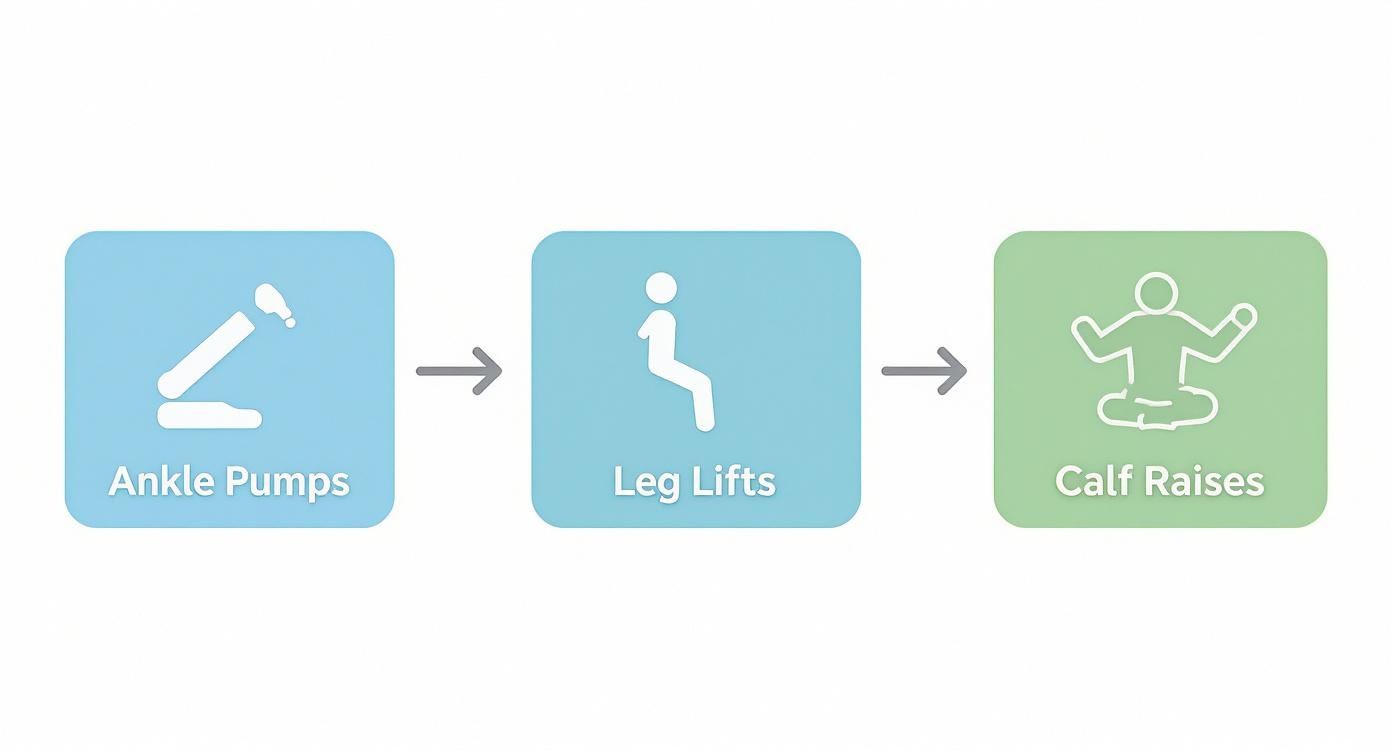
Pairing these quick exercises with a targeted massage creates a powerful combination for both immediate relief and long-term circulatory health.
The Ultimate Convenience: Professional Mobile Massage
Look, self-massage is a fantastic daily tool, but nothing truly compares to the skill and knowledge of a professional therapist. They have a deep understanding of the body’s intricate vascular and muscular systems and can apply precise techniques to maximise blood flow and release that deep-seated tension you can’t quite reach yourself.
But the real game-changer in modern wellness is just how accessible this expert care has become. Picture this:
You've been stuck in back-to-back meetings in your Melbourne office all day, and your legs feel heavy and stiff. Instead of battling traffic to get to a clinic, a qualified remedial therapist arrives at your workplace during your lunch break. They set up a professional massage chair and deliver a targeted treatment that restores circulation right then and there.
This level of convenience isn't some rare luxury anymore. Professional mobile massage services bring five-star wellness directly to you, wherever you happen to be. Whether it's an in-room treatment at your hotel on the Gold Coast, a restorative session at home in Sydney, or even a wellness service aboard a yacht, expert care is now on-demand.
This approach makes it easier than ever to prioritise your health and actively improve circulation in your legs, seamlessly fitting expert care right into your busy schedule.
Supportive Habits for Healthy Circulation
While getting your body moving is crucial, it’s the small, consistent things you do every day that really cement good circulatory health. These supportive habits don't demand a massive effort but they deliver some seriously significant benefits. Think of them as the quiet achievers in your mission for better blood flow, especially if you spend long days at a desk, on a long-haul flight, or even kicking back on a yacht.
One of the simplest yet most effective tools in your arsenal? A good pair of compression socks. These aren't just for long flights; they're a game-changer for office workers too. By applying gentle, graduated pressure that's tightest at the ankle and eases up the leg, they cleverly help your veins push blood back towards your heart. This fights the pull of gravity that can cause blood to pool in your lower legs.
Creating a Better Environment for Blood Flow
It's amazing what a few simple tweaks to your immediate surroundings can do. When you’re sitting for hours on end, the way you hold your body and position your legs is critical. Slouching or letting your legs just dangle can create kinks in your body's circulatory 'highway', slowing everything down.
A quick ergonomic check of your workspace can get your circulation moving better right from your chair:
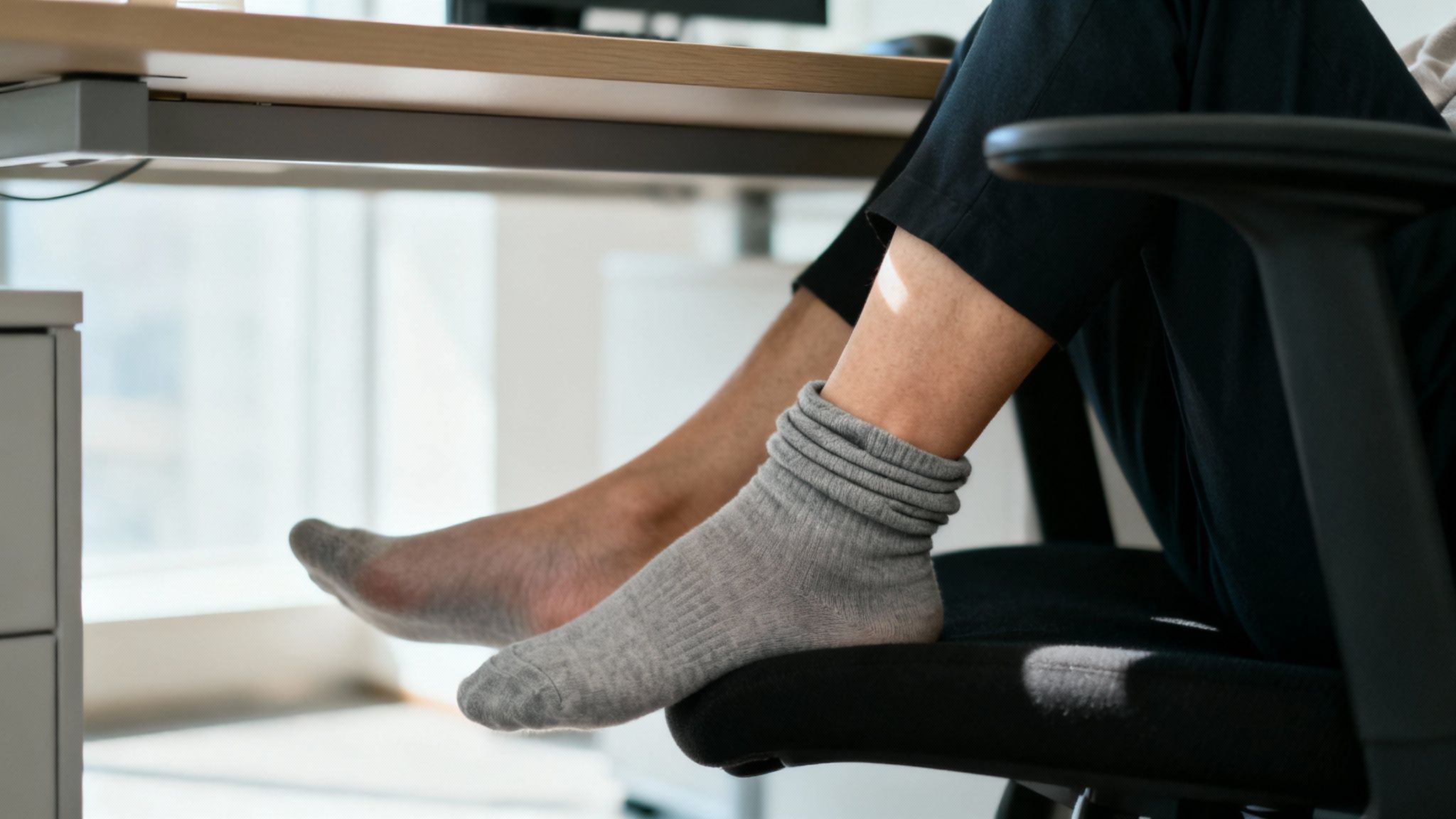
- Pop a Footrest Under Your Desk: Using a small footrest helps keep your knees at a comfortable angle (around 90 degrees). It also stops the edge of your chair from digging into the back of your thighs, which is a classic culprit for constricting blood flow.
- Get Your Chair Height Right: Your feet should be resting flat on the floor or on your footrest. This simple adjustment takes the strain off your entire lower body and encourages a much healthier posture.
- Stop Crossing Your Legs: I know, it's a hard habit to break. But crossing your legs can pinch veins and temporarily halt circulation. Make a conscious effort to sit with both feet on the floor instead.
When you combine smart ergonomic habits with specialised treatments, you can really amplify the benefits. For those seeking a deeper, more therapeutic approach, you can learn more about how hot stones and massage work together to relax muscles and give your blood flow a significant boost.
Smart Solutions and Travel-Ready Tips
For those who find traditional exercise a real challenge, some interesting tech offers promising alternatives. A clinical trial by the University of the Sunshine Coast looked into a footplate muscle stimulation device for Aussie patients with poor circulation. The results were impressive: after just 12 weeks, participants saw meaningful improvements in how far they could walk without pain.
This is a practical solution for anyone who struggles with movement. Given that a large number of Australian adults face weight-related health challenges—a major risk factor for poor circulation—innovations like these provide a genuinely valuable option. You can read more about these promising findings for vascular disease sufferers.
When you're travelling, your circulation is put under immense pressure, especially on those epic long-haul flights from Sydney to London. A little forward planning makes all the difference. Try to book an aisle seat so it’s easier to get up and stretch every hour. Wear loose, comfortable clothing and focus on staying hydrated with plenty of water, while steering clear of alcohol and too much caffeine. These small habits ensure you step off the plane feeling refreshed, not stiff and swollen.
How Your Diet Impacts Leg Circulation
It’s easy to overlook, but what you eat and drink directly fuels every system in your body, and your circulatory network is certainly no exception. Think of your diet as the foundational pillar for healthy blood flow. Getting it right can make a profound difference in how your legs feel day-to-day. This isn’t about restrictive eating, but about smartly adding foods that support your vascular health.
The simplest place to start is with your water bottle. Your blood is more than 90% water, so when you’re dehydrated, your blood volume can drop. This makes it thicker and harder for your heart to pump around. Staying properly hydrated is one of the easiest and most effective ways how to improve circulation in legs, ensuring your blood flows smoothly and efficiently.
Eating for Better Blood Flow
Certain foods are absolute powerhouses, packed with compounds that actively help your arteries relax and function better. By getting more of these onto your plate, you give your body the raw materials it needs to maintain a healthy circulatory system. The best part? They are easy to find in any Aussie supermarket, from Coles to your local grocer.
Here are a few circulation-boosting foods to focus on:
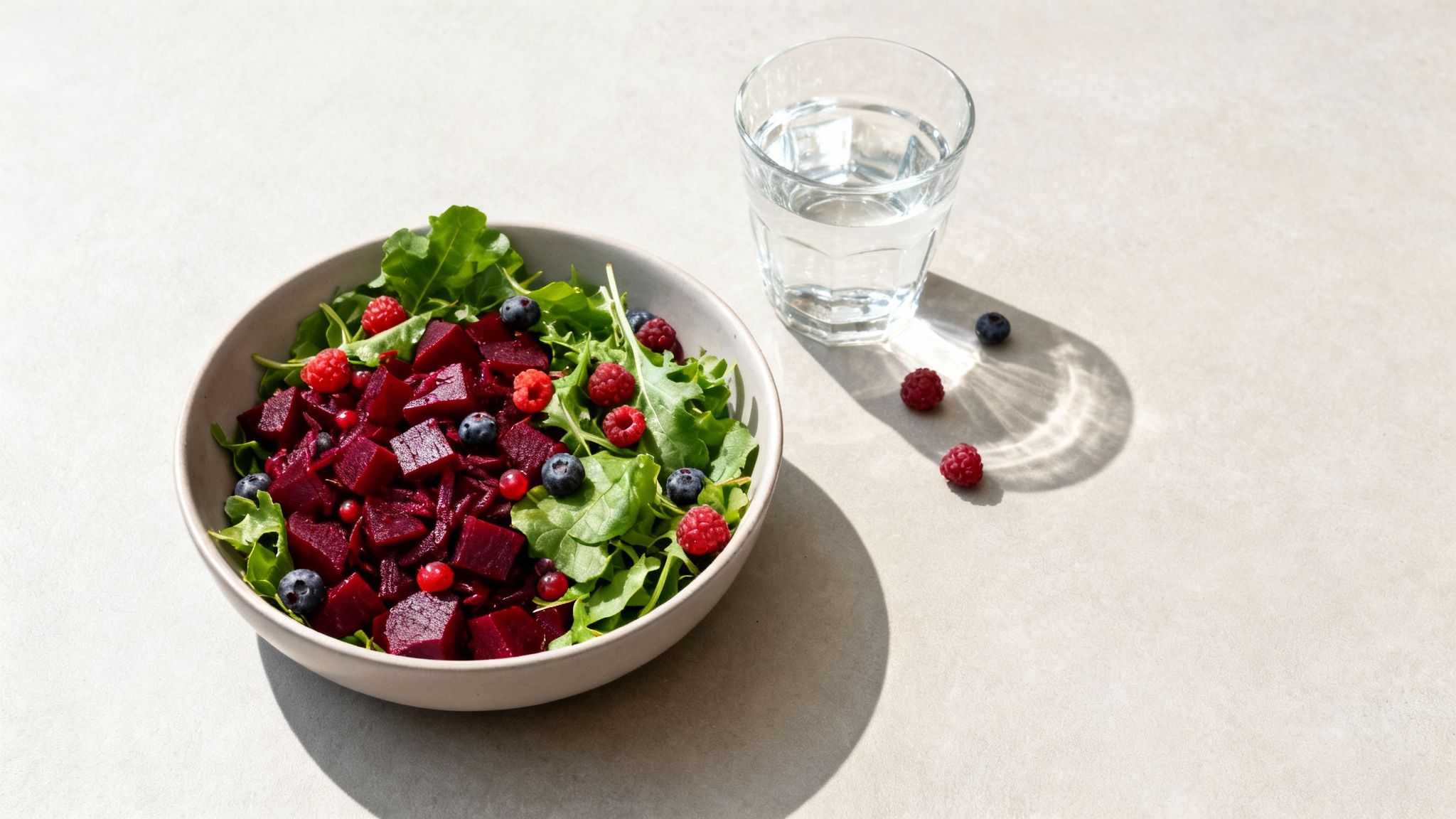
- Leafy Greens: Spinach and kale are loaded with nitrates, which your body cleverly converts into nitric oxide. This molecule is a superstar for circulation, helping to widen blood vessels and improve flow. A simple side salad with lunch is an easy win.
- Berries & Citrus Fruits: These are bursting with flavonoids and antioxidants, which fight inflammation and help protect your blood vessels from damage. A handful of berries in your morning yoghurt is a great way to start the day.
- Beetroot: Another nitrate champion, beetroot has been shown to support healthy blood pressure and flow. You can find pre-cooked beetroot at the supermarket for a quick addition to salads or smoothies.
- Oily Fish: Think salmon and tuna. They're packed with omega-3 fatty acids, which are brilliant for reducing inflammation and supporting overall heart health.
Foods to Enjoy in Moderation
Just as some foods help, others can definitely hinder your circulation. The biggest culprit is often excess sodium. A diet high in salt can lead to water retention and increased blood pressure, putting extra strain on your arteries over time.
A simple, actionable tip is to check the labels on packaged foods. You’d be surprised how much sodium is hiding in sauces, soups, and processed snacks. Opting for fresh, whole foods is always the best strategy for keeping your salt intake in check.
By making a few conscious swaps—like choosing herbs and spices over extra salt or snacking on an orange instead of a bag of chips—you’re not just eating healthier. You're actively taking steps to improve circulation in your legs for the long term. This approach makes healthy eating a sustainable part of your wellness routine, whether you're dining at home in Melbourne or grabbing a bite between meetings in Brisbane.
Your Leg Circulation Questions Answered
When you're trying to improve circulation in your legs, it’s natural to have questions, especially when it comes to fitting new habits into an already packed schedule. Whether you're working in a Brisbane high-rise or trying to get comfortable in a hotel room, getting the practical details right makes all the difference. Here are some straight answers to the questions we hear most often.
How Long Until I Notice a Difference?
While simple stretches or a good massage can give you immediate relief from that heavy, stiff feeling, real, lasting improvements take a bit of consistency. You'll likely feel lighter and less achy after just one targeted massage, but significant changes to your overall circulatory health usually become noticeable after a few weeks of consistent effort.
What really shapes your timeline are a few key things:
- Consistency: Daily movement is simply non-negotiable for long-term results.
- Underlying Causes: Your progress will naturally depend on what's causing the sluggish circulation in the first place.
- Supportive Habits: Things like diet, hydration, and remembering to elevate your legs all add up and play a huge cumulative role.
Is Massage a Good Solution for Desk Jobs?
Absolutely. In fact, it's one of the most effective ways to directly counteract the negative effects of a sedentary office job. While it doesn't replace the need for regular movement breaks, a professional massage provides a powerful, direct intervention that exercise alone can't replicate.
A targeted leg massage manually gets blood and lymph moving, helps flush out the fluid that pools around your ankles, and releases deep muscle tension that might be physically constricting blood vessels. Arranging a regular mobile massage at your office is an incredibly efficient wellness strategy for any team.
What Massage Techniques Work Best for Circulation?
Not all massage is created equal when it comes to getting your blood flowing properly. Certain techniques are specifically designed to encourage fluid movement and bring tired, heavy legs back to life.
A skilled therapist will never just follow a routine; they'll use a combination of methods tailored to exactly what your body needs. They might use long, gliding strokes moving towards the heart (effleurage) to help your veins return blood more efficiently, or use kneading techniques (petrissage) to wake up circulation in deeper muscle tissues.
For anyone dealing with a bit of swelling, a gentle Manual Lymphatic Drainage (MLD) approach is brilliant. It’s a very specific technique focused on encouraging stagnant fluid to get moving again. An expert knows precisely how to blend these methods for the most effective outcome.
Ready to feel the circulation-boosting benefits of a truly professional massage? The Royal Masseur delivers five-star wellness directly to your home, hotel, or office in Sydney, Melbourne, Brisbane, and beyond. Book your restorative session today and experience the difference expert care makes.