Feeling sluggish, or perhaps you've noticed your hands and feet are always cold? You're not alone. The secret to boosting your body's blood and lymph flow isn't some drastic overhaul. Instead, it’s about weaving simple movements, smart massage techniques, and mindful daily habits into your routine. These small, consistent actions are a powerful, actionable toolkit for improving circulation naturally, right from the inside out.
Why Natural Circulation Is Key to Your Wellbeing
Poor circulation isn't just about feeling a bit chilly; it's a clear signal from your body that something needs your attention. For so many professionals across Australia, long hours glued to a desk can really slow down the circulatory system. Think of this network as your body's internal delivery service—it's responsible for getting oxygen and vital nutrients to every single cell while carting away the waste products. When that service gets sluggish, the effects ripple through your whole system.
You might notice a drop in your energy levels, a bit of mental fog creeping in, or even some muscle stiffness. These are all common signs that your blood and lymphatic fluids aren't moving as efficiently as they should. This guide is all about moving past generic advice to give you practical, real-world strategies you can start using today.
Understanding the Impact on Your Daily Life
It’s easy to brush off things like cold fingers or slightly swollen ankles, but they have a direct impact on your quality of life and even your productivity. Think about it for a moment:
- In the office: Reduced blood flow can lead to fatigue and make it tough to concentrate during that big meeting.
- At home: It can show up as annoying leg cramps or a restless feeling, getting in the way of your ability to properly relax and recover.
- During leisure: Even when you're on a relaxing getaway, say on a yacht, that nagging stiffness and discomfort can stop you from fully enjoying your downtime.
The goal here isn’t a complete lifestyle revolution. It's about making small, intentional changes that add up to a significant, positive shift in your energy and vitality.
This approach is all about empowering you with simple, effective techniques. We're talking about everything from targeted self-massage you can do in your hotel room to incorporating gentle movements into your workday. By learning how to support your body's natural flow, you're making a real investment in your long-term health, ensuring you feel more vibrant and energised, no matter where your day takes you.
Simple Movements to Revitalize Your Blood Flow
You don’t need to slog through a high-intensity gym session to get your blood moving. The real secret to better circulation lies in consistent, gentle movement. Think of it as your body's own internal pump, pushing blood and lymphatic fluid exactly where it needs to go. Simple muscle contractions are incredibly effective at undoing the damage of a long, sedentary day.
This is all about weaving small moments of activity into your existing routine, turning idle time into an opportunity for wellness. It’s a sustainable practice built on consistency, not intensity, whether you’re in a high-rise office in Sydney, relaxing at home on the Gold Coast, or even unwinding on a yacht.
Weave Movement into Your Workspace
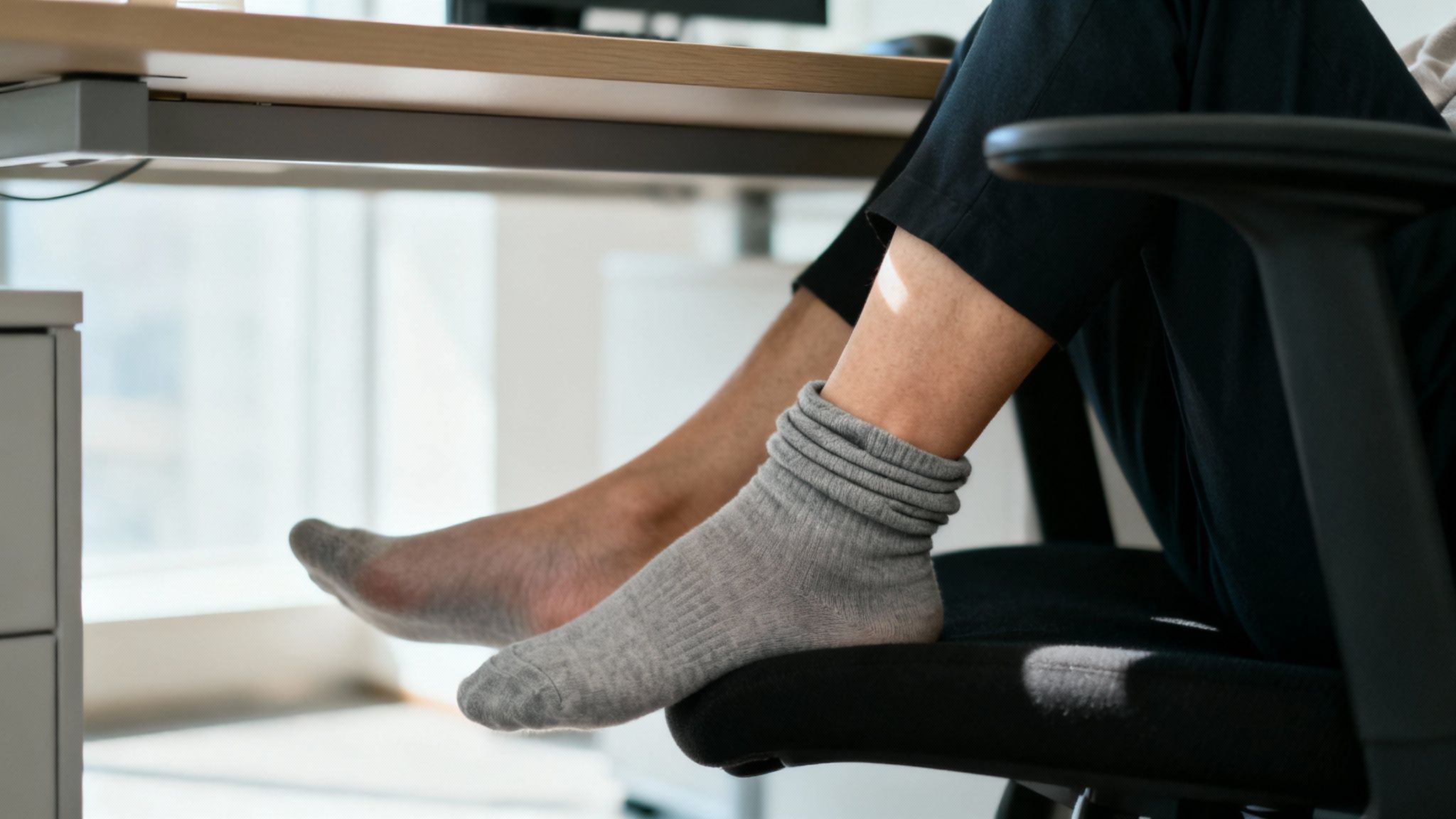
The modern workplace, with its long hours spent sitting, is often the main culprit behind sluggish circulation. But you don't need a massive overhaul of your workday to fight back. Instead, you can introduce subtle movements that make a genuine difference without even leaving your desk.
- Ankle Rotations and Pumps: While you're sitting, lift your feet just off the floor. Slowly rotate your ankles clockwise ten times, then switch to counter-clockwise. Follow that up by pointing your toes forward and then flexing them back towards you—we call these ankle pumps. Repeat this about 15 times. This simple sequence fires up the calf muscles, which are critical for pumping blood back up your legs.
- Seated Marching: Sit up tall in your chair, pull in your core, and gently march your knees up and down. Try to do this for 30 seconds every hour. It’s a discreet yet powerful way to get the blood flowing in your lower body.
These little micro-exercises are fantastic for stopping blood from pooling in your legs, which is a massive issue for desk-bound professionals. If leg health is a specific concern, there are plenty of targeted exercises you can do. You can find out more in our detailed guide on how to improve circulation in your legs.
Turn Everyday Moments into Circulation Boosters
Your daily routine is already packed with hidden opportunities to get your circulation going. The trick is to start recognising these moments and using them to your advantage. It’s about making movement an automatic part of your day, not just another item on your to-do list.
Think about all the times you're just waiting around. Waiting for the kettle to boil for your morning tea? That’s a perfect two-minute window for a set of calf raises. Just stand with your feet flat on the floor and slowly rise up onto the balls of your feet, hold for a moment, and then lower back down. This is one of the best ways to improve circulation naturally because you’re engaging your "second heart"—your calf muscles.
Taking a brisk 15-minute walk during your lunch break does more than just clear your head. It actively counteracts hours of sitting by getting your heart rate up and encouraging blood vessels to expand, which promotes better flow throughout your entire body.
Activate Your Body in Any Space
Whether you're in a compact Melbourne hotel room for business or just have a bit of space at home, you can perform simple sequences that stimulate circulation from head to toe. Yoga and stretching are particularly brilliant because they combine movement with deep breathing, which helps to properly oxygenate your blood.
Here are a few poses you can do absolutely anywhere:
- Legs-Up-The-Wall (Viparita Karani): This is an incredibly restorative pose. Just lie on the floor and swing your legs straight up against a wall. It cleverly uses gravity to help drain lymphatic fluid and venous blood from your legs and feet, reducing swelling and fatigue.
- Downward-Facing Dog (Adho Mukha Svanasana): This classic yoga pose gently inverts the body, encouraging blood to flow towards the brain while giving the entire back of your body—including your calves and hamstrings—a fantastic stretch.
- Cat-Cow Stretch (Marjaryasana-Bitilasana): Get on your hands and knees and flow between arching and rounding your spine. This simple movement is amazing for increasing flexibility in the spine and promoting blood flow to the vital organs in your torso.
Here in Australia, physical activity is rightly seen as a cornerstone of preventive health. In 2021, about 41% of Australian adults met the national guidelines of at least 150 minutes of moderate activity per week. These simple movements all contribute to that goal, enhancing your circulation by strengthening the heart and making your blood vessels more flexible. You can read the full details about Australia's health trends over on the CSIRO website.
Mastering Massage for Circulatory Health
While simple movements are a fantastic start, massage offers a more direct, hands-on way to get things moving. It's one of the most powerful methods to manually encourage blood and lymphatic fluid, providing both immediate relief and long-term wellness benefits. By learning a few key techniques, you can turn your own hands into an incredible tool for circulatory health.
This isn't about becoming a professional therapist overnight. It’s about strategic self-care you can do anywhere—at your desk in a busy Melbourne office, in the comfort of your home after a long day, or even in a hotel room while travelling. You have the power to directly address areas of tension and stiffness that might be putting a roadblock on your body’s natural flow.
Your Office Wellness Toolkit
Long hours hunched over a keyboard create serious tension in the neck and shoulders. This tightness isn't just uncomfortable; it can literally restrict blood flow to and from your head. Thankfully, a quick, targeted self-massage can work wonders.
- Neck and Shoulder Release: Sit up straight in your chair. Gently drop your right ear towards your right shoulder to feel a nice stretch along the left side of your neck. Now, with your right hand, use your fingertips to apply gentle pressure to those tense muscles between your neck and left shoulder. Try small, circular motions or slow, sweeping strokes. Hold for about 30 seconds, breathe deeply, and then switch sides.
- Forearm and Hand Massage: We often forget just how much work our hands and arms do. Extend one arm out with your palm facing up. Use the thumb of your other hand to press firmly into the muscles of your forearm, working your way from the elbow down towards the wrist. This feels especially amazing for anyone who spends their day typing.
These quick fixes help release muscle knots and ease the physical stress that constricts blood vessels, making them a non-negotiable part of any office wellness routine.
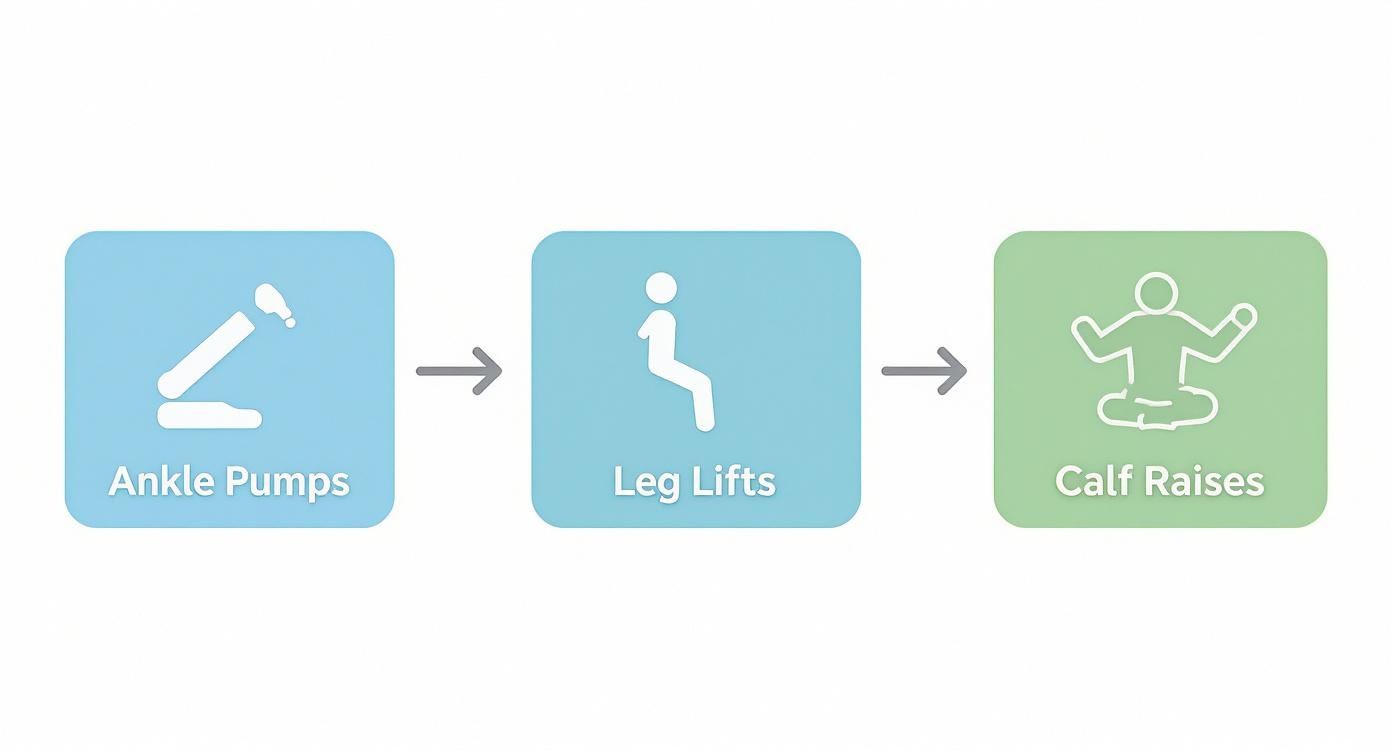
Below is a quick visual guide to some simple movements that are the perfect complement to massage, especially when you're stuck in a chair for hours.
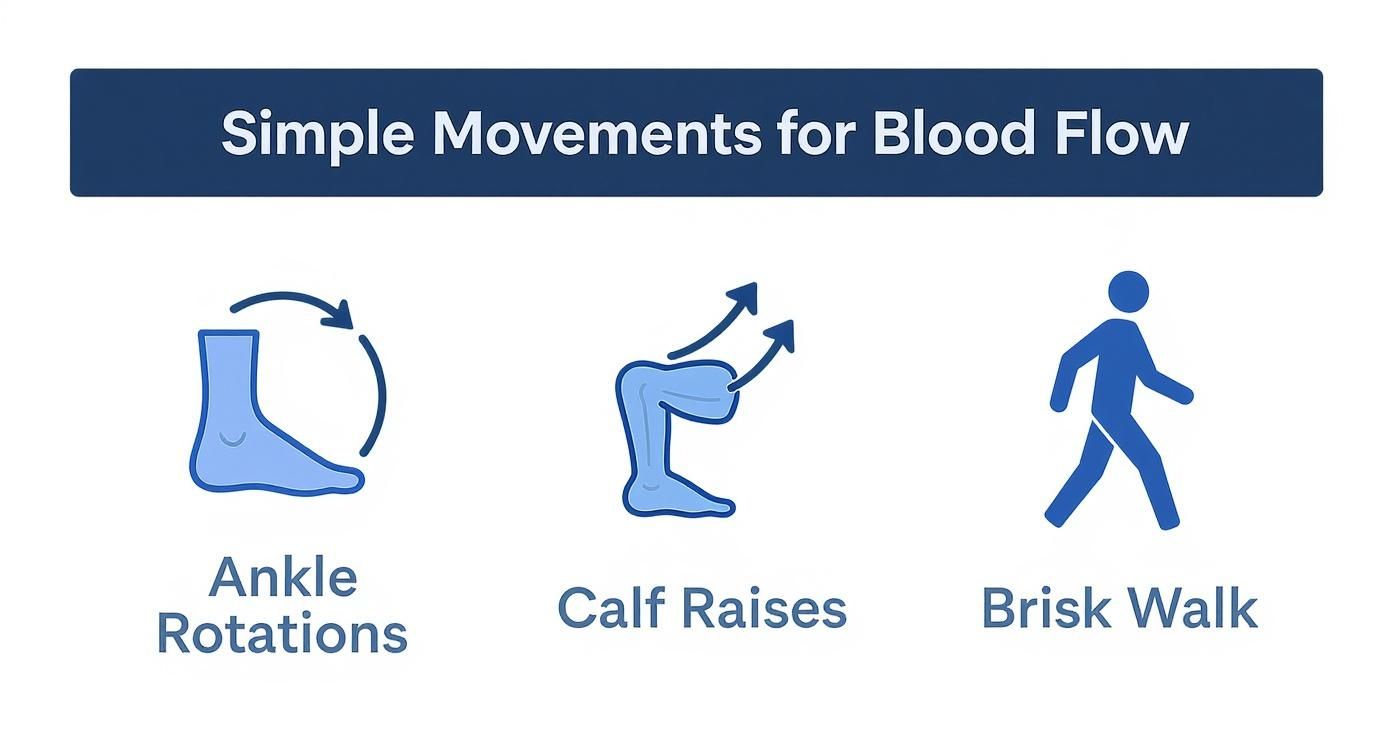
This graphic breaks down three easy but effective actions—ankle rotations, calf raises, and a brisk walk—that use your lower body's muscles to pump blood right back up to your heart.
Targeted Massage Techniques for Any Setting
Knowing the right move for the right moment makes all the difference. This simple table breaks down which techniques work best whether you're at your desk, chilling at home, enjoying a trip on a yacht, or staying in a hotel.
| Setting | Recommended Technique | Target Area | Primary Benefit |
|---|---|---|---|
| The Office | Neck & Shoulder Release | Neck, trapezius muscles | Eases tension from poor posture, boosts blood flow to the brain |
| Hand & Forearm Press | Forearms, hands, wrists | Relieves repetitive strain from typing, prevents stiffness | |
| At Home | Leg Effleurage & Petrissage | Calves, thighs, hamstrings | Promotes venous return after a long day, reduces swelling |
| Foot Arch Rub | Soles of the feet | Stimulates nerve endings and improves circulation to extremities | |
| On a Yacht | Upper Back Rub | Shoulders, upper back | Releases tension from holding posture, enhances relaxation |
| In a Hotel Room | Legs-Up-The-Wall | Lower legs and feet | Uses gravity to reduce swelling and fatigue after a day of travel |
These targeted approaches ensure you’re always equipped to combat stagnation, no matter where you are.
Revitalising Techniques for Home and Travel
After a long day on your feet or being crammed into a plane or car seat, your legs and feet really feel the effects of poor circulation. A dedicated self-massage before bed or when you arrive at your hotel can provide incredible relief and set you up for better rest.
One of the most effective methods involves two specific types of strokes. First up is effleurage, which is all about long, gentle, sweeping movements. When you’re working on your legs, always stroke upwards from your ankle towards your heart to encourage blood flow in the right direction. This is fantastic for stimulating both your veins and your lymphatic system.
The second technique is petrissage. This is where you get a bit deeper, using kneading and squeezing motions on the muscle tissue. It’s brilliant for breaking up stubborn knots and forcing fresh blood into those tight, constricted areas.
By starting with gentle effleurage to warm things up and then moving to deeper petrissage on any tight spots, you create a powerful self-treatment that tackles both surface-level fluid movement and deep muscle tension.
And don't forget your feet! A simple foot massage can be amazingly restorative. Use your thumbs to apply firm, circular pressure to the arch and ball of your foot. Gently pull and rotate each toe to release built-up tension. It not only feels great but also stimulates crucial nerve endings and boosts blood flow right down to your extremities.
The Power of Lymphatic Support
We talk a lot about blood circulation, but your lymphatic system is the unsung hero of your circulatory network. Think of it as your body's drainage and waste disposal system. Unlike the circulatory system, which has the heart as a pump, the lymphatic system relies on muscle contractions and manual movement to get things flowing.
This is where gentle massage truly shines. Light, rhythmic strokes directed towards your major lymph nodes (found in your neck, armpits, and groin) can dramatically improve drainage. This is especially helpful for reducing that puffy, heavy feeling you can get in your arms and legs. If you want to get into the nitty-gritty of this, our guide explains what lymphatic drainage massage is in much more detail.
When to Call in a Professional
Self-massage is a brilliant tool for daily maintenance and getting quick relief. But there are times when you need an expert. A professional therapist can take these benefits to a completely different level. With their deep understanding of anatomy, they can zero in on and release chronic tension patterns you might not even know you have.
A professional treatment, whether it’s a remedial massage in your home, a seated massage for your team at the office, a relaxing session in your hotel room, or even on a yacht, is like a complete circulatory reset. They use advanced techniques to access deeper muscle layers, providing a more profound and lasting improvement in your blood and lymph flow.
Think of it this way: self-massage is your daily tune-up, but a professional session is the comprehensive service. Both are essential for keeping your body running smoothly.
Eating to Enhance Your Body's Natural Flow
What you eat and drink has a massive impact on your entire circulatory system. While movement is the physical pump, the right foods and proper hydration are the building blocks for strong, flexible blood vessels and healthy blood. It’s all about nourishing your body from the inside out, using simple, whole foods you can find right here in Australia.
Forget overhauling your entire diet. This is about making smart, simple additions to your plate that actively support your body’s ability to deliver oxygen and nutrients to every single cell.
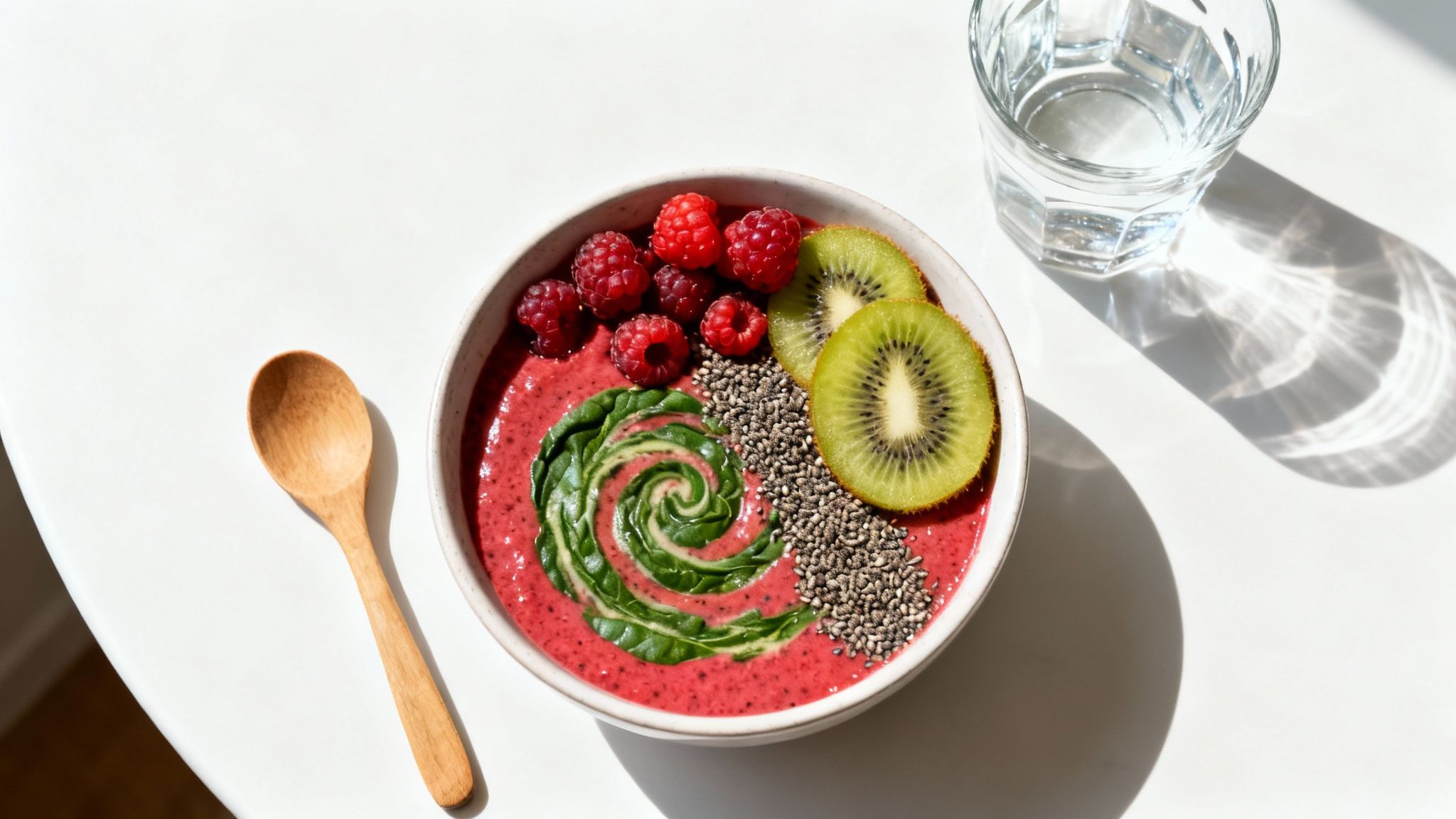
Foods That Fuel Better Blood Flow
Some foods are genuine powerhouses for your circulation. They’re packed with compounds that help relax your blood vessels, fight inflammation, and protect against cellular damage. Getting more of these into your meals is one of the most practical steps you can take.
A good place to start is simply adding more colour to your plate with these circulation-boosting heroes:
- Oily Fish: Think Tasmanian salmon, mackerel, and sardines. These are loaded with omega-3 fatty acids, which are brilliant for reducing inflammation and preventing blood platelets from clumping together.
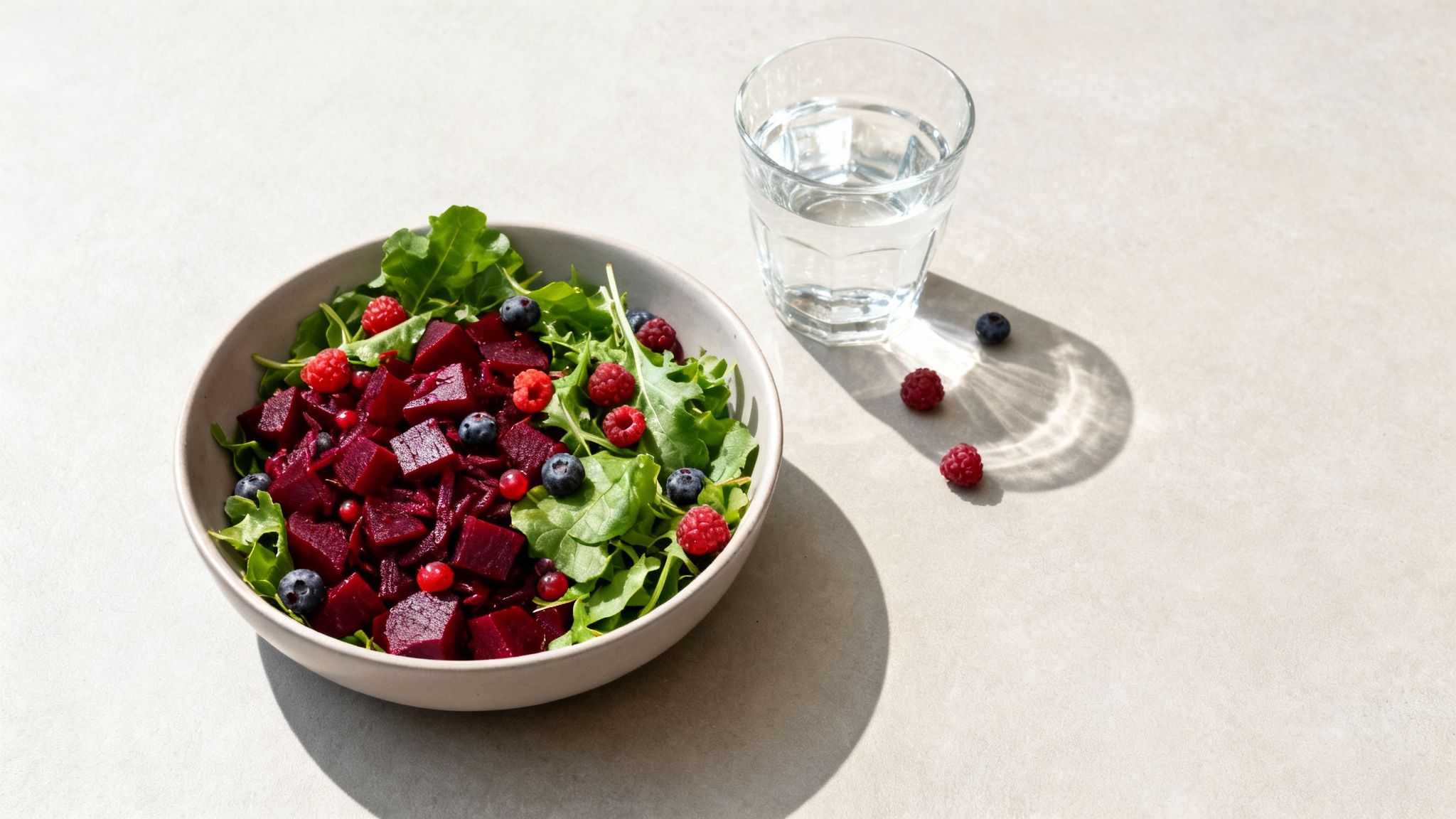
- Leafy Greens: Spinach, kale, and rocket are rich in nitrates. Your body converts these into nitric oxide, a fantastic molecule that tells your blood vessels to relax and widen, letting blood flow more easily.
- Vibrant Berries: Blueberries, strawberries, and raspberries are full of antioxidants called flavonoids. These compounds act like bodyguards, protecting the delicate lining of your blood vessels from damage.
There's a growing awareness across Australia about the link between diet and vascular health. The national dietary guidelines champion a high intake of fruits, vegetables, and lean proteins—all of which support endothelial function, the key to healthy blood vessels. In fact, diets rich in the antioxidants found in berries (which 40% of Australians enjoy weekly) can reduce oxidative stress and improve vasodilation. To learn more about national health trends, you can check out the information on the official climate change in Australia website.
Key Nutrients for a Healthy Circulatory System
When you understand why certain foods work, it’s easier to make smart choices. Two of the biggest players in circulatory nutrition are nitrates and flavonoids.
Imagine your blood vessels are like flexible hoses. Nitrates, found in foods like beets and leafy greens, are converted into nitric oxide. This nitric oxide is the signal that tells those hoses to relax and expand, which lowers blood pressure and makes it much easier for your heart to pump blood around.
Flavonoids are the compounds that give berries, citrus fruits, and even dark chocolate their rich colours. They're potent antioxidants that shield your vessel walls from inflammation and stiffness.
A simple way to get a solid boost is with a daily 'circulation smoothie'. Just blend a handful of spinach, a cup of mixed berries, a spoonful of flaxseeds (for extra omega-3s), and some water or almond milk. It’s a delicious, nutrient-packed start to your day.
The Critical Role of Hydration
It’s easy to focus on food, but you can’t overlook water. Your blood is more than 90% water, and how thick or thin it is (its viscosity) is directly tied to how hydrated you are.
When you're dehydrated, your blood literally gets thicker and more sluggish. This forces your heart to work overtime to push it through your veins and arteries, putting unnecessary strain on your entire cardiovascular system.
Staying well-hydrated keeps your blood at the right consistency, so it can flow smoothly and efficiently. The trick is to sip water consistently throughout the day, rather than chugging it all at once. For most people, around two litres daily is a good target, but you might need more if you're active or dealing with a Queensland summer. It's one of the simplest and most effective things you can do for your circulation every single day.
Everyday Habits for Lasting Circulatory Improvement
While targeted exercises and a good diet are your heavy hitters, lasting circulatory health is really built in the small, consistent habits you weave into daily life. These are the subtle adjustments that create a powerful support system for your body’s natural flow.
It’s all about working smarter, not harder. By understanding how to counteract the daily grind of modern life—whether you’re at a desk in a Sydney high-rise or unwinding at home—you can give your body a serious helping hand.
Counteracting the Effects of Prolonged Sitting
Let's be honest, most of us sit way too much. It's a massive roadblock for healthy circulation, especially in the lower body. Gravity is already working against us, making it a real chore for blood to get from our legs back up to the heart. This is where strategic, simple tweaks to your workspace become non-negotiable.
The goal is to stop compressing major blood vessels and encourage a bit of movement. Little things can make a huge difference:
- Elevate Your Feet: Pop a small footrest under your desk. This simple move stops your knees from locking at a sharp 90-degree angle, a position notorious for pinching the blood vessels behind them. That slight elevation makes all the difference for a smoother return flow.
- Prioritise Posture: Slouching is more than just a recipe for back pain; it squashes your entire core and restricts blood flow to your vital organs. Sit up tall, pull your shoulders back, and get your screen at eye level. This open posture is crucial, and you can learn more about the deep connection between your alignment and health by exploring the details of posture and its musculoskeletal effects.
- Choose Supportive Footwear: Tight, restrictive shoes—especially high heels—are circulation killers for your feet and ankles. Whenever you can, opt for comfortable, supportive footwear that lets your feet rest naturally.
After a long day stuck at your desk or on your feet, give this a try: lie on the floor and rest your legs up against a wall for 10-15 minutes. It’s a simple trick that uses gravity to your advantage, helping to drain stale blood and excess fluid from your legs.
The Invigorating Power of Hydrotherapy
One of the oldest and easiest tricks in the book for boosting circulation is hydrotherapy—specifically, the contrast between hot and cold. Alternating temperatures in your shower is like taking your blood vessels to the gym.
Here’s how it works. The hot water makes your blood vessels dilate (widen), bringing blood rushing to your skin. Then, when you switch to cold, they immediately constrict (narrow), pushing that blood back towards your internal organs. This rapid pumping action is a fantastic workout for your entire circulatory system.
A simple routine you can try tomorrow morning:
- Start with your normal warm shower for a few minutes.
- Switch the water to as cold as you can handle for 30 seconds. Really focus the spray on your legs and arms.
- Flip it back to hot for about a minute to recover.
- Repeat this cycle three to five times, and always try to end on cold.
This practice doesn’t just get your blood moving; it’s incredibly energising. It's the perfect way to kickstart your day or refresh yourself after a workout.
Managing Stress to Support Your Vessels
Chronic stress is the silent enemy of good circulation. When you’re stressed out, your body is flooded with hormones like cortisol, kicking off your "fight or flight" response. This makes your blood vessels tighten up, raising your blood pressure and forcing your heart to work overtime.
Over the long term, this constant tension can lead to stiff, unhappy arteries and poor circulation. That’s why managing stress isn't just fluffy wellness advice; it's an essential part of a circulatory health plan.
Deep breathing is one of the most powerful and immediate tools you have to fight back. When you take slow, deep breaths, you activate the "rest and digest" part of your nervous system. This sends a direct signal to your brain to calm the heck down, which in turn helps your blood vessels relax and open up.
Try this simple technique anywhere, anytime:
- Inhale slowly through your nose for a count of four.
- Hold that breath for a count of seven.
- Exhale completely through your mouth for a count of eight.
- Repeat four or five times.
Integrating these small habits—better ergonomics, a little hydrotherapy, and mindful breathing—creates a holistic safety net that supports your circulation 24/7. They're the quiet, consistent efforts that add up to a profound difference in how you feel every single day.
Common Questions About Improving Circulation
You’ve covered movement, massage and nutrition—but it’s only natural to still have questions about boosting circulation the natural way. Below, you’ll find clear, experience-driven answers to help you fine-tune your wellness routine.
How Quickly Can I See Results?
Often, you’ll notice an almost immediate lift. For example, a couple of minutes of neck-and-shoulder self-massage during a busy workday can banish tightness on the spot. Likewise, some gentle calf stretches after a long flight will ease leg heaviness almost instantly.
That said, genuine, long-lasting shifts take time and routine. Within two to four weeks of weaving daily movement—think short walks at your desk—into your day, adding targeted massage sessions and upping your water intake, you’re likely to feel warmer hands and toes.
For deeper improvements in blood-vessel function and overall cardiovascular health, expect three to six months of consistent effort. Stick with a simple plan and watch those incremental gains add up.
Is Massage Enough To Fix My Circulation?
Massage is an incredible catalyst for improving local blood flow. You’ve probably felt how a focused session in your hotel room eases leg fatigue after wandering Brisbane’s streets. It literally jump-starts circulation in tight, knotty areas.
In practice, however, massage is most powerful when combined with other healthy habits. Pair it with simple strength moves—calf raises under your desk, for instance—and a diet rich in hydrating foods. Think of massage as the spark plug in a well-tuned engine: it accelerates and amplifies the benefits of everything else you’re doing.
While a great massage on a yacht is a peak wellness experience, remember it’s part of a bigger picture. The daily walks, the water you drink, and the foods you eat all work together with massage for the best results.
When Should Poor Circulation Lead To A Doctor’s Visit?
Everyday strategies form your first line of defence against sluggish blood flow and the effects of too much sitting. Still, certain symptoms should prompt a trip to your GP:
- Persistent Numbness or a constant tingling ‘pins and needles’ in your hands or feet
- Unusual Skin Discolouration, where extremities turn abnormally pale or blue
- Slow-Healing Sores on your legs or feet
- Sharp, Cramping Pain in your calves that appears when walking and eases with rest
These warning signs might point to an underlying concern such as Peripheral Artery Disease (PAD). A proper diagnosis and treatment plan from an Australian medical professional are essential.
Ready to experience the profound circulatory benefits of professional massage? The Royal Masseur delivers five-star treatments directly to your home, office or hotel in Sydney, Melbourne, Brisbane and beyond. Book your session today and feel the difference.