
Therapeutic massage is all about results. It’s a targeted treatment designed to relieve pain, sort out muscular imbalances, and get your body functioning properly again. This isn’t your average relaxation massage; it’s a focused session with a clear physical goal, making it an incredibly powerful and actionable tool for your overall wellbeing, wherever you are.
Understanding Therapeutic Massage Beyond Relaxation
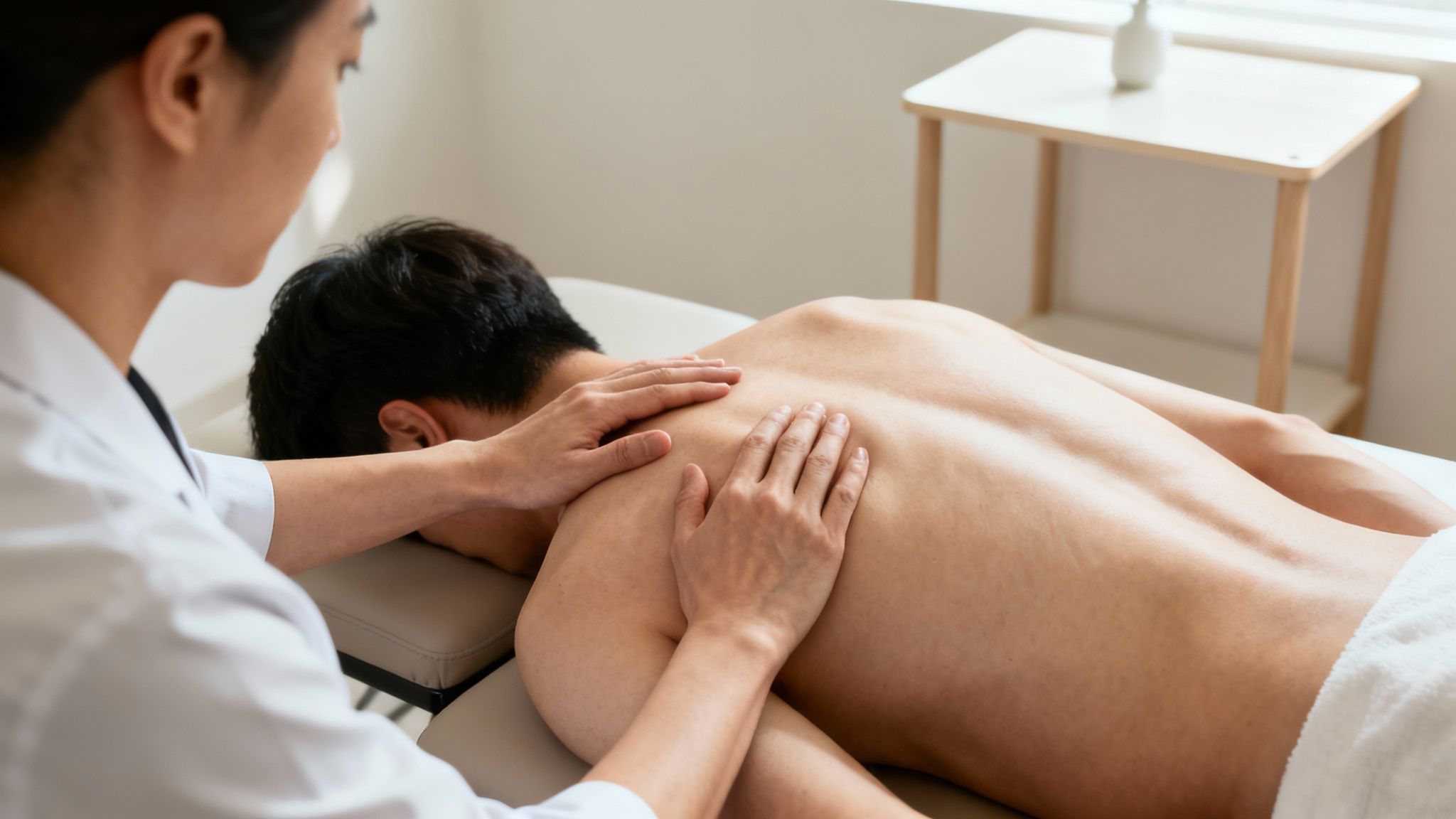
Think about the difference between a casual stroll in the park and a session with a personal trainer. Both involve moving your body, but one is purely for gentle enjoyment, while the other is carefully structured to hit a specific fitness target. That’s the perfect way to think about therapeutic massage.
A relaxation massage is designed to soothe your nervous system and give you a general sense of calm. A therapeutic session, on the other hand, is a strategic intervention. It’s an outcome-driven treatment that gets to work on specific problems within your body’s soft tissues—your muscles, tendons, and ligaments.
This approach takes things beyond simple pampering and moves into the realm of structured physical care. The main goal isn’t just to make you feel good for an hour; it’s to create lasting changes that genuinely improve your quality of life.
A Focus on Specific Wellness Goals
What truly makes a massage “therapeutic” is its clear, defined purpose. Before your therapist’s hands even get to work, you’ll have a chat about what you want to achieve. This goal-oriented method makes it highly effective for a whole range of modern-day aches and pains.
Just look at the demands of modern life. Long hours hunched over a desk often lead to chronic neck and shoulder pain, a complaint so many Australians know all too well. An actionable insight is to book a therapeutic massage delivered right to your office. It can directly target those strained muscles, helping to improve your posture and reduce the risk of repetitive strain injuries.
It’s the same if you’re recovering from a sports injury at home or managing a chronic condition. A mobile therapist can bring that specialised care right to your door. This convenience alone removes the stress of travel, letting your body put all its energy into healing. For those wanting the ultimate restorative experience, a session in a private hotel room or even on a yacht creates an environment of total tranquillity, amplifying the treatment’s benefits.
A therapeutic massage is less about the setting and more about the intent. It applies professional, evidence-based techniques to achieve specific wellness goals, wherever you are.
The treatment is incredibly adaptable. While it’s quite different from general relaxation techniques, you can learn more about how various styles stack up by reading our complete guide to Swedish relaxation massage. Understanding this distinction helps you pick the right service for your needs, ensuring you book a session that’s perfectly in tune with your wellness goals.
The Evolution of Therapeutic Massage in Australia
Therapeutic massage might feel like a very modern solution, perfectly designed for our hectic lives. But the truth is, its core principles are anything but new. This is a discipline that’s been tested and refined for millennia, with deep historical roots and a solid, evidence-based foundation. Its journey from an ancient healing art to a respected profession within Australia’s healthcare system is a real testament to just how effective it is.
Knowing this history helps build a sense of trust. It shows that the techniques used today, whether in a high-rise office or a quiet hotel room, aren’t just passing fads. They’re part of a legitimate field dedicated to physical wellbeing—a practice that has earned its place by getting real results, time and time again.
The simple idea of using touch to heal is ancient. Historical records show therapeutic massage has been around for about 2,500 years, with some evidence even pointing back to 2500 BCE. Here in Australia, it was first introduced as a complementary medical treatment in the late 1800s and early 1900s. Its role became much more official during the 20th century, especially during World War One and Two, when it was a key part of soldier rehabilitation programs. You can discover more about its early history and its journey into Australian healthcare.
From Battlefields to Boardrooms
Using massage to help soldiers recover was a massive turning point. It proved, on a large scale, the practice’s profound ability to restore function, manage pain, and speed up recovery from serious physical trauma. This wartime application offered powerful, real-world proof of its medical value, helping to shift how people saw it -> from a simple comfort measure to a serious therapeutic tool.
After the wars, the profession just kept maturing. The mid-to-late 20th century saw the establishment of professional associations and formal training standards right across Australia. This was a critical step in cementing its credibility, making sure practitioners had a deep understanding of anatomy, physiology, and pathology.
Therapeutic massage moved from the fringes of complementary medicine into the mainstream of allied health, backed by scientific validation and a commitment to professional excellence.
This professionalisation meant that techniques like deep tissue massage, trigger point therapy, and myofascial release were no longer just intuitive practices. They became structured treatments, all based on a clinical understanding of how our soft tissues respond to targeted manipulation.
Therapeutic Massage in Modern Australia
Today, therapeutic massage is a core part of the Australian wellness landscape. It’s recognised for its ability to tackle the specific physical strains of modern life—from the “tech neck” that’s so common among office workers to the repetitive strain injuries we see in athletes.
And its evolution is still going, especially in how it’s delivered. The rise of premium mobile services has made expert care more accessible than ever, bringing targeted relief directly to where it’s needed most:
- In the office: Corporate wellness programs now use seated massage to combat workplace stress and boost productivity.
- At home: People managing chronic pain or recovering from an injury can now get treatment in a comfortable, private setting.
- In luxury settings: High-end hotels and even private yachts now offer therapeutic sessions, providing the ultimate convenience and recovery for travellers and professionals.
This journey from an ancient tradition to modern, mobile healthcare really solidifies its status. It’s a powerful and legitimate tool for looking after your physical wellbeing, no matter the environment.
When most people hear the word “massage,” they picture a tranquil spa day, all fluffy robes and cucumber water, designed for pure, blissful escape. While that’s a fantastic experience, it’s only one side of the story. The real game-changer is the intent behind the treatment, and understanding this difference is the secret to getting the results you’re actually looking for.
Choosing between a therapeutic and a relaxation massage is a bit like deciding between a gentle yoga class and a targeted physiotherapy session. One is all about achieving a state of general calm and disconnecting from a stressful week; the other is about diagnosing and fixing a specific problem, like reconnecting a painful shoulder to its proper function. Both are incredibly valuable, but they serve entirely different masters.
This distinction is crucial whether you’re looking to unwind in a hotel room, boost team focus with an office wellness program, or find deep restoration on a yacht. Knowing what you want to achieve ensures the session you book is perfectly aligned with your body’s needs.
The Core Difference Is Intent
At its heart, the main thing separating these two styles is the goal of the session. A relaxation massage, which is often a Swedish massage, uses long, flowing strokes, gentle kneading, and rhythmic tapping. The primary objective is to soothe your nervous system, ease mild muscle tension, and leave you feeling peaceful and refreshed. It’s a full-body reset for your mind.
A therapeutic massage, on the other hand, always starts with a specific physical problem to solve. It’s a targeted, outcome-focused treatment that uses a whole toolbox of techniques to get to the root cause of pain, restore mobility, or correct muscular imbalances. It’s less about a generalised feeling of calm and much more about achieving a measurable improvement in how your body works.
This little decision tree simplifies the choice right down to its most basic question.
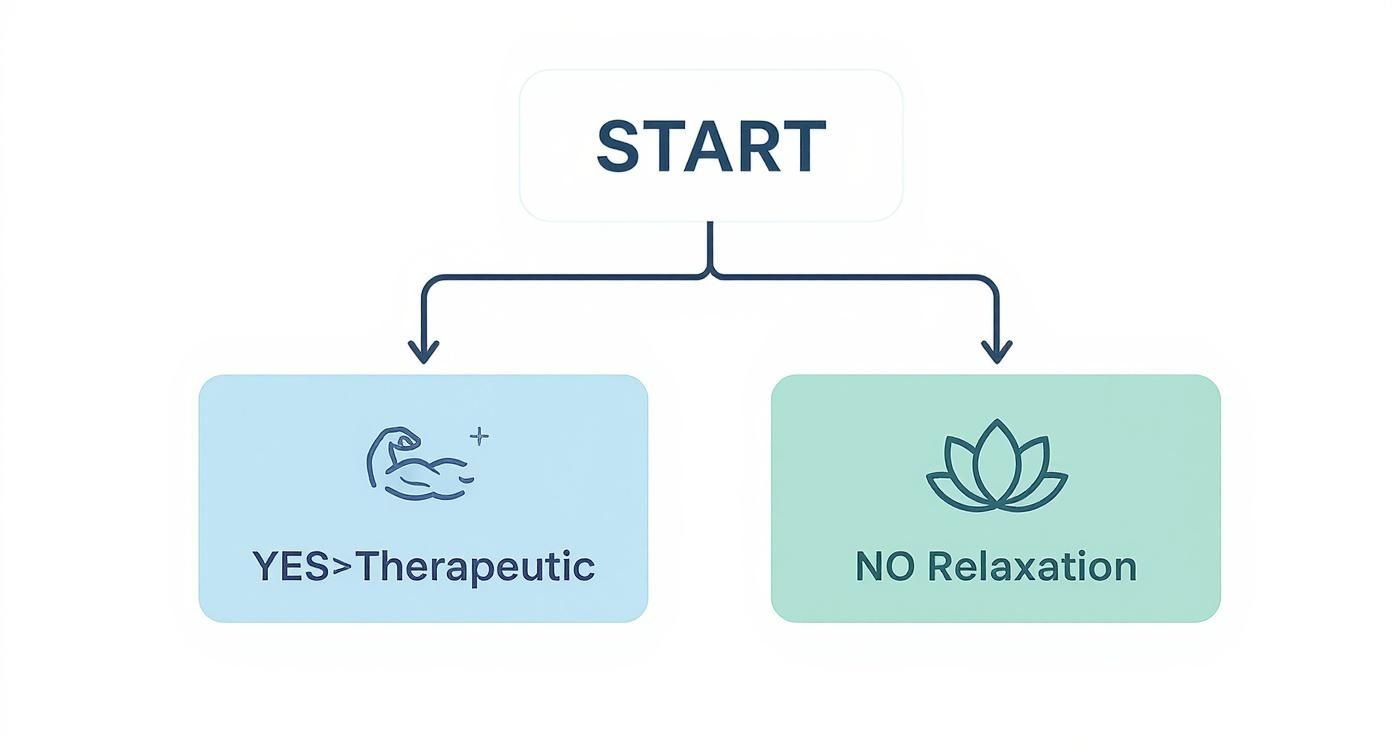
As you can see, if pain or a specific physical issue is your main driver, a therapeutic approach is the most direct path to finding real relief.
Therapeutic vs Relaxation Massage Which Is Right for You?
To make the choice even clearer, let’s break down the key differences side-by-side. This comparison shows just how much the session’s ultimate goal shapes every single part of the experience.
| Aspect | Therapeutic Massage | Relaxation (Swedish) Massage |
|---|---|---|
| Primary Goal | To resolve a specific physical issue like chronic pain, limited mobility, or injury recovery. | To reduce stress, promote general relaxation, and induce a sense of overall wellbeing. |
| Techniques Used | Employs a diverse range of techniques, including deep tissue, trigger point therapy, and myofascial release. | Primarily uses long, gliding strokes (effleurage), kneading (petrissage), and rhythmic tapping (tapotement). |
| Pressure Applied | Varies from light to deep and intense, depending on the issue being treated and your comfort level. | Typically uses light to medium pressure, focused on creating a soothing, comfortable experience. |
| Client Communication | Involves active and ongoing dialogue. The therapist will ask for feedback on pressure and sensation to guide the treatment effectively. | Generally involves minimal talking to allow you to fully disconnect and relax. |
| Area of Focus | Concentrates on specific areas of the body that are causing pain or dysfunction. | Usually a full-body treatment designed to address all major muscle groups equally. |
| Ideal Scenario | You’re dealing with a recurring stiff neck from your desk job or recovering from a sports-related strain. | You’ve had a stressful week at work and need to mentally switch off and de-stress your body. |
The most important thing to remember is that therapeutic massage is a partnership. It needs your active participation and communication to pinpoint problem areas and work towards a specific, functional outcome.
Ultimately, both styles of massage are powerful tools for managing your health. By understanding their distinct goals and methods, you can confidently choose the right treatment to meet your needs, ensuring every session—whether at home, in the office, or on the water—delivers exactly what your body and mind are crying out for.
Real-World Benefits of Therapeutic Massage for Your Lifestyle
We all know massage can help with pain, but the real power of therapeutic massage is how it delivers specific, targeted results that slot perfectly into your modern life. It’s a practical fix for today’s problems, offering tangible relief right where you need it, whether that’s in a busy office or the quiet of your own home.
This is about getting past vague wellness promises and seeing genuine, real-world improvements. Instead of just “feeling less pain,” imagine finally sorting out that nagging “tech neck” from a week of video calls, or easing the lower back ache that comes with constant travel. Therapeutic massage uses precise techniques to solve these exact issues.
Elevating Wellness in the Office
The modern workplace can be a real battleground for our bodies. Long hours hunched over a screen lead to rounded shoulders, a forward head posture, and chronic tension that settles deep in the neck and upper back. It’s a huge issue—Safe Work Australia flags work-related musculoskeletal disorders as a major problem affecting thousands of employees every year.
This is exactly where corporate wellness massage programs make an immediate, noticeable difference. A skilled therapist can perform targeted chair massages right in the office, zeroing in on the exact muscle groups screaming for relief after a day at the desk. Here’s an actionable insight: implementing a regular office massage program is a proactive way to combat these physical strains before they become chronic issues.
- Beating Burnout: Regular sessions are a powerful circuit-breaker for stress, helping to lower cortisol levels and head off the mental and physical exhaustion that leads to burnout.
- Sharpening Team Focus: When physical discomfort isn’t a constant distraction, employees can concentrate better, which means a big boost in productivity and fewer mistakes.
- Cutting Down on Sick Days: Proactively tackling musculoskeletal strain helps reduce the frequency of work-related pain, contributing to a healthier and more present team.
Finding Your Sanctuary at Home
For most of us, home is the ultimate place to relax and recover. Mobile therapeutic massage brings professional care directly into this sanctuary, which is a game-changer for anyone dealing with chronic conditions, recovering from an injury, or simply trying to manage a hectic schedule. No fighting traffic, no rushing to an appointment—the healing comes right to you.
This convenience is especially vital for new mothers navigating postnatal recovery or for individuals with mobility challenges. It simply removes the barriers to getting consistent care, which is often the secret to achieving lasting results. Our guide on remedial massage therapy goes deeper into how these focused treatments are adapted for your specific needs, even in a home environment. A session tailored to you, at home, ensures your body gets the focused attention it needs to heal properly.
The real beauty of at-home therapeutic massage is its ability to weave professional care into your personal space. It allows for a deeper state of relaxation and more effective recovery, without any of the added stress of getting to a clinic.
The Ultimate Recuperation in Premium Settings
Sometimes, the environment you’re in is a massive part of the healing process. For those chasing the absolute highest level of recuperation, getting a therapeutic massage in a luxury setting—like a hotel room or even on a private yacht—can seriously amplify the benefits.
Picture this: you’ve just stepped off a long-haul flight, and a therapist arrives at your hotel to work out all that travel-induced stiffness. Or after a day out on the water, a targeted session on the deck of a yacht helps your muscles recover while you’re surrounded by total tranquillity.
These premium experiences merge expert therapeutic techniques with an environment built for ultimate relaxation. This synergy doesn’t just feel good; it accelerates physical recovery and delivers a mental reset that’s hard to find anywhere else. It transforms a simple treatment into a truly restorative event, helping you bounce back faster and feel profoundly refreshed. By connecting the power of touch to your immediate surroundings, therapeutic massage becomes a practical, powerful tool for boosting your wellbeing, no matter what your lifestyle looks like.
What to Expect During Your First Session
Booking your first therapeutic massage can feel a bit like stepping into the unknown. You know you need relief, but you might not be sure exactly how the session will unfold. The great news is that the whole experience is a collaboration, designed entirely around your comfort, safety, and specific wellness goals.
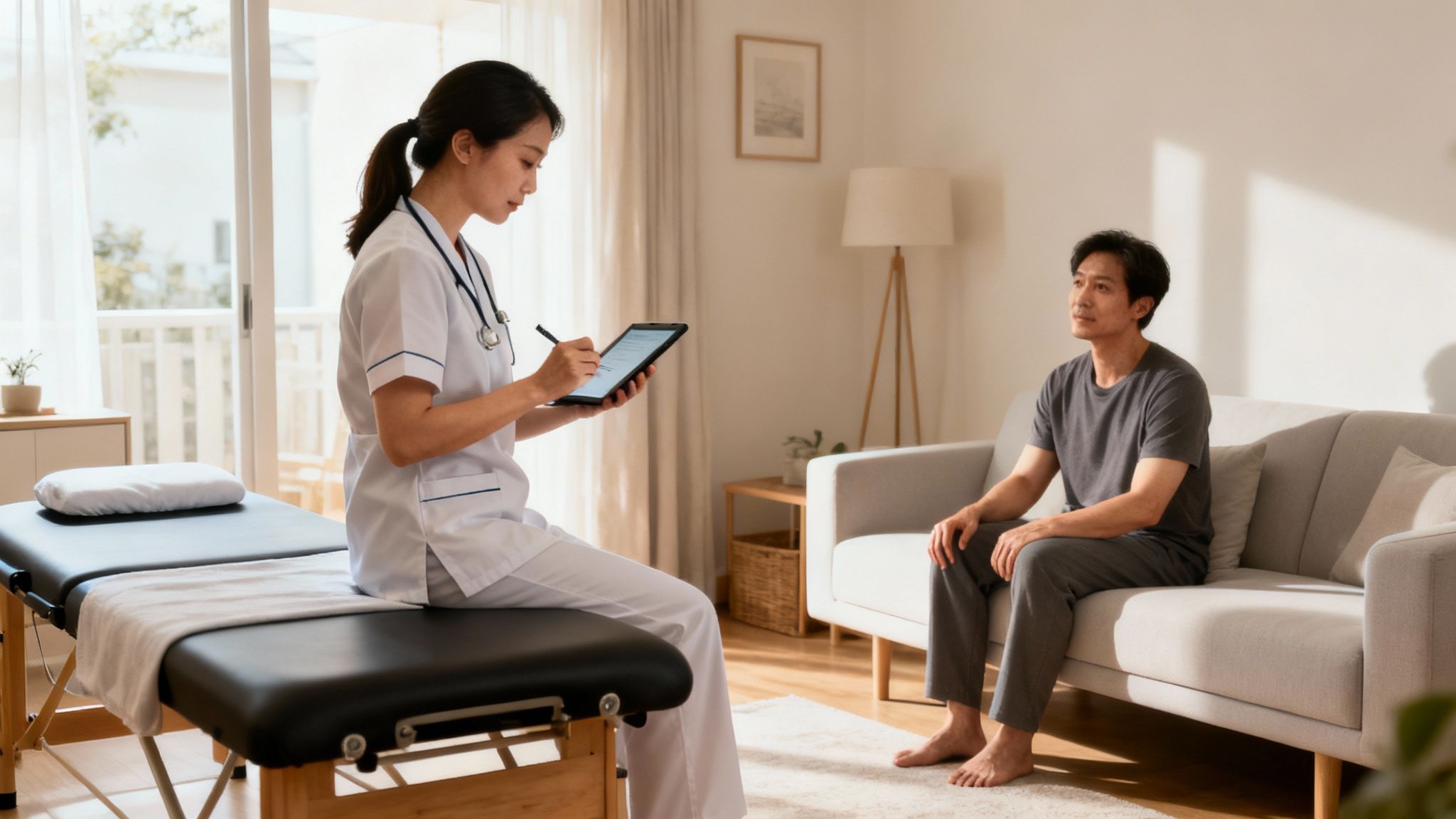
Whether your therapist is setting up in a corporate boardroom, your living room, or a hotel suite, the core structure of the session stays consistent. It’s all about creating a personalised treatment plan that actually works for you. Let’s walk through what you can expect, from start to finish.
The Initial Consultation
Every single therapeutic session begins with a conversation. This isn’t just small talk; it’s a vital part of the treatment where your therapist gets a proper understanding of your body and what you want to achieve.
You’ll chat about your health history, any current injuries, and the specific areas causing you pain or discomfort. This is your time to be open and detailed. Are you dealing with stubborn neck tension from long hours at the computer? Or maybe lower back pain from a recent flight? This information helps the therapist build a mental map of your needs.
Your session is a two-way street. The more information you provide about your goals and comfort levels, the more effective and targeted your therapeutic massage will be.
This consultation is the foundation upon which a successful treatment is built, ensuring the session is tailored to you from the very first moment. It’s what turns a standard massage into a truly therapeutic experience.
The Treatment and Communication
Once the plan is clear, the hands-on portion begins. The environment will be adapted to your location, of course. In a corporate setting, this might be a specialised massage chair designed for targeted neck and shoulder work. In the privacy of your home, yacht, or hotel room, your therapist will set up a professional massage table, complete with fresh, clean linens.
Throughout the session, communication is absolutely key. Your therapist will check in with you about the pressure they are applying, and it’s essential to provide feedback. What feels like effective pressure to one person might be far too intense for another.
Remember, a therapeutic massage can sometimes involve a sensation of “good pain” as the therapist works on tight knots, but it should never be sharply or unbearably painful. You are always in control of the session.
After the massage, your therapist will likely offer some post-session advice. This might include:
- Stretches: Simple movements to maintain mobility in the areas that were just worked on.
- Hydration: Drinking plenty of water is crucial to help flush out metabolic waste released from your muscles during the treatment.
- Heat or Cold Therapy: Recommendations for using a heat pack or ice to soothe any residual tenderness.
This aftercare advice is designed to extend the benefits of your session long after the therapist has packed up, helping you feel empowered and confident in managing your own wellbeing.
How to Find a Qualified Massage Therapist in Australia
The true magic of a therapeutic massage isn’t just in the techniques themselves; it flows from the skill, knowledge, and intuition of the person providing the treatment. In other words, the effectiveness of your session hinges entirely on the quality of your therapist.
Finding a properly qualified professional in Australia means looking beyond flashy websites and knowing what credentials actually matter. Investing a little time upfront to vet your therapist is the single most important step you can take to ensure you receive care that is safe, effective, and genuinely therapeutic. It’s what allows you to book with confidence, whether you need relief at home, in the office, or at your hotel.
Checking Credentials and Qualifications
Here in Australia, the massage industry has clear benchmarks for professional practice. When you’re on the hunt for a therapist, the first thing to check is their formal education. A Diploma of Remedial Massage is the gold standard, as it proves they’ve had comprehensive training in anatomy, physiology, and advanced assessment techniques.
Beyond their diploma, membership in a professional association is a massive green flag. These organisations don’t just hand out memberships; they require their therapists to hold the right qualifications, maintain current first aid certifications, and be fully insured. It’s a strong sign of a therapist’s commitment to high standards.
Key Australian associations to look for include:
- Massage & Myotherapy Australia (MMA): One of the country’s leading and most respected professional bodies.
- Association of Massage Therapists (AMT): Another top-tier organisation that holds its members to rigorous professional standards.
When a therapist is affiliated with one of these bodies, you can feel confident you’re dealing with a true professional.
Practical Tips for Vetting a Therapist
Once you’ve got a shortlist, it’s time to dig a little deeper. The demand for quality massage in Australia has skyrocketed, with employment in the sector jumping by 16.8 percent in the decade leading up to 2019. But with only 29.9% of practitioners working full-time, the field is filled with a mix of experience levels. You can read more on these trends in a government submission on the Australian migration system.
So, how do you find the best of the best? Start by reading online reviews and testimonials. What are past clients saying about their experience, the therapist’s professionalism, and the results they got?
Don’t be shy about asking questions before you book, either. A great therapist will be more than happy to talk about their qualifications, their experience with your specific issue, and what a typical session with them looks like.
Using a reputable mobile massage service like The Royal Masseur gives you a huge advantage here. We do all the heavy lifting for you by pre-screening every single therapist on our team. We verify their qualifications, check their insurance, and confirm their professional memberships. This process guarantees you receive care from a vetted, high-calibre professional every single time.
Ultimately, finding a skilled practitioner is about making sure your investment in your wellbeing actually pays off. For more guidance on finding a pro, our article on locating the best massage therapists near you offers extra tips to make your search easier. Taking these simple steps ensures the hands you’re in are both skilled and trustworthy.
Got Questions About Therapeutic Massage? We’ve Got Answers.
It’s completely normal to have a few questions before you dive into something new for your wellness routine. Whether you’re thinking about a session for your office, at home, or even in a luxury hotel room, getting clear answers helps you book with total confidence.
Let’s tackle some of the most common queries we hear.
How Often Should I Get a Therapeutic Massage?
Honestly, there’s no single magic number. The right frequency really comes down to your specific goals and what your body is telling you. It’s all about creating a schedule that’s tailored to your situation.
If you’re dealing with an acute issue, like recovering from a sports injury or a sudden back pain flare-up, your therapist might suggest weekly sessions for a short burst to really accelerate the healing. For managing chronic conditions or as part of an ongoing corporate wellness program, fortnightly or monthly appointments are often the sweet spot for keeping tension under control. The best approach is always to chat with your therapist and create a personalised plan based on how your body responds.
Is Therapeutic Massage Supposed to Hurt?
You should expect to feel effective, focused pressure, but you should never be in sharp or unbearable pain. Some people describe the sensation during techniques like trigger point therapy as a “good pain”—that satisfying intensity you feel when a therapist is working on a stubborn knot that desperately needs to release.
The most important thing to remember is this: you are always in control of the session. Open and honest communication with your therapist is key. It ensures the pressure stays within your comfort zone while still being effective. Your comfort and safety are always the top priorities.
What’s the Best Way to Prepare for a Session?
A little preparation goes a long way and can make a huge difference to your results. To get the most out of your treatment, whether it’s at home or on a yacht, there are just a few simple things you can do.
First, make sure you’re well-hydrated by drinking water throughout the day leading up to your appointment. It also helps to have a clear idea of any specific issues or tight spots you want to focus on. Most importantly, just be ready to chat openly with your therapist about your goals and comfort levels.
What Should I Do After My Massage?
Aftercare is just as crucial as the massage itself for locking in the benefits. The first thing to do right after your session is drink plenty of water. This helps your body flush out any metabolic waste that’s been released from your muscles.
It’s also a great idea to skip any strenuous exercise, heavy meals, or alcohol for several hours afterwards. Just give your body some time to rest and process the treatment. If you feel any lingering muscle tenderness, a warm bath with Epsom salts can work wonders to soothe it and extend that feeling of deep relief.
Ready to experience the targeted benefits of professional care in your own space? The Royal Masseur brings five-star therapeutic massage and wellness services directly to your home, hotel, or office. Book your session today and discover a new level of wellbeing.