
A postnatal massage at home is your chance to heal and reconnect with yourself, all from the comfort of your own space. Forget the stress of travel; this is about creating a quiet sanctuary for recovery. It’s a supportive practice designed to gently address the aches, pains, and emotional shifts that come after childbirth, helping you feel more like yourself again.
Embracing Wellness After Birth With At-Home Massage
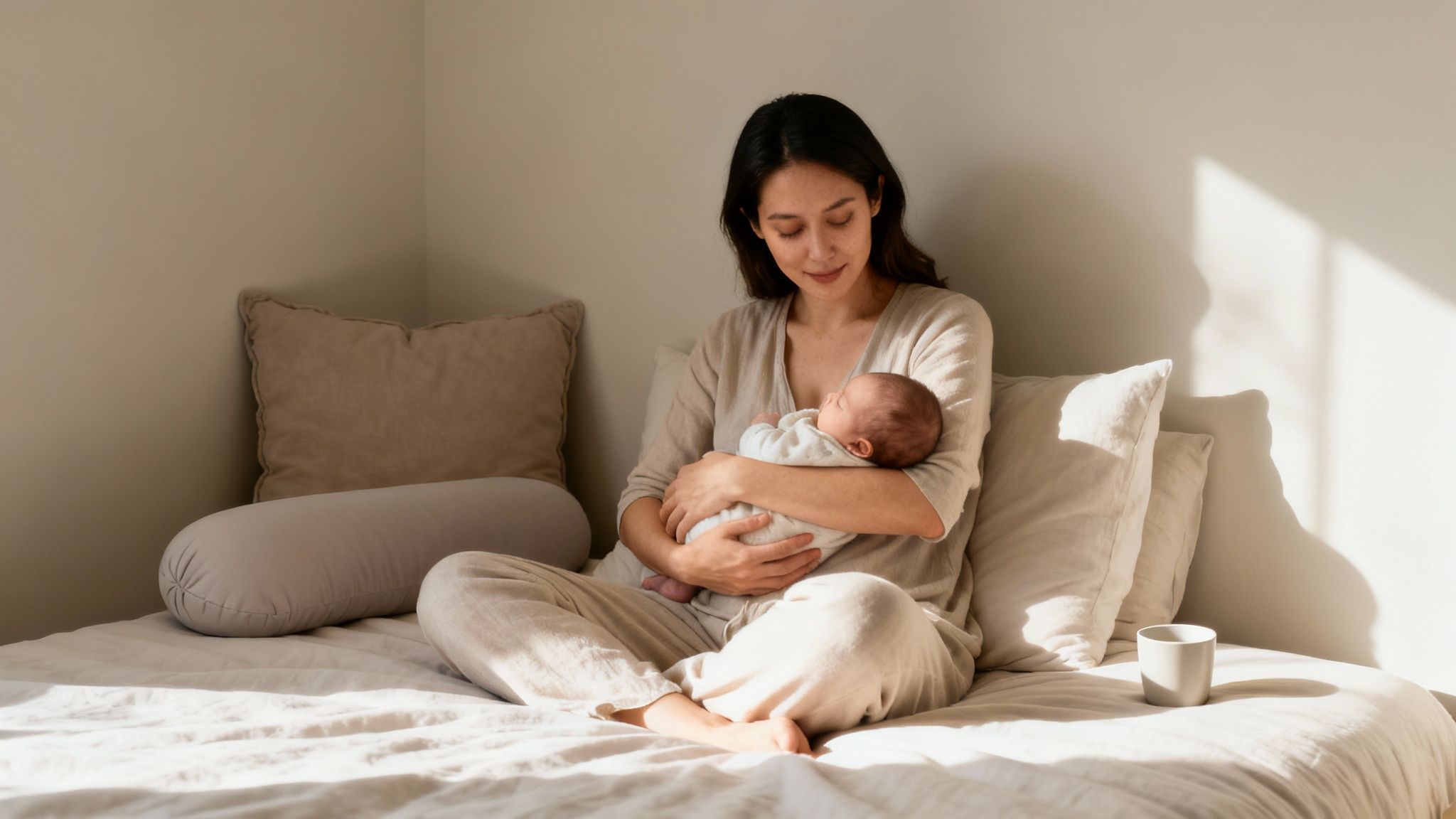
The postpartum period is a massive adjustment. Amidst the joy and beautiful chaos of a newborn, your body is working overtime to recover from the huge demands of pregnancy and birth. Bringing massage into your routine isn't just an indulgence—it’s a vital tool to support that healing process.
Whether it’s performed by a caring partner or a qualified mobile therapist, an at-home massage offers a moment to pause. It's a rare opportunity to just breathe and focus completely on your own wellbeing.
Why Prioritise Massage Postpartum
The benefits go so much deeper than simple relaxation. For so many new mums in Australia, the physical toll shows up as persistent back pain from feeding, shoulder tension from carrying your baby for hours, and just pure exhaustion. A targeted postnatal massage can get right to these specific issues, easing muscle strain and making you feel more comfortable in your own skin.
This practice also plays a huge role in your emotional wellbeing. In fact, Australian research has shown that even a massage from a partner can positively impact maternal mental health, with studies indicating it helps reduce symptoms of stress and anxiety.
Tailoring Wellness to Your Space
The real beauty of a postnatal massage at home is that it fits into your life, wherever you are. Wellness isn't confined to a spa; it's about carving out intentional moments for recovery in the spaces you already inhabit. Whether it’s a quiet corner of your bedroom, your home office during a lunch break, a hotel room while travelling, or even on a yacht for a true escape, the principles of creating a restorative environment remain the same. This flexibility makes it so much easier to actually prioritise your recovery.
Many of the core principles of prenatal care, like focusing on safety and comfort, carry right through to the postpartum period. You can read more on this in our guide to a safe pregnancy massage.
This journey is about more than just physical relief. It’s about carving out intentional moments for yourself, reconnecting with your changing body, and finding stillness amidst the beautiful chaos of new motherhood.
This guide will walk you through the practical steps and safety advice you need to confidently bring massage into your postpartum journey, helping you feel stronger, calmer, and more present for it all.
Right, let's turn your space into the perfect haven for a postnatal massage. You don't need a fancy spa room or anything elaborate. The whole point is to carve out a peaceful bubble where you can completely switch off and just be.
This is about making recovery work for you, whether that's in a quiet corner of your bedroom, your home office after hours, a hotel room if you're travelling, or even on a yacht if you're lucky enough to be away.
First things first, let's talk timing. Life with a newborn is beautifully unpredictable, so flexibility is your best friend here. A great time to aim for is right after a feed, when your little one is likely to be settled or snoozing. Don't get hung up on finding a perfect, uninterrupted hour. Honestly, even 15-20 minutes of focused, quiet time can feel like an absolute lifesaver.
Setting the Scene for Relaxation
Once you've got a potential window, it's all about the sensory details. Little tweaks to your environment are powerful cues for your mind and body to finally switch off from mum-duty. Dim the lights, pop your phone on silent (and put it somewhere you can't see it), and maybe play some calming music or a guided meditation. The goal is to strip away the distractions.
This works anywhere, by the way. If you've managed to book a mobile therapist to your office for a quick session, find a quiet meeting room and use headphones to block everything out. In a hotel? Just draw the curtains and hang the "do not disturb" sign. You can create a sanctuary almost anywhere with a bit of intention.
The location itself doesn't matter nearly as much as the act of consciously setting aside that space and time just for your own recovery. It's such a powerful form of self-care.
Getting Your Essentials Together
There's nothing worse than getting settled only to realise you need to get up for something. Having everything you need within arm's reach means you can sink into the massage without any interruptions. You don't need much, but the right items make all the difference for a postpartum body.
To make it super simple, here’s a quick reference guide to everything you need for a comfortable and effective at-home massage session.
Your At-Home Postnatal Massage Checklist
| Item Category | Essentials | Pro Tip for New Mums |
|---|---|---|
| Support | Several pillows of different sizes | Grab extra pillows to prop under your knees when lying on your back, or between your knees if you're side-lying. A rolled-up towel can offer great lower back support. |
| Surface | A firm bed or a plush rug on the floor | The floor can offer more stability, which is great for deeper work on your back and hips. Just make sure you have plenty of cushioning. |
| Lubrication | A natural, unscented oil (sweet almond, jojoba, or coconut) | Choose a fractionated coconut oil. It's light, non-greasy, and absorbs beautifully, plus it’s completely safe for baby's skin if you're breastfeeding. |
| Comfort | A couple of soft, warm towels | Pop a towel in the dryer for a few minutes before you start. The warmth feels incredible on sore back and shoulder muscles. |
Once you have these few things ready, you’ve done more than just prepare for a massage. You’ve intentionally created a space for healing, turning a corner of your home, office, or hotel room into the perfect place for some much-needed restoration.
Safe Techniques for Your Postpartum Body
Your body has navigated some incredible changes through pregnancy and birth, so approaching any kind of massage requires a bit of mindfulness and care. Proper positioning and gentle techniques aren't just about comfort; they're absolutely essential for safe healing. The real focus is always on listening to what your body needs in this moment.
For a postnatal massage at home, comfort really dictates the best position. Many new mums find that lying on their side with pillows tucked between their knees and supporting their belly is the most comfortable option, especially if they're dealing with breast tenderness or recovering from a C-section. This position takes all the pressure off sensitive areas while still allowing for effective work on the back, hips, and shoulders.
Alternatively, lying face down might be possible with the right support. You can create a little "nest" with pillows to make space for tender breasts. Never push through discomfort—if a position doesn't feel right, adjust immediately.
Gentle Techniques for Common Postpartum Pains
After welcoming your baby, a whole new set of aches and pains can appear. Hours spent feeding, rocking, and carrying your little one often lead to some pretty intense tension in the upper back, neck, and shoulders.
Here are a few gentle, effective techniques to target these common spots:
- For Upper Back and Shoulder Tension: Start with long, gliding strokes (effleurage) using the flat of your hand or palm, moving from the lower back up towards the shoulders. This warms up the muscles beautifully. Then, use gentle kneading motions (petrissage) around the shoulder blades and the base of the neck to release those stubborn knots.
- For Lower Back Aches: While you're side-lying, use the palm of your hand to apply gentle, consistent pressure in circular motions over the lower back and gluteal muscles. You'll want to avoid any deep, pokey pressure, especially near the spine.
This little visual guide breaks down the key steps to prepare your space, making sure you have everything set for a relaxing session.
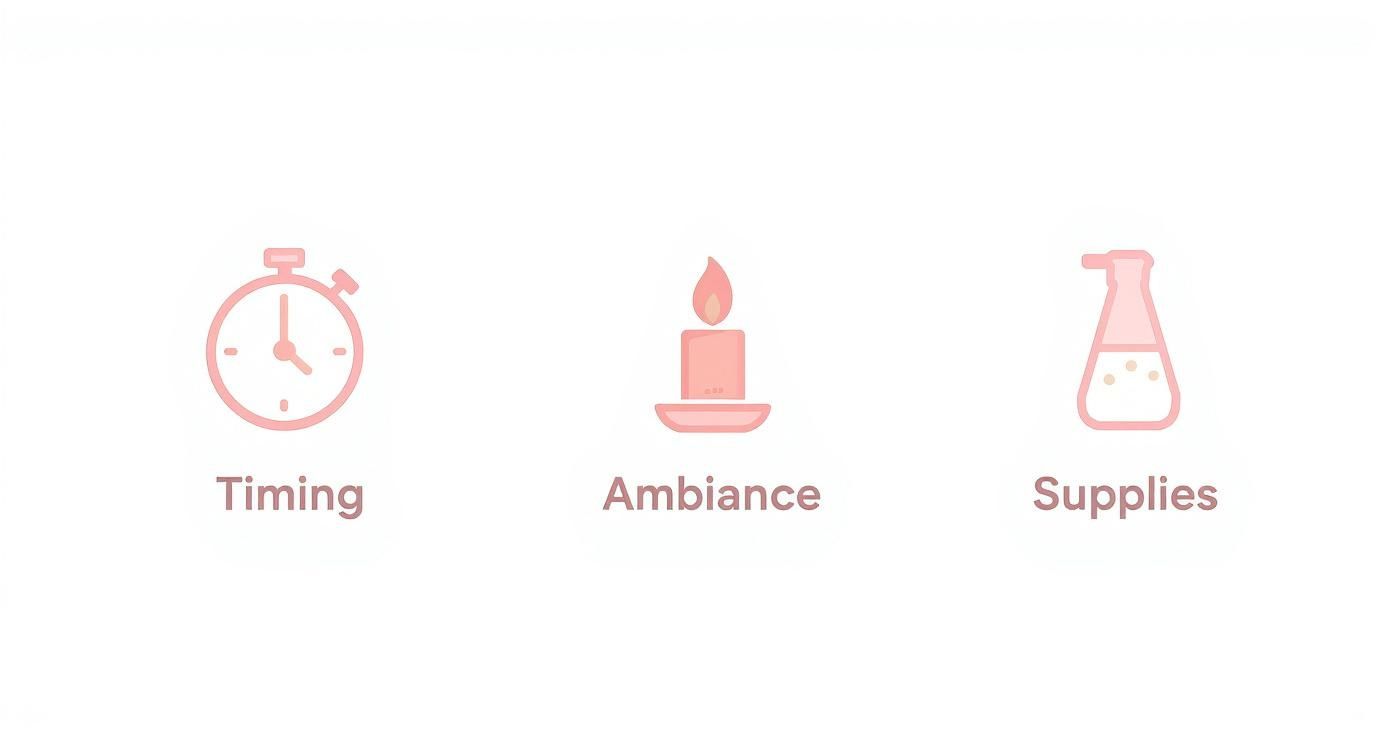
It’s a simple reminder that a successful home massage is built on three pillars: choosing the right time, creating a calming atmosphere, and having your supplies ready to go.
Addressing Pelvic and Abdominal Recovery
Your core has done an amazing job and now needs some gentle encouragement to heal. Light, clockwise circular strokes around the abdomen can aid digestion and help stimulate uterine involution (the process of the uterus returning to its pre-pregnancy size). It's a wonderfully gentle way to reconnect with your belly.
For more targeted fluid reduction, you might be interested in learning about what is lymphatic drainage massage from our detailed guide.
Perineal massage is another technique widely supported in Australia. It's often recommended during late pregnancy to improve tissue elasticity and reduce trauma during birth. Postpartum, once you've healed and received clearance from your GP, gentle scar tissue massage can be beneficial for both perineal tears and C-section incisions.
C-Section Scar Care
If you've had a caesarean birth, it is absolutely critical to wait until your incision is fully healed and you have your doctor's approval before touching the area directly. This is usually around the 6-week mark, but everyone's recovery timeline is different.
Once you get the all-clear, you can begin with very gentle techniques.
Start by gently moving the skin around the scar, without touching it directly. Use your fingertips to make small circles above, below, and to the sides of the incision.
When you feel ready, use one or two fingers to apply light pressure directly on the scar itself. Gently move it up and down, side to side, and in small circles. If you're comfortable, you can gently try to lift the scar away from the underlying tissue.
The key is to start slowly and really listen to your body. If you feel any sharp pain, stop immediately. The goal here is to prevent adhesions and improve mobility, promoting a smooth and comfortable recovery.
Understanding When to Avoid Postnatal Massage
While a postnatal massage at home can be an absolute game-changer for your recovery, it isn't always the right move. Your body is in a profound state of healing, and some situations call for a pause to put safety first. Knowing when to hold off is just as crucial as knowing which techniques to use.
The golden rule is always to listen to your body and your medical team. If anything feels off, or if you're even slightly unsure, it's always best to wait. This ensures your wellness journey is truly supporting, not hindering, your postpartum recovery.
Critical Health Considerations
There are some specific medical situations where massage is a definite no-go and could be unsafe. We call these contraindications, and they’re essential red flags designed to protect your health. If you're experiencing any of the following, you absolutely must postpone any massage.
Getting clearance from your GP or a maternal health nurse before you begin is standard practice, especially if you had a complicated pregnancy or birth. It just makes sure everyone involved in your care is on the same page.
You should avoid massage completely if you have:
- Fever or Infection: Your body is already working overtime to fight off illness. A massage can sometimes stir things up and make you feel worse.
- High Blood Pressure or Pre-eclampsia: Massage has a direct effect on circulation and blood pressure, so it’s vital to have these conditions fully under control and cleared by a doctor before you even consider it.
- Contagious Skin Conditions: This one’s straightforward—it's to prevent spreading any rash or infection.
- Deep Vein Thrombosis (DVT): This is a blood clot, usually in the leg. Massage is strictly off-limits as it could dislodge the clot, which is extremely dangerous.
Always consult with your GP before starting any new wellness practice after birth. A quick chat with a trusted health professional, like those at Pregnancy Birth and Baby, provides peace of mind and keeps your recovery safe.
When to Seek Medical Advice First
Beyond those absolute no-go situations, there are other times when you need a doctor's green light before scheduling that at-home session. These scenarios require a bit more care to ensure the massage is adapted properly to your specific needs.
For instance, significant swelling (oedema) in just one leg needs immediate medical attention before any massage is considered. Likewise, if you have any open wounds, stitches that aren't fully healed, or areas of broken skin, those spots must be completely avoided.
Remember, this isn’t about putting up barriers to your self-care. It’s about making smart, empowered choices that truly honour your body's incredible postpartum journey.
Finding a Qualified Professional for Mobile Massage
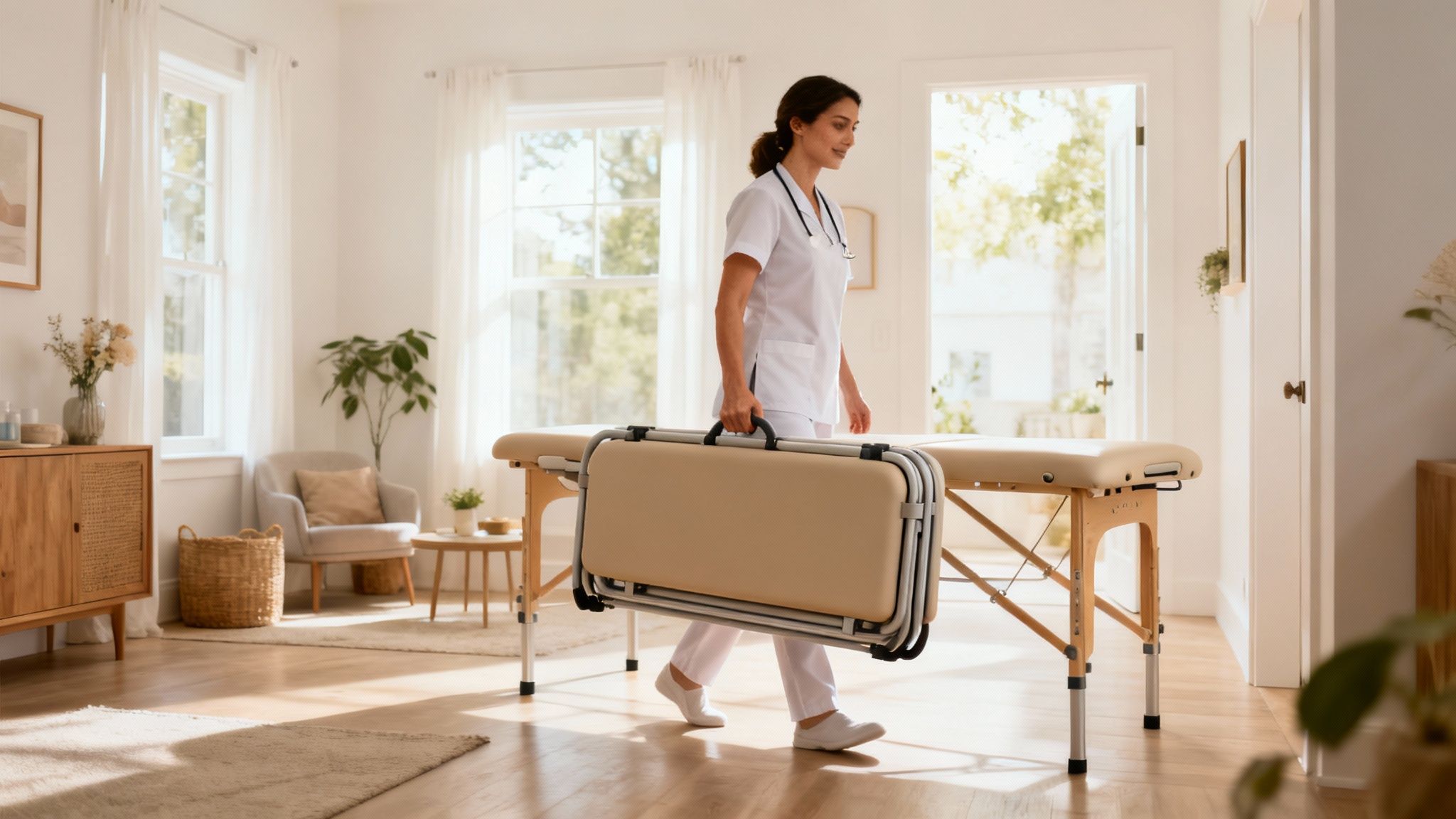
Sometimes, the most restorative thing you can do for yourself is to simply let an expert take over. Booking a professional for a postnatal massage brings specialised knowledge right to your door, taking all the guesswork and stress out of the equation.
It’s about getting that five-star wellness experience with the ultimate convenience. Whether that’s in your living room between feeds, your office for a midday reset, a hotel room for a proper escape, or even on a yacht, the right therapist can make it happen.
The key, though, is finding someone who truly understands the unique needs of a postpartum body. You’re not just looking for any massage therapist; you need a professional with specific training and hands-on experience in perinatal care. Their expertise is what ensures every technique is safe, appropriate, and genuinely beneficial for your stage of recovery.
Vetting Your Mobile Massage Therapist
When you start searching for the right professional in Australia, qualifications should be your first checkpoint. A great therapist will be completely transparent about their credentials and will be happy to answer any questions you have. Never hesitate to ask them about their experience with postpartum clients specifically.
Before you book, make sure you're clear on these points:
- Qualifications and Specialisation: Look for certifications in pregnancy, prenatal, or perinatal massage. This shows they’ve done specific training beyond a general diploma.
- Insurance and Association Membership: Make sure they are fully insured and a member of a recognised Australian professional body, like Massage & Myotherapy Australia (MMA) or the Australian Traditional Medicine Society (ATMS).
- Postpartum Experience: Ask them directly how many postpartum clients they typically see and what common issues they help address.
A truly qualified therapist gets the physical and emotional landscape of the fourth trimester. They’ll know how to position you for comfort, especially after a C-section, and use techniques that support your healing rather than get in the way of it.
Questions to Ask Before Your First Session
Once you've shortlisted a potential therapist, a quick chat can confirm if they're the right fit. This is your chance to outline what you need and get a feel for their professionalism. Having a few questions prepared helps you make an informed decision and feel completely comfortable.
Consider asking things like:
- "What specific techniques do you use for common postpartum issues like back pain from breastfeeding or pelvic discomfort?"
- "How do you adapt the massage if I've had a C-section?"
- "What is your policy if my baby wakes up and I need to pause the session?"
- "What equipment do you bring, and is there anything I need to provide?"
Taking a few moments to properly vet your professional ensures your postnatal massage at home is not just convenient, but also safe, effective, and incredibly restorative. If you need more tips, check out our guide on how to find the right mobile massage therapist for your needs.
Your Postnatal Massage Questions, Answered
Even with all the benefits in front of you, it’s completely normal to have a few questions swirling around before you dive into a postnatal massage at home. This is your body and your unique recovery journey, so feeling confident and well-informed is the first step.
To clear things up, I’ve pulled together some of the most common queries I hear from new mums across Australia, along with some clear, practical answers. Think of this as your final checklist for peace of mind, making sure you’re ready to embrace this restorative practice as a key part of your postpartum wellness.
How Soon Can I Actually Start After Birth?
This is easily the question I get asked the most, and honestly, the answer really comes down to your individual birth experience.
For an uncomplicated vaginal birth, you can often begin with some very gentle massage on your back, shoulders, and feet within that first week. The real focus here is on relaxation and easing that initial tension that comes from labour and endless hours of feeding.
However, if you've had a C-section, patience is everything. It is absolutely vital to wait until your incision is well-healed—which is usually around the 6-week mark—and you've been given the all-clear from your GP. Until then, there should be no direct pressure applied to your abdomen or the scar tissue, period.
What Massage Oils Are Safe if I’m Breastfeeding?
When you're breastfeeding, whatever you put on your skin has the potential to come into contact with your baby. Because of this, it’s always best to stick with simple, natural, and unscented options.
You want a light, nourishing oil that's gentle on both your skin and your baby's.
- Fractionated Coconut Oil: This is a fantastic choice. It’s non-greasy, absorbs beautifully, and is completely odourless.
- Sweet Almond Oil: Another very popular option, known for being super hydrating.
- Jojoba Oil: This one closely mimics the skin's natural sebum, making it a brilliant, non-irritating choice.
The key thing to remember is to avoid essential oils with strong scents, especially anywhere near your chest or hands. A baby's sense of smell is incredibly sensitive, and strong fragrances can be really overwhelming and even interfere with feeding cues.
Can My Partner Give Me a Massage?
Absolutely! In fact, having your partner give you a massage can be a really beautiful way to connect during that whirlwind postpartum period. It gives them a hands-on, practical way to offer support that directly contributes to your comfort and wellbeing.
They don't need to be a professional therapist. The focus should just be on simple, soothing strokes on your back, shoulders, and legs. Remind them to use the flats of their hands and gentle pressure, avoiding any deep or prodding movements, especially near your lower back and abdomen. Many Australian birthing centres and online parent resources offer great little tutorials on basic techniques.
How on Earth Do I Manage a Massage With a Newborn Around?
Flexibility is the name of the game when you have a newborn. The idea of an uninterrupted hour might seem like a fantasy, so the first step is to just let go of that expectation. Instead, aim for shorter, more frequent sessions.
Try to time your massage for when your baby is usually settled, like just after a feed. Keep the bassinet nearby so you can easily tend to them if you need to. If your baby wakes up mid-massage, you simply pause. No stress.
This is exactly why having a mobile therapist come to you is such a game-changer—it completely removes the stress of travel and rigid appointment times. It allows your wellness to fit around your new family life, not the other way around.
Ready to experience the healing benefits of expert care in your own home? The team at The Royal Masseur brings five-star postnatal massage directly to you in Sydney, Melbourne, Brisbane, and beyond. Book your session today and let us support your recovery journey.