In today's competitive landscape, attracting and retaining top talent requires more than just a competitive salary. A truly supportive work environment, one that prioritises genuine well-being, is the new benchmark for Australian employers. Generic, tick-the-box programs often miss the mark, leading to low engagement and wasted resources. This guide cuts through the noise, offering impactful and actionable workplace wellness program ideas designed for the modern Aussie business.
We move beyond the basics to explore innovative strategies that deliver real results, with a special focus on the restorative power of professional massage. This surprisingly effective tool for boosting morale and productivity can be adapted for any setting, whether it's through on-site corporate chair massage, at-home services for remote staff, or even as a luxury inclusion for team-building retreats on a yacht or for travelling executives in their hotel rooms.
This article provides a practical roadmap for HR managers and business leaders to implement programs that employees will actually value. You will find detailed steps and success metrics for each idea, enabling you to build a culture of well-being that truly supports your team and strengthens your entire organisation. Let's explore the concepts that will make a tangible difference.
1. Mental Health and Stress Management Programs
Prioritising mental health is a cornerstone of modern workplace wellness program ideas, moving beyond basic perks to provide genuine support. These initiatives focus on psychological well-being through confidential counselling, stress reduction workshops, and mental health awareness training. By creating a psychologically safe environment, organisations acknowledge that mental health is integral to productivity, team morale, and overall employee wellness.
This approach involves offering a multi-faceted support system. For example, providing subsidised access to therapy via an Employee Assistance Program (EAP), offering subscriptions to meditation apps like Calm or Headspace, and running workshops on resilience and stress management. Normalising these conversations through leadership advocacy is key to reducing stigma and encouraging participation.
Key Benefits & Implementation
- Benefits: Reduces absenteeism and presenteeism, improves focus and productivity, boosts employee morale and loyalty, and attracts top talent.
- Implementation:
- Partner with Professionals: Engage accredited EAP providers or corporate wellness vendors in Australia to offer confidential counselling.
- Train Leadership: Equip managers to recognise signs of distress and guide team members to available resources.
- Promote Regularly: Use internal communications to consistently highlight available programs and share de-stigmatising messages.
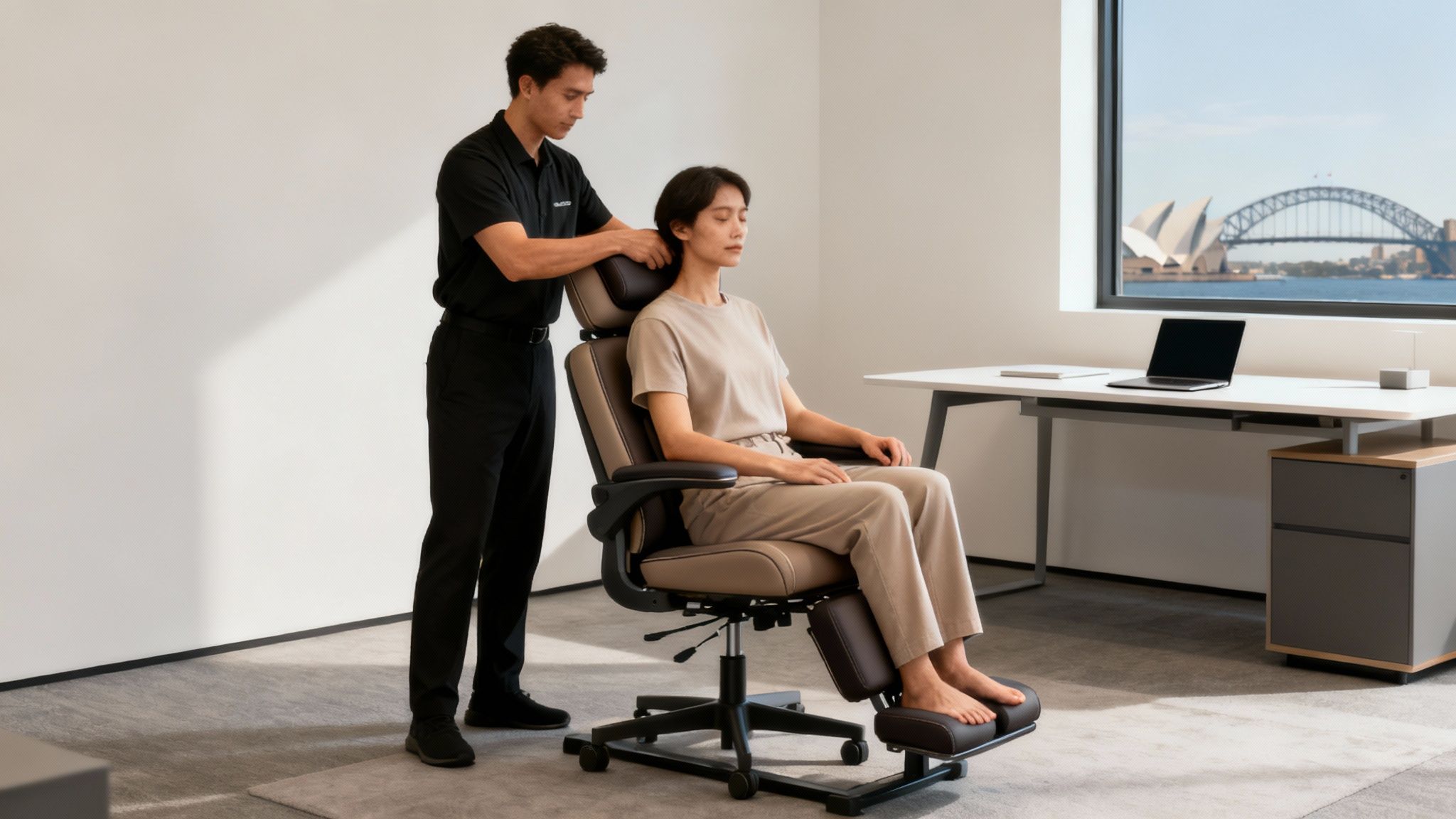
For immediate stress relief, integrating tangible, calming activities can be highly effective. A simple yet powerful addition is offering on-site massage, which provides a physical release from stress and tension. This type of hands-on support complements formal mental health programs by addressing the physical symptoms of stress directly in the office. For more on this, you can explore how chair massage therapy offers convenient workplace wellness.
2. Physical Fitness and Exercise Programs
Encouraging physical activity is a fundamental component of effective workplace wellness program ideas, designed to counteract sedentary office life and boost overall health. These initiatives promote regular movement through subsidised gym memberships, on-site fitness classes, and engaging team challenges. By fostering an active culture, organisations demonstrate a commitment to employees' long-term physical well-being, which is directly linked to energy levels, focus, and disease prevention.
This approach often involves offering a diverse range of options to cater to all fitness levels and interests. For instance, companies might organise corporate sports leagues, partner with local Sydney or Melbourne gyms for discounted rates, or run walking challenges. The goal is to make fitness accessible, fun, and a natural part of the work week, helping to build camaraderie while improving cardiovascular health.

Key Benefits & Implementation
- Benefits: Reduces health risks associated with a sedentary lifestyle, increases energy and concentration, lowers stress levels, and enhances team collaboration through group activities.
- Implementation:
- Survey Employee Interests: Ask your team what activities they would most enjoy, from yoga and Pilates to high-intensity interval training (HIIT).
- Offer Flexible Options: Provide a mix of on-site classes, virtual sessions, and stipends for gym memberships to accommodate remote and hybrid workers.
- Gamify Participation: Use leaderboards, team competitions, and rewards to motivate employees and make fitness a social, engaging experience.
To complement active fitness programs, consider incorporating recovery-focused services. Offering on-site remedial or sports massage can help employees manage muscle soreness, prevent injuries, and recover faster from their physical activities. This supportive element ensures a holistic approach to physical wellness, addressing both exertion and restoration.
3. Nutrition and Healthy Eating Initiatives
Fueling the body correctly is fundamental to employee performance and well-being, making nutrition a vital component of any robust workplace wellness program. These initiatives focus on educating and empowering staff to make healthier dietary choices through accessible resources, expert guidance, and creating a supportive food environment. By promoting balanced nutrition, organisations can directly impact energy levels, cognitive function, and long-term health outcomes.
This approach goes beyond simply providing fruit bowls. It involves a strategic effort to make healthy eating the easy choice, such as offering subsidised healthy meals, hosting cooking demonstrations with local chefs, or providing one-on-one consultations with a registered dietitian. Companies like Google have famously integrated this by designing their cafeterias to place nutritious options in the most visible and accessible locations, subtly nudging employees toward better choices.

Key Benefits & Implementation
- Benefits: Increases energy levels and concentration, reduces the risk of chronic diseases, improves overall mood and mental clarity, and can lower healthcare-related costs.
- Implementation:
- Enhance Food Offerings: Partner with your catering provider to introduce healthier, clearly labelled meal and snack options. Ensure vegetarian, vegan, and gluten-free choices are available.
- Provide Expert Education: Organise lunch-and-learn sessions or webinars with accredited nutritionists to cover topics like meal prepping, understanding food labels, and mindful eating.
- Incentivise Healthy Choices: Create a 'healthy choice' rewards program where employees earn points for selecting nutritious meals, which can be redeemed for wellness-related perks.
Nutrition is intrinsically linked to physical well-being. To complement these initiatives, consider how other wellness services can address the physical side effects of a sedentary office lifestyle. Offering on-site chair massages provides a tangible way to relieve posture-related tension and boost circulation, reinforcing a holistic commitment to health that nourishes both inside and out.
4. Work-Life Balance and Flexible Work Arrangements
Empowering employees to harmonise their professional and personal lives is a fundamental pillar of effective workplace wellness program ideas. This involves implementing policies that grant greater autonomy over how, when, and where work gets done, such as flexible schedules, remote work options, compressed work weeks, and generous time-off policies. By moving away from rigid, traditional structures, organisations can directly address burnout and significantly improve employee life satisfaction.
This strategic approach focuses on outcomes rather than hours clocked. For example, some companies offer compressed four-day work weeks, while others adopt a remote-first culture supported by robust collaboration tools. The core principle is trust, giving employees the flexibility they need to manage personal appointments, family commitments, or simply work during their most productive hours. Leading by example from management is crucial for creating a culture where employees feel comfortable using these arrangements without fear of reprisal.
Key Benefits & Implementation
- Benefits: Reduces employee burnout and stress, increases job satisfaction and loyalty, expands the talent pool by removing geographical barriers, and improves overall productivity.
- Implementation:
- Establish Clear Policies: Document flexible work guidelines, setting clear expectations around communication, availability, and performance metrics.
- Equip for Success: Provide the necessary technology and tools, like project management software and communication platforms, to support remote and hybrid teams.
- Focus on Outcomes: Train managers to measure performance based on results and project completion, not on hours spent at a desk.
To further support work-life balance, consider services that bring relaxation directly to your team, wherever they are. Providing a mobile massage therapy service in Sydney allows employees working from home to de-stress without adding another commute to their day, reinforcing your commitment to their well-being beyond the office walls.
5. Health Screenings and Preventive Care Programs
Proactive health initiatives are a vital component of forward-thinking workplace wellness program ideas. These programs focus on prevention and early detection, offering employees regular health assessments, biometric screenings, and educational resources. By identifying potential health risks before they escalate into serious conditions, organisations can empower their staff to take control of their well-being and foster a culture of preventative health.
This approach involves bringing healthcare directly to the workplace. Examples include annual on-site flu vaccinations, biometric screenings for cholesterol and blood pressure, or workshops on chronic disease prevention. Ensuring complete confidentiality and providing clear, actionable feedback are crucial for building trust and encouraging employees to participate in these valuable, often life-saving, initiatives.
Key Benefits & Implementation
- Benefits: Reduces long-term healthcare costs, lowers absenteeism due to chronic illness, increases employee awareness of personal health risks, and demonstrates a genuine investment in employee welfare.
- Implementation:
- Partner with Health Providers: Engage accredited corporate health providers in Australia to conduct confidential on-site screenings and vaccinations.
- Ensure Data Privacy: Communicate strict confidentiality protocols to build employee trust. Assure staff that individual results are private and will not be shared with the employer.
- Offer Follow-Up Support: Connect employees with resources for follow-up, such as telehealth consultations or referrals to specialists, to help them act on their screening results.
To complement these medical programs, consider addressing the physical contributors to common health complaints like hypertension and musculoskeletal issues. Providing on-site corporate massage is an effective, non-clinical way to manage stress and physical tension, which are known risk factors for more serious health problems. This hands-on approach offers immediate relief and reinforces the company’s holistic commitment to preventative care.
6. Financial Wellness and Benefits Education Programs
Financial stress is a significant, often hidden, contributor to poor overall well-being. Workplace wellness program ideas that address financial health are therefore crucial, providing employees with the tools and knowledge to manage their finances effectively. These initiatives move beyond salary to offer practical support, including financial planning workshops, retirement planning guidance, and confidential debt management counselling.
This approach involves creating a supportive framework that empowers employees to take control of their financial future. For example, organisations can host seminars on understanding superannuation, offer one-on-one sessions with certified financial planners, or provide access to digital platforms for budgeting and savings. Educating staff on how to maximise their existing benefits, like health insurance or salary packaging, is another key component that demonstrates a genuine investment in their long-term security.
Key Benefits & Implementation
- Benefits: Reduces employee stress and anxiety, improves focus and productivity, increases appreciation of total compensation packages, and boosts retention.
- Implementation:
- Engage Financial Experts: Partner with accredited financial advisors or reputable Australian financial wellness providers to deliver workshops and confidential consultations.
- Simplify Complex Information: Create clear, accessible guides for company benefits and use simple language to explain financial concepts during training sessions.
- Offer Diverse Support: Provide a range of resources, from group seminars on budgeting to confidential support for issues like student loan debt or building an emergency fund.
7. Ergonomics and Workplace Safety Programs
Focusing on the physical work environment is a fundamental component of any robust workplace wellness program. Ergonomics and workplace safety programs aim to prevent musculoskeletal injuries, chronic pain, and discomfort by ensuring workstations and daily tasks are designed to fit the employee. These initiatives go beyond simply providing a chair and desk, focusing instead on tailored assessments, proper equipment, and ongoing education to create a safer, more comfortable workplace.
This proactive approach involves a systematic evaluation of how employees interact with their environment. Examples include conducting individual ergonomic assessments to customise workstation setups, providing options like sit-stand desks, and offering training on correct posture and lifting techniques. By investing in the physical safety of the team, organisations can significantly reduce the risk of long-term health issues and foster a culture that values physical well-being.
Key Benefits & Implementation
- Benefits: Reduces workers' compensation claims and injury rates, decreases absenteeism due to pain or discomfort, improves employee comfort and focus, and demonstrates a tangible commitment to employee health.
- Implementation:
- Engage Ergonomic Specialists: Partner with occupational therapists or ergonomic consultants in Australia to perform professional worksite assessments for all employees, both in-office and remote.
- Invest in Quality Equipment: Budget for and provide adjustable chairs, monitors, keyboards, and sit-stand desks to meet individual employee needs identified during assessments.
- Promote Movement and Education: Schedule regular "stretch breaks" and run workshops on office ergonomics and safe manual handling to reinforce best practices.
Addressing the physical strain of office work can be complemented by hands-on therapies. For instance, providing on-site chair massages directly targets the neck, back, and shoulder tension that often results from poor posture and prolonged sitting. This not only offers immediate relief but also reinforces the importance of listening to one’s body, making it a perfect addition to a comprehensive ergonomics program.
8. Social Connection and Community Building Programs
Fostering a sense of community is a powerful yet often overlooked component of workplace wellness program ideas. These initiatives are designed to build meaningful relationships and a strong sense of belonging among employees through team events, volunteer days, mentorship programs, and social activities. By creating an environment where colleagues feel genuinely connected, organisations can significantly improve mental health, boost engagement, and reduce feelings of isolation.

This approach involves creating diverse opportunities for interaction beyond daily tasks. Examples include establishing employee resource groups (ERGs) for shared interests or backgrounds, organising company-wide community service days, or hosting informal social gatherings like team lunches or after-work trivia. These programs transform the workplace from a collection of individuals into a supportive, collaborative community, which is crucial for long-term employee satisfaction and retention.
Key Benefits & Implementation
- Benefits: Improves team cohesion and collaboration, reduces employee turnover, enhances mental well-being by combating loneliness, and strengthens organisational culture.
- Implementation:
- Support Employee-Led Groups: Provide a budget and resources for employees to form their own social clubs or ERGs based on common interests.
- Organise Volunteer Opportunities: Partner with local Australian charities and allocate paid time for employees to volunteer, making it accessible for everyone.
- Facilitate Inclusive Events: Offer a mix of virtual and in-person social activities to cater to remote, hybrid, and in-office team members, ensuring all events are optional.
Events that encourage open conversation and support are particularly effective. For instance, you could discover how to design workshops for R U OK? Day that combine team bonding with vital mental health conversations, creating a safe space for connection.
9. Sleep Quality and Recovery Programs
Recognising that performance is directly tied to rest, modern workplace wellness program ideas now include a focus on sleep quality and recovery. These initiatives go beyond generic advice, offering structured support to combat sleep deprivation, a common issue in today's demanding work culture. By educating employees on sleep hygiene and providing tangible resources, organisations can address a fundamental pillar of health that impacts everything from cognitive function to emotional resilience.
This approach involves creating a culture that actively values rest. For example, some forward-thinking companies have introduced dedicated "nap rooms" or quiet spaces for short, restorative breaks. Other initiatives include providing subsidies for sleep-tracking technology, running workshops led by sleep experts, and setting clear policies on after-hours communication to protect employees' downtime. Leadership championing these programs is crucial for normalising rest as a key component of high performance, not a sign of weakness.
Key Benefits & Implementation
- Benefits: Improves employee concentration and decision-making, reduces workplace accidents and errors, lowers stress levels, and enhances overall mood and morale.
- Implementation:
- Educate and Empower: Host seminars with sleep scientists or health professionals to teach the science of sleep and practical hygiene tips.
- Create Quiet Zones: Designate a comfortable, low-light room for employees to take short power naps or simply disconnect and recharge.
- Promote Healthy Boundaries: Implement and enforce policies that discourage after-hours emails and calls, encouraging a full switch-off from work.
To complement these programs, addressing the physical tension that often disrupts sleep is highly effective. Chronic stress and poor posture from desk work can lead to physical discomfort that makes quality rest difficult. Offering on-site chair massages can provide direct physical relief, helping to relax tense muscles and calm the nervous system, thereby preparing the body for better sleep and recovery. This practical support helps bridge the gap between education and tangible well-being.
10. Substance Abuse Prevention and Support Programs
Addressing substance abuse is a critical, though often overlooked, component of a holistic workplace wellness program. These comprehensive initiatives go beyond simple policy, offering preventative education, confidential support, and clear pathways to treatment. By creating a supportive and non-judgemental framework, organisations can safeguard employee well-being, ensure workplace safety, and retain valuable team members who may be facing personal challenges.
This approach focuses on both prevention and intervention. It involves providing resources like confidential screening tools, covering addiction treatment under company health insurance, and promoting access to support networks. Leading companies often partner with local Australian support services to provide expert guidance and resources, ensuring employees receive professional, confidential help.
Key Benefits & Implementation
- Benefits: Improves workplace safety, reduces accident rates, decreases absenteeism and healthcare costs, enhances productivity, and fosters a culture of compassion and support.
- Implementation:
- Develop a Clear Policy: Create and communicate a supportive, recovery-friendly workplace policy that outlines available resources without punitive undertones.
- Provide Confidential Access: Partner with an EAP provider that specialises in substance abuse counselling to offer confidential assessments and referrals.
- Educate and De-stigmatise: Run awareness campaigns and training for managers to help them recognise signs of substance misuse and respond with empathy and support, guiding employees toward help rather than disciplinary action.
To complement these formal programs, consider the role of stress management in prevention. Chronic stress is a significant trigger for substance misuse. Integrating tangible stress-relief services like corporate massage provides a healthy outlet for tension. Offering regular on-site chair massages can proactively reduce the physical and mental strain that might otherwise lead employees to seek unhealthy coping mechanisms.
Workplace Wellness Programs: 10-Point Comparison
| Program | Implementation Complexity 🔄 | Resource Requirements ⚡ | Expected Outcomes 📊 | Ideal Use Cases 💡 | Key Advantages ⭐ |
|---|---|---|---|---|---|
| Mental Health and Stress Management Programs | Moderate–High — needs licensed partners, confidentiality systems | High — counselors, apps, training, ongoing budget | Improved wellbeing, lower absenteeism; ROI over time (reported 3–6:1) | High-stress teams, large orgs, burnout prevention | Reduces stigma, improves retention and culture |
| Physical Fitness and Exercise Programs | Moderate — facility or vendor coordination | Medium–High — gyms, instructors, equipment, incentives | Better cardiovascular health, mood, energy; measurable participation | Sedentary offices, campuses, team-building initiatives | Boosts energy, reduces chronic disease risk |
| Nutrition and Healthy Eating Initiatives | Low–Moderate — incremental rollout possible | Medium — cafeteria changes, nutritionists, food costs | Reduced diet-related risks, improved focus and productivity | Organizations with food services or catering | Increases energy and satisfaction; easy to scale |
| Work‑Life Balance & Flexible Arrangements | High — policy, management and cultural change | Low–Medium — collaboration tech, manager training | Lower burnout, higher retention and productivity | Remote-capable roles; talent attraction/retention strategies | Strong retention and talent attraction benefits |
| Health Screenings & Preventive Care Programs | Moderate — scheduling, data privacy, clinical partners | Medium — clinicians, testing equipment, follow-up resources | Early detection, cost savings (15–25% over 3–5 yrs) | Large employers with benefits; higher-risk populations | Identifies risks early; reduces ER visits and costs |
| Financial Wellness & Benefits Education | Low–Moderate — program setup and advisor sourcing | Low — workshops, advisors, materials | Reduced financial stress; improved focus and engagement | Workforces with financial stress or complex benefits | Improves productivity and benefits engagement |
| Ergonomics & Workplace Safety Programs | Moderate — assessments, behavior change, training | Medium — ergonomic equipment, consultants | Fewer musculoskeletal injuries (50–60% reductions reported) | Office workers, manufacturing, repetitive tasks | Prevents injuries; lowers workers’ comp claims |
| Social Connection & Community Building Programs | Low–Moderate — event coordination and facilitation | Low — events, volunteer time, ERG support | Higher engagement (+41%), productivity (+21%) and retention | Distributed teams, culture-building priorities | Strengthens belonging, collaboration, inclusion |
| Sleep Quality & Recovery Programs | Moderate — culture change, possible facilities | Medium — nap spaces, apps, education, scheduling flexibility | Better cognition, fewer errors, improved health and productivity | Shift workers, safety‑critical roles, high‑stress teams | Improves safety and decision‑making; reduces fatigue |
| Substance Abuse Prevention & Support Programs | High — sensitive, legal/compliance and ongoing care | High — trained counselors, treatment coverage, policies | Saves lives; strong ROI ($4–7 saved per $1 invested) | Safety‑critical industries, workplaces with known risks | Enhances safety, reduces liability, supports recovery |
Bringing It All Together: Your Next Step in Corporate Wellness
We've explored a comprehensive range of workplace wellness program ideas, from mental health initiatives and ergonomic assessments to financial education and social connection events. The journey to creating a thriving, healthy workplace culture isn't about ticking every box on this list. Instead, it's a strategic process of listening to your team, identifying their unique needs, and selecting initiatives that deliver genuine value and impact.
The most successful programs are not just implemented; they are integrated into the very fabric of your company's culture. They demonstrate a genuine commitment from leadership and provide accessible, meaningful support that employees can easily engage with. Remember, the goal is to build a foundation of wellbeing that supports every aspect of an employee's life, leading to a more engaged, resilient, and productive workforce. A small, well-executed initiative can often create more positive momentum than an ambitious but poorly managed program.
Key Takeaways for a Successful Program
To synthesise the ideas discussed, focus on these core principles as you move forward:
- Start with Listening: Before launching any program, use surveys, focus groups, or informal chats to understand what your employees truly want and need. A program built on assumptions is destined to fall flat.
- Prioritise Tangible Impact: Choose initiatives that offer immediate, noticeable benefits. Tangible wellness perks like professional on-site massage provide a powerful, positive experience that employees can feel right away, building goodwill and engagement for future programs.
- Embrace Flexibility and Adaptability: The modern workplace, especially in hybrid or remote settings, demands flexible solutions. Ensure your wellness offerings are accessible to everyone, whether they are in the central business district of Sydney or working from a home office on the Gold Coast.
- Measure What Matters: Track participation rates, gather qualitative feedback, and monitor key business metrics like absenteeism and employee retention. This data is crucial for demonstrating ROI and refining your strategy over time.
Your Actionable Next Step
Feeling overwhelmed by the sheer number of workplace wellness program ideas? Your most effective first step is to choose a high-impact, low-administration initiative that signals a real investment in your people. This is where professional, on-site wellness services can be a game-changer.
Bringing an expert massage service directly into the office, a hotel for a corporate retreat, or even onto a yacht for a special event provides an unparalleled experience. It's a clear and powerful message that you value your team's physical and mental health. Services like these, focused on remedial and relaxation therapies, directly combat workplace stress and physical strain, offering an immediate boost to morale and demonstrating your company’s commitment to wellbeing in a truly memorable way.
Ready to make a tangible investment in your team's wellbeing? The Royal Masseur specialises in delivering premium, five-star mobile massage experiences to offices, hotels, and exclusive venues across Sydney, Melbourne, and Brisbane. Let us help you launch your wellness program with an initiative your employees will love and remember. Visit The Royal Masseur to learn how we can tailor a corporate wellness package for your organisation.