Stop thinking about workplace injuries as something you deal with after the incident report. That reactive, compliance-only mindset is outdated and costly. A truly proactive approach means identifying risks before they turn into harm and building a culture that genuinely values employee well-being.
This is about more than policies. It's about practical support, like bringing in corporate massage therapy to manage physical and mental strain. It’s about understanding a simple truth: a team that feels cared for is a productive, resilient, and present team. This guide offers actionable insights to make wellness a core part of your injury prevention strategy, whether your team is in the office, at home, or even on a yacht for a corporate event.
Why Proactive Wellness is Your Best Defence
Waiting for injuries to happen is a flawed and expensive strategy. In today's Australian business world, just ticking the compliance boxes simply isn't good enough. The real cost of workplace injuries goes way beyond the obvious financial hit from compensation claims and lost workdays.
It’s a silent drain on your organisation, slowly chipping away at team morale and even damaging your reputation as an employer.
When your approach to safety is purely reactive, it sends a clear message to your team: their well-being is an afterthought. This fosters a culture of silence, where people work through pain because they don't want to be seen as a problem. It’s a dangerous cycle. Minor strains escalate into chronic conditions, absenteeism climbs, and you can feel the engagement in the room take a nosedive.
The True Cost of Inaction
Ignoring proactive prevention has consequences that ripple through every part of your business. They show up not just in direct financial costs but in subtle, powerful ways that can stifle growth.
- The Financial Drain: It's not just about workers' comp. Think about the hidden costs: hiring and training temps, paying overtime to cover absences, and the potential for legal fees down the line.
- Morale and Culture: A workplace that feels unsafe breeds anxiety and disengagement. Your best people will eventually leave for companies that visibly invest in their well-being.
- Reputational Damage: Word gets around. A reputation for a high injury rate makes it incredibly difficult to attract top talent and can even make clients think twice.
Understanding the Australian Risk Landscape
This isn't just a hypothetical problem; it's a measurable reality across Australia. The data is clear: the burden of workplace injuries is heavily concentrated in specific sectors. In fact, a staggering one-third of Australian jobs are responsible for over half of all serious injury claims.
To give you a clearer picture, let's break down the industries feeling the most strain.
Australia's High-Risk Injury Sectors
This table highlights the industries with the highest rates of serious injury claims, helping you understand where prevention efforts are most critical.
| High-Risk Industry | Share of Serious Claims | Common Injury Causes |
|---|---|---|
| Health Care & Social Assistance | 19.9% | Manual handling (lifting patients), slips, trips, falls, psychological stress |
| Construction | 12% | Falls from height, muscular stress from lifting, being hit by moving objects |
| Manufacturing | 10.1% | Repetitive motion injuries, muscular stress from handling objects, machinery incidents |
This data paints a stark picture of where the biggest challenges lie. For a deeper dive, you can explore detailed breakdowns of Australian occupational health and safety statistics.
What this tells us is that a one-size-fits-all safety policy is doomed to fail. A smart, proactive strategy needs to be tailored to the specific risks your team faces, whether they’re in a high-rise office, a busy construction site, or working from a home office.
The most effective strategy for preventing workplace injuries is one that is woven into your company culture. It moves beyond a policy document and becomes a shared responsibility, championed by leadership and embraced by every team member.
When you start seeing prevention as a strategic investment rather than a compliance cost, you lay the foundation for a healthier, more resilient, and far more productive organisation. The next sections will walk you through the actionable steps to build exactly that.
Practical Risk and Ergonomic Assessments
Alright, let's move from the high-level theory to what you can actually do on the ground. Real, effective injury prevention isn’t about dusty safety manuals; it’s about what you can see and measure in your own workspace. It means getting hands-on and learning to spot the small problems before they balloon into a serious incident.
The key is to catch those subtle, creeping strains that eventually lead to major issues. We're talking about the tiny discomforts that, day after day, grind an employee down until they develop a chronic condition. These are the things that fly completely under the radar until someone is forced to take significant time off.
And the good news? This process doesn't need a huge budget or a team of expensive consultants. It just takes a keen eye and a bit of focus on how your team actually interacts with their environment.
Spotting the Subtle Signs of Strain
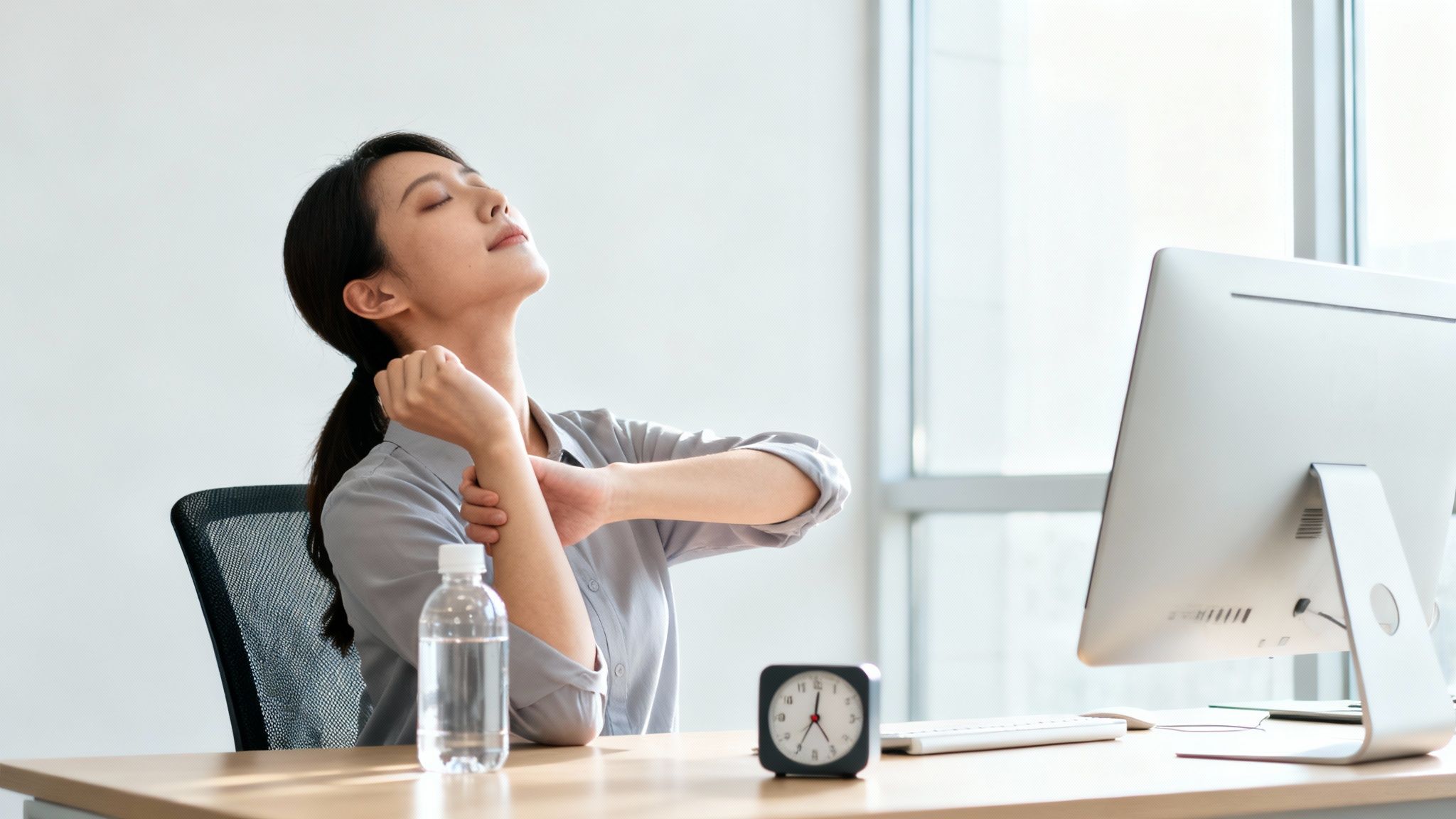
Most office-related musculoskeletal problems don't just appear out of nowhere. They’re the slow-burn result of poorly set-up workstations forcing the body into unnatural positions for eight hours a day. Knowing what to look for is your first line of defence.
Your main focus should be on the usual suspects of bad ergonomics:
- Monitor Height: Is your team member hunched over like a gargoyle or craning their neck up to see their screen? The top of the monitor should be at or just a fraction below eye level.
- Chair Support: Does the chair actually support their lower back, or is there a gap? Their feet should be flat on the floor, with their thighs roughly parallel to the ground.
- Keyboard and Mouse Placement: Look at their wrists. Are they bent at a weird angle? Wrists should be straight, with elbows bent at a comfortable 90-degree angle, tucked in close to the body.
The most powerful tool you have is creating a culture where people feel safe enough to mention a little niggle or discomfort early on. An assessment should feel like a supportive chat, not an interrogation. This proactive conversation is your secret weapon for preventing injuries.
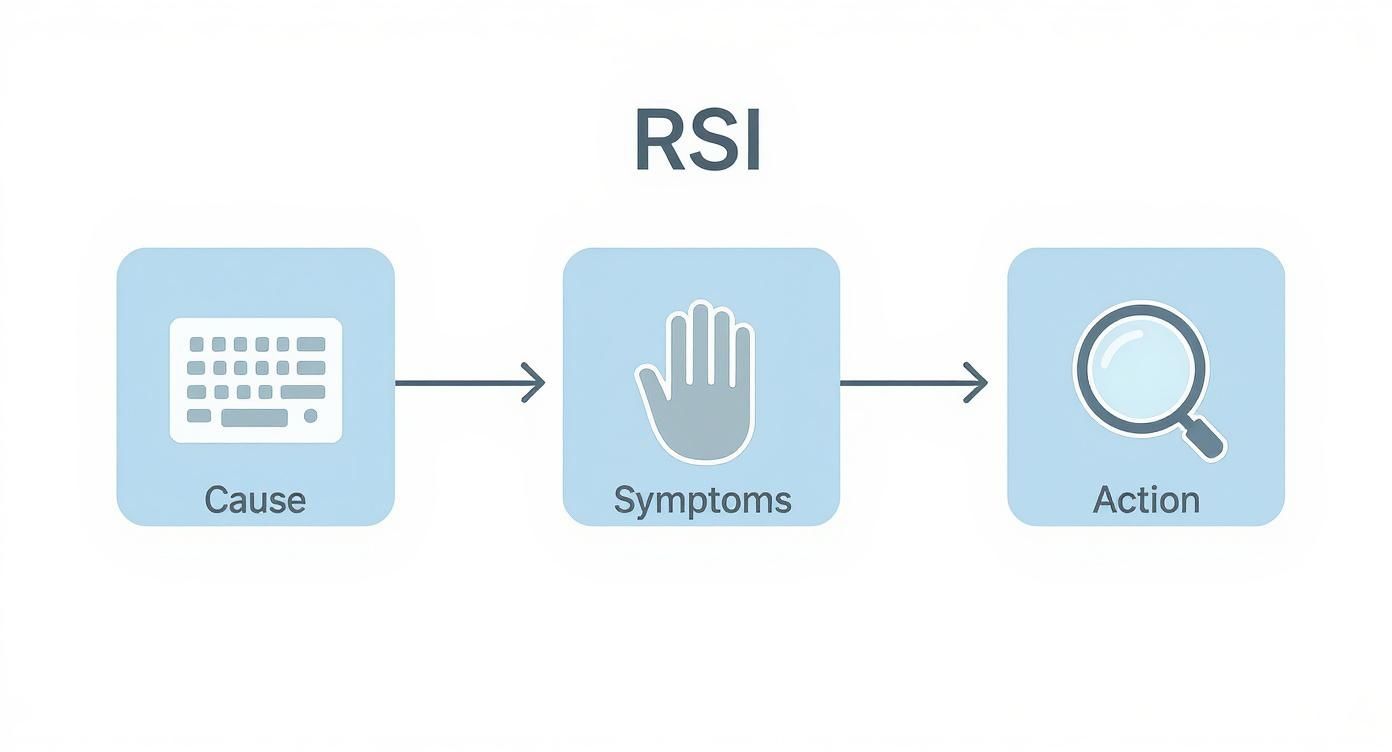
When an injury does happen, the fallout goes way beyond the individual employee. It creates ripples that affect the entire organisation’s financial health, team morale, and even its public reputation.
This diagram shows how quickly the damage can cascade.
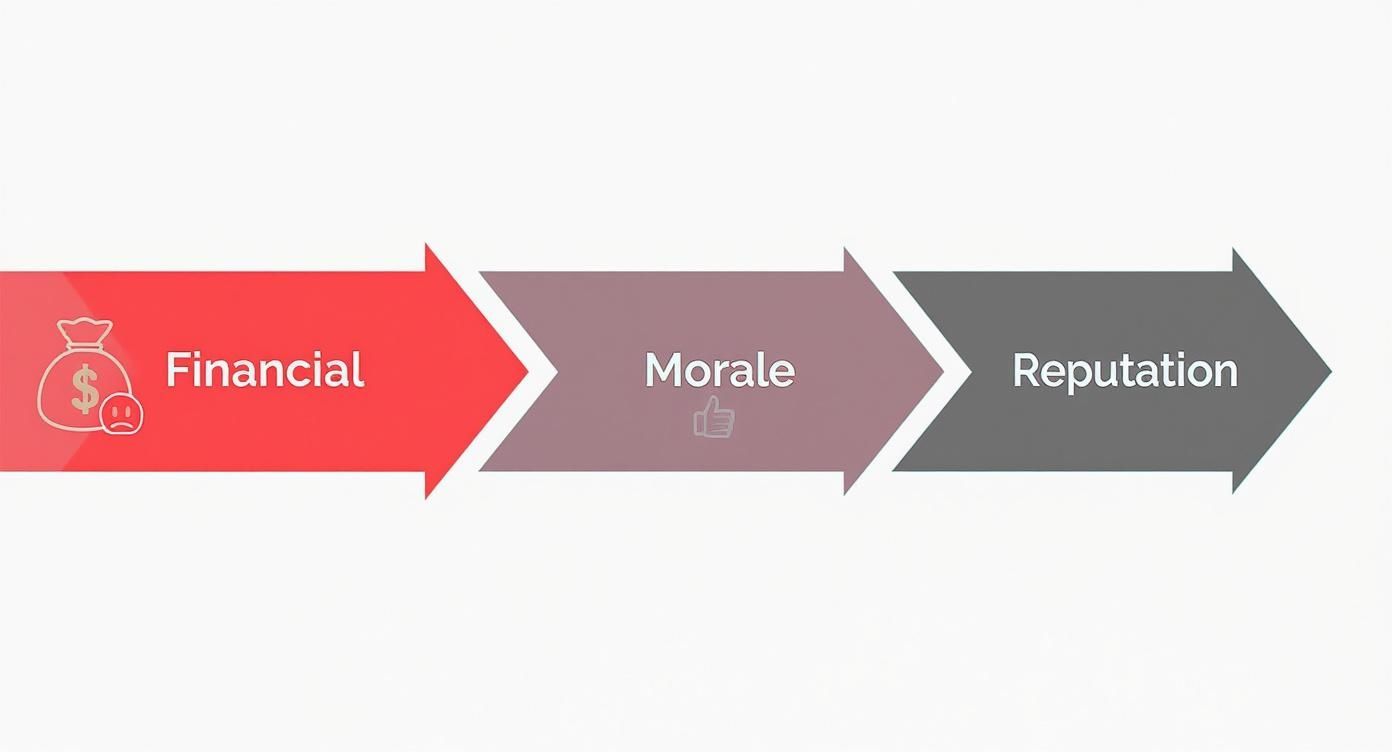
It starts with direct financial costs, which then eat away at team morale, and ultimately tarnish the company's reputation. This makes prevention a critical business function, not just an HR task.
Conducting Simple and Effective Assessments
You really don't need to be a certified ergonomics expert to make a huge difference. A simple, structured observation can tell you almost everything you need to know about what an individual needs. This process empowers you to make your workplace a safer, more responsive space.
Here's a practical checklist to get you started:
- Observe From a Distance First: Before you dive in, just watch how someone works naturally when they don't feel like they're being watched. Notice their posture, how often they fidget or stretch, and if they look generally comfortable.
- Start a Conversation: Kick things off with open-ended questions. Try something like, "How are you feeling at your desk by the end of the day?" or "Is there anything about your setup that feels a bit awkward?"
- Review the 'Big Three': Go through the monitor, chair, and keyboard/mouse setup with them. Make small adjustments on the spot where you can—even using a stack of books to raise a monitor is a great temporary fix.
- Document and Follow Up: Keep a quick, simple record of what you saw and the changes you made. Then, crucially, check in with them a week later to see if the adjustments actually helped.
This hands-on approach does more than just fix a wonky chair; it shows your team you are genuinely invested in their wellbeing. It turns "safety" from a static policy into an ongoing, collaborative effort. Repetitive strain, in particular, often stems directly from these minor, unaddressed ergonomic issues. To get a much deeper insight into this specific risk, you can learn more about how to prevent repetitive strain injury in our detailed guide.
By actively engaging with your people and their physical workspace, you build a foundation of trust and create an environment where small problems get fixed long before they become big ones.
Making Massage a Cornerstone of Your Wellness Strategy
Policies and ergonomic checklists are your foundation, but a truly injury-proof culture is built on daily habits and genuine support. This is where you go beyond just preventing problems and start actively promoting wellbeing. Bringing therapeutic massage into your company’s routine isn’t just a nice-to-have perk; it's a smart strategy for tackling the physical and mental strains that lead to injuries in the first place.
A strong wellness culture makes employee health visible and accessible. When your team sees massage chairs set up in the break room or gets reminders about remedial therapy benefits, it sends a clear message: their health is a priority. It normalises self-care and gives people the nudge they need to address small aches before they spiral into chronic conditions that mean time off work.
This section is all about making massage a cornerstone of your injury prevention plan. Let's look at some practical ways to roll out programs that are effective, convenient, and genuinely valued by your entire team.
The Immediate Impact of On-Site Seated Massage
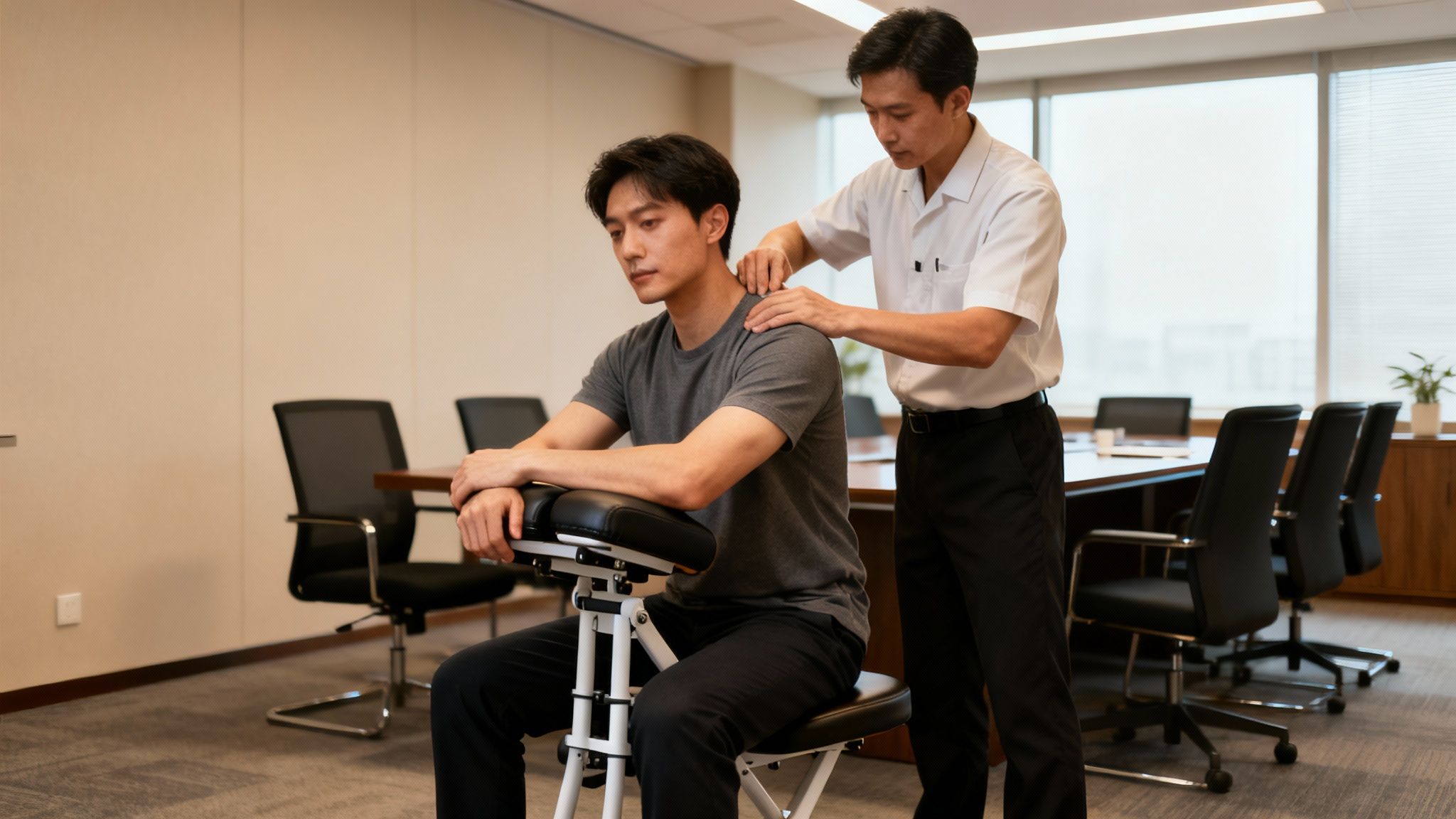
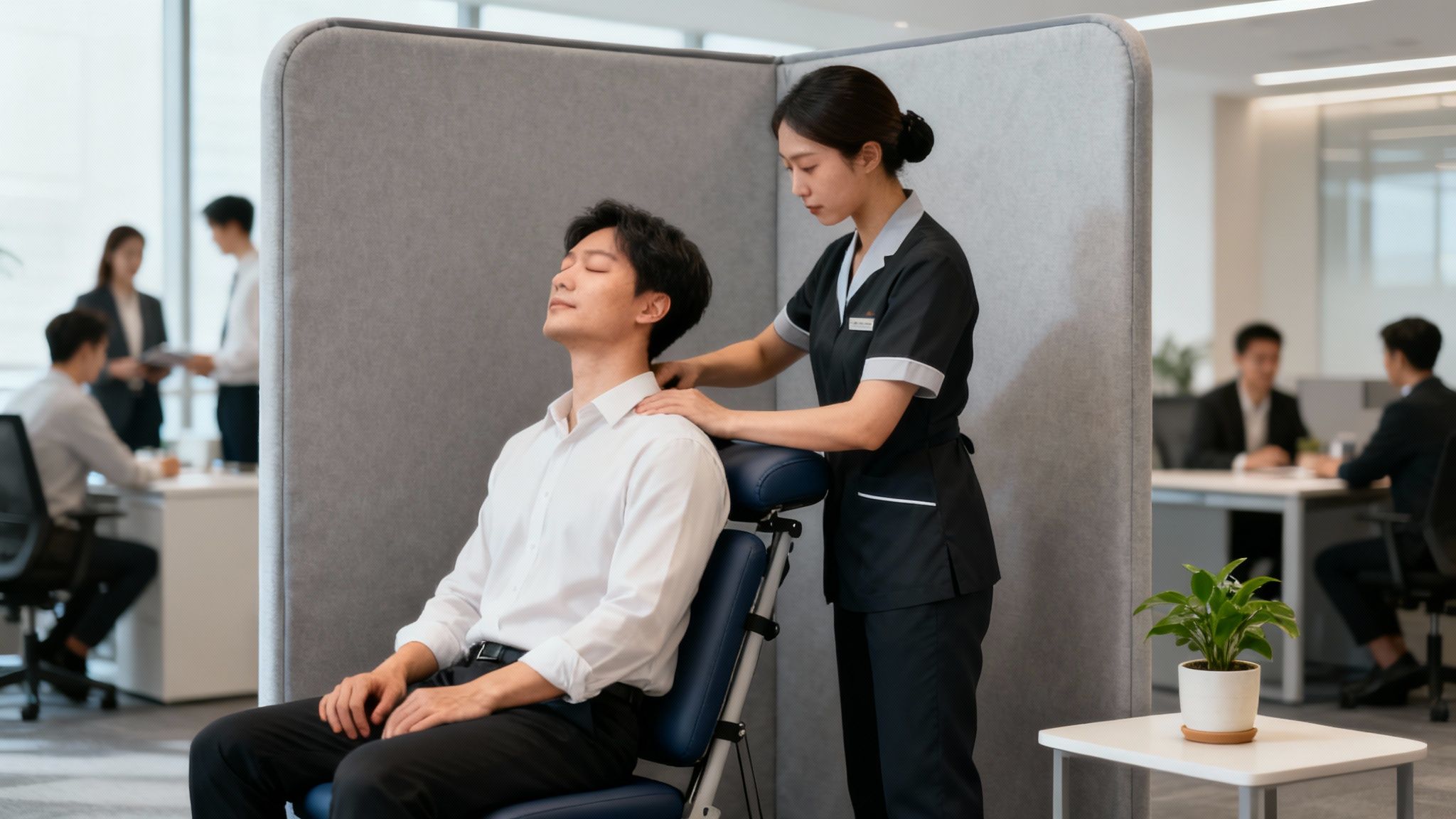
For most Australian offices, the easiest and most effective way to dive into corporate wellness is with on-site seated chair massage. This isn’t just about feeling good; it’s a direct hit against the usual suspects of office strain: a tight neck, hunched shoulders, and an aching back.
These are short, sharp sessions, usually around 15-20 minutes, done right over clothing, making them ridiculously easy to slot into a busy day. There's no major disruption, no one has to leave the building, and the immediate drop in stress levels is something you can practically feel in the air. A skilled therapist can quickly work through the key tension points that build up from hours at a desk, boosting circulation and releasing muscle tightness on the spot.
By bringing the service directly to your people, you remove every single barrier. It becomes a visible, appreciated part of the work week that helps break up long stretches of sitting and resets both mental and physical fatigue. It's a fantastic tool for stopping the slow creep of musculoskeletal stress that so often ends in an injury claim. You can learn more about why chair massage therapy is a convenient workplace wellness solution in our dedicated article.
Going Deeper with Remedial Therapy
While seated massage is brilliant for maintenance and busting stress, some of your team will have more specific or nagging issues that need a more clinical eye. This is where remedial massage becomes a vital part of a complete wellness program.
Remedial massage is a targeted treatment that assesses and addresses specific musculoskeletal problems. It's the perfect solution for staff dealing with chronic lower back pain, recurring tension headaches, or the early signs of a repetitive strain injury (RSI). A qualified therapist uses a whole range of techniques to find and help repair damaged tissues, restoring normal function and easing pain.
Integrating remedial therapy shows a serious commitment to individual employee health. It gives people a path to get expert help for those niggling issues that could otherwise become serious, long-term injuries, directly supporting your goal of preventing workplace injuries.
You can offer this in a few ways:
- On-Site Clinics: Set aside a private room for a remedial therapist to visit on a regular schedule, say, once a month.
- Wellness Stipends: Give employees a budget to use for approved remedial massage therapists near where they live.
- Partnership Programs: Team up with a trusted provider who has a network of clinics across Sydney, Melbourne, or Brisbane.
This kind of flexibility ensures everyone, including your remote workers, can get the specific care they need to stay healthy, productive, and pain-free.
Flexible Wellness for a Modern Workforce
Today’s workplace isn't just one building anymore. Your team could be working from home, flying for business, or even attending a corporate event out on the harbour. A truly effective wellness strategy has to be adaptable enough to meet them wherever they are.
This modern approach shows that your commitment to preventing workplace injuries goes far beyond the office walls. It recognises the different realities of your team's work lives and provides support that actually fits their situation. True wellness is about providing high-quality care that is also incredibly convenient.
Here’s how you can extend your program to every corner of your business:
- At Home: For remote staff, offering a wellness stipend or partnering with a mobile massage service lets them book treatments on their own terms. This is crucial for tackling the unique ergonomic challenges that pop up in home office setups.
- In a Hotel Room: Travelling execs and sales teams are especially prone to stress and physical strain. Arranging for a professional therapist to provide an in-room massage helps them decompress, recover from the journey, and stay sharp.
- On a Yacht: For corporate retreats, team-building events, or entertaining clients on a yacht, having a massage therapist on board is an exceptional touch. It’s a unique way to reward your team and promote relaxation in a memorable setting, reinforcing your company's dedication to a premium wellness culture.
By thinking creatively about how you deliver these services, you make sure no one gets left out. This inclusive approach strengthens your culture and turns your wellness program into a genuinely valuable benefit for every single employee.
Enhancing Resilience with Corporate Yoga and Pilates
Massage therapy is brilliant for tackling muscle tension and helping the body recover, but a truly bulletproof injury prevention strategy needs to be proactive, not just reactive. While massage helps repair existing aches and pains, structured movement builds the physical resilience needed to stop them from happening in the first place.
This is exactly where corporate yoga and Pilates come in. They are powerful additions to your wellness program, creating a complete cycle of care.
Building a Stronger Defence Against Injury
Think of poor posture as the gateway to most office-related injuries. All those hours spent hunched over a keyboard weaken core muscles, tighten the hips, and round the shoulders, setting the stage for pain. Yoga and Pilates directly attack this problem by rebuilding foundational strength and improving body awareness.
Pilates, for instance, is phenomenal for developing deep core strength. I'm not talking about building a six-pack; this is about firing up the small, stabilising muscles around the spine. It creates a natural corset of support that shields the lower back from strain.
Yoga is the perfect partner to this, focusing on improving flexibility and balance. Gentle, guided stretches help release tension in those chronically tight spots like the hamstrings and shoulders—areas that can pull the body out of alignment and cause pain elsewhere.
By improving core stability and functional flexibility, you're essentially giving your employees a physical toolkit to better withstand the daily demands of their jobs. It’s a direct investment in their long-term physical health and a smart move for preventing workplace injuries.
Making Yoga and Pilates Accessible
The key here is convenience. Just like your seated massage program, these practices need to be ridiculously easy for your team to access. People are busy, so if it's not simple, it won't happen.
Fortunately, there are a few great ways to bring yoga and Pilates into your workplace culture.
Here are a few models I've seen work really well:
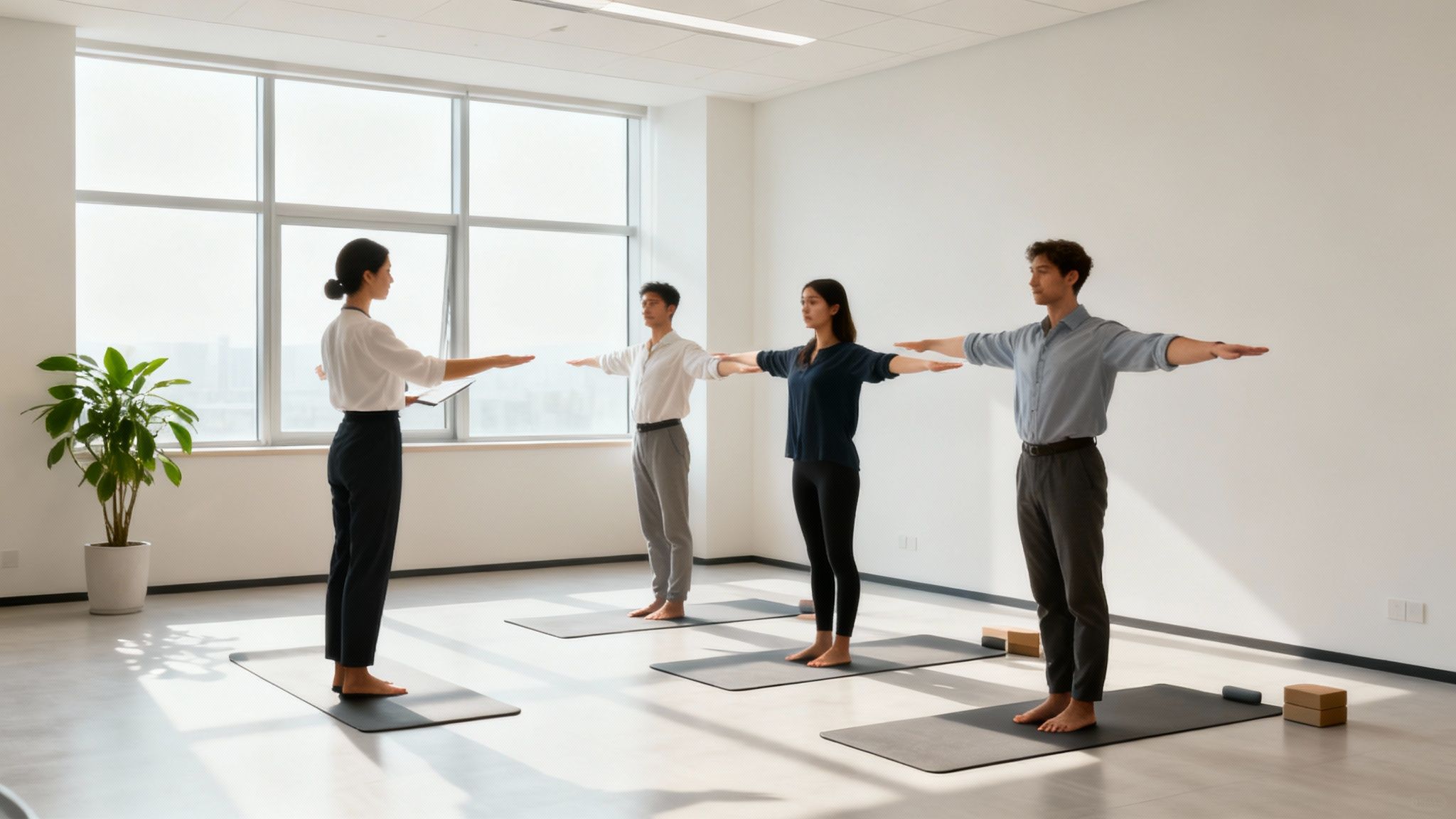
- On-Site Mat Classes: This is the most popular option for a reason. You bring a qualified Australian instructor into the office for a weekly class—think a 45-minute session at lunchtime or just after work in a spare boardroom.
- Virtual Live Sessions: Perfect for remote or hybrid teams. Live-streamed classes are a fantastic way to keep everyone connected, ensuring staff working from home in Brisbane or Melbourne feel just as included as those in the Sydney head office.
- On-Demand Content: Partner with a provider who offers a library of pre-recorded yoga and Pilates sessions. This gives your team the freedom to squeeze in a quick 15-minute stretch or a full class whenever their schedule allows.
This multi-pronged approach means that no matter where an employee is or how packed their calendar is, they have a way to participate.
From Proactive Movement to Lasting Wellness
A truly holistic wellness program addresses both the symptoms and the root causes of workplace strain. And while Australia has made great strides in reducing serious incidents—the fatality rate dropped by 24% over a decade to 1.3 deaths per 100,000 workers—the focus must now expand to preventing those chronic, non-fatal injuries that chip away at productivity and well-being. To get a better sense of the current landscape, you can explore more about recent Australian work health and safety statistics.
When you combine the restorative benefits of massage with the strengthening power of yoga and Pilates, you create a formidable defence. It’s a strategy that not only helps in preventing workplace injuries but also boosts energy, improves focus, and sends a clear message to your team that you are genuinely invested in their overall well-being.
How to Measure Your Program's Real Impact
To keep your wellness initiatives thriving, you need to show they’re actually working. Let's be honest, justifying the budget for things like corporate massage or yoga means going beyond simply counting injury claims. A genuine measure of success is about telling a compelling story with data—showing leadership how these programs are building a healthier, more productive, and resilient team.
This isn’t about getting lost in complex analytics. It’s about tracking the right things. The subtle but powerful shifts in your workplace culture and employee well-being that really matter. By focusing on a few key metrics, you can clearly demonstrate the return on your investment in preventing workplace injuries.
Moving Beyond Injury Claims
While a drop in formal injury claims is the ultimate prize, it’s what we call a lagging indicator. It can take months, sometimes even years, for that number to show a significant change. To prove your program is working now, you need to focus on the leading indicators—the metrics that predict a healthier future for your workplace.
These are the numbers that reveal the day-to-day impact of your wellness efforts:
- Employee Morale and Engagement: Are people happier and more connected? You can track this over time with simple, anonymous pulse surveys.
- Absenteeism Rates: Keep an eye on unplanned absences. A drop in "sickies," especially for those minor aches and pains, is a strong sign that your programs are making a real difference.
- Participation Rates: How many people are actually showing up for the massage, yoga, or Pilates sessions? High uptake is a powerful data point in itself.
By tracking these forward-looking KPIs, you're not just measuring outcomes; you're proving that your strategy is actively building a more positive and present workforce. It completely shifts the conversation from "How much did we spend?" to "Look at the value we're creating."
Collecting Meaningful Feedback
Numbers only ever tell part of the story. The qualitative feedback—the personal stories and comments from your team—is what really brings your data to life. This is where you uncover the real-world impact of your wellness initiatives.
The most effective feedback mechanisms are simple and direct. Think about setting up a short, optional survey that pops up after someone attends a wellness session. Keeping your finger on the pulse of employee sentiment can also help you shape future events, like designing effective R U OK? Day massage workshops that genuinely resonate with your team.
Ask a few open-ended questions to gather those rich insights:
- "How did the seated massage session affect your stress levels today?"
- "Have you noticed any changes in your posture or back pain since starting Pilates?"
- "What is one thing you've learned from the yoga classes that you use during your workday?"
This direct feedback provides powerful, human testimonials for your reports. A quote from an employee saying they no longer get afternoon tension headaches is far more persuasive than any statistic.
Creating Compelling Wellness Reports
Your final step is to pull all this information together into a clear, concise quarterly wellness report for the leadership team. The goal here is to present a narrative that connects your wellness activities directly to key business objectives like productivity and employee retention.
Structure your report to tell a clear story. Kick it off with an executive summary highlighting the key wins, then dive into the data. Use simple charts and graphs to visualise trends in things like absenteeism or survey scores. Most importantly, sprinkle in those powerful employee testimonials to add that crucial human element.
This report becomes your evidence. It’s the proof that your investment in massage, yoga, and other wellness services isn't just a perk—it's a core part of your strategy for preventing workplace injuries and building a high-performing team.
Your Questions Answered
When you're rolling out a wellness program aimed at preventing workplace injuries, questions are a good sign. It means your team is engaged and thinking through the details. Here are some of the most common queries we hear from managers and employees across Australia, along with straight-to-the-point answers to help you move forward.
How Can We Justify The Cost Of A Corporate Massage Program?
The key is to stop thinking of it as an expense and start seeing it as an investment in productivity and risk management. It's a strategic move, not just a perk.
Start by gathering the real numbers on what workplace injuries are currently costing your Australian business. Look at lost workdays, rising compensation claims, and even the subtle but damaging dip in team morale.
Then, put the modest cost of a preventative program like seated massage right next to those much larger figures. The comparison is usually pretty stark. To really drive the point home, talk about the immediate benefits your team will feel—things like reduced stress, sharper focus, and fewer of those daily aches and pains. If the budget is tight, propose a small-scale pilot program. Track simple metrics like self-reported stress levels or short-term absenteeism to show a tangible return before you ask for a bigger commitment.
Are Wellness Services Like Massage A Taxable Fringe Benefit In Australia?
This is a nuanced area, so your first port of call should always be your accountant. They'll give you advice tailored to your specific business.
Generally speaking, if services like massage or yoga are provided on your business premises with the clear goal of promoting employee health and preventing injury, they can often be exempt from Fringe Benefits Tax (FBT). This usually falls under the 'work-related preventative health care' exemption.
The context, however, is everything. Off-site services or programs that look purely recreational might be viewed differently by the ATO. The best way to stay on the right side of things is to clearly document your program's primary objective: preventing workplace injuries. This clarifies its work-related nature and strengthens your case for tax purposes.
What Is The Real Difference Between Seated Massage And Remedial Massage?
They both play a role in a solid wellness strategy, but they serve two very different needs. One is for maintenance, the other is for repair.
Seated Office Massage: Think of this as your proactive, preventative tool. It’s a quick 15-20 minute session done over clothes while the employee sits in a specially designed ergonomic massage chair. It hits all the high-tension spots like the neck, shoulders, and back, offering immediate stress relief and a mental reset during a busy workday.
Remedial Massage: This is a targeted, clinical treatment for a specific musculoskeletal issue or chronic pain. It's a longer session on a proper massage table where a qualified therapist assesses and treats an underlying problem.
In short, seated massage is about keeping your team feeling good and stopping problems before they start. Remedial massage is the targeted solution you bring in when a specific issue has already surfaced.
How Do We Include Our Remote And Traveling Staff In Our Wellness Program?
A truly effective wellness program has to be flexible enough to support everyone, no matter where they clock in from. Building an inclusive plan for preventing workplace injuries means thinking beyond the head office.
For your remote crew scattered across cities like Sydney or Melbourne, offering a wellness stipend is a fantastic option. They can use it for local services like remedial massage or yoga, and partnering with a national provider network in Australia can make this completely seamless.
For your executives on the road, arranging in-hotel massage services is a brilliant way to help them manage the physical toll and mental fatigue of travel. It helps them recover faster and stay sharp for those crucial meetings. Another great, location-independent option is providing easy access to high-quality virtual yoga or Pilates classes, ensuring every single team member feels valued and included in your company's commitment to their well-being.
At The Royal Masseur, we specialise in creating flexible corporate wellness programs that support your team wherever they work. From on-site seated massage in your office to in-home remedial therapy for remote staff, we help you build a culture of well-being that actively prevents injuries. Discover our corporate wellness solutions.