
Booking a Thai massage at home brings the ancient art of therapeutic stretching and acupressure right to your doorstep, cutting out the travel and weaving genuine wellness into your packed schedule. This is about transforming your personal space—whether it's your office for a midday reset, a hotel room while travelling, or even a yacht for the ultimate luxury—into a private sanctuary for deep relaxation and healing.
Why Mobile Thai Massage Is Transforming Australian Wellness

The concept of wellness in Australia is shifting. It’s no longer a luxury saved for a rare spa trip; proactive self-care is becoming an essential part of a productive life. The rise of mobile Thai massage directly addresses the realities of modern living, where time is a premium resource and convenience is paramount.
For busy professionals in the office, parents managing family life, or anyone needing to decompress, the traditional wellness model can feel out of reach. This is where the practicality of an in-home or on-location service truly excels.
The Ultimate Convenience for a Modern Lifestyle
Imagine this: no battling city traffic, no searching for parking, and no clinical waiting rooms. Instead, a qualified therapist arrives at your location—be it your home, office, or hotel—fully equipped to create a professional treatment space. This isn't just a time-saver; it’s an energy-saver, allowing you to focus entirely on the restorative experience.
The actionable benefits of bringing wellness to you are significant:
- Deep Relaxation in a Trusted Space: Being in a familiar environment like your home or a private office allows your nervous system to relax more quickly, enabling a deeper state of calm from the outset.
- Total Privacy and Control: You dictate the environment. The lighting, temperature, and choice of music (or silence) are all tailored to your preference, creating a truly personalised session.
- Seamless Integration: A massage can be scheduled during a work-from-home lunch break, booked for an evening at your hotel, or used as a restorative end to a long day on your yacht without disrupting your entire schedule.
This move toward convenience-based wellness is more than a trend. The mobile massage market is expanding across Australia, with strong networks in major hubs like Sydney and Melbourne. This growth is fuelled by consumer demand for practical solutions.
Considering many Australians spend significant time commuting, eliminating travel for a wellness appointment is a powerful efficiency hack. You can explore more on the benefits of mobile massage versus a traditional spa to see how this model provides tangible advantages.
By bringing therapy to your preferred location, a Thai massage at home, in the office, or at your hotel removes the logistical barriers that prevent consistent self-care. It’s a practical and effective way to manage stress, ease physical tension, and find genuine peace in a demanding world.
Setting the Scene for Your At Home Massage
An authentic Thai massage experience begins before the therapist arrives. The key is creating a sanctuary—a quiet bubble where your mind can switch off and your muscles can release tension. This preparation is crucial, whether you're clearing a space in your office for a professional visit or setting up in your living room.
Think of it as signalling to your body that it’s time to de-stress. A few simple, actionable tweaks can transform any room into a peaceful retreat, enhancing the therapeutic power of the massage.
Choosing and Preparing Your Space
First, find a room where you can have uninterrupted privacy. A living room, a quiet home office after hours, or a spacious hotel suite can be perfect. The most important requirement is ample floor space. Traditional Thai massage is performed on a mat, so you’ll need a clear area of at least 2 by 2.5 metres to accommodate the dynamic stretches and movements.
Once you have your space, focus on the surface. A hard floor is unsuitable, but an overly soft bed lacks the necessary stability.
- The Ideal Surface: A firm yoga mat is a good foundation. A futon mattress or a thick, folded blanket over a rug provides the perfect balance of comfort and support.
- Comfort Essentials: Have a couple of pillows and a light blanket on hand. Pillows offer excellent support under the knees or head, while a blanket is useful for staying warm as your body temperature can drop during deep relaxation.
Remember, the foundation of a great Thai massage at home is about function and simplicity. A quiet, clear, and comfortable floor space is the most critical element to arrange for yourself or your therapist.
Crafting the Perfect Ambience
With the physical space ready, it’s time to engage the other senses. These details elevate a simple massage into a restorative ritual.
Adjust the room temperature to be slightly warmer than usual, as you won't be moving. Dim bright overhead lights and use a soft lamp to create a calming glow.
Finally, consider sound. For some, a playlist of calming instrumental music or nature sounds works best. For others, pure, uninterrupted silence is the ultimate luxury. There is no right answer; choose what feels most relaxing for you.
Taking a few minutes for this setup creates an environment that amplifies the healing power of the massage, making your Thai massage at home a genuinely profound wellness experience.
Your At Home Thai Massage Preparation Checklist
Here’s an actionable checklist to ensure you have everything ready for a seamless and relaxing massage experience, whether you're hiring a professional or practising with a partner.
| Element | Professional Therapist Visit | DIY/Partner Massage | Pro Tip |
|---|---|---|---|
| Space | Clear a 2 x 2.5 metre area on the floor. | Clear a 2 x 2.5 metre area on the floor. | Choose a room with a door you can close to minimise interruptions. |
| Surface | Have a yoga mat or thick blanket ready. | Have a firm yoga mat, futon, or folded blanket ready. | A surface that's too soft (like a bed) won't provide the right support for Thai stretches. |
| Comfort | Provide a few pillows and a light blanket. | Have pillows and a blanket within easy reach. | Pillows are great for supporting the knees, neck, or lower back during certain positions. |
| Temperature | Set the room to a comfortable, slightly warm temp. | Make sure the room is warm enough to relax in without moving. | A slightly warmer room prevents you from feeling chilled as your body relaxes. |
| Lighting | Dim the lights or use a soft lamp. | Dim the lights or use a soft lamp. | Avoid harsh overhead lighting to help the eyes and mind rest. |
| Sound | Ask the therapist if they bring music, or have a quiet space. | Choose calming music or enjoy complete silence. | Let your partner know your sound preference beforehand to avoid distractions. |
| Clothing | Wear loose, comfortable clothing like yoga pants and a t-shirt. | Wear loose, comfortable clothing you can move freely in. | Stretchy, breathable fabrics work best. Avoid jeans or restrictive clothing. |
These small, actionable steps ensure that once the massage begins, your only task is to breathe, relax, and enjoy the full therapeutic benefits.
Mastering Simple Thai Massage Techniques with a Partner
Sharing the healing power of touch is an excellent way to connect with a partner. You don’t need extensive training to provide genuine relief and relaxation at home. Learning a few basic Thai massage techniques is simpler than you might imagine. The goal isn’t to replicate a professional treatment but to use simple, safe movements to help each other unwind.
The secret is to use your body weight for gentle, rhythmic pressure, rather than muscle strength. This makes the massage less tiring for the giver and more effective for the receiver. It becomes a collaborative practice that builds trust and communication while easing tension.
This visual guide shows the importance of environmental details. The right space, mood, and sound work together to create the perfect atmosphere.
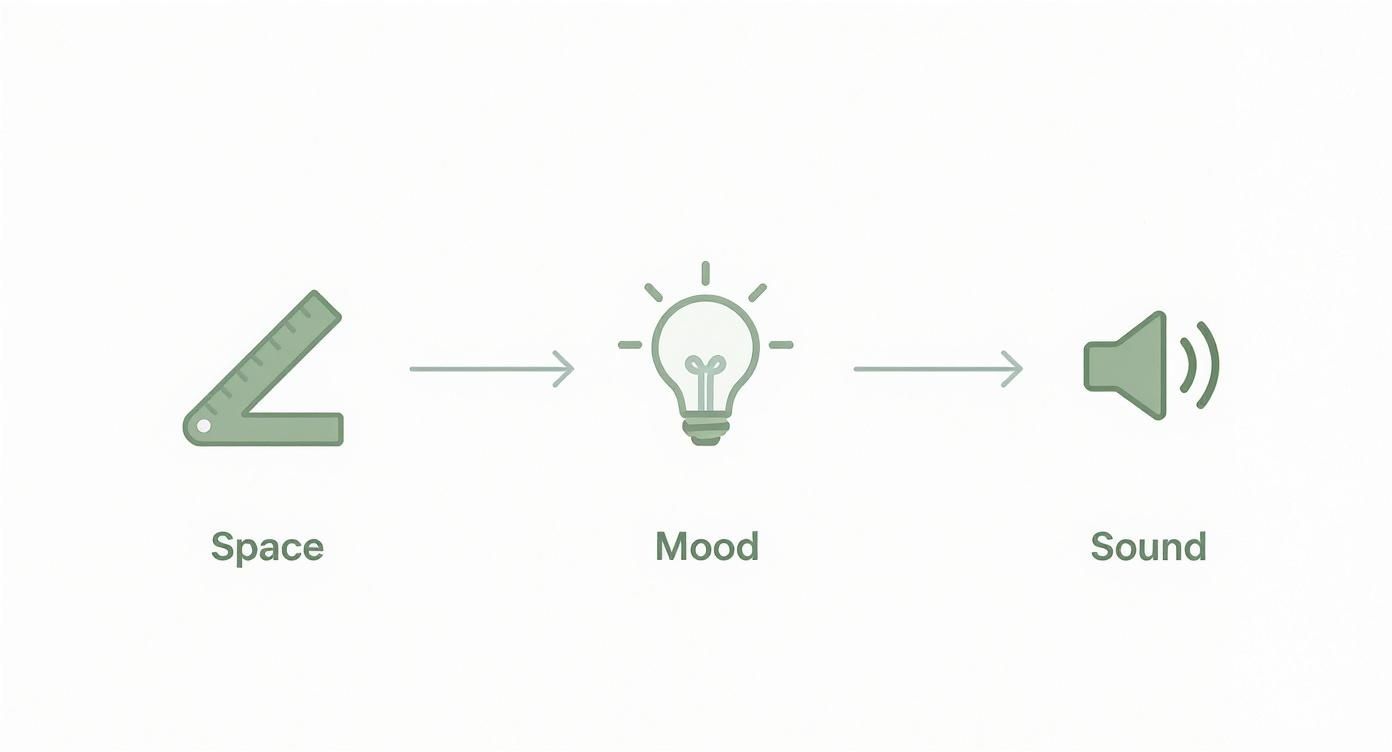
It highlights that a successful Thai massage at home starts with intentionally crafting a peaceful environment before any techniques are applied.
Foundational Moves Anyone Can Learn
First, have your partner lie comfortably on their back on a firm mat. Kneel beside them and take a few deep breaths together to sync up and settle into the moment. Always maintain open communication, checking in regularly about pressure and comfort.
A great starting point is the simple palm press.
- Place one hand over the other on your partner's thigh.
- Lean forward, using your body weight to apply slow, steady pressure. Focus on leaning, not pushing.
- Hold for three to five seconds, then release gently.
- "Walk" your hands up their leg in this manner, moving from the thigh towards the calf, avoiding the kneecap. This action warms the muscles and improves blood flow.
This technique can be used on the arms, back, and feet. The key is the slow, rhythmic application of pressure, which is very calming for the nervous system.
Remember, the goal is to create a space for relaxation and release, not to "fix" a problem. Your intention and gentle touch are your most powerful tools.
Simple Assisted Stretches for Shoulders and Back
Modern life, with its focus on screens, often leads to tight shoulders and aching backs. A few simple assisted stretches can provide incredible relief. For those seeking more targeted solutions, understanding professional approaches can be beneficial. You can learn more in our detailed guide to achieving neck and shoulder pain relief for deeper insights.
Here’s a safe and effective stretch to try together:
- Gentle Spinal Twist: Have your partner lie on their back with knees bent and feet flat on the floor. Gently guide both knees to one side, encouraging them to keep both shoulders flat on the mat. Hold for a slow count of ten, then return to the centre and repeat on the other side.
- Shoulder Opener: With your partner sitting cross-legged, kneel behind them. Place your hands on the front of their shoulders and gently draw them back to open up the chest. Hold for a few deep breaths, ensuring you're not pulling too hard.
Communication is non-negotiable. Thai massage can be intense, but it should never be sharply painful. Encourage your partner to speak up if the pressure is too much or a stretch feels uncomfortable. This feedback loop is essential for a safe and enjoyable experience for both of you.
Finding and Booking a Professional Mobile Massage Therapist
While practising with a partner is beneficial, there are times when the skill of a professionally trained therapist is needed for a truly therapeutic Thai massage at home. This is the best approach for addressing specific aches, chronic pain, and the deep-seated tension from modern life.
With many options available, especially in cities like Sydney and Melbourne, how do you find the right therapist? It's about knowing what to look for: qualifications, professionalism, and the right specialisation. This ensures you book a safe, effective, and deeply restorative experience.
Vetting Your Therapist for a Safe and Effective Session
Your peace of mind is paramount. When inviting a mobile massage therapist into your personal space, there are a few non-negotiables to verify. These credentials signify a professional committed to high standards of practice and client safety.
Before booking, ensure the therapist or their company can confirm the following:
- Formal Qualifications: Look for a Diploma of Remedial Massage or an equivalent certification from a recognised Australian institution. This demonstrates a thorough understanding of anatomy and physiology.
- Association Membership: Membership in a professional body like Massage & Myotherapy Australia (MMA) indicates adherence to a strict code of ethics and professional standards.
- Current Insurance: Always confirm that the therapist holds current public liability and professional indemnity insurance. This is a crucial safety measure for both you and them.
A reputable therapist will be transparent about their qualifications and insurance. If this information isn't easily found on their website, don't hesitate to ask directly before booking. Your comfort and safety are the top priorities.
What to Expect During a Professional Home Visit
Once booked, the experience should be seamless and discreet. A professional mobile therapist understands they are entering your private space—be it your home, office, hotel room, or yacht—and will act with the utmost respect.
They will arrive with all necessary equipment, including a high-quality floor mat, fresh linens, and any bolsters or pillows needed for proper support. Their setup is quick and quiet, transforming your chosen space into a professional treatment area in minutes.
The session will begin with a brief consultation. This is your opportunity to discuss any issues, such as lower back tightness from sitting or shoulder tension from stress. Good communication allows the therapist to tailor the session to your specific needs. They will check in about pressure throughout the massage to ensure the intensity is right for you.
With a strong professional infrastructure in Australia, finding a qualified practitioner is straightforward. Thai massage is a sought-after specialty. New South Wales has 525 therapists, Victoria has 351, and Queensland has 196. As shown by data on Thai massage therapists in Australia, there is a significant, formally recognised workforce available.
Ultimately, the right choice is someone who meets professional standards and aligns with your wellness goals. For a deeper dive, our guide on how to find the right mobile massage therapist for your needs offers more practical tips. A little research upfront ensures you can book with confidence and receive the full benefits of a professional treatment.
The Unique Physical and Mental Benefits of Thai Massage
What makes a Thai massage at home feel so different from a standard massage? It’s the dynamic, whole-body approach that offers benefits beyond simple muscle relaxation. This isn’t a passive experience; it's an active, energising therapy that directly addresses the challenges of a modern, often sedentary lifestyle.
The unique combination of rhythmic acupressure, assisted yoga-like stretches, and gentle compression works on multiple levels. This method doesn't just knead sore muscles; it works systematically to unblock energy pathways, lengthen tight fascia, and create a sense of spaciousness in the body that lasts long after the session.
Releasing Modern-Day Tension
Consider your daily routine: hours hunched over a laptop in the office, constant phone use, or long commutes. These activities create specific patterns of tension. Thai massage is designed to counteract these modern ailments.
The deep, methodical stretches are particularly effective for issues like 'tech neck' and lower back pain from prolonged sitting. By mobilising the hips, elongating the spine, and opening the chest and shoulders, the massage helps restore natural posture and ease chronic stiffness. This not only relieves pain but also boosts energy by improving blood flow and releasing physical restrictions. For other ways to support your body's systems, check our guide on how to improve circulation naturally.
This active approach is why many people feel both deeply relaxed and invigorated after a session. It’s a complete reset for your body's physical structure and energy flow, leaving you feeling lighter, more flexible, and mentally clearer.
A Powerful Tool for Mental Clarity
The benefits are as much mental as they are physical. The rhythmic, meditative nature of the massage fosters a state of mindfulness, pulling your focus away from endless to-do lists and grounding you in the present. This focused attention helps quiet a busy mind, reduce stress, and promote a profound sense of calm.
This is particularly relevant for busy Australians, especially women balancing demanding careers and family life. Effective stress management has made practices like Thai massage a vital part of their wellness routine. Research shows that among mid-aged and older Australian women, 7.7% consulted a massage therapist in the last year. It’s not surprising that women represent 61.19% of the global market share for massage services in 2023.
This trend reflects a growing recognition of massage as a crucial tool for managing the physical and mental demands of a busy life. You can discover more about these findings on women's health and massage therapy.
Your At-Home Thai Massage Questions, Answered
Bringing the Thai massage experience into your own space for the first time can bring up a few practical questions. Sorting out the details beforehand is key to ensuring your session is seamless, comfortable, and tailored to your needs.
Here are straightforward answers to the most frequently asked questions.
What Should I Wear for a Thai Massage at Home?
For a traditional Thai massage, you remain fully clothed. The best attire is loose, comfortable clothing that allows for a full range of motion—similar to what you would wear for yoga or Pilates.
Lightweight tracksuit pants, leggings, or loose-fitting trousers and a t-shirt are ideal. Avoid restrictive clothing like jeans or items with belts, zips, and buckles. Your therapist needs to be able to move your limbs freely to guide you through the assisted stretches central to the practice.
Do I Need My Own Massage Table?
No, you do not. In fact, a massage table is not used in authentic Thai massage. This traditional therapy is always performed on a firm, padded mat on the floor.
When you book a professional mobile therapist, they arrive with all necessary equipment. This includes a high-quality, comfortable floor mat and any bolsters or pillows required for extra support. Your only responsibility is to ensure there is enough clear floor space for them to set up, typically around 2 metres by 2.5 metres.
Is Thai Massage Painful?
Thai massage is often described as intense, but it should never be outright painful. You will feel deep pressure and significant stretching, which can create a strong sensation in tight areas. Many clients refer to this as a "good pain" because it is accompanied by a powerful feeling of release.
Open communication is crucial. If any movement or pressure feels sharp or excessive, you must inform your therapist immediately. A skilled practitioner will adjust their technique to work within your comfort zone. Tensing up in pain is counterproductive to the goals of the session.
Certain health factors should also be considered. Thai massage is not recommended for individuals with serious heart conditions, recent surgeries, or severe osteoporosis. Always disclose your full health history before the session begins.
How Is a Mobile Massage in a Hotel or on a Yacht Different?
While the quality and technique of the massage remain the same, the logistics for unique locations like a hotel room or yacht differ slightly. For a hotel visit, you may need to arrange access for the therapist with the concierge or meet them in the lobby.
On a yacht, the primary considerations are space and stability. The therapist will require a flat, stable area to work, so scheduling the session while docked or in calm waters is essential for safety and comfort. Experienced mobile therapists are adept at discretion and skilled in adapting to these exclusive environments to provide a five-star experience, wherever you are.
Ready to experience the ultimate in convenience and relaxation? The Royal Masseur brings expert Thai massage and a full suite of wellness services directly to your home, office, or hotel. Book your session today at https://theroyalmasseur.com.au and discover a new level of wellbeing.