Finding the best massage for lower back pain really comes down to what your body is telling you. While both Remedial and Deep Tissue massages are brilliant for tackling that stubborn, chronic tension, the right choice depends on your situation. Is your pain from sitting all day, a sudden injury, or just general stress? This guide offers actionable insights to help you find effective relief, whether you're at home, in the office, staying in a hotel, or even on a yacht.
Choosing the Right Massage for Your Lower Back Pain
Lower back pain is a frustratingly common problem that can completely throw off your productivity and daily life. For busy professionals, getting effective relief that actually fits into a packed schedule is the goal. The good news is that targeted massage therapy is a powerful, non-invasive solution that does more than just offer a temporary fix—it supports your long-term muscle and joint health.
First, you need to get to the root of your discomfort. Is it a dull, persistent ache from long hours hunched over a desk? Or is it a sharp, specific pain from that weekend sports injury? Each scenario calls for a different therapeutic approach.
Why Your Location Matters for Wellness
The setting of your massage plays a surprisingly big role in its effectiveness. The aim is to minimise stress and maximise relaxation, which is why modern wellness is about bringing therapy directly to you. This is a game-changer for a few key situations:
- In the Office: Corporate massage directly addresses the postural strain and mental fatigue that build up during the workday, making it an incredibly efficient wellness tool.
- At Home: An at-home session cuts out travel, allowing you to relax completely in your own comfortable space without facing traffic afterwards.
- In a Hotel Room: For travellers, an in-room massage is the perfect way to recover from a long flight or prepare for a big meeting, right where you are.
- On a Yacht: Even in luxurious or remote settings, mobile massage ensures you can access premium therapeutic care without any interruption to your downtime.
This convenient, modern approach makes consistent wellness not just possible, but achievable. Here in Australia, where lower back pain affects approximately 4 million people, having accessible care is vital. In fact, estimates suggest a staggering 70% to 90% of Australians will experience it at some point, making it a leading cause of disability and lost work productivity.
The most effective wellness strategy is one that integrates seamlessly into your life. By bringing expert massage therapy to your preferred location, you remove barriers to consistent care and create an environment for genuine recovery.
Choosing the right type of massage is just as important as where you have it. A Remedial Massage therapist, for example, will assess and treat the underlying cause of your pain. On the other hand, a Deep Tissue massage focuses purely on releasing severe tension trapped in those deeper layers of muscle. To get a better handle on this powerful technique, check out our detailed guide on what is deep tissue massage. This foundational knowledge will help you make an informed decision for lasting relief.
Comparing Top Massage Techniques for Back Pain
When you’re dealing with a sore lower back, picking the right type of massage can feel like a huge decision. Get it wrong, and you might get some fleeting relief. Get it right, and you could be on the path to feeling genuinely better for the long haul. Understanding what makes each style different is the first step to getting the targeted care your back is crying out for.
Every massage technique has a specific job. Some are designed to help you switch off and relax, while others get right in there to break down deep, stubborn knots or treat the root cause of an injury. By looking at their pressure, goals, and who they’re best for, you can make a smart choice that actually matches your pain.
Before we dive in, it helps to know what’s causing the ache in the first place.
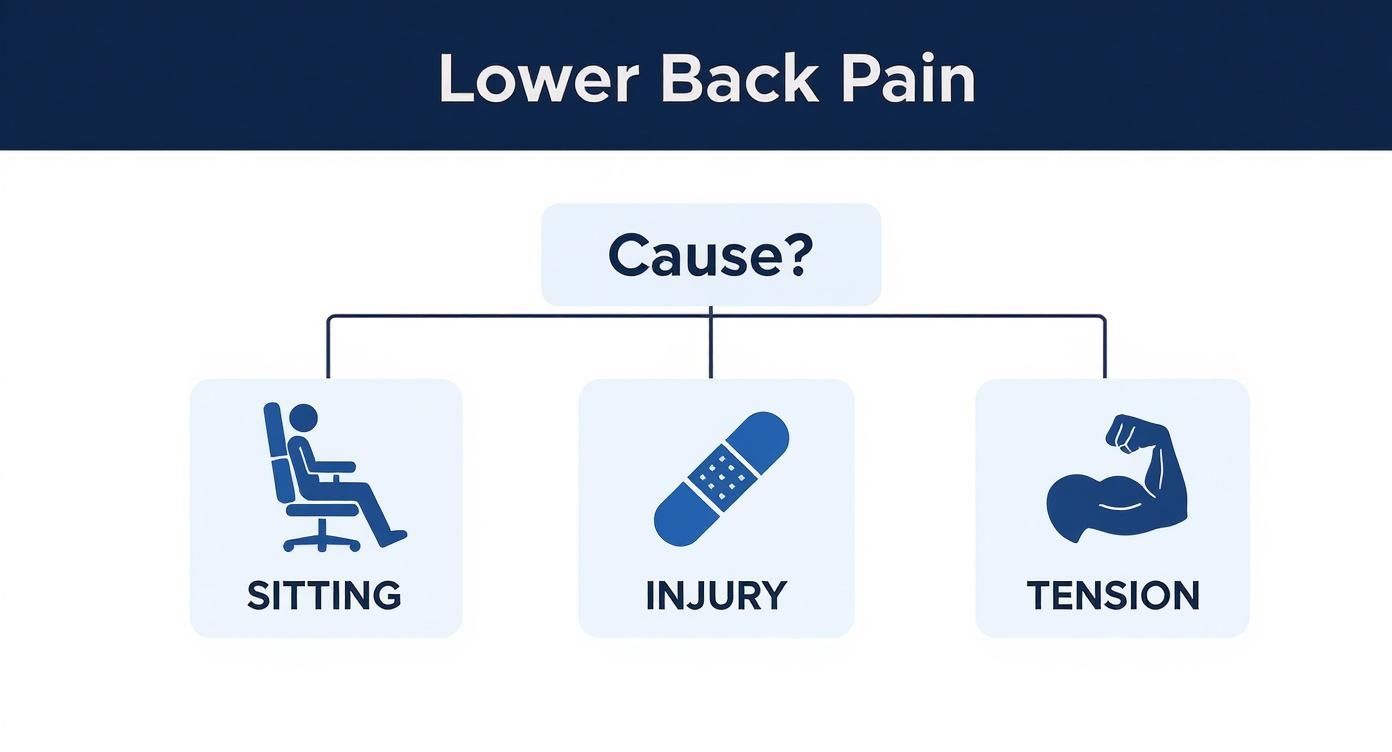
As you can see, things like being stuck at a desk all day, a sudden injury, or just built-up muscle tension are the usual suspects. Each one needs a slightly different approach to fix.
Swedish Massage: A Gentle Introduction
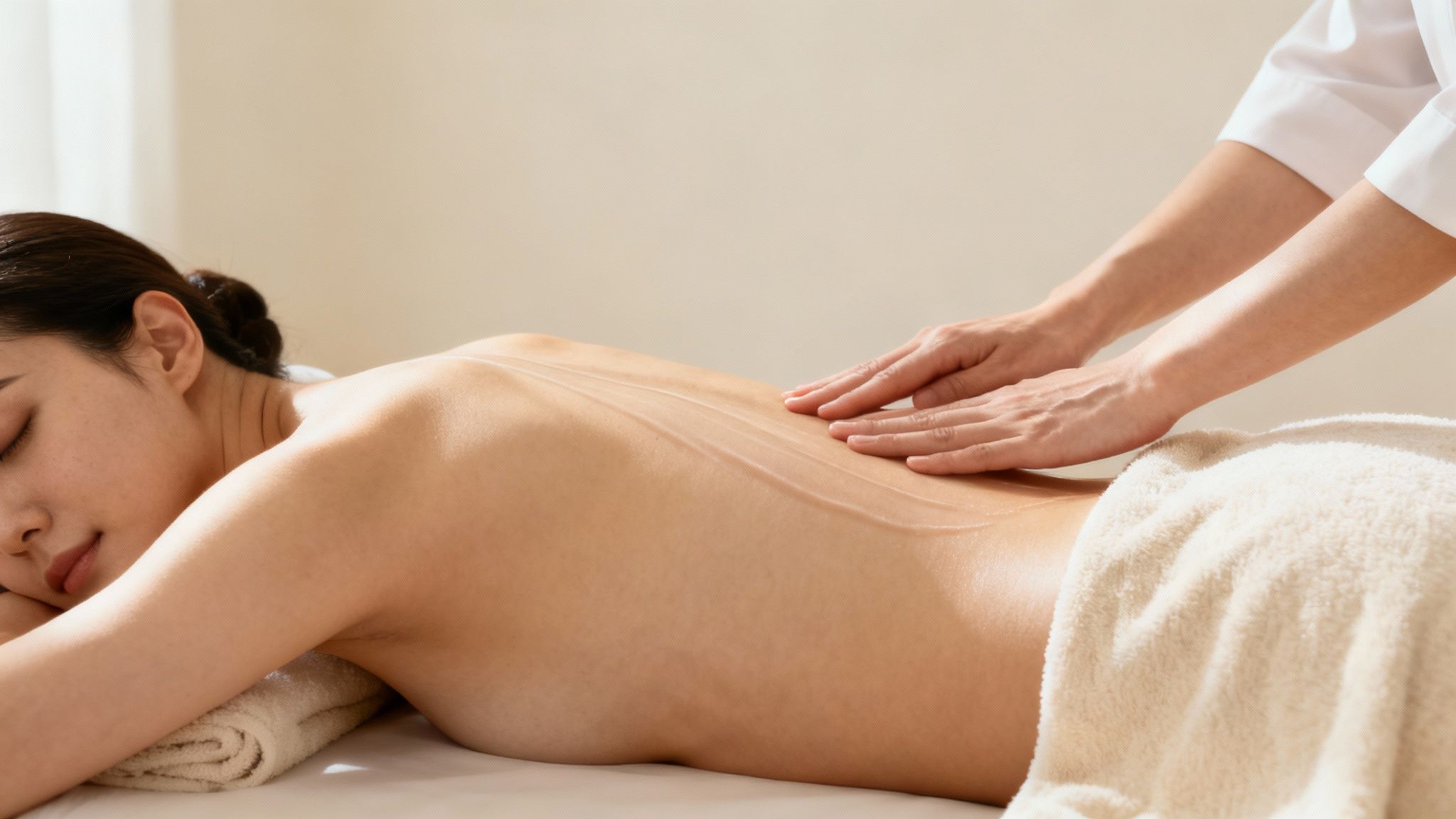
Swedish massage is what most people picture when they think of a classic massage. It’s all about long, flowing strokes, kneading, and gentle circular movements that help you relax and get your circulation moving. It’s the perfect entry point if you’re new to massage or if your main goal is to de-stress rather than tackle intense muscle pain.
If your back pain feels like a direct result of a hectic week at work or just feeling generally worn out, a Swedish massage can work wonders. By calming your nervous system, it encourages your muscles to let go of the tension they’ve been subconsciously holding onto.
Deep Tissue Massage: Targeting Chronic Tension
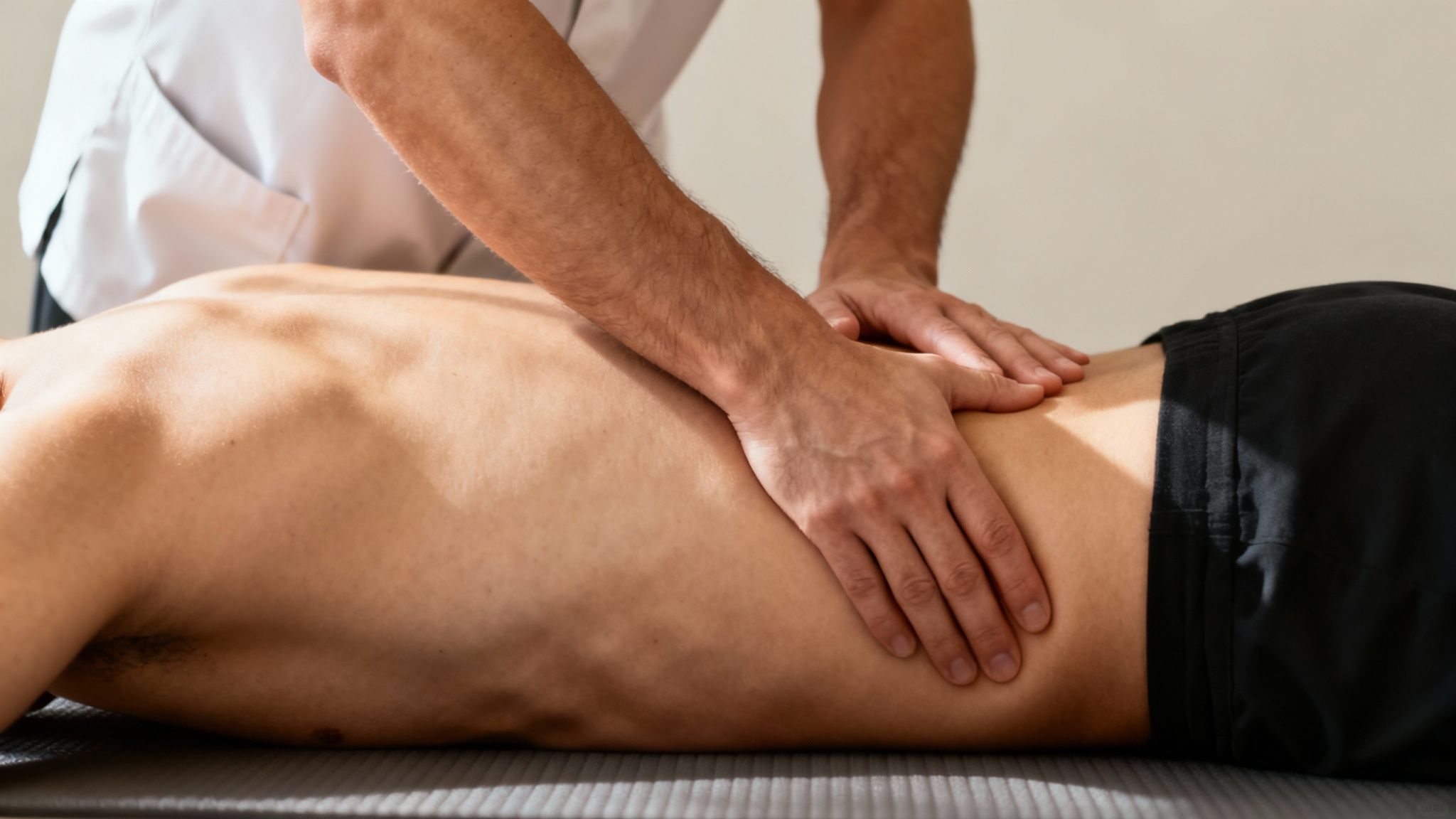
Deep Tissue massage takes things up a notch. Using firm pressure and slow, deliberate strokes, your therapist targets the deeper layers of muscle and the connective tissue around them. This technique is specifically designed for chronic aches and pains, a stiff neck, upper back tightness, and sore shoulders that just won't quit.
A common myth is that deep tissue massage has to hurt to be effective. A skilled therapist works with your pain threshold to release tension, not create more. Good communication during your session is everything.
This is the go-to for anyone who spends hours hunched over a desk, which often leads to deep-seated knots in the lower back and shoulders. It works to undo those patterns of tension that have built up over time.
Remedial Massage: A Clinical Approach
Remedial massage is less about general relaxation and more about a targeted, therapeutic fix. It’s a systematic approach where a therapist assesses and treats muscles, tendons, ligaments, and connective tissues that are damaged, knotted, or immobile. They use a whole range of techniques to find and help repair the damage, supporting your body's natural healing process.
For those battling persistent lower back pain, understanding the benefits of remedial massage therapy is a game-changer. This style often provides a real path to long-term recovery, not just a temporary break from the pain. It’s no surprise it’s a popular choice for Aussies seeking effective treatment; in fact, lower back pain is the most common reason people seek massage therapy in Australia.
Sports Massage: For Active Lifestyles
Don't let the name fool you; sports massage isn't just for pro athletes. It's incredibly beneficial for anyone who is regularly active. This technique zeroes in on the specific muscle groups used in your sport or activity. It can be used to prep your body for peak performance, cut down on fatigue, and relieve muscle swelling and tension after you’ve pushed yourself.
So, if your lower back is screaming after a weekend game of footy or a longer-than-usual run, a sports massage can target those strained muscles directly. It will help improve your flexibility and seriously speed up your recovery time, getting you back to the activities you love, sooner.
At-a-Glance Massage Comparison for Lower Back Pain
Feeling a bit overwhelmed by the options? Use this quick reference guide to compare the key characteristics of these four popular massage types and find the right one for your back pain.
| Massage Type | Best For | Pressure Level | Primary Goal |
|---|---|---|---|
| Swedish Massage | General relaxation, stress reduction, and easing mild muscle tension. | Light to Medium | To relax the entire body and improve blood flow. |
| Deep Tissue Massage | Chronic muscle pain, postural problems, and significant tension knots. | Firm to Deep | To break down adhesions (knots) and restore normal movement. |
| Remedial Massage | Specific injuries, chronic pain conditions, and postural correction. | Varies (Light to Deep) | To treat a specific problem or injury and restore function. |
| Sports Massage | Athletes, active individuals, injury prevention, and post-event recovery. | Varies (Can be Deep) | To enhance performance and treat sports-related injuries. |
Ultimately, the best massage is the one that aligns with your specific symptoms and lifestyle. Whether you need the gentle touch of a Swedish massage or the targeted approach of Remedial, choosing correctly is the most important step towards relief.
Matching Your Massage to Your Lifestyle
The best massage for lower back pain isn't just about the technique; it’s about how that therapy fits into your actual life. The demands of your daily routine, how active you are, and even your current life stage all play a massive role in what your body is crying out for. A one-size-fits-all approach rarely delivers lasting relief.
Instead, the real key is matching the treatment to your specific circumstances. By understanding how different scenarios create their own distinct types of back pain, you can choose a massage that provides targeted, effective, and genuinely helpful care.
For the Corporate Professional: The Desk-Bound Back
Long hours slumped in an office chair, often with less-than-perfect posture, place an incredible strain on the lower back. This sustained compression leads to tight hip flexors, weakened glutes, and that persistent, nagging ache in the lumbar region. It's a common complaint we hear in offices from Sydney to Melbourne.
For this kind of postural strain, Remedial Massage is the clear winner. Unlike a general relaxation massage, a remedial therapist conducts a proper assessment to pinpoint exactly which muscles are overworked and which have switched off. They use specific techniques to release that chronic tension in the lower back and related areas like the glutes and piriformis, which are often the real culprits.
During a corporate wellness session, a remedial therapist can identify and address the root causes of 'desk back' right there on-site. They offer immediate relief and practical advice on ergonomic adjustments to stop it from coming back. This makes it an incredibly efficient solution for busy professionals.
A typical session might involve deep tissue work, trigger point therapy, and targeted stretching to restore muscular balance and improve mobility. The goal here is to correct the underlying problem, not just put a temporary band-aid on the symptoms.
For the Expectant Mother: Navigating Pregnancy Pains
Pregnancy brings rapid physical changes, including a shifting centre of gravity and hormonal shifts that relax your ligaments. This combination often results in lower back pain and sciatica—that sharp, shooting pain that can travel right down the leg. Finding a safe and effective solution is paramount for comfort during this incredible time.
Pregnancy Massage is specifically designed to address these unique challenges. Performed by a specially trained therapist, these sessions use supportive pillows and side-lying positions to ensure the complete safety and comfort of both mother and baby. The techniques are gentle yet incredibly effective, focusing on easing tension in the lower back, hips, and pelvis.
The main aim is to alleviate pressure on the sciatic nerve and reduce the muscular strain caused by a growing baby bump. Therapists use modified Swedish massage strokes to improve circulation, reduce swelling in the legs and feet, and promote overall relaxation—which is hugely beneficial for managing stress.
For the Active Individual: Recovering from Exertion
Whether you’re a weekend warrior hitting the footy field or a dedicated gym-goer, an active lifestyle can lead to muscle fatigue and strain. Overexertion, improper form, or just repetitive movements can easily result in a sore, tired lower back that gets in the way of your performance and recovery.
Sports Massage is the ideal choice for this scenario. It’s a dynamic, functional therapy focused on manipulating soft tissue to prevent injury, prepare the body for athletic activity, and seriously speed up recovery. A therapist will likely use a combination of deep tissue techniques, active stretching, and targeted pressure to address specific muscle groups.
For lower back soreness, a sports massage helps to:
- Reduce muscle soreness by flushing out lactic acid and other metabolic waste.
- Improve flexibility and range of motion in the hips and lumbar spine.
- Break down adhesions (those pesky knots) that can restrict movement and cause pain.
This approach is less about whole-body relaxation and more about getting functional results. It helps you recover faster and maintain your active lifestyle, whether you're training for a marathon or just enjoying a regular fitness routine on the Gold Coast.
Let's talk about unlocking wellness, even when your schedule is jam-packed.
For busy professionals, the biggest roadblock to feeling better isn't a lack of desire—it's a lack of time. This is where modern wellness solutions have completely changed the game, bringing expert care right to your doorstep and cutting out the travel time, traffic, and stress. It’s a simple shift that turns massage from a once-in-a-blue-moon treat into a regular, vital part of your health routine.
Suddenly, the "best" massage for your lower back pain becomes the one that you can actually fit into your life.
This is about more than just convenience; it's about making the therapy itself more effective. When you don't have to battle traffic or rush to an appointment, your body and mind are already starting from a calmer place. Receiving a treatment in the comfort and privacy of your own home, hotel room, or even a yacht allows for a much deeper level of healing. Your nervous system can genuinely switch off, making every minute of the massage count.
The whole experience becomes seamless. The stress of the commute is gone, replaced by the calm of your own space, ensuring the benefits of your session stick around long after the therapist has packed up.
Corporate Wellness: Onsite Relief in the Office
The modern workplace can be a real battleground for your back. Endless hours sitting—often with suboptimal posture—lead to chronic muscle strain, reduced productivity, and more sick days. Forward-thinking Australian companies now recognise that proactive wellness initiatives are not just a perk; they are a strategic investment in their team's health and performance.
Corporate massage is a direct, powerful solution. By bringing qualified therapists onsite, businesses offer immediate relief from the physical and mental toll of office life. This typically involves:
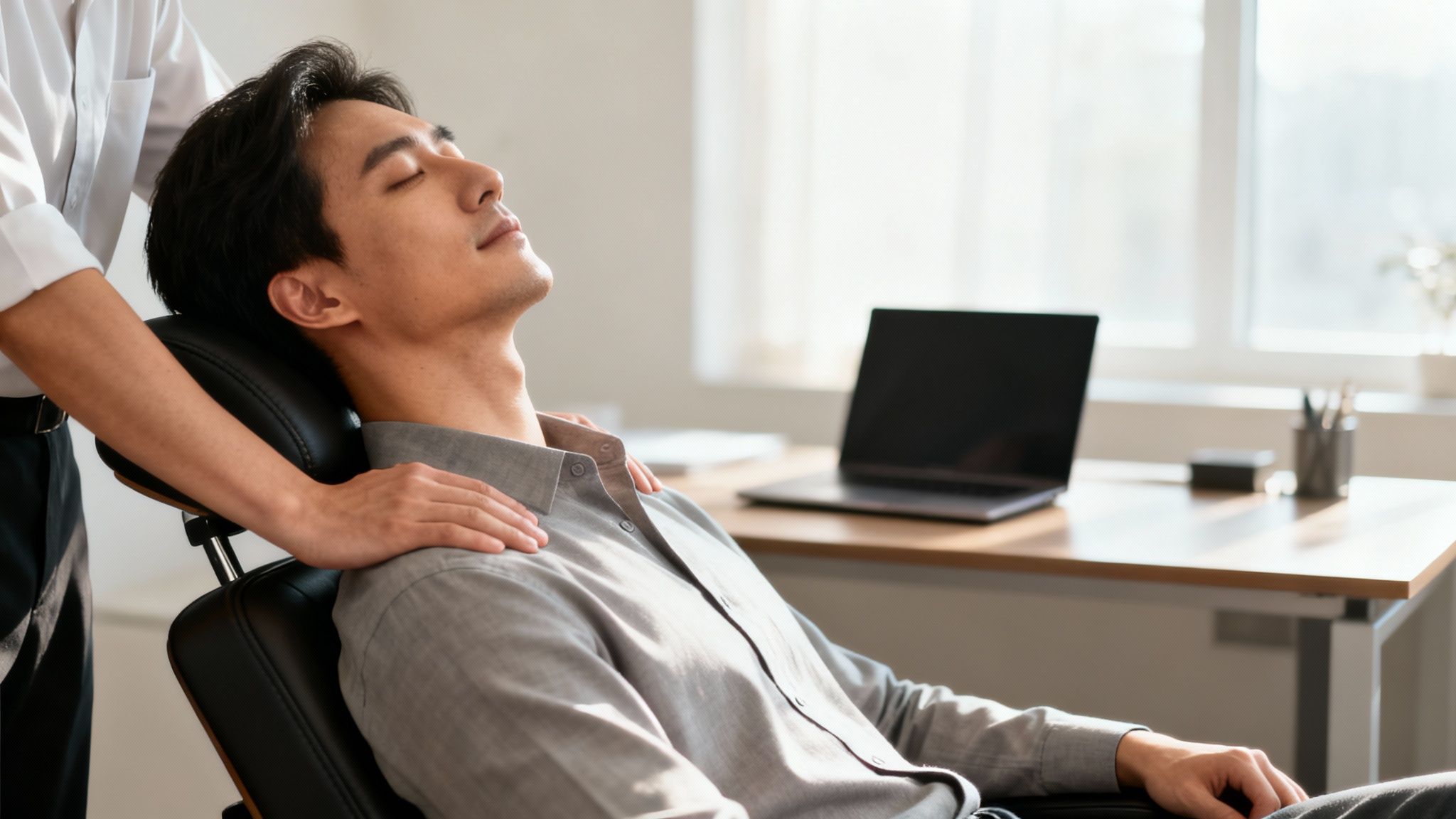
- Seated Chair Massages: These are quick, focused 15-20 minute sessions that target the neck, shoulders, and back—the exact spots that ache after hours at a desk.
- Table Massages: For companies with a dedicated wellness room, a full-length table massage provides a more comprehensive, clinical-style treatment.
Onsite massage is a game-changer for morale and productivity. Just a short session can hit the reset button on stress, melt away muscle tension, and send employees back to their desks feeling refreshed and refocused.
This approach directly addresses the root of workplace-related back pain. It improves postural awareness and eases tension that accumulates over a long week, all while demonstrating that employee wellbeing is a genuine priority.
Mobile Massage: Your Personal Sanctuary, Anywhere
While corporate programs are excellent for team wellness, there are times you need a more private, personalised session. This is where mobile massage truly shines, delivering the full professional clinic experience directly to you, wherever you may be—at home, in a hotel, or on the water. It’s an invaluable service for those with demanding schedules or who simply value ultimate convenience.
Imagine finishing a long day and having a professional therapist arrive at your door, ready to set up a comfortable table and provide a treatment designed specifically for you. It removes all logistical hurdles, making it easier to prioritise your health. The Royal Masseur is at the forefront of this service, and you can easily find a mobile massage therapist near me to fit your schedule.
This flexibility is not just for home. If you're travelling for business or pleasure in cities like Sydney or Brisbane, an in-room hotel massage can undo the stiffness from a long flight. For a truly premium experience, therapists can even provide treatments on luxury yachts, proving that high-end wellness can be accessible no matter where life takes you. This level of personalised care ensures you get the relief you need, whenever and wherever you need it most.
Supporting Your Back Health Beyond the Massage
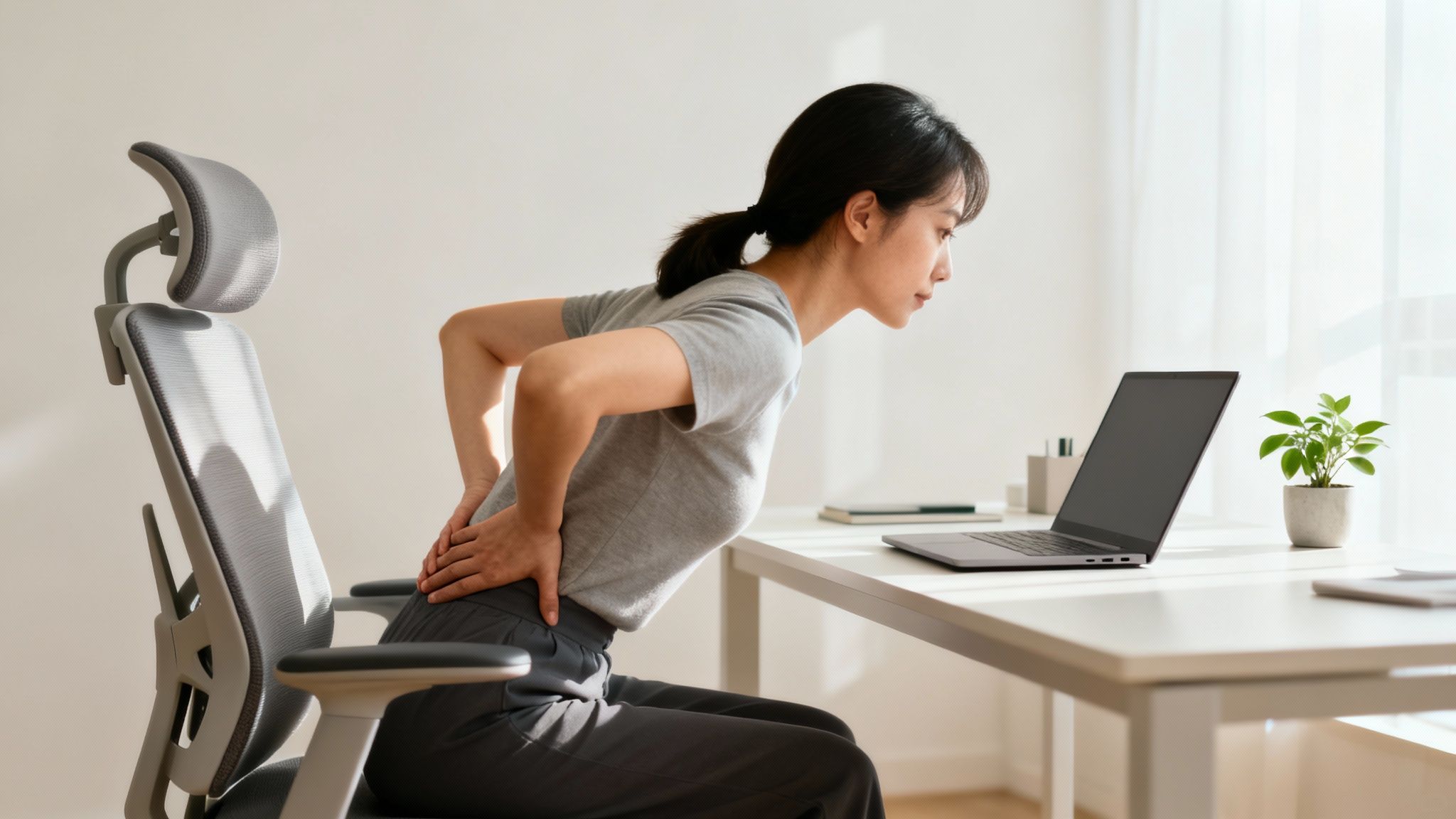
While a professional massage delivers powerful, targeted relief, keeping that lower back pain at bay is all about what you do between sessions. Think of it this way: the massage hits the reset button, but your daily habits determine how long that blissful feeling lasts. True, long-term wellness is built on those small, consistent efforts.
Lasting relief isn't just about treating the symptoms. It’s about getting to the root causes, which are so often embedded in our daily lives—the way we sit at our desks, how we sleep, and how we move.
Simple Stretches for Any Location
Weaving simple movements into your day is a game-changer, especially for counteracting the effects of prolonged sitting. Whether you're in the office, a hotel room, or working from home, these stretches are designed to be quick, discreet, and incredibly effective.
- Seated Cat-Cow: While sitting, place your hands on your knees. Inhale as you arch your back and look up, opening your chest. Exhale as you round your spine and drop your chin, feeling a gentle release in your lower back. Repeat 5-8 times every hour. It's a lifesaver.
- Knee-to-Chest Stretch: Lying on your back, gently pull one knee toward your chest until you feel a comfortable stretch in your lower back and glute. Hold for 20-30 seconds, then switch sides. This is a perfect one to do at home just before bed to release the day's tension.
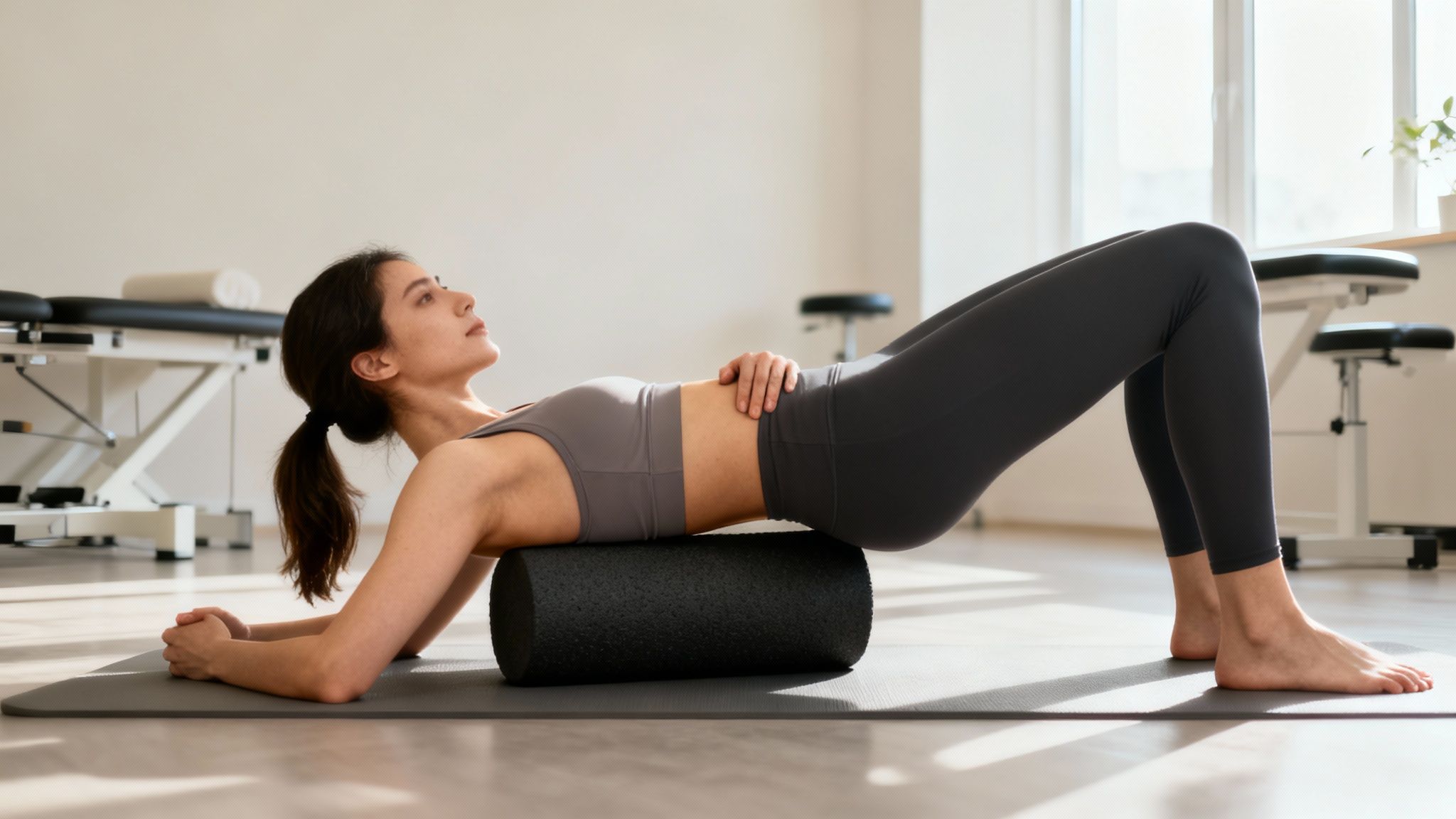
- Glute Bridge: Lying on your back with knees bent and feet flat, lift your hips off the floor until your body forms a straight line from your shoulders to your knees. This strengthens your glutes, the powerhouse muscles that provide crucial support for your lower back.
These simple movements improve spinal flexibility and boost circulation, helping to keep your muscles supple and happy.
Building Core Stability and Good Habits
A strong core is like a natural corset for your spine. It provides stability and takes a huge amount of strain off your lower back. You don’t need gruelling gym sessions to build one, either; simple exercises make a world of difference. The 'bird-dog' exercise, for example, is brilliant for engaging your abdominal and back muscles at the same time.
Beyond exercise, mindful habits are everything. When lifting anything, always bend at your knees, not your waist. Make sure your workspace is set up ergonomically, with your monitor at eye level and your chair providing proper lumbar support. These small adjustments prevent the tiny micro-traumas that can accumulate over time and lead to chronic pain.
Supporting your back is a 24/7 job that extends right into your sleep. Your mattress and pillows play a massive role in spinal alignment. An unsupportive sleep surface can undo all the good work of a massage in a single night.
Ensuring your sleeping environment supports your back is just as important as the massage itself. Investing in quality sleep products is a direct investment in your back health, and many people have great success by finding the best mattress topper for back pain to add that extra layer of crucial support.
This is especially relevant when you look at the scale of the issue here in Australia. Chronic lower back pain is a major burden, with one in six people—that’s 4 million of us—affected at any given time. It’s the third leading cause of disease burden and costs the Australian health system around $3.4 billion every year. This is why health experts advocate for integrated approaches that combine massage with education and exercise for genuine, long-term benefits. By adopting these supportive habits, you become an active partner in your own wellness journey.
Your Back Pain Massage Questions, Answered
Stepping into any new therapy, even one as natural as massage, usually comes with a few questions. That's completely normal. Understanding what to expect helps you get the most out of every session and weave it into your wellness routine in a way that actually works.
Many people wonder if they're on the right track, especially when they're just starting out. Getting clear on how often to book, what your body might feel like afterwards, and when it’s time to loop in a doctor helps you feel confident and in control of your back pain journey.
How Often Should I Get a Massage for Chronic Back Pain?
Finding the right rhythm for your massages is the key to managing chronic lower back pain for the long haul. There’s no single magic number; the ideal schedule really comes down to your pain levels, your lifestyle, and how your body responds to the treatment. It’s all about striking that perfect balance between consistent relief and a routine you can actually stick to.
A good rule of thumb for anyone with persistent discomfort is to schedule sessions more frequently at the start, just to get on top of the pain. Once your symptoms begin to settle down, you can start spacing them out.
A smart approach often looks something like this:
- Initial Phase: Kick things off with a massage once a week for the first 4-6 weeks. This gives your therapist the chance to really get to work on that long-standing muscle tension and keep a close eye on your progress.
- Maintenance Phase: As you start to feel a significant improvement, you can switch to a maintenance plan of once every 2-4 weeks. This frequency is great for preventing pain from creeping back and managing any new tension from daily life.
- As-Needed Basis: For those with milder, more intermittent pain, just booking a session during a flare-up or after a particularly demanding activity might be all you need.
Think of your massage schedule like a fitness plan. Consistency is what delivers results. Working with your therapist to create a personalised schedule ensures your treatment is both effective and sustainable for your lifestyle and budget.
For a corporate professional in Sydney dealing with constant postural strain from being desk-bound, a fortnightly remedial massage at the office could be a game-changer. On the other hand, someone with less severe pain might find a monthly session at home is more than enough to keep them feeling their best.
Is It Normal to Feel Sore After a Massage?
Yes, it’s quite normal—and often a good sign—to feel a bit of soreness after certain massages, especially deep tissue or remedial work. The sensation is known as post-massage soreness or Delayed Onset Muscle Soreness (DOMS), and it feels a lot like how your muscles feel after a solid workout.
This happens because your therapist has been working on tight, knotted muscles that might have been holding tension or have been underused for a long time. The pressure helps release these adhesions and boost blood flow, but this process can create a little temporary inflammation as the tissues start to heal and realign.
This feeling typically only lasts for 24 to 48 hours, and you can help ease it by:
- Hydrating Well: Guzzling plenty of water helps flush out all the metabolic waste that gets released from your muscles during the massage.
- Taking a Warm Bath: An Epsom salt bath can be wonderfully soothing, helping to relax your muscles even further and ease any aches.
- Gentle Movement: Skip the strenuous exercise, but a bit of gentle walking or light stretching can prevent stiffness and keep the circulation going.
Think of this temporary soreness as a signal that your body is adapting and healing. It’s proof that the massage hit the right spots, paving the way for better mobility and less pain down the track.
When Should I See a Doctor for My Back Pain?
While massage is a brilliant tool for managing musculoskeletal pain, it's vital to know when your symptoms need a proper medical opinion. Your safety is always the number one priority. Remember, massage therapists are not doctors and can't diagnose underlying conditions.
You should definitely book an appointment with your GP before getting a massage if your lower back pain comes with any of these "red flag" symptoms:
- Numbness, tingling, or weakness that travels down one or both legs, especially if it's getting worse.
- Loss of bladder or bowel control—this is a medical emergency.
- Pain that’s the result of a major trauma, like a car accident or a bad fall.
- Unexplained weight loss, fever, or chills along with the back pain.
- Pain that is constant, severe, and doesn't get better with rest or changing your position.
Getting a proper diagnosis from a healthcare professional here in Australia ensures any serious medical issues are ruled out first. Once you have the all-clear, a qualified massage therapist can work in partnership with your doctor's advice to provide safe and effective relief.
Ready to take the next step towards a pain-free back? The expert therapists at The Royal Masseur bring personalised, five-star treatments directly to your home, hotel, or office. Experience the ultimate convenience in wellness by booking your tailored mobile massage session today.