

That deep, nagging ache in your shoulder that just won’t quit? The one that makes it impossible to focus on your work? That stubborn knot is what’s known as a trigger point, and a specialised trigger point therapist is exactly who you need for targeted relief—delivered right to you, wherever you are.
Get Relief From Muscle Knots Anywhere
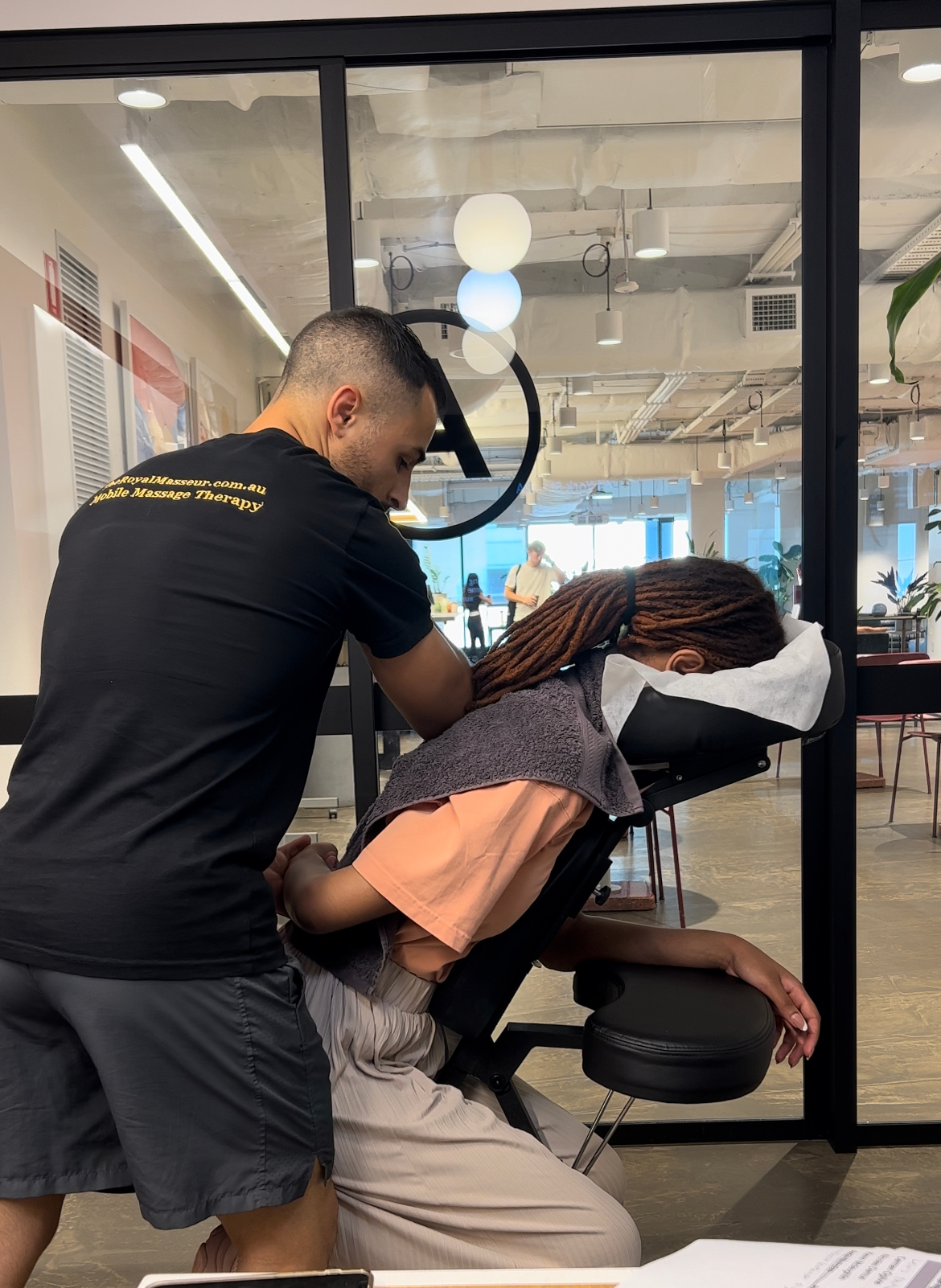
Think of a trigger point as a tiny, clenched fist deep inside a muscle. These hyper-irritable spots create a world of discomfort, not just in the muscle itself, but often referring pain to completely different parts of your body. That tension headache you can’t shake, for instance, could easily be coming from a tight knot in your neck muscles.
For busy professionals, this kind of distracting pain is more than a simple annoyance; it can seriously derail your productivity and zap your sense of wellbeing. The biggest hurdle, of course, is finding the time to actually get it treated.
On-Demand Wellness for Your Lifestyle
This is where the sheer convenience of mobile wellness services really shines. A skilled trigger point therapist can bring their expertise and all the necessary equipment directly to you, fitting into your packed schedule without a fuss. It’s a modern approach to healthcare that’s fast becoming the go-to in major Australian cities.
This on-demand service is designed for maximum convenience and powerful results, whether you need relief:
- In your office: A quick session in your Sydney high-rise can melt away the strain from long hours hunched over a desk.
- At your home: Get professional care in your own Melbourne sanctuary without having to battle the traffic.
- In your hotel room: Deal with stiffness and aches from travel while you’re on the move for business or a getaway.
- On a yacht: Why not? You can experience premium wellness services even while you’re out on the water.
The real benefit here is simple: you get highly effective, targeted treatment for muscle pain without having to blow up your day. It’s all about making wellness accessible, so you can deal with pain before it starts dictating your schedule.
When the professional comes to you, you can get straight back to your work or relaxation without the added stress of travel. This guide will walk you through exactly how this service works and show you why a trigger point therapist is your key to unlocking lasting freedom from muscular pain.
What a Trigger Point Therapist Actually Does
A trigger point therapist is so much more than your average massage therapist. Think of them as highly trained musculoskeletal detectives, whose work goes far beyond simple relaxation to uncover and resolve the real sources of complex muscle pain. They have a specialised understanding of how muscles function, how they work together, and—most importantly—how they can send pain signals to completely different parts of the body.
Ever had one of those nagging headaches that seems to come from nowhere? A general massage might offer some fleeting relief, but a trigger point therapist gets to work investigating the muscles in your neck and upper shoulders. They’re hunting for that specific, tiny knot—the trigger point—that is actually referring pain up to your head. This diagnostic skill is what truly sets them apart.
The Detective Work of Pain Relief
The way a trigger point therapist works is both methodical and incredibly precise. They use their hands to palpate muscle tissue, not just feeling for general tightness, but searching for the distinct, taut bands and hyper-irritable nodules that scream “trigger point.” A crucial part of their expertise is understanding the intricate web of pain referral patterns.
This specialised knowledge allows for a level of precision that you just don’t get with general massage, making them a vital part of any modern wellness strategy. They don’t just treat the symptom; they hunt down the source.
This unique skillset is built on a deep foundation of anatomical and physiological knowledge. Here in Australia, the massage and myotherapy profession sees trigger point therapy as a specialised clinical skill that demands comprehensive training in anatomy, physiology, and musculoskeletal assessment. You’ll find that professional development programs really zero in on hands-on clinical practice, ensuring therapists are experts at treating real clients with complex conditions.
Beyond a Standard Massage
While both a trigger point therapist and a remedial massage therapist want to get you out of pain, their game plans are quite different. A trigger point therapist focuses with pinpoint accuracy, aiming to deactivate specific knots to interrupt pain signals and get the muscle working properly again. This requires an in-depth understanding of not just where the pain is felt, but where it’s actually coming from.
This precise approach means a session can feel quite different from a typical massage. Instead of long, flowing strokes, your therapist will apply sustained, targeted pressure directly onto the source of your discomfort. It’s a focused intervention designed to deliver lasting results, making it an invaluable tool for managing chronic pain, improving mobility, and enhancing your overall wellbeing. If you’re curious about how this compares with other modalities, you can learn more about what is a remedial massage in our detailed guide.
Inside a Mobile Trigger Point Therapy Session
When your mobile trigger point therapist arrives, they’re not just bringing a massage table—they’re bringing a highly targeted strategy to hunt down and resolve your specific muscular pain. This isn’t your average relaxation massage. It’s a focused mission to find and deactivate the very source of your discomfort, whether you’re at home, in the office, or staying in a hotel.
First things first, your therapist will have a chat with you. They’ll ask about your pain, what it feels like, your lifestyle, and what you’re hoping to achieve. This initial conversation is critical; it’s like giving them a map to the trouble spots. For an executive dealing with that all-too-familiar neck strain from long hours at a desk, the therapist already has a clear idea of which muscles to investigate first. This personalised approach means every minute of the session counts.
Unlocking Muscle Knots With Precision
Your therapist will likely use a combination of techniques, but two of the most common are manual release and myofascial release. They might sound a bit technical, but the ideas behind them are straightforward and incredibly effective.
- Manual Release: This is the real heart of trigger point therapy. Once a tight, irritable knot is found, your therapist applies direct, sustained pressure. Think of it like hitting a reset button on a glitchy computer. That pressure encourages the clenched muscle fibres to finally let go, which restores blood flow and interrupts the constant pain signals they’ve been firing off.
- Myofascial Release: This technique is a bit gentler and focuses on the connective tissue, or fascia, that wraps around your muscles like a spiderweb. Using slow, sustained stretches, your therapist works to release tightness in this tissue, which can dramatically improve your flexibility and ease that feeling of widespread tension.
This infographic breaks down the key skills a trigger point therapist brings to every session.
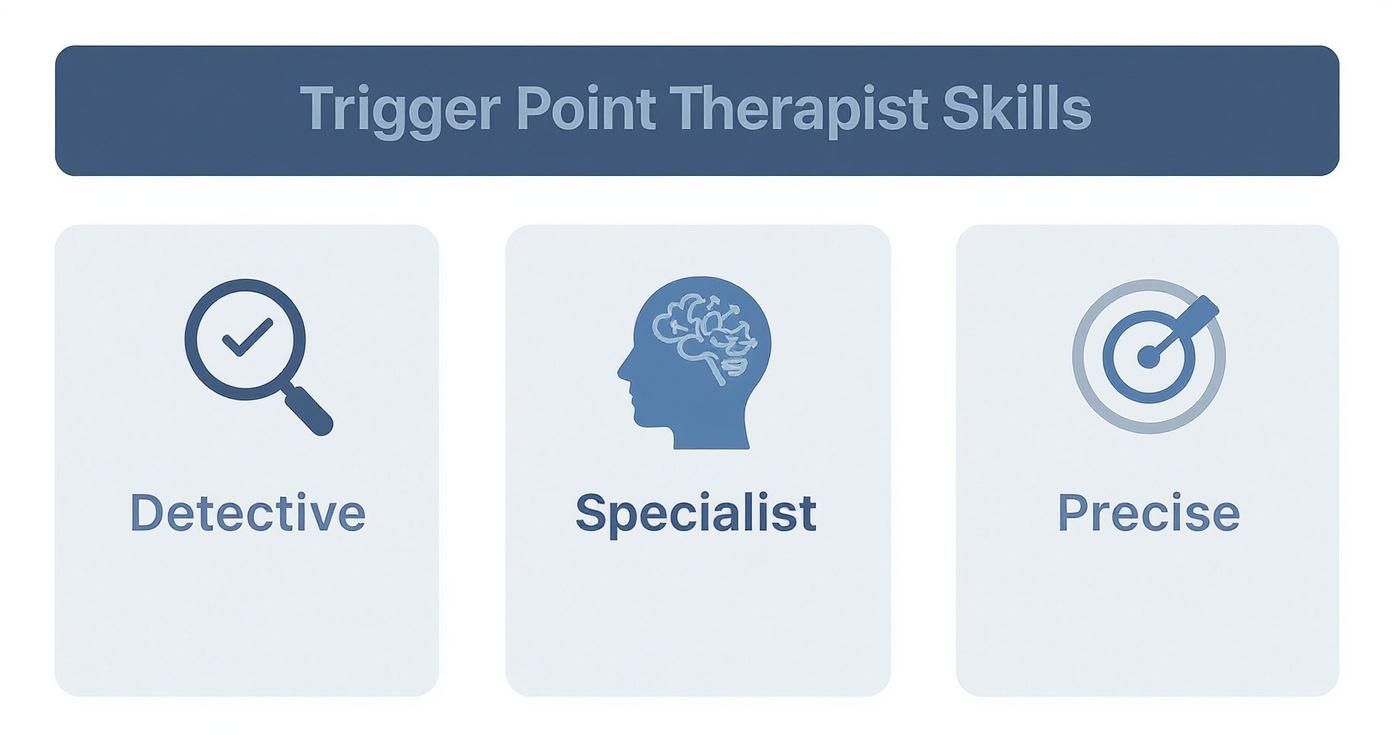
As you can see, the work is a blend of investigation, specialised knowledge, and highly accurate application.
Customised Care For Your Environment
No two sessions are ever the same because no two clients are. The treatment is completely adapted to what you need, right where you are. An office worker might need focused attention on their neck and shoulders—you can find out more in our guide to the benefits of chair massage in Sydney. On the other hand, a traveller might need work on their lower back and hips to undo the stiffness from a long flight.
The beauty of a mobile session is its complete customisation. Your therapist uses their expertise to deliver exactly what your body needs, right where you are, to get you back to feeling your best.
The effectiveness of these hands-on techniques isn’t just anecdotal. Research has shown that trigger point therapy leads to significant pain reduction all over the body, from the shoulders to the lower spine. The sustained pressure technique, often held for 30 seconds to several minutes, is now recognised as a legitimate treatment within Australian primary health networks for its proven results. This means you’re getting a treatment that’s grounded in both expert skill and solid science.
How On-Site Wellness Services Work

The idea behind mobile trigger point therapy is to make it completely seamless, bringing expert care right to you with zero fuss. It’s pretty simple: your qualified trigger point therapist shows up with all the professional gear, like a comfy massage table and fresh linens. All you need is a small, private space where you can properly relax.
This kind of convenience really changes the game, making high-quality wellness a practical option even for the most hectic schedules. From the moment you book to the second your therapist packs up, the whole thing is designed to be effortless so you can just focus on relief and recovery.
Let’s look at how this plays out in a few different settings.
In the Office: A Corporate Wellness Solution
Picture this: a quiet meeting room or an unused office in your Sydney workplace gets turned into a temporary wellness retreat. This is exactly what corporate trigger point therapy is all about, and it’s a growing trend among smart Australian businesses looking to boost morale and productivity.
Your team can book in for short, powerful 20-minute sessions throughout the day. These treatments are laser-focused on tackling the neck, shoulder, and back pain that’s so common after long hours at a desk. It’s an incredibly effective way to slash stress, sharpen focus, and show your team you genuinely care about their wellbeing. Best of all, the therapist handles everything discreetly, so there’s barely any disruption to the workday.
At Home: Your Personalised Retreat
For anyone working remotely, busy parents, or just people who value their privacy, at-home sessions are the ultimate convenience. Your trigger point therapist brings the full clinic experience right into your living room or home office in Melbourne. No battling traffic, no hunting for a park, and no rushing to get to an appointment.
Being in your own familiar space allows for a much deeper level of relaxation. It’s the perfect way to manage chronic pain or just unwind after a brutal week, all without stepping out the front door.
The core idea is to remove every barrier between you and effective pain relief. Whether at work or home, the service adapts to your life, not the other way around.
In a Hotel or on a Yacht: Luxury and Discretion
Travel often brings its own unique aches and pains, from a stiff neck after a long flight to sore muscles from being constantly on the go. Mobile trigger point therapy is a lifesaver for guests in hotels across Brisbane and the Gold Coast. A therapist can be booked to come directly to your room, providing discreet and professional relief from all that travel-related stiffness.
This premium service also extends to more exclusive settings, like a private yacht. A therapist can come aboard to deliver treatments, making sure you and your guests can fully enjoy your time on the water without being held back by muscular pain. In every scenario, the process is straightforward, professional, and built entirely around what you need.
Finding a Qualified Therapist in Australia
When you’re dealing with targeted muscular therapy, choosing the right professional isn’t just important—it’s crucial for getting safe and effective results. In Australia, finding a qualified trigger point therapist means you need to look past a slick website or a fancy business card. It’s about making sure they have the right training, credentials, and real-world experience to help you hit your wellness goals.
The very first thing to check is their formal qualifications. A reputable therapist will almost always have a Diploma of Remedial Massage or an Advanced Diploma of Myotherapy. These aren’t just pieces of paper; they’re your assurance that the therapist has a deep, working knowledge of anatomy, physiology, and the clinical skills needed to perform trigger point work properly.
Key Credentials to Verify
Beyond a diploma, you’ll want to see if they’re part of a professional association. Being a member of a recognised body like Massage & Myotherapy Australia (MMA) or the Association of Massage Therapists (AMT) is a massive green flag. These organisations hold their members to strict codes of conduct and require them to have current insurance and commit to ongoing professional development.
When you’re ready to book, don’t be shy about asking some direct questions. A good therapist will be more than happy to chat.
- “Can you tell me about your experience with my specific issue, like chronic neck pain or tension headaches?” Their answer will quickly tell you how confident and skilled they are in treating your particular condition.
- “What’s your main approach for treating trigger points?” This helps you figure out if their techniques are a good match for what you’re looking for.
- “Are you fully insured and a member of a professional association?” For your own safety and peace of mind, this one is non-negotiable.
Making an informed choice is about empowering yourself. Taking a few moments to verify credentials and ask questions ensures you connect with a skilled, insured, and reputable therapist who can genuinely help you.
Finally, put online resources to work for you. Client testimonials and reviews on professional websites can give you invaluable insights into a therapist’s style and how effective they are. For more tips on choosing the right professional for in-home services, check out this helpful guide on how to find the right mobile massage therapist for your needs. Doing this little bit of groundwork upfront is the best way to guarantee you receive the high-quality care you deserve.
What to Expect During and After Your Session
Knowing what’s coming can help you relax into your trigger point therapy session and get the most out of it. We’ve structured the experience from start to finish to make sure you get exactly what you need, and it all begins with a good chat.
First up, your therapist will take the time to really listen, asking about your pain, your lifestyle, and what you’re hoping to achieve. They’ll likely have a look at your posture and check your range of motion to get the full picture of what’s going on in your body. This initial conversation is crucial—it’s how we create a treatment plan that gets to the real source of your discomfort.
Communication is Key
During the treatment, your therapist will apply focused, sustained pressure to those specific knots. It can feel pretty intense, but it should always be what we call a ‘good pain’—that strong sensation that feels like it’s actually doing something productive and bringing relief. We’ll be checking in with you constantly about the pressure to ensure it’s right for you. Your feedback is vital.
After the session, a little bit of aftercare goes a long way in locking in the benefits and helping your body heal.
That temporary soreness you might feel afterwards? It’s a great sign. Think of it like the feeling after a solid workout. It means the muscle is responding, letting go of long-held tension, and starting to repair itself.
Your Post-Session Care Plan
To help your muscles recover and make the results last, follow a few simple steps after your treatment:
- Hydrate Well: Drink plenty of water. This helps flush out all the metabolic waste that gets released from your muscles during the session.
- Gentle Movement: A slow walk or some light stretching can keep you flexible and stop stiffness from setting in.
- Rest and Recover: Give your body a break. Avoid any intense activity or heavy workouts for at least 24 hours to let your body settle and adapt to the changes.
This targeted approach isn’t just talk; it gets powerful results. A major review found that patients who had manual trigger point therapy were almost four times more likely to report an overall improvement compared to control groups. It’s a testament to how effective this work can be. If you’re interested, you can dive deeper into the full findings on patient response to trigger point therapy.
Frequently Asked Questions
When you’re exploring a new therapy, it’s natural to have a few questions pop up. Let’s clear up some of the common queries about trigger point therapy so you know exactly what to expect.
How Is This Different From Deep Tissue Massage?
That’s a great question, as they can both feel pretty intense but their goals are worlds apart. Think of a deep tissue massage as using broad, sweeping strokes to ease general tension across large muscle groups. It’s fantastic for overall relaxation.
A trigger point therapist, on the other hand, is more like a detective. We hunt for those tiny, stubborn knots—the real culprits behind your pain—and apply precise, targeted pressure. It’s a much more clinical approach, zeroing in on the specific source of discomfort, even if that pain is showing up somewhere else in your body.
Is Trigger Point Therapy Painful?
It’s definitely an intense sensation. The process involves your therapist applying direct, sustained pressure right onto a sensitive muscle knot, which will naturally cause some discomfort.
However, it should always be what we call a ‘good pain’—a satisfying release, not a sharp or unbearable one. Communication is everything. Your therapist will constantly check in with you to make sure the pressure is productive and well within your personal comfort zone.
How Often Should I Get Treatment?
The right frequency really comes down to you, your body, and your goals. If you’re dealing with a fresh injury or acute pain, we might start with weekly sessions to get on top of it quickly.
As things start to improve, we can ease back to fortnightly or monthly appointments for maintenance and to keep those knots from coming back. We’ll work together to map out a treatment plan that fits into your life, whether that’s at home, in the office, or even on a yacht.
Ready to feel the difference that targeted relief can make? The Royal Masseur delivers five-star wellness from a professional trigger point therapist straight to your door in Sydney, Melbourne, Brisbane, and the Gold Coast. Book your mobile session today and get to the root of your pain.
[…] seemed mysterious or widespread. To see how this works in practice, you can learn more about how a specialised trigger point therapist tackles these complex pain […]