

Ever felt a nagging pain that just won't go away? A tight shoulder from too many hours at the desk, or an old sports injury that flares up when you least expect it? That’s where remedial massage comes in. It’s much more than your average relaxation massage; it’s a targeted, clinical approach designed to get to the root of the problem.
Think of it as a form of physical therapy that uses highly specialised hands-on techniques. The goal isn’t just to provide temporary relief, but to assess and treat the muscles, tendons, ligaments, and connective tissues that are causing you grief. It’s all about rehabilitation, pain management, and restoring your body to its best.
Understanding Remedial Massage Therapy

The best way to think of a remedial massage therapist is as a highly skilled ‘body mechanic’. Their job is to perform a proper diagnosis to figure out what’s really going on, and then create a treatment plan specifically for you. This focus on finding and fixing the source of your discomfort is what truly sets it apart from a general rub-down.
It doesn’t matter if your pain comes from hunching over a laptop, a strain from your weekend warrior activities, or just chronic, built-up tension. The treatment is laser-focused on resolving that underlying issue, not just putting a band-aid on the symptoms. It’s about getting your body working the way it should again.
Before we dive deeper, here's a quick overview to get you started.
Remedial Massage At a Glance
This table gives you a snapshot of what makes remedial massage a unique and effective therapy.
| Aspect | Description |
|---|---|
| Primary Goal | To treat specific pain, injuries, or musculoskeletal conditions. |
| Approach | Clinical and systematic. Involves assessment, diagnosis, and a tailored treatment plan. |
| Techniques Used | Deep tissue work, trigger point therapy, myofascial release, muscle energy techniques, and more. |
| Best For | Chronic pain, sports injuries, postural problems, sciatica, and headaches. |
| Therapist's Role | A qualified health professional who diagnoses and treats the root cause of the issue. |
This goal-oriented approach is why remedial massage has become such a respected part of the healthcare landscape.
A Professional Approach to Wellness
This focus on clinical results has cemented remedial massage as a legitimate health profession in Australia. It’s a field with a huge, skilled workforce, trusted by thousands of Aussies for effective pain relief. The main industry body, Massage & Myotherapy Australia, now represents over 8,500 qualified members, which shows you just how mainstream it’s become.
Modern wellness is all about integrating this kind of specialised care into our busy lives. Mobile services have made it incredibly convenient, bringing expert treatment right to your door and turning any space into your own private clinic.
- In your office: Perfect for sorting out that neck and back pain caused by desk work.
- At your home: Ideal for managing chronic conditions in a comfortable, private setting.
- In a hotel room: A fantastic way to recover from the stiffness of travel.
- On a yacht: The ultimate wellness luxury while you’re taking time out.
This on-demand model makes professional-grade therapy genuinely accessible. It’s about weaving high-level body maintenance into your own schedule so you can stay on top of your game, no matter where you are. At the end of the day, remedial massage is a smart investment in your long-term health, offering a strategic fix for pain and dysfunction.
How Remedial Massage Actually Heals Your Body
A proper remedial massage is a systematic process that kicks off long before any hands-on work begins. Think of your therapist as a detective investigating a case; the first step is always to gather the clues to understand the real story behind your pain or discomfort.
This initial phase is a thorough assessment. Your therapist will chat with you about your health history and lifestyle—like your desk setup at the office or how you train for a sport—and then perform a physical evaluation. This isn't just a quick look; they might analyse your posture or ask you to perform simple movements to test your range of motion. This diagnostic approach ensures the treatment is aimed squarely at the source of the problem, not just the symptoms.
Unpacking the Core Techniques
Once the therapist has a clear picture of what’s happening in your body, they'll select the right techniques to address the issue. These methods are the tools of their trade, each designed for a different purpose but all working toward the clinical goals of reducing your pain and restoring proper function.
Some of the most common techniques you’ll encounter include:
Deep Tissue Massage: This involves applying firm pressure using slow, deliberate strokes. The aim here is to reach the deeper layers of muscle and the connective tissue around them, known as fascia. It’s incredibly effective for chronic aches and pains and those really contracted areas like a stiff upper back, neck, or tight leg muscles.
Trigger Point Therapy: Ever felt a small, super-irritable "knot" in a muscle that shoots pain to another area when you press it? That's a trigger point. This therapy involves applying direct, sustained pressure to these spots to convince them to release their tension.
Myofascial Release: Picture fascia as a web of connective tissue that wraps around every muscle and organ in your body. When it gets tight or restricted, it can cause widespread pain and stiffness. Myofascial release uses gentle, sustained pressure to stretch and smooth out this web, improving your mobility and easing discomfort.
The Journey from Assessment to Relief
To truly get your head around how these techniques work together, let's use an analogy. Imagine a rope with a stubborn, tight knot in it. That knot is your trigger point, and the rope is your muscle.
A therapist using trigger point therapy is like someone carefully working to undo that knot. They apply precise pressure, not just randomly yanking at it, until the fibres finally let go. Once the knot is gone, the rope (your muscle) can function properly again—it’s longer, more flexible, and no longer pulling on everything it’s attached to.
This targeted process is what makes remedial massage so effective. It’s a deliberate journey from a detailed assessment to a personalised treatment plan. For instance, if you're dealing with persistent lower back pain from sitting in your office chair, the therapist might identify tight hip flexors and weak glutes during the assessment. Their treatment would then focus on releasing those hip flexors with deep tissue work and helping you activate your glutes, providing a lasting solution, not just a quick fix.
The ultimate goal is always clinical. It’s about restoring your body’s natural alignment and function, whether you’re recovering from an injury at home, managing work-related tension in a hotel, or optimising your physical wellness on a yacht.
Key Differences Between Massage Styles
With so many different massage styles out there, it can feel a bit overwhelming trying to figure out which one is right for you. The key to choosing the right treatment really boils down to one simple question: are you just looking to unwind and de-stress, or are you trying to fix a specific physical problem?
Understanding this difference is everything. A relaxation massage is designed to soothe your nervous system, while a remedial massage is a clinical treatment laser-focused on resolving a diagnosed issue. It’s the difference between a calming tune-up and a detailed mechanical repair for your body.
The image below shows the focused, three-step clinical process that really defines remedial therapy.
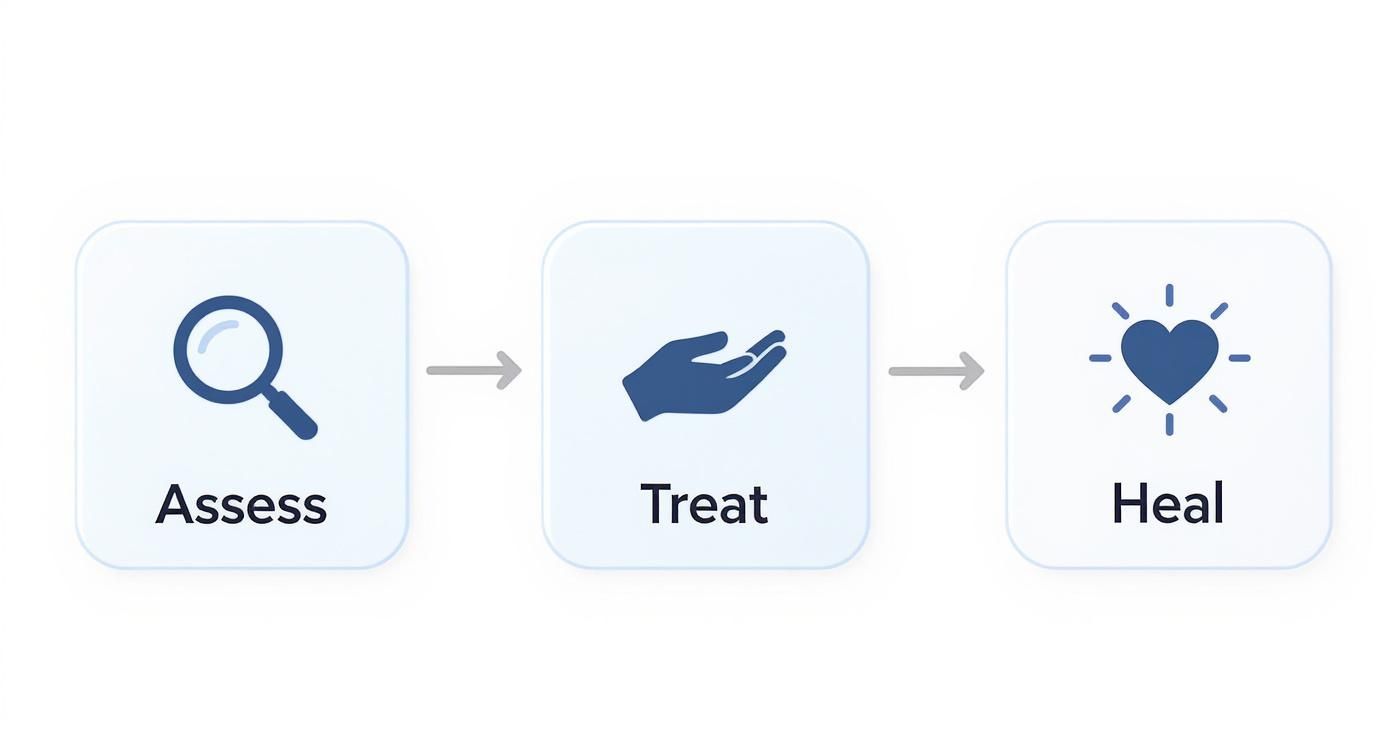
This visual really captures the journey from assessment and diagnosis to hands-on treatment and, finally, healing and restoration.
Comparing Common Massage Modalities
To help you make an informed choice, let’s break down the most popular options you’ll come across. Each one has a very different job to do.
This table gives a quick snapshot of four common types of massage, comparing their goals and who they’re best suited for.
Remedial vs Relaxation vs Sports vs Myotherapy
| Therapy Type | Primary Goal | Key Techniques | Best For |
|---|---|---|---|
| Remedial Massage | To diagnose and treat specific musculoskeletal injuries and pain conditions. | Deep tissue, trigger point therapy, myofascial release, and postural assessment. | Chronic pain (e.g., back pain, sciatica), sports injuries, and postural imbalances. |
| Relaxation (Swedish) | To promote general relaxation, reduce stress, and improve circulation. | Long, flowing strokes (effleurage), kneading (petrissage), and gentle tapping. | Stress relief, improving sleep, and general wellness maintenance. |
| Sports Massage | To prepare the body for athletic activity, aid recovery, and prevent injuries. | A mix of techniques including deep tissue, stretching, and targeted pressure. | Athletes, fitness enthusiasts, or anyone preparing for or recovering from a physical event. |
| Myotherapy | To assess, treat, and manage musculoskeletal pain and associated conditions. | Broader scope including remedial techniques, plus dry needling, cupping, and corrective exercises. | Complex chronic pain conditions that require a multi-faceted treatment approach. |
As you can see, each style has a distinct purpose. A sports massage might be perfect before a big game, but for that nagging "tech neck" from your desk job, remedial therapy is designed to deliver a much more targeted solution.
Myotherapy A Deeper Level of Care
Myotherapy often gets confused with remedial massage, but it’s best understood as a more advanced clinical discipline. Think of it this way: a myotherapist has a much broader toolkit. They often incorporate remedial techniques as part of a larger treatment plan that might also include things like dry needling or detailed exercise prescription.
If your condition is complex or just isn't responding to other treatments, myotherapy could be the next logical step. For a more detailed breakdown, you can explore the key differences between myotherapy and remedial massage to see which path is right for you.
Practical Benefits for Your Modern Lifestyle
Let's move past the clinical definitions for a moment. The real magic of remedial massage therapy is how it slots right into your day-to-day life. Think of it as a practical tool for handling the physical toll of a modern lifestyle, delivering real benefits whether you're in a high-rise office in Sydney or a quiet hotel room on the Gold Coast.
If you're an office professional, you know the daily grind all too well. Hours hunched over a keyboard create that classic ‘tech neck’ or a nagging ache deep in your lower back. A mobile remedial massage therapist can tackle these issues right where they start—at your workplace, turning an unused meeting room into your own private treatment space.

This kind of targeted treatment gets right to the source, releasing muscle tension, boosting circulation to starved tissues, and correcting postural imbalances before they snowball into chronic problems. The result? Less pain, sharper focus, and better productivity all week long.
Your Private Wellness Retreat Anywhere
The sheer convenience of mobile remedial massage transforms any location into a sanctuary for healing. It’s an on-demand wellness solution built for hectic schedules, bringing expert, personalised care directly to your door.
- At Home: Manage ongoing conditions or recover from an injury in the comfort and privacy of your own space.
- In a Hotel: Fight off the stiffness and fatigue that comes with travel, making sure you’re sharp and ready for that big meeting or day of sightseeing.
- On a Yacht: Integrate elite body maintenance into your downtime, turning your escape into a truly restorative and luxurious experience.
This flexibility means looking after your physical wellbeing no longer has to disrupt your life. Instead, it becomes a seamless part of it.
Boosting Performance and Recovery
For anyone with an active lifestyle, managing muscle strain is everything. Remedial massage is a powerful ally here, addressing minor strains and imbalances before they have a chance to become serious, performance-killing injuries.
Regular sessions can lead to faster recovery times, increased flexibility, and improved overall athletic output. By reducing the stress hormone cortisol and promoting blood flow, the therapy creates an optimal environment for your muscles to repair and rebuild stronger.
This isn't just about feeling good in the short term; it's a strategic investment in your long-term health and physical capabilities. In fact, its power in pain management is getting serious attention. The therapy's role in Australian healthcare is strongly supported by the public and professionals, as outlined in this AAMT research report on wellness.
Whether you’re dealing with lower back pain from sitting at a desk or you're aiming to elevate your physical performance, remedial massage is a smart, effective solution. If that nagging discomfort is holding you back, it's worth discovering these seven key reasons to seek remedial massage for lower back pain and taking a proactive step towards lasting relief.
What to Expect During Your Mobile Massage Session
Booking a mobile remedial massage brings professional, clinical care straight to your door, whether you're at home, in the office, or staying in a hotel. Knowing what's involved can help you relax and get the absolute most out of your session. The whole experience is designed to be seamless, professional, and completely focused on your body’s needs.

Your therapist will arrive with a professional massage table and all the necessary gear; all they need from you is a quiet space to set up. Before anything else, the session kicks off with a brief but thorough consultation. They’ll chat with you about your health history, what’s bothering you right now, and what you’re hoping to achieve.
This initial chat is vital. It’s what allows the therapist to create a treatment plan specifically for you, whether you’re dealing with a stiff neck from long hours at the desk or tight hamstrings from your last workout.
During and After Your Treatment
Once you're settled and comfortable on the table, the hands-on work begins. Communication is everything here. Your therapist will check in about the pressure, making sure it’s effective but always well within your comfort zone. This isn't a passive experience; your feedback is what guides the treatment and guarantees the best results.
Don't hesitate to speak up if the pressure is too much or not enough. An open dialogue with your therapist is the most important part of what is remedial massage therapy, ensuring the treatment is both safe and effective for your body.
After the massage, your therapist will arm you with some personalised aftercare advice. Think of these as simple tips to lock in the benefits of the session and give your body the best chance to heal.
Common post-massage recommendations often include:
- Hydration: Drinking plenty of water is crucial. It helps to flush out all the metabolic waste that gets released from your muscles during the massage.
- Gentle Stretching: Your therapist might show you a few specific stretches to help maintain that newfound flexibility and freedom in your muscles.
- Rest: Give your body some time to process the work that’s been done. Don't rush straight into a heavy workout.
It’s completely normal to feel a bit of soreness for a day or two afterwards, much like you would after a good gym session. This is just a sign that your muscles are adjusting and healing. Having your session in a familiar place like home makes it so much easier to relax and follow this advice. If you're looking for an exceptional at-home experience, you can learn more about booking a professional mobile massage therapy session in Sydney and see just how convenient it is.
How to Choose Your Ideal Massage Therapist
Finding the right remedial massage therapist is probably the single most important step in your whole wellness journey. This is especially true when you’re booking a mobile service to come to your office, home, or hotel.
Your choice really does dictate the quality of your treatment. Taking a moment to check a therapist’s credentials can be the difference between a fantastic, effective session and a disappointing one. Not all massage providers are created equal, so it pays to know what you’re looking for.
Start with the basics: their formal qualifications. Here in Australia, a reputable therapist must hold at least a Diploma of Remedial Massage. This isn't just a piece of paper; it's your assurance that they've gone through extensive training in anatomy, physiology, and the specific assessment and treatment techniques that make remedial massage what it is.
Vetting Your Mobile Therapist
Beyond that diploma, there are a few more boxes to tick to make sure you’re booking a true professional. These quick checks give you peace of mind, so you know the person arriving at your door is skilled, insured, and accountable.
Professional Association Membership: Look for membership in a recognised Australian industry body like Massage & Myotherapy Australia (MMA) or the Association of Massage Therapists (AMT). Being part of these organisations means they have to follow a strict code of ethics and commit to ongoing professional development.
Comprehensive Insurance: Your therapist absolutely must have current professional indemnity and public liability insurance. This is a non-negotiable standard for any healthcare provider, protecting both you and them.
Positive Client Reviews: Check for genuine testimonials on their website or third-party platforms. Hearing what previous clients have to say offers invaluable insight into their professionalism, reliability, and how effective they are at treating issues similar to yours.
Finalising Your Booking
Once you’ve verified their credentials, the last step is to have a quick chat before locking it in. A great therapist will be more than happy to discuss their experience with your specific problem, whether it's that nagging neck strain from the office or a sports injury.
Ask about their approach and just make sure you feel comfortable with them. This is also the perfect time to clarify pricing for their mobile service and ensure there are no hidden travel fees.
Taking these simple, practical steps empowers you to book with confidence, knowing you’ve found a skilled practitioner who can meet your wellness needs, wherever you are.
Your Remedial Massage Questions, Answered
It's completely normal to have a few questions before you dive into a new therapy. Feeling confident and prepared is a huge part of the experience, so let’s clear up some of the most common queries we hear about remedial massage.
Is Remedial Massage Supposed to Hurt?
Let’s be honest: when a therapist is working on a stubborn knot or damaged muscle tissue, you’re definitely going to feel it. But there’s a world of difference between therapeutic discomfort and genuine pain. It should never be painful.
Think of it like a good stretch—you feel the tension, but it’s a productive, releasing sensation. A professional therapist is trained to work right up to your tolerance level, never past it, and will constantly check in with you about the pressure. It's also quite normal to feel some mild soreness for a day or two afterwards, much like the satisfying ache you get after a solid gym session.
How Often Should I Get a Session?
The real answer? It depends entirely on what your body needs and what you’re trying to achieve.
If you're dealing with a fresh, acute injury, your therapist might suggest weekly sessions to get on top of it quickly. For managing a long-term chronic condition or just keeping desk-job posture in check, a session every two to four weeks is often the sweet spot for effective maintenance. After your first assessment, your therapist will chat with you and recommend a plan that’s actually tailored to you.
A quick note on health funds: Most Australian private health funds with 'extras' cover offer rebates for remedial massage. For your claim to be eligible, your therapist must be a registered provider with your specific fund. Always check your level of cover and make sure you get a receipt with the therapist’s provider number.
Ready to feel the difference that expert, personalised remedial massage can make? The Royal Masseur brings a five-star treatment experience directly to your home, office, or hotel along Australia's east coast.
Book your session at https://theroyalmasseur.com.au and take the first real step towards lasting relief and wellbeing.