Remedial massage therapy is a targeted treatment that goes way beyond a standard relaxation massage. It’s a clinical, hands-on approach designed to assess and treat specific musculoskeletal problems, homing in on the root cause of your pain and dysfunction. It’s a systematic way to help repair damaged muscles, tendons, and joints, which is why it’s such a respected allied health practice across Australia.
Your Body Mechanic For Pain And Tension
Think of a remedial massage therapist less like someone at a day spa and more like a highly skilled ‘body mechanic.’ While a regular massage offers general relaxation—kind of like a car wash for your vehicle—remedial massage is a clinical treatment designed to properly diagnose and fix specific mechanical problems. It’s a methodical approach to tackling pain, injury, and chronic tension.
This form of therapy is built on one core philosophy: find and treat the source of your pain, not just the symptoms you feel. It’s precisely why it has become such a trusted practice for managing discomfort and improving how you move, whether that tension has built up in the office, at home, or during travel.
A Systematic Approach To Healing
A key difference setting remedial massage apart is the assessment process. A qualified therapist doesn’t just start working on the spot that hurts. Instead, they kick things off with a thorough evaluation to get a clear picture of your body’s unique mechanics.
This initial assessment often includes:
- Postural Analysis: Observing how you stand and sit to spot any imbalances that could be causing strain.
- Range of Motion Tests: Checking the movement in your joints to pinpoint restrictions or areas of pain.
- Functional Movement Screening: Asking you to perform simple movements to see how well your muscles are coordinating.
This diagnostic step is crucial. It’s what allows the therapist to create a precise treatment plan aimed at resolving the underlying issue, not just giving you temporary relief. For instance, that nagging shoulder pain might actually be coming from poor posture developed over long hours hunched at a desk in your home office or a hotel room.
Remedial massage therapy moves beyond simple relaxation. It is a targeted intervention that uses evidence-based techniques to systematically restore the body’s normal function, offering a pathway to lasting relief from musculoskeletal pain and dysfunction.
Once the source of the problem is identified, the therapist uses a range of specific, hands-on techniques on the affected areas. The goal is simple: repair damaged tissues, ease stiffness, and restore proper alignment and movement. This targeted ‘repair’ work is what truly separates a clinical remedial treatment from a general wellness massage. By getting to the true source of the problem, this therapy helps you move better, feel better, and get back to your life without pain holding you back.
Key Techniques For Targeted Pain Relief
A remedial massage therapist’s hands are backed by a toolkit of specific techniques, each chosen to tackle different layers of tissue and types of pain. Think of it like a skilled mechanic who knows exactly which tool to grab for a specific engine problem—it’s all about precision. Understanding these methods helps demystify what’s happening during a session and shows how targeted manipulation can unravel even the most complex pain patterns.
These techniques are what set remedial massage therapy apart. We move beyond general relaxation to deliver real, lasting results.
This flowchart breaks down the remedial process, from the initial chat and assessment right through to treatment and relief.
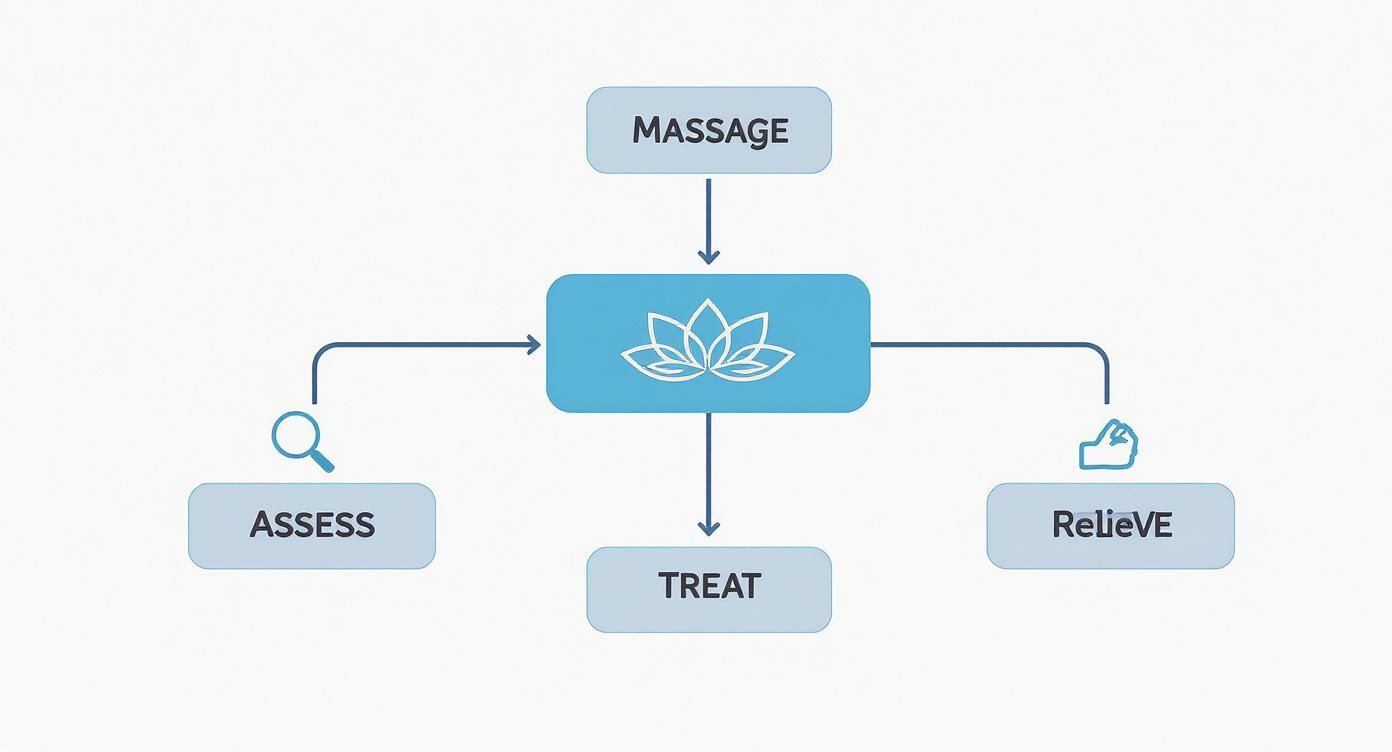
It’s a simple but powerful reminder that every effective treatment starts with a thorough assessment. This ensures all the hands-on work is aimed directly at the source of your discomfort, not just the symptoms.
Deep Tissue Massage
When most people think of an intense, problem-solving massage, they're usually picturing deep tissue. This technique uses slow, deliberate strokes and sustained pressure to reach the deeper layers of your muscles and connective tissues. Its main job is to break down adhesions—those stubborn, painful knots that build up in muscles from old injuries or chronic tension.
Imagine your muscles as a neat bundle of uncooked spaghetti, all lying smooth and parallel. Adhesions are like spots where some of those strands have cooked and clumped together, restricting movement and causing pain. Deep tissue work methodically separates these clumps, helping to restore normal function and ease that deep-seated ache. It’s a game-changer for chronic pain in the neck, upper back, and legs.
Trigger Point Therapy
Ever felt a sharp pain somewhere, only to realise the real tender spot is somewhere else entirely? You've just met a trigger point. These are tiny, hyper-irritable knots within a tight band of muscle that can shoot pain to other parts of the body. A classic example is a trigger point in an upper back muscle (the trapezius) being the true culprit behind a tension headache.
Trigger point therapy is like hitting a ‘reset button’ on these muscular knots. We apply direct, sustained pressure to the trigger point until the muscle finally lets go. This deactivates the knot, interrupting the pain signals it’s been broadcasting. It's an incredibly precise technique that can bring profound relief from issues that might have seemed mysterious or widespread. To see how this works in practice, you can learn more about how a specialised trigger point therapist tackles these complex pain patterns.
A common myth is that more pressure equals a better massage. With remedial work, the magic is in the precision and anatomical knowledge, not brute force. The right technique on the right spot is what creates lasting change.
Myofascial Release
Your entire body is wrapped in a web of connective tissue called fascia. When it’s healthy, fascia is supple and allows your muscles to glide smoothly over one another. But injury, inflammation, or even just poor posture can cause this tissue to become tight and restricted, leading to stiffness and a frustrating loss of movement.
Myofascial release is a bit like carefully smoothing out a wrinkled shirt. Your therapist applies gentle, sustained pressure to stretch and ‘unstick’ the fascia, allowing everything underneath to move freely again. The technique feels less intense than deep tissue, but it's incredibly powerful for improving flexibility and relieving that feeling of being "stuck" or tight all over.
To give you a clearer picture, here’s a quick breakdown of how these manual techniques compare.
Remedial Massage Techniques At a Glance
| Technique | Primary Goal | Best For | Sensation |
|---|---|---|---|
| Deep Tissue Massage | Break down knots (adhesions) in deeper muscle layers. | Chronic muscle tension, stubborn aches, postural issues. | Intense, slow, and focused pressure. Can be uncomfortable but "hurts good." |
| Trigger Point Therapy | Deactivate specific, irritable knots that refer pain elsewhere. | Headaches, sciatica-like pain, mysterious radiating aches. | Sharp, localised pressure that eases as the muscle releases. |
| Myofascial Release | Release restrictions in the body's connective tissue web (fascia). | General stiffness, limited range of motion, chronic tightness. | Gentle, sustained stretching. Feels less intense but deeply effective. |
Each technique has its place, and a skilled therapist will often blend them to create a treatment that's perfectly suited to what your body needs on the day.
Complementary Methods: Dry Needling and Cupping
On top of the hands-on work, many remedial therapists in Australia are trained in complementary methods that can seriously boost treatment results. These aren't standalone therapies but are integrated into a session to target specific problems more effectively.
- Dry Needling: This involves inserting very fine, sterile needles directly into muscular trigger points. Unlike acupuncture, which is based on traditional Chinese medicine, dry needling is grounded in Western anatomy. The needle helps to elicit a "twitch response" that releases the tight muscle band, dials down pain, and restores function.
- Cupping: This ancient technique uses suction cups to create a vacuum on the skin. This negative pressure lifts the underlying tissue, helping to decompress tight muscles, dramatically increase blood flow to the area, and release fascial restrictions. It’s fantastic for mobilising stiff tissues and flooding areas that need healing with fresh, oxygenated blood.
By blending these different techniques, a remedial massage therapist creates a highly personalised treatment plan. Whether you're in a hotel room after a long flight or dealing with desk-related tension in your office, this multi-faceted approach ensures that every layer of tissue contributing to your pain is addressed.
Integrating Wellness Into Your Lifestyle
Let's be honest, finding time for self-care in our hectic world can feel like just another chore on an endless to-do list. But what if high-quality remedial massage therapy didn't have to mean a disruptive clinic visit? Modern wellness is all about seamlessly integrating expert care into your life, not making it another source of stress.
The solution? Mobile remedial massage. We bring the clinic—and the relief—directly to you. This approach tears down the usual barriers like travel time and sterile waiting rooms, delivering targeted treatment right where you need it most. It’s professional healthcare on your terms, without ever compromising on quality.

This is about redefining what’s possible for your personal wellness, turning any private space into your personal sanctuary for healing.
Your Private Treatment Room, Anywhere
Imagine this: you've just wrapped up a long day of meetings in your Sydney CBD office. That familiar tension is already building in your neck and shoulders. Instead of battling traffic to get to a clinic, your therapist arrives right there, ready to get to work.
Or maybe you’re a frequent traveller touching down in Melbourne, feeling every minute of that long-haul flight. A mobile session in your hotel room can undo all that stiffness and get your circulation moving again, setting you up for a successful trip. This is the kind of convenience that ensures your wellness routine never gets pushed aside by a busy schedule.
The real magic of mobile remedial massage isn't just the convenience—it's the consistency. When treatment is this easy to access, you're far more likely to stick with it. That leads to better, more sustainable results for both your body and your mind.
Actionable Wellness In The Workplace
For Australian businesses, fostering a culture of wellness is no longer just a perk; it's a strategic necessity. High-pressure environments inevitably lead to burnout, stress, and physical issues that contribute to absenteeism. A corporate wellness program that includes on-site remedial massage is one of the most powerful tools you can have.
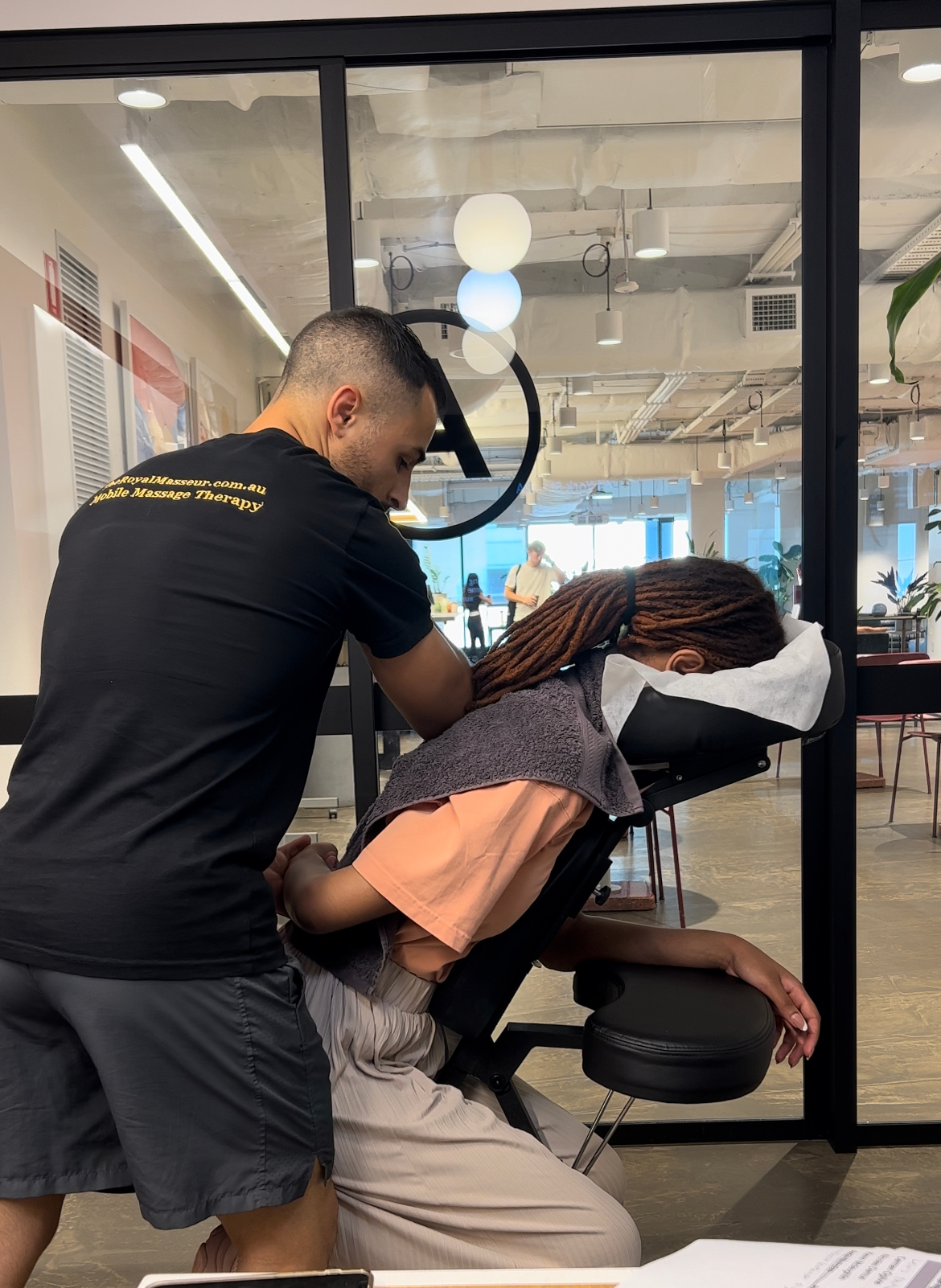
A therapist can set up in a quiet meeting room, offering targeted seated massages that directly address the classic ailments of office life, such as:
- Neck and Shoulder Strain: The result of hours hunched over a laptop.
- Lower Back Pain: A chronic complaint for anyone in a sedentary role.
- Wrist and Forearm Tension: Often linked to repetitive keyboard and mouse work.
These sessions do more than just provide a moment of relief. They're a tangible investment in your team's health, showing them they're valued while actively reducing the physical toll of their jobs. It’s a proactive way to build a more resilient, energised, and productive workforce.
Tailored Care In The Comfort Of Home
There's a unique level of comfort that comes with receiving treatment in your own home. There’s no need to face traffic right after your session, which allows the benefits of the massage to truly settle in. This is particularly valuable for anyone managing chronic pain, recovering from an injury, or for new mothers needing perinatal support.
Your living room—or any quiet corner—can be transformed into a professional treatment space. The therapist brings everything: a comfortable table, fresh linens, and specialised oils. All you have to do is relax and focus on healing.
This highly personalised service makes your remedial massage therapy experience completely stress-free from beginning to end. Good circulation is vital for healing, and you can learn more in our guide on how to improve circulation naturally to support your recovery between sessions.
By bringing expert care directly to you, mobile services make it easier than ever to prioritise your health and maintain peak performance in every part of your life.
How to Choose Your Therapist in Australia
Finding the right remedial massage therapist is probably the single most important part of your recovery journey. It’s the difference between a nice but ineffective rub-down and a clinical treatment that actually gets results.
Luckily, Australia has a well-regulated industry, but it still pays to know exactly what you’re looking for. You need to be sure you're placing your health in safe, expert hands.
Think of it like choosing any other healthcare professional—you wouldn't pick a surgeon without checking their credentials, right? The same logic applies here. You’re looking for a clinical professional, not just someone with a basic massage certificate.
Check for Essential Qualifications
Before you even think about booking, you need to confirm the therapist has the non-negotiable qualifications. This is your first and most critical filter for quality and safety.
A genuine remedial massage therapist in Australia must hold a very specific qualification.
Look for these key credentials:
- A Diploma of Remedial Massage: This is the minimum industry standard (HLT52015 or HLT52021). It guarantees the therapist has gone through extensive training in anatomy, physiology, and the specific assessment techniques needed for effective treatment.
- Membership in a Professional Association: Reputable therapists are members of professional bodies like Massage & Myotherapy Australia (MMA) or the Association of Massage Therapists (AMT). This isn't just a nice-to-have; membership requires them to follow a strict code of ethics and commit to ongoing professional development.
These two things are your proof that the therapist is properly trained and accountable for the care they give. Don't ever feel awkward about asking to see their qualifications.
The Right Questions to Ask
Okay, so you've confirmed their credentials. The next step is making sure they’re the right fit for you and your specific issue. A quick chat can tell you a lot about their experience and how they approach treatment.
Try asking these questions:
- What’s your experience with [your specific condition]? Whether you’re dealing with chronic back pain from sitting at a desk all day or a niggling sports injury, you want a therapist who is confident and experienced in treating your exact problem.
- What does your initial assessment involve? A skilled therapist should be able to walk you through their process, which must include discussing your health history and doing physical tests before any hands-on work begins.
- Are you covered by health funds? If you have private health insurance, finding a therapist with a provider number means you can claim a rebate, which makes ongoing treatment much more affordable.
Their answers will give you a great sense of their professionalism and expertise. If you want to dive deeper into different therapy types, our guide explaining the difference between myotherapy and remedial massage is a great resource.
Finding a therapist is a partnership. The ideal professional is not only technically skilled but also an excellent communicator who listens to your needs and makes you feel comfortable and empowered throughout the treatment process.
The remedial massage industry in Australia is strong, with around 18,900 professionals working across the country. What's really encouraging is that 50.1% of them hold at least a Diploma-level qualification, showing a serious commitment to high standards. This means you have access to a fantastic pool of skilled therapists, especially in states like New South Wales and Victoria, where most practitioners are based. You can learn more about the professional landscape of Australian massage therapists here.
Ultimately, your comfort and trust are everything. The best therapeutic relationships are built on clear communication and a shared goal: getting you better. By doing a little homework upfront, you can confidently choose a practitioner who will help you achieve lasting relief and feel your best.
Remedial Massage’s Growing Role in Aussie Healthcare
Once seen as a bit of a luxury, remedial massage is fast becoming a core part of Australia's healthcare scene. It's now widely recognised as a powerful, drug-free way to manage pain, and it's carving out a crucial space in a system dealing with an ageing population and real worries about opioid dependency. This isn't just a trend; it's a direct response to people wanting effective, hands-on care that actually works.
You'll find that GPs and other allied health professionals are referring patients for remedial massage more and more. It's becoming a go-to for managing long-term chronic conditions, getting people back on their feet faster after an injury, and genuinely improving their quality of life. This isn't just based on a hunch, either. A solid body of evidence is backing up its therapeutic benefits.
A Key Player in Preventative Health
One of the biggest ways remedial massage therapy is helping the whole system is through preventative health. By sorting out musculoskeletal issues before they spiral into chronic, debilitating problems, skilled therapists are easing a huge burden on our wider healthcare network. Think of it as proactive maintenance for your body—a tune-up before the engine seizes.
Regular treatments can help deal with the physical toll of modern life, whether that’s from being hunched over a desk all day or the strain from a physically demanding job. This forward-thinking approach is essential for keeping Aussies healthier and more active for longer, which means fewer needs for more invasive or costly medical procedures down the track.
Remedial massage is now a key partner in collaborative healthcare. It works hand-in-hand with conventional medicine to offer a more complete, patient-focused way to manage pain, speed up recovery, and maintain long-term wellbeing.
Meeting a Critical Need for Care
Across Australia, the demand for effective, non-drug pain relief is surging. With healthcare costs on the rise and the well-known downsides of long-term opioid use, both patients and doctors are searching for better alternatives. This is where qualified remedial massage therapists are stepping in, filling the gap with proven, hands-on treatments.
Therapists are becoming much more integrated into primary healthcare, often working with patients referred directly by their GP. The focus is on managing conditions and providing vital support, particularly for our ageing population and in specific areas like women’s health. As the evidence continues to mount, it strengthens the case for better funding and integration to take the pressure off an already strained health system. For more on this, check out the recent insights from Massage & Myotherapy Australia’s budget submission on Mirage News.
This growing recognition confirms that remedial massage therapy isn't just a treatment; it's a smart, sustainable part of Australia's healthcare future, improving lives and community health one session at a time.
What to Expect During Your First Session

Walking into your first remedial massage session should feel reassuring, not intimidating. Knowing exactly what happens helps you relax and get the most out of the experience. Think of it as a collaborative effort—a partnership between you and your therapist to figure out your body and deliver real relief.
Your session will always kick off with a conversation. This isn’t just small talk; it's a crucial initial consultation where your therapist gets to know your health history, lifestyle, and what you’re hoping to achieve. Be ready to chat about any pain, old injuries, or nagging tension you’re feeling. The more details you share, the better.
The Assessment and Treatment Plan
After our chat, your therapist will guide you through a physical assessment. This is what really separates remedial massage therapy from a standard spa treatment. You might be asked to perform a few simple movements to check your range of motion, or your posture might be analysed to spot any underlying imbalances. It’s all about finding the source of the problem.
This assessment helps your therapist form a clear picture of what’s causing your discomfort. From there, they'll walk you through a proposed treatment plan, explaining the techniques they’ll use and what you can expect to feel.
Your feedback is the most important part of any session. Never be afraid to speak up about the pressure or if something doesn’t feel right. A good therapist will check in with you constantly and adjust their approach to what your body needs.
During and After Your Session
Once you’re settled on the massage table, the hands-on work begins. Your therapist will use targeted techniques to address the specific areas identified during your assessment. Remember, communication is key the whole way through.
After the massage, your therapist will give you some personalised aftercare advice. This is just as vital as the treatment itself and usually includes a few simple things:
- Hydration: Drinking plenty of water is non-negotiable. It helps your body flush out metabolic waste released from your muscles.
- Stretches: You might get a few specific stretches to do at home to help maintain your newfound mobility and prevent stiffness.
- Heat or Cold Therapy: You'll get clear advice on whether to use a heat pack or ice to manage any post-treatment soreness.
This complete approach ensures the benefits of your session last. It’s this focus on detailed, preventative care that’s fuelling the growth of Australia's wellness sector. More and more people are seeking out proactive health solutions, driving major expansion in specialty treatments like remedial massage. You can learn more about the growth of the massage therapy market and where it's headed.
By knowing what's involved, you can walk in feeling confident and prepared. Your first session is the starting line for a successful healing journey.
Common Questions About Remedial Massage
Jumping into the world of remedial massage can bring up a few questions. That's completely normal. Getting clear, straightforward answers helps you walk into your session feeling confident and ready to get the most out of it.
Let's tackle some of the most common queries we hear.
One of the first things people ask is, "Is this going to hurt?" It's a fair question. Remedial massage can involve firm, targeted pressure, so you might feel what’s best described as ‘therapeutic discomfort.’ Think of it as the satisfying sensation of a therapist finally getting to a stubborn muscle knot that's been bothering you for weeks. It should feel productive, not painful.
A skilled therapist knows the difference intimately and will always work within your comfort zone. Communication is everything here – you are always in control of the pressure.
How Often Should I Get a Massage?
This is one of those "it depends" answers, but for good reason. The ideal frequency for remedial massage therapy comes down to your personal goals and what your body is telling you. There's no one-size-fits-all schedule.
Here’s a simple way to think about it:
- For Injury Recovery: If you're nursing a specific injury, more frequent sessions are usually the way to go. Think weekly for a few weeks to really accelerate healing, reduce inflammation, and get you back to moving properly.
- For General Maintenance: To keep on top of chronic tension from desk work or an active lifestyle, a session every 4-6 weeks is a fantastic strategy. It’s like a regular tune-up for your body, preventing those minor aches from turning into major problems down the track.
Can I Claim This on My Private Health Insurance?
Yes, in most cases, you absolutely can. Here in Australia, the majority of private health funds offer rebates for remedial massage as part of their extras cover. To make a claim, you just need to make sure your therapist is registered with a recognised professional association and has a provider number for your health fund.
It's always a good idea to check your policy details beforehand so you know exactly what you're covered for. Any qualified therapist will give you a proper receipt with all the details you need to make your claim a breeze.
What's the Difference Between Remedial and Deep Tissue Massage?
This is a classic point of confusion, and it’s a great question. The easiest way to understand it is that deep tissue massage is a technique, whereas remedial massage is a treatment philosophy. Deep tissue is all about applying firm, sustained pressure to reach the deeper layers of muscle and fascia. It's just one of the tools in our toolkit.
Remedial massage therapy is a whole assessment and treatment process. A therapist might use deep tissue techniques, but they'll also bring in others like trigger point therapy or myofascial release to figure out and treat the root cause of your specific issue. It’s not just about applying pressure; it’s about solving a problem.
So, while your remedial session will almost certainly include some deep tissue work, the overall approach is far more strategic and laser-focused on getting you a specific therapeutic result.
Ready to feel the difference that targeted, expert care can make, all in the comfort of your own space? The Royal Masseur brings clinical-grade remedial massage right to your home, hotel, or office. Book your mobile session today and take the first real step towards lasting relief. https://theroyalmasseur.com.au