
Sports massage therapy isn't just for elite athletes, although you’d be forgiven for thinking that. At its heart, it’s a highly specialised treatment designed to get your body working at its best, prevent injuries before they happen, and speed up recovery when they do.
Think of it as a targeted tune-up for your body's engine. It's an essential tool for anyone dealing with the physical toll of a modern desk job or an active lifestyle. This is a practical solution that delivers real results whether you're in a Sydney office, your own home, a hotel room, or even on a yacht.
Your Guide to Sports massage Therapy
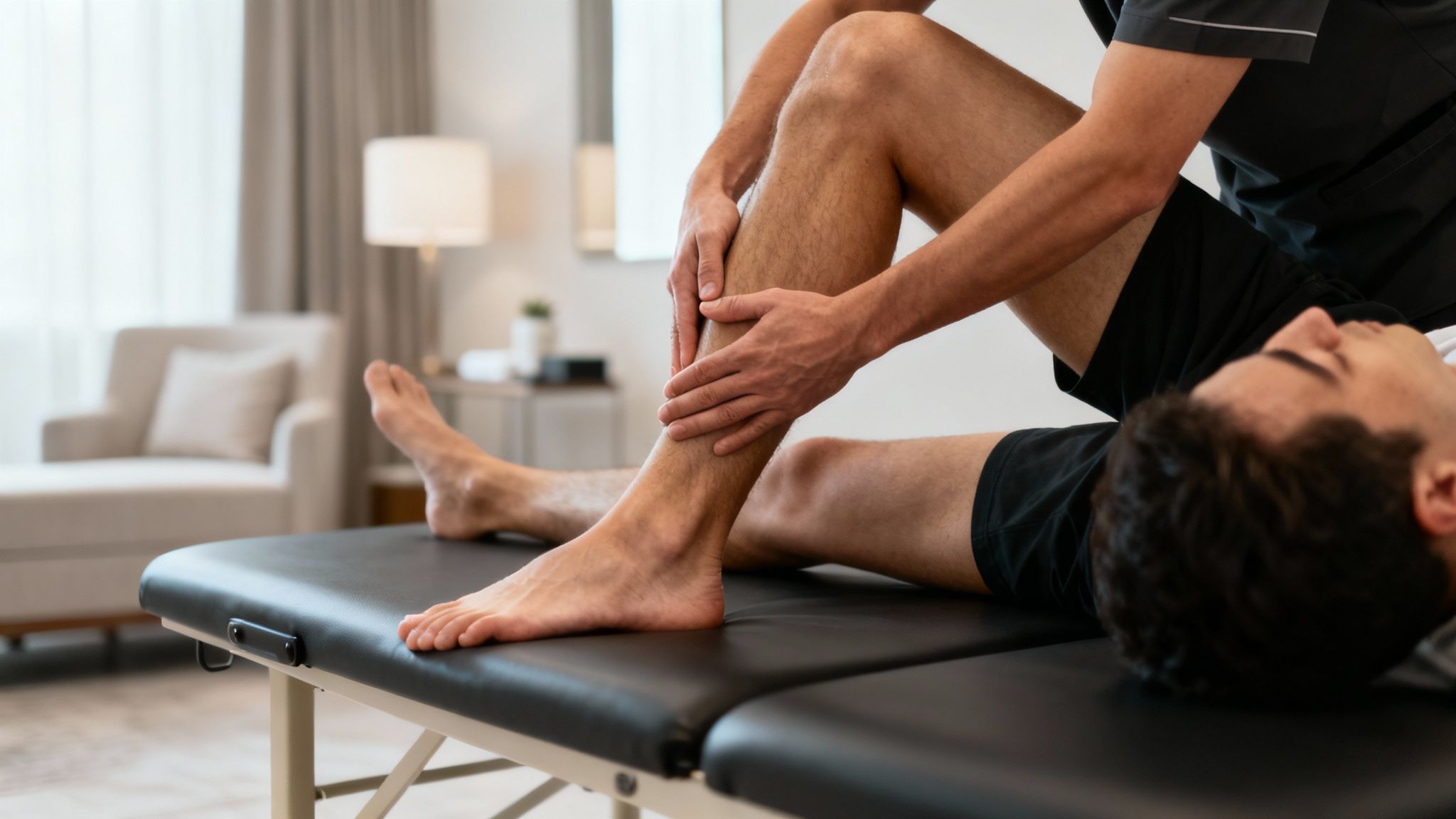
Many people hear "sports massage" and immediately picture a pro athlete on a sideline table. And while it's a cornerstone of professional athletic care, its principles are incredibly effective for a much wider range of people. At its core, this therapy uses a variety of hands-on techniques to manipulate your soft tissues, addressing muscle imbalances and promoting better overall function.
Imagine that nagging neck strain from hours hunched over a laptop at home, or the lower back tightness that creeps in after a weekend of activity. Sports massage provides an actionable strategy to zero in on these exact issues. It’s not about general relaxation; it's about identifying and solving specific musculoskeletal problems to help you move better, feel less pain, and build resilience against future strain.
This practical, hands-on approach has become a key part of mainstream wellness right across Australia. In fact, about 20% of Australians saw a massage therapist in the last year, with huge demand for treatments that address specific conditions like back pain. You can discover more insights about massage therapy in Australia here.
To give you a clear snapshot, here's a quick rundown of what sports massage is all about.
Sports Massage at a Glance
| Concept | Description |
|---|---|
| What It Is | A targeted form of massage using specific techniques to manipulate soft tissue (muscles, tendons, ligaments). |
| Primary Goal | To optimise physical performance, aid recovery, prevent injury, and rehabilitate existing issues. |
| Who It's For | Athletes, desk workers, and anyone with musculoskeletal pain from their daily activities. |
| Focus Area | Addresses specific problem areas and muscle groups related to your activity or pain source. |
| Key Outcome | Improved flexibility, reduced muscle soreness, enhanced circulation, and better overall movement. |
This table shows that it’s a proactive, results-focused therapy, not just a passive treatment.
A Proactive Approach to Wellness
Unlike a treatment you just lie back and receive, sports massage is an active partnership between you and your therapist. The goal is to create lasting, positive change in your body, whether the session takes place in your office, home, or hotel room.
This is achieved through several actionable steps:
- Improving Circulation: Enhanced blood flow is crucial. It delivers vital oxygen and nutrients to your muscles while helping to flush out metabolic waste products that cause soreness and fatigue.
- Increasing Flexibility: By releasing tight muscles, working on trigger points, and breaking down adhesions (those stubborn knots), the therapy helps restore your natural, pain-free range of motion.
- Reducing Muscle Tension: Targeted pressure works to undo knots and relieve the kind of chronic tightness that plagues office workers and active individuals alike.
Ultimately, sports massage is a powerful investment in your physical wellbeing. It’s a highly effective way to manage the demands of an active lifestyle or a challenging job, available wherever you need it.
The Core Techniques of Sports Massage
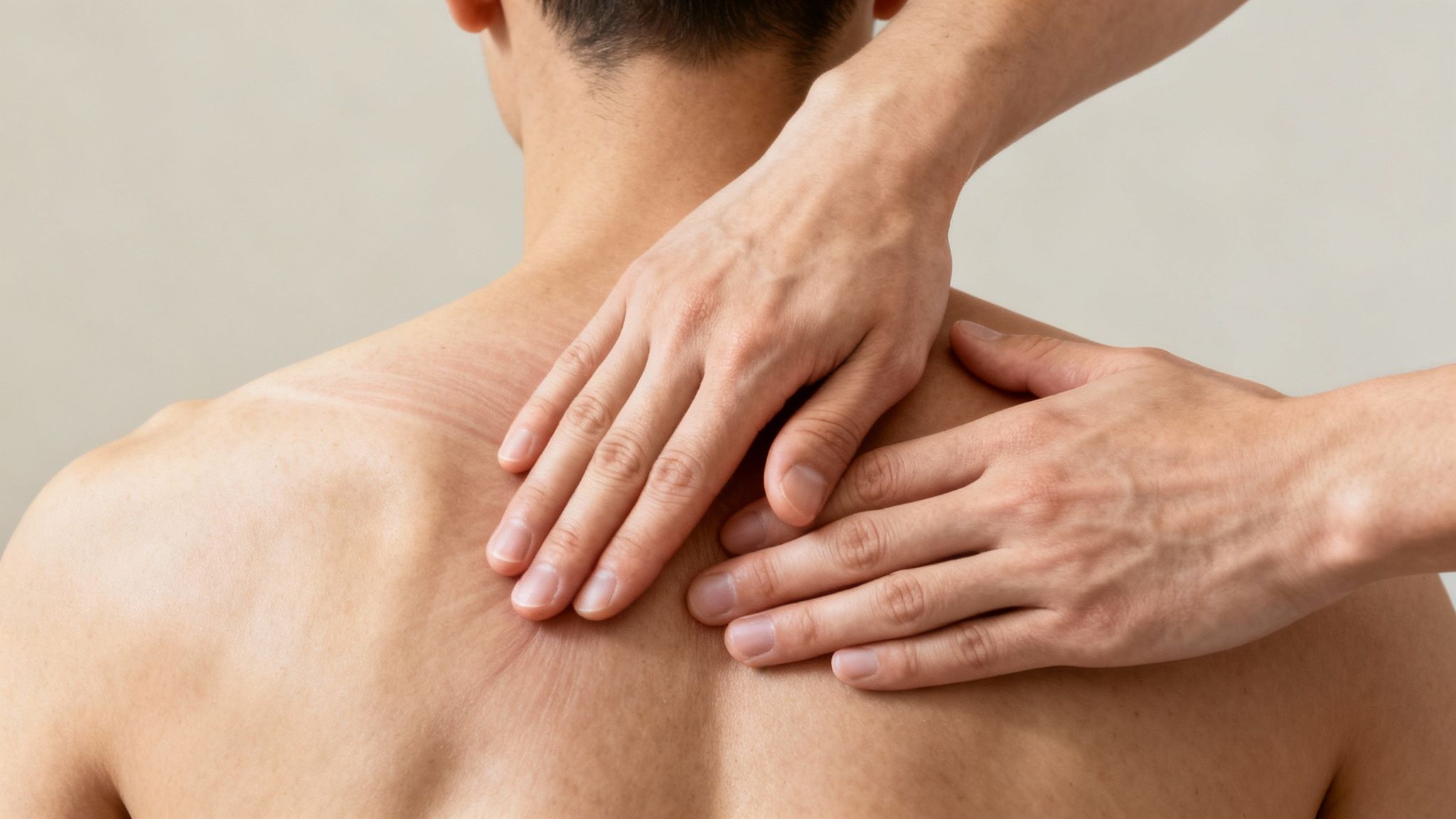
So, what actually goes on during a sports massage? Every treatment is shaped around your specific needs, but the strategy always revolves around three core goals: preventing injury, boosting performance, and speeding up recovery. Your therapist uses specific hands-on methods to get your body ready for action or help it bounce back afterwards.
Think of it this way: a pre-event massage is like a dynamic warm-up for your muscles. It’s designed to be stimulating and invigorating, cranking up blood flow and flexibility right before you need to perform. On the flip side, a post-event massage acts as a crucial system reset. It calms the nervous system and helps flush out metabolic by-products left over from intense effort.
This adaptability makes it an incredibly powerful tool, whether you're recovering from a long week of meetings hunched over a laptop in a hotel room or prepping for a weekend activity.
Demystifying the Hands-On Methods
A skilled therapist has a whole toolkit of techniques they can draw from, and each one has a specific job. You don’t need to know all the technical jargon, but understanding the basics helps you appreciate what’s happening on the table. The two most common strokes you'll feel are effleurage and petrissage.
Effleurage (Gliding Strokes): This involves long, sweeping strokes used to warm up the muscles and get the circulation going. It’s often the first and last technique used in a session, preparing the tissue for deeper work and then soothing it at the end. It feels smooth, rhythmic, and deeply relaxing.
Petrissage (Kneading): This is the classic "kneading" motion most people picture when they think of massage. The therapist lifts, rolls, and squeezes the muscles to release deep-seated tension and break down stubborn knots. It’s more focused and intense, zeroing in on those specific tight spots that can really limit your mobility.
A common misconception is that sports massage has to be painful to work. While some techniques get right in there with firm pressure to release tension, a professional therapist will always work within your comfort zone, encouraging open communication to find that sweet spot for your body.
Going Deeper with Targeted Techniques
Beyond those foundational strokes, your therapist might pull out more advanced methods to tackle specific issues. For instance, friction techniques involve small, deep, circular movements applied right on a problem area, like a tendon or ligament, to help break down scar tissue. Another method is tapotement, which uses rhythmic tapping or cupping motions to stimulate nerve endings and energise the muscles.
While some of these techniques pop up in other massage styles, their application in sports massage is uniquely focused on function and performance. For a closer look at how pressure is used to target those underlying muscle layers, you might be interested in our guide that explains what is deep tissue massage. This focused, results-driven approach is what makes sports massage such an indispensable part of any modern wellness routine.
Who Truly Benefits From Sports Massage
When you hear "sports massage," it’s easy to picture an elite athlete on a physio table. But the reality is, its application is much broader. The techniques are designed to tackle musculoskeletal stress, making it an incredibly effective tool for a whole range of people. Think about the weekend warrior playing touch footy in a Sydney park, or the corporate executive battling that relentless ‘tech neck’ in a Melbourne high-rise—the benefits are real and often immediate.
Let's be honest, modern life puts our bodies through the wringer. Hours slumped over a desk at home, repetitive keyboard use, and the mental strain of a high-pressure job all lead to chronic muscle tension and nagging pain. This is exactly where sports massage proves its worth, far beyond the sporting arena.
More Than Just an Athlete's Tool
It’s better to think of sports massage as a solution for anyone whose body is under regular physical demand, whether that’s from sport or just from work. It provides an actionable solution for common workplace issues like lower back pain from sitting all day, or that familiar tightness in the upper back and shoulders from staring at a screen. It’s not just about fixing injuries; it's a proactive way to maintain a pain-free, active life.
By focusing on the root causes of muscle strain—whether from running a marathon or a marathon of meetings—sports massage helps restore function and build resilience. It’s about making sure your body can keep up with whatever you ask of it.
This approach is particularly relevant here in Australia, where we love to balance office jobs with an active lifestyle. The sheer number of injuries, even from casual activities, shows a clear need for effective treatment. For example, data from the Australian Institute of Health and Welfare reveals that 28% of sports injuries affect the knee and lower leg, with another 15% hitting the elbow and forearms. Read the full statistics on sports-related injuries in Australia. It’s a stark reminder of just how vulnerable our bodies are to strain, making targeted therapies like this essential.
The Modern Professional's Wellness Solution
For corporate professionals, a sports massage is a seriously smart investment in personal wellbeing and productivity. Repetitive strain from constant typing and mouse-clicking is a major cause of wrist, neck, and shoulder pain, leading to the kind of discomfort that kills focus and performance.
An actionable insight is to schedule these sessions proactively. By bringing in targeted massage, you can get on top of these symptoms and stop them from turning into chronic problems. If you're looking for practical ways to fight this specific type of workplace strain, have a look at our guide on how to prevent repetitive strain injury.
At the end of the day, whether you’re climbing the corporate ladder or hiking a mountain, the principle is the same. Sports massage therapy gives your body the targeted support it needs to perform at its best, recover faster, and stay strong. It's a key part of modern wellness, conveniently available right in your home, hotel, office, or even on your yacht.
Sports Massage vs Other Massage Styles
With so many different massage styles out there, it can be tricky to know which one is right for you. You might be wondering if that nagging shoulder tension calls for a sports, remedial, or deep tissue massage. Understanding the key differences is the first step to choosing the right therapy to hit your specific wellness goals and get the results you're after.
Here's a simple way to think about it: a relaxation massage is like a gentle car wash for your body. It’s soothing and leaves you feeling generally refreshed. A sports massage, on the other hand, is like a detailed engine tune-up. It's highly targeted, performance-driven, and completely focused on function—identifying and fixing specific issues to keep your body running at its best.
This functional approach is incredibly versatile, which is why it's not just for professional athletes anymore.
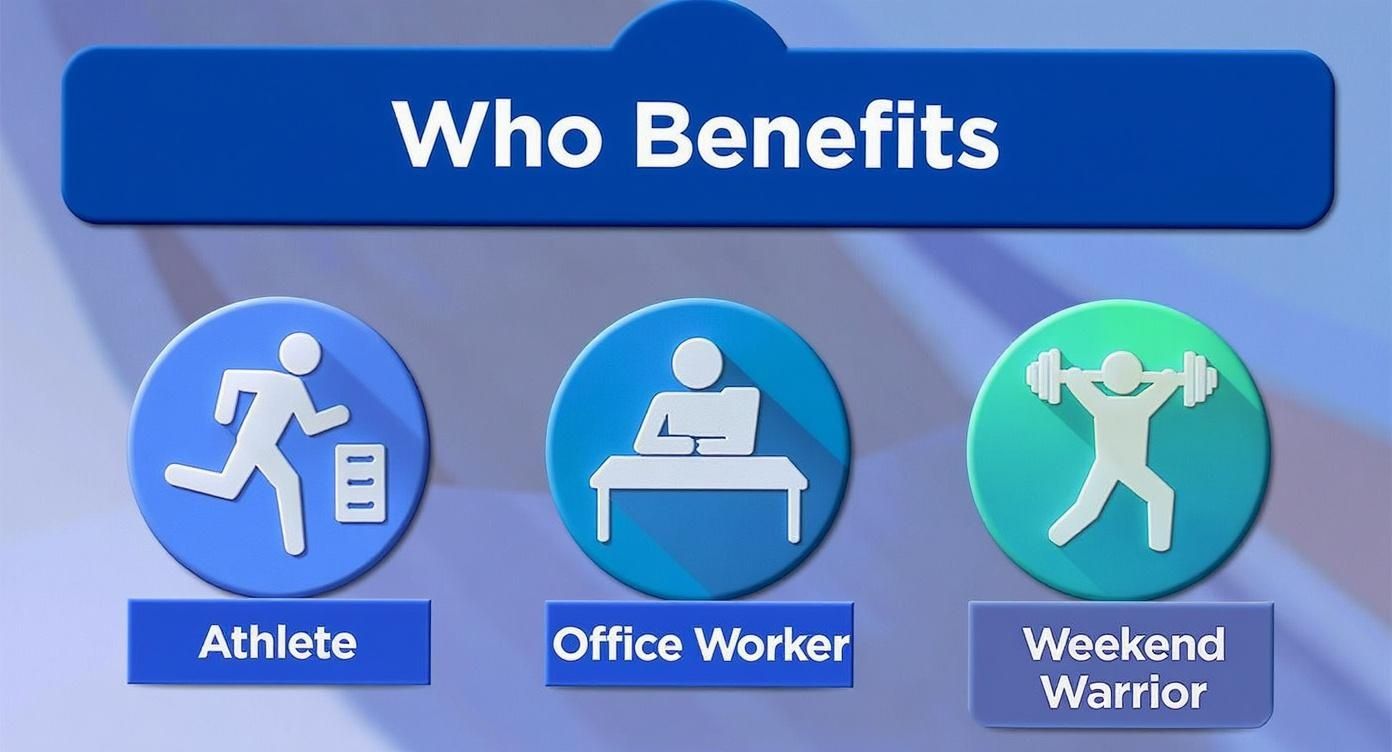
The key takeaway here is that it doesn't matter if your physical strain comes from running a triathlon, sitting at a desk, or your weekend footy match—the core principles of sports massage therapy apply.
Comparing Massage Therapies What's Right For You
To help you make an informed choice, let's put sports massage side-by-side with other popular styles. Each has a distinct goal, pressure level, and ideal application, so there’s a perfect match for whatever your body needs.
| Feature | Sports Massage | Remedial Massage | Relaxation Massage |
|---|---|---|---|
| Primary Goal | To improve athletic performance, prevent injury, and aid recovery from physical activity. | To assess and treat specific musculoskeletal injuries or conditions, such as sciatica or chronic back pain. | To reduce stress, promote general relaxation, and calm the nervous system. |
| Pressure Level | Varies from light to very deep, depending on the goal (e.g., pre-event vs. post-event). | Typically firm and deep, focusing on specific problem areas identified during assessment. | Generally light to medium, using long, flowing strokes to induce a state of calm. |
| Best For | Athletes, office workers with postural strain, and anyone with activity-related muscle tightness. | Individuals recovering from a diagnosed injury or dealing with chronic, persistent pain. | Anyone needing to de-stress, unwind from a busy week, or simply relax their mind and body. |
As you can see, the main difference really boils down to the intent behind the treatment. Sports massage is fundamentally about function—making your body work better for whatever you do. A therapist might focus on your shoulder mobility if you’re a swimmer or address calf tightness if you’re a runner who spends all day on your feet.
This focus on function makes it an incredibly practical and effective choice, whether you're getting treatment in your home, a hotel room, or as part of a corporate wellness program.
Wellness Anywhere With Mobile Massage
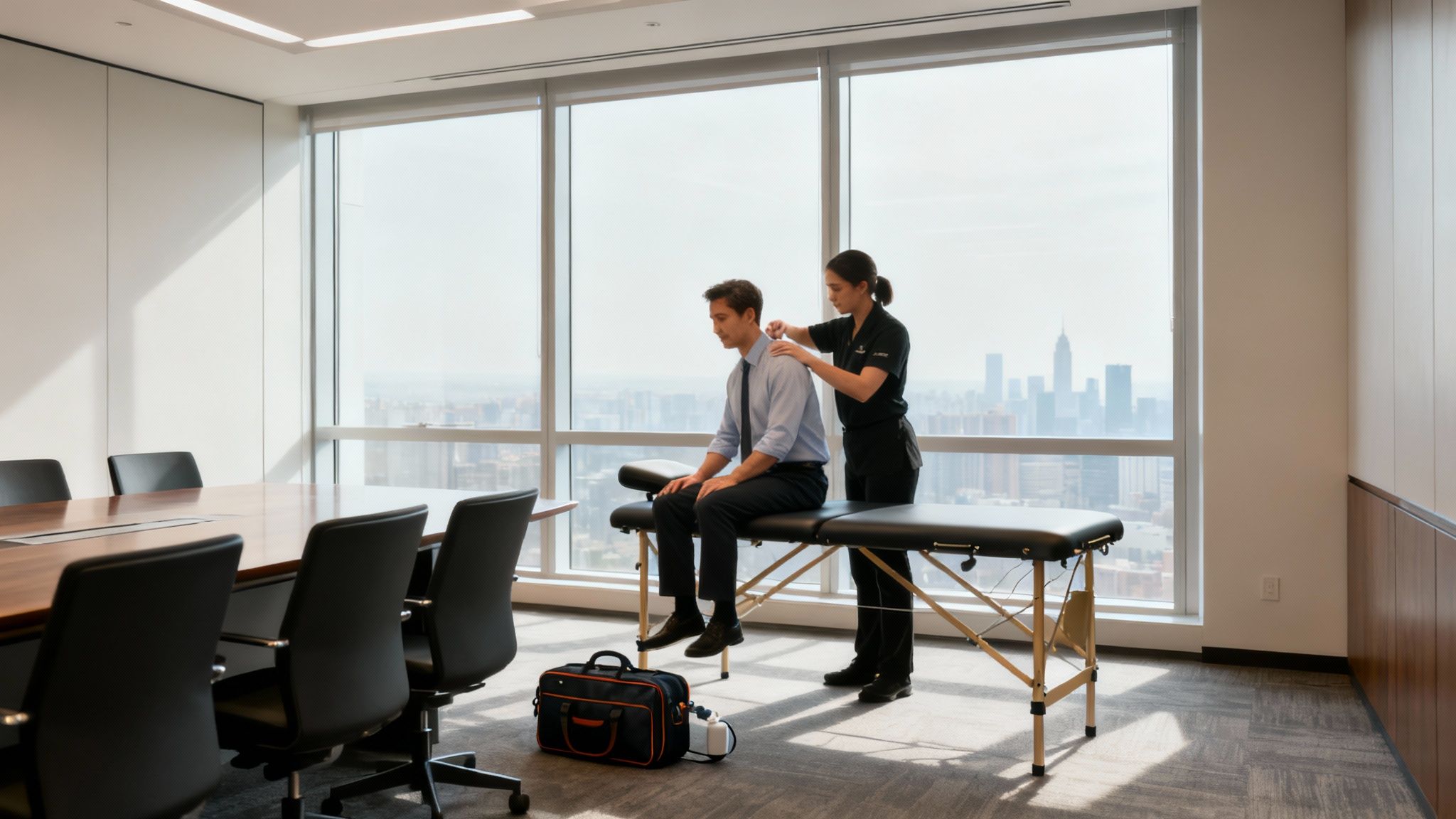
These days, modern wellness has broken free from the clinic walls and is ready to meet you exactly where you are. Forget fighting traffic to get to an appointment. Mobile massage services bring professional sports massage therapy right to your doorstep—whether that’s your home office, a corporate boardroom, a hotel room, or even a yacht moored in Sydney harbour.
The whole model is built around your convenience. It saves precious time for busy professionals while delivering top-tier treatment in a private, comfortable setting. By removing logistical hassles, it makes consistent self-care not just possible, but easy. For many, this is the missing link to finally addressing persistent muscle tightness.
Transforming Corporate Wellness in Australia
Onsite sports massage is completely changing the game for corporate wellness programs across Australia. Forward-thinking companies are realising that employee wellbeing isn't just a perk; it's directly tied to productivity and morale. Bringing therapists into the workplace offers a tangible benefit that tackles the physical toll of office life head-on.
Regular in-office sessions can dramatically reduce employee stress, prevent common work-related niggles like carpal tunnel and tech neck, and boost overall focus. It’s a strategic investment in your people that pays dividends through less absenteeism and a more energised, resilient workforce. Discover more about bringing this professional care directly to your team with mobile massage therapy in Sydney.
By addressing muscle imbalances and tension before they become chronic issues, onsite sports massage shifts the focus from reactive treatment to proactive prevention. It’s about maintaining a healthy, high-performing team.
Preparing for Your Onsite Session
Getting the most out of a mobile massage couldn't be simpler. The therapist brings everything needed, from a professional table or ergonomic chair to lotions and linens. Your only job is to provide a quiet, private space where you can switch off and relax without interruption.
Here’s a quick, actionable checklist on how to prepare:
- Designate a Space: A small conference room, a quiet office, or even a sectioned-off corner of a larger room works perfectly.
- Communicate Your Goals: Be ready to tell your therapist about any specific aches, pains, or areas of tension you’re feeling. The more they know, the better the treatment.
- Wear Comfortable Clothing: Loose-fitting attire is ideal, allowing for easy movement and access to key muscle groups.
This convenient, straightforward approach makes elite sports massage therapy accessible to everyone, ensuring you get the expert care you need, wherever you happen to be.
What to Expect During and After Your Session
Knowing what’s in store can make all the difference, especially if you’re new to sports massage. A typical session is a collaborative process designed to hit your specific goals, whether we’re seeing you in your home, hotel room, or as part of a corporate wellness day.
Your session will always kick off with a brief but crucial consultation. Your therapist will ask about your activity levels, any pain points or areas of tightness you're dealing with, and what you're hoping to achieve. This is your moment to point out that nagging shoulder tension from long hours at the desk or the calf tightness from your last run.
From there, communication is the most critical part of the treatment itself. A professional therapist will constantly check in with you about pressure and comfort. While you might feel some intensity on tight knots—what many call a ‘good pain’—it should never be unbearable. Your feedback is absolutely essential for tailoring the pressure to what your body actually needs.
Your Aftercare Checklist
The benefits of your sports massage don't just stop when the session ends. What you do in the hours and days that follow plays a huge role in maximising the results and helping your body recover properly. Think of it as homework that turns a great massage into a lasting wellness win.
Following a simple aftercare plan helps to flush out metabolic waste, reduce any potential soreness, and lock in that newfound flexibility and relief you’re feeling.
Maximising your recovery is simple but non-negotiable. Proper aftercare ensures your muscles heal correctly and you get the full value from your treatment, setting you up for better performance and less pain down the track.
Here are a few actionable steps to follow after your session:
- Hydrate Generously: Drink plenty of water. Massage helps to release toxins from your muscles, and water is absolutely crucial for flushing them out of your system.
- Gentle Movement: Hold off on any strenuous exercise for at least 24 hours. Instead, opt for light activities like a gentle walk or some simple stretches to keep the blood flowing and prevent stiffness.
- Consider Temperature Therapy: If you feel any soreness, a warm bath can do wonders to soothe the muscles. For any acute inflammation, a cold pack applied for 10-15 minutes can be really beneficial.
By following this guidance, you're helping your body integrate all the work done during the session, making sure you feel the positive effects for days to come.
Your Sports Massage Questions, Answered
Let's get straight to it. Here are the answers to the most common questions we hear about sports massage. We've cut through the jargon to give you practical, straightforward advice, whether you're navigating the demands of corporate life in Australia or simply looking after your wellness at home.
Is Sports Massage Painful?
While it’s certainly more intense than a gentle relaxation massage, it should never be an unbearable ordeal. You might feel some discomfort—what many people call a ‘good pain’—especially when a therapist is working to release a stubborn muscle knot or break down old scar tissue.
But here’s the key: a skilled therapist works with you, not against you. They’ll always stay within your comfort threshold and will check in throughout the session to adjust the pressure. The goal is always to release tension and get your body moving properly again, not to cause unnecessary pain.
How Often Should I Get a Sports Massage?
There's no single magic number; the ideal frequency really comes down to your body, your goals, and your lifestyle. An athlete pushing through a heavy training block might find weekly sessions are non-negotiable for keeping their body in peak condition.
On the other hand, if you're an office worker looking to beat that chronic neck and shoulder tightness from sitting at a desk all day, a session once or twice a month might be the perfect maintenance schedule. Your therapist will help you figure out a plan that makes sense for your specific needs, whether that’s preventing injuries, maintaining performance, or just managing the strains of your job.
The real secret is consistency. Think of it as proactive maintenance for your body, not just a reactive fix. Regular, targeted treatments create lasting change in a way that scrambling for a massage only when the pain is severe simply can’t.
Can I Get a Sports Massage in My Office?
Absolutely. In fact, mobile sports massage is a game-changer for corporate wellness programs across Australia. A professional therapist can easily set up a specialised massage chair or a portable table in a quiet meeting room or empty office.
These onsite sessions are an incredibly efficient way to tackle the common aches and pains that come from office life—think tight necks, sore shoulders, and lower back strain. It’s a proven strategy for boosting employee wellbeing, slashing stress levels, and improving focus, all without anyone needing to leave the building.
Do I Need to Be an Athlete for This?
Not at all. This is easily one of the biggest myths out there. While the name has "sports" in it, sports massage is highly beneficial for anyone dealing with muscle issues, chronic pain, or tension from repetitive daily life.
It doesn’t matter if your "sport" is running marathons, sitting at a desk, working on a trade site, or even just spending weekends in the garden. The techniques are all about improving function, relieving muscle tightness, and helping you move better.
Ready to experience the benefits of expert sports massage where it’s most convenient for you? The Royal Masseur delivers premium, tailored treatments directly to your home, hotel, or office.
Book your mobile massage session today and discover a new level of wellness.