Posted on Leave a comment

What Is Sports Massage Therapy and Its Benefits

Sports massage therapy isn't just for elite athletes, although you’d be forgiven for thinking that. At its heart, it’s a highly specialised treatment designed to get your body working at its best, prevent injuries before they happen, and speed up recovery when they do.

Think of it as a targeted tune-up for your body's engine. It's an essential tool for anyone dealing with the physical toll of a modern desk job or an active lifestyle. This is a practical solution that delivers real results whether you're in a Sydney office, your own home, a hotel room, or even on a yacht.

Your Guide to Sports massage Therapy
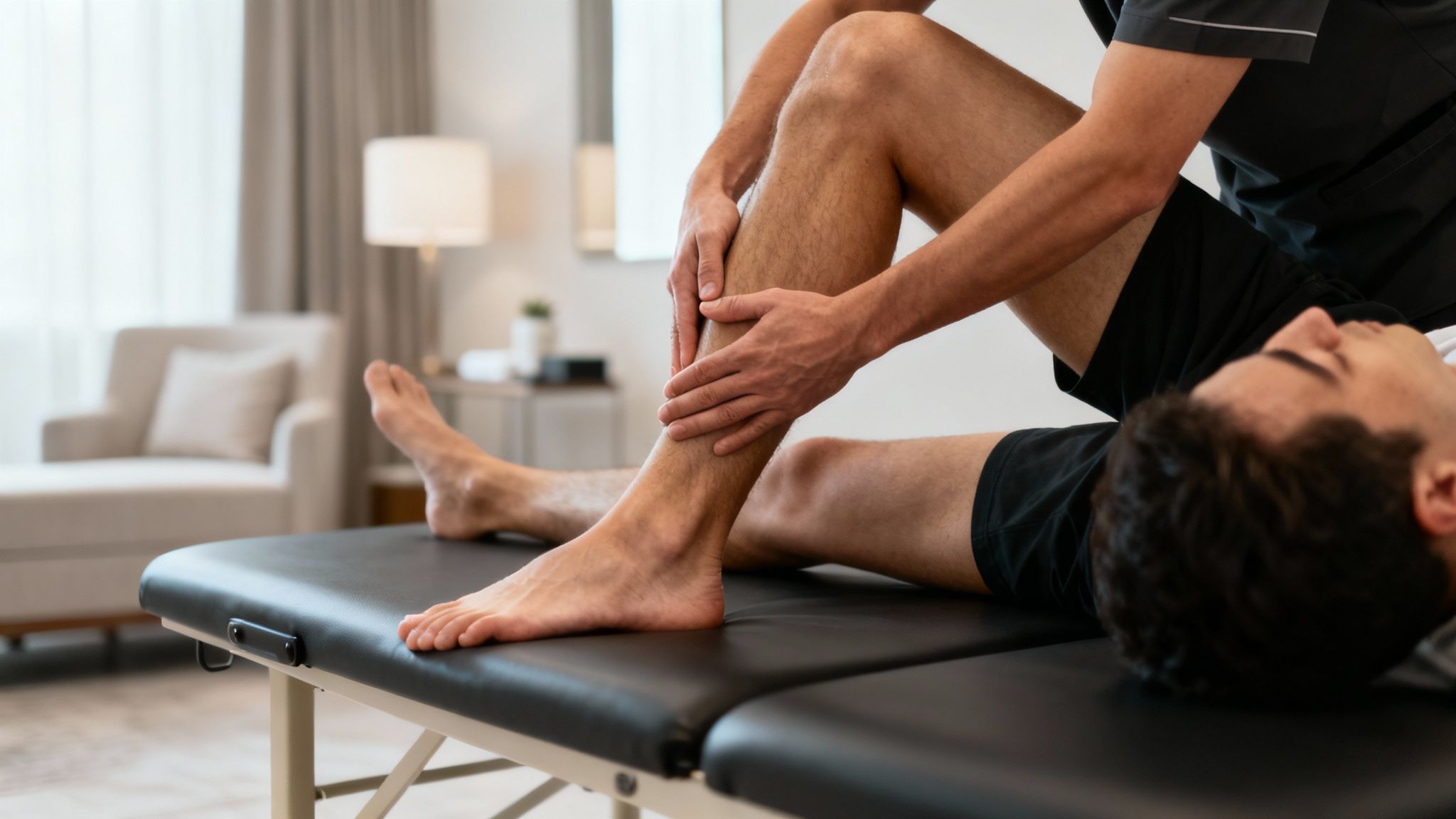
Physical therapist performing sports massage therapy on patient's calf muscle on treatment table

Many people hear "sports massage" and immediately picture a pro athlete on a sideline table. And while it's a cornerstone of professional athletic care, its principles are incredibly effective for a much wider range of people. At its core, this therapy uses a variety of hands-on techniques to manipulate your soft tissues, addressing muscle imbalances and promoting better overall function.

Imagine that nagging neck strain from hours hunched over a laptop at home, or the lower back tightness that creeps in after a weekend of activity. Sports massage provides an actionable strategy to zero in on these exact issues. It’s not about general relaxation; it's about identifying and solving specific musculoskeletal problems to help you move better, feel less pain, and build resilience against future strain.

This practical, hands-on approach has become a key part of mainstream wellness right across Australia. In fact, about 20% of Australians saw a massage therapist in the last year, with huge demand for treatments that address specific conditions like back pain. You can discover more insights about massage therapy in Australia here.

To give you a clear snapshot, here's a quick rundown of what sports massage is all about.

Sports Massage at a Glance

ConceptDescription
What It IsA targeted form of massage using specific techniques to manipulate soft tissue (muscles, tendons, ligaments).
Primary GoalTo optimise physical performance, aid recovery, prevent injury, and rehabilitate existing issues.
Who It's ForAthletes, desk workers, and anyone with musculoskeletal pain from their daily activities.
Focus AreaAddresses specific problem areas and muscle groups related to your activity or pain source.
Key OutcomeImproved flexibility, reduced muscle soreness, enhanced circulation, and better overall movement.

This table shows that it’s a proactive, results-focused therapy, not just a passive treatment.

A Proactive Approach to Wellness

Unlike a treatment you just lie back and receive, sports massage is an active partnership between you and your therapist. The goal is to create lasting, positive change in your body, whether the session takes place in your office, home, or hotel room.

This is achieved through several actionable steps:

  • Improving Circulation: Enhanced blood flow is crucial. It delivers vital oxygen and nutrients to your muscles while helping to flush out metabolic waste products that cause soreness and fatigue.
  • Increasing Flexibility: By releasing tight muscles, working on trigger points, and breaking down adhesions (those stubborn knots), the therapy helps restore your natural, pain-free range of motion.
  • Reducing Muscle Tension: Targeted pressure works to undo knots and relieve the kind of chronic tightness that plagues office workers and active individuals alike.

Ultimately, sports massage is a powerful investment in your physical wellbeing. It’s a highly effective way to manage the demands of an active lifestyle or a challenging job, available wherever you need it.

The Core Techniques of Sports Massage
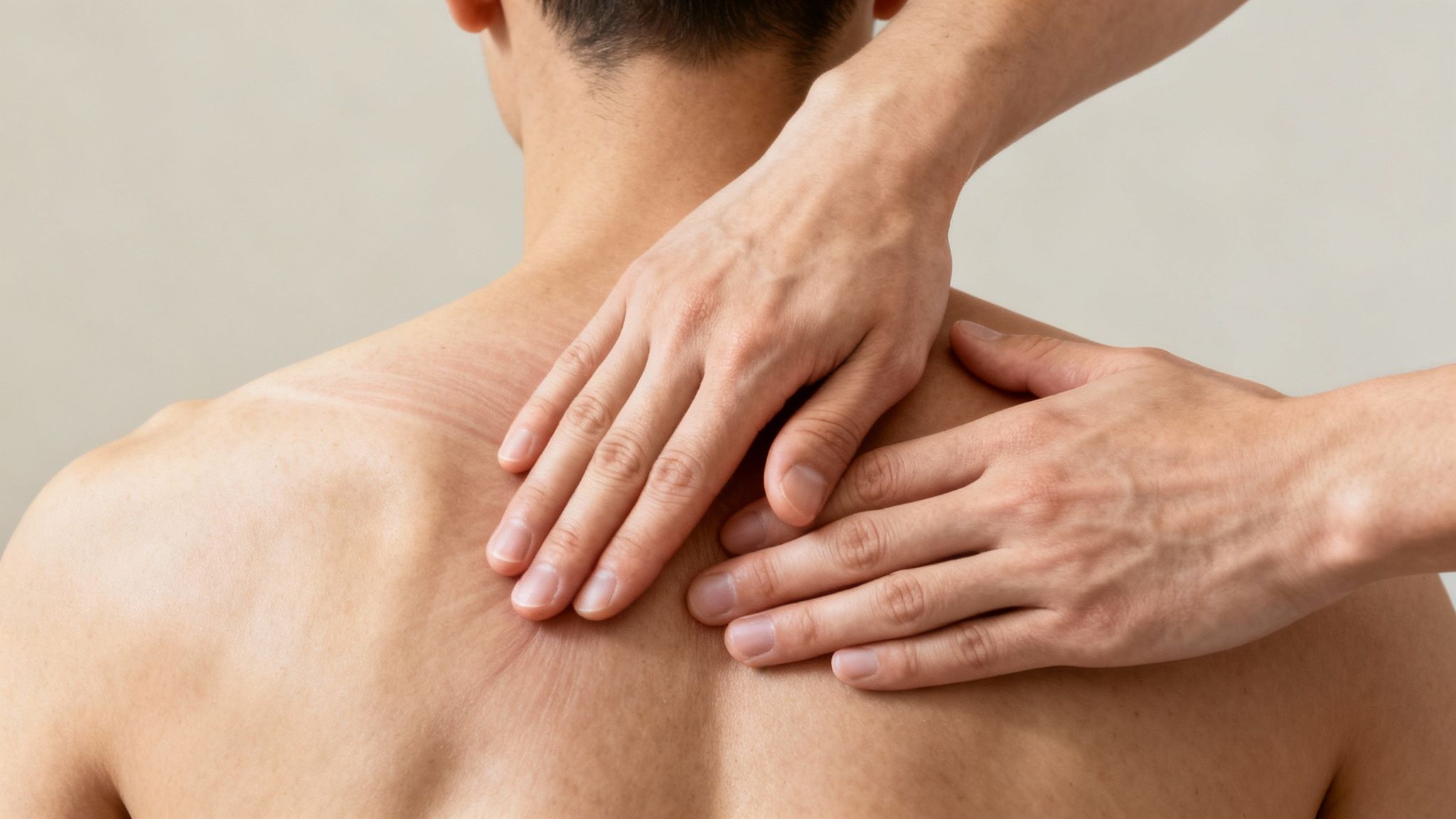
Professional massage therapist performing deep tissue therapy on male patient's upper back and shoulder

So, what actually goes on during a sports massage? Every treatment is shaped around your specific needs, but the strategy always revolves around three core goals: preventing injury, boosting performance, and speeding up recovery. Your therapist uses specific hands-on methods to get your body ready for action or help it bounce back afterwards.

Think of it this way: a pre-event massage is like a dynamic warm-up for your muscles. It’s designed to be stimulating and invigorating, cranking up blood flow and flexibility right before you need to perform. On the flip side, a post-event massage acts as a crucial system reset. It calms the nervous system and helps flush out metabolic by-products left over from intense effort.

This adaptability makes it an incredibly powerful tool, whether you're recovering from a long week of meetings hunched over a laptop in a hotel room or prepping for a weekend activity.

Demystifying the Hands-On Methods

A skilled therapist has a whole toolkit of techniques they can draw from, and each one has a specific job. You don’t need to know all the technical jargon, but understanding the basics helps you appreciate what’s happening on the table. The two most common strokes you'll feel are effleurage and petrissage.

  • Effleurage (Gliding Strokes): This involves long, sweeping strokes used to warm up the muscles and get the circulation going. It’s often the first and last technique used in a session, preparing the tissue for deeper work and then soothing it at the end. It feels smooth, rhythmic, and deeply relaxing.

  • Petrissage (Kneading): This is the classic "kneading" motion most people picture when they think of massage. The therapist lifts, rolls, and squeezes the muscles to release deep-seated tension and break down stubborn knots. It’s more focused and intense, zeroing in on those specific tight spots that can really limit your mobility.

A common misconception is that sports massage has to be painful to work. While some techniques get right in there with firm pressure to release tension, a professional therapist will always work within your comfort zone, encouraging open communication to find that sweet spot for your body.

Going Deeper with Targeted Techniques

Beyond those foundational strokes, your therapist might pull out more advanced methods to tackle specific issues. For instance, friction techniques involve small, deep, circular movements applied right on a problem area, like a tendon or ligament, to help break down scar tissue. Another method is tapotement, which uses rhythmic tapping or cupping motions to stimulate nerve endings and energise the muscles.

While some of these techniques pop up in other massage styles, their application in sports massage is uniquely focused on function and performance. For a closer look at how pressure is used to target those underlying muscle layers, you might be interested in our guide that explains what is deep tissue massage. This focused, results-driven approach is what makes sports massage such an indispensable part of any modern wellness routine.

Who Truly Benefits From Sports Massage

When you hear "sports massage," it’s easy to picture an elite athlete on a physio table. But the reality is, its application is much broader. The techniques are designed to tackle musculoskeletal stress, making it an incredibly effective tool for a whole range of people. Think about the weekend warrior playing touch footy in a Sydney park, or the corporate executive battling that relentless ‘tech neck’ in a Melbourne high-rise—the benefits are real and often immediate.

Let's be honest, modern life puts our bodies through the wringer. Hours slumped over a desk at home, repetitive keyboard use, and the mental strain of a high-pressure job all lead to chronic muscle tension and nagging pain. This is exactly where sports massage proves its worth, far beyond the sporting arena.

More Than Just an Athlete's Tool

It’s better to think of sports massage as a solution for anyone whose body is under regular physical demand, whether that’s from sport or just from work. It provides an actionable solution for common workplace issues like lower back pain from sitting all day, or that familiar tightness in the upper back and shoulders from staring at a screen. It’s not just about fixing injuries; it's a proactive way to maintain a pain-free, active life.

By focusing on the root causes of muscle strain—whether from running a marathon or a marathon of meetings—sports massage helps restore function and build resilience. It’s about making sure your body can keep up with whatever you ask of it.

This approach is particularly relevant here in Australia, where we love to balance office jobs with an active lifestyle. The sheer number of injuries, even from casual activities, shows a clear need for effective treatment. For example, data from the Australian Institute of Health and Welfare reveals that 28% of sports injuries affect the knee and lower leg, with another 15% hitting the elbow and forearms. Read the full statistics on sports-related injuries in Australia. It’s a stark reminder of just how vulnerable our bodies are to strain, making targeted therapies like this essential.

The Modern Professional's Wellness Solution

For corporate professionals, a sports massage is a seriously smart investment in personal wellbeing and productivity. Repetitive strain from constant typing and mouse-clicking is a major cause of wrist, neck, and shoulder pain, leading to the kind of discomfort that kills focus and performance.

An actionable insight is to schedule these sessions proactively. By bringing in targeted massage, you can get on top of these symptoms and stop them from turning into chronic problems. If you're looking for practical ways to fight this specific type of workplace strain, have a look at our guide on how to prevent repetitive strain injury.

At the end of the day, whether you’re climbing the corporate ladder or hiking a mountain, the principle is the same. Sports massage therapy gives your body the targeted support it needs to perform at its best, recover faster, and stay strong. It's a key part of modern wellness, conveniently available right in your home, hotel, office, or even on your yacht.

Sports Massage vs Other Massage Styles

With so many different massage styles out there, it can be tricky to know which one is right for you. You might be wondering if that nagging shoulder tension calls for a sports, remedial, or deep tissue massage. Understanding the key differences is the first step to choosing the right therapy to hit your specific wellness goals and get the results you're after.

Here's a simple way to think about it: a relaxation massage is like a gentle car wash for your body. It’s soothing and leaves you feeling generally refreshed. A sports massage, on the other hand, is like a detailed engine tune-up. It's highly targeted, performance-driven, and completely focused on function—identifying and fixing specific issues to keep your body running at its best.

This functional approach is incredibly versatile, which is why it's not just for professional athletes anymore.
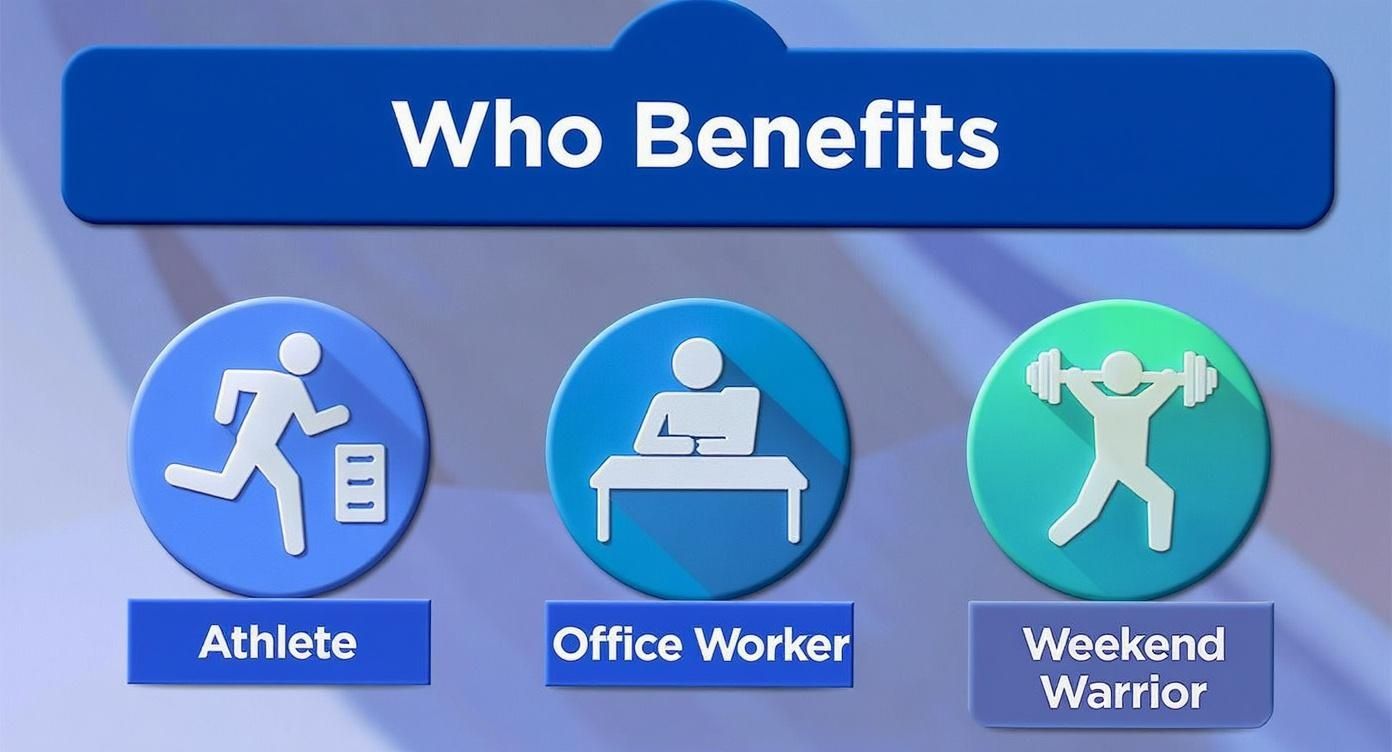
Three icons showing benefits for athletes, office workers, and weekend warriors in sports massage therapy

The key takeaway here is that it doesn't matter if your physical strain comes from running a triathlon, sitting at a desk, or your weekend footy match—the core principles of sports massage therapy apply.

Comparing Massage Therapies What's Right For You

To help you make an informed choice, let's put sports massage side-by-side with other popular styles. Each has a distinct goal, pressure level, and ideal application, so there’s a perfect match for whatever your body needs.

FeatureSports MassageRemedial MassageRelaxation Massage
Primary GoalTo improve athletic performance, prevent injury, and aid recovery from physical activity.To assess and treat specific musculoskeletal injuries or conditions, such as sciatica or chronic back pain.To reduce stress, promote general relaxation, and calm the nervous system.
Pressure LevelVaries from light to very deep, depending on the goal (e.g., pre-event vs. post-event).Typically firm and deep, focusing on specific problem areas identified during assessment.Generally light to medium, using long, flowing strokes to induce a state of calm.
Best ForAthletes, office workers with postural strain, and anyone with activity-related muscle tightness.Individuals recovering from a diagnosed injury or dealing with chronic, persistent pain.Anyone needing to de-stress, unwind from a busy week, or simply relax their mind and body.

As you can see, the main difference really boils down to the intent behind the treatment. Sports massage is fundamentally about function—making your body work better for whatever you do. A therapist might focus on your shoulder mobility if you’re a swimmer or address calf tightness if you’re a runner who spends all day on your feet.

This focus on function makes it an incredibly practical and effective choice, whether you're getting treatment in your home, a hotel room, or as part of a corporate wellness program.

Wellness Anywhere With Mobile Massage
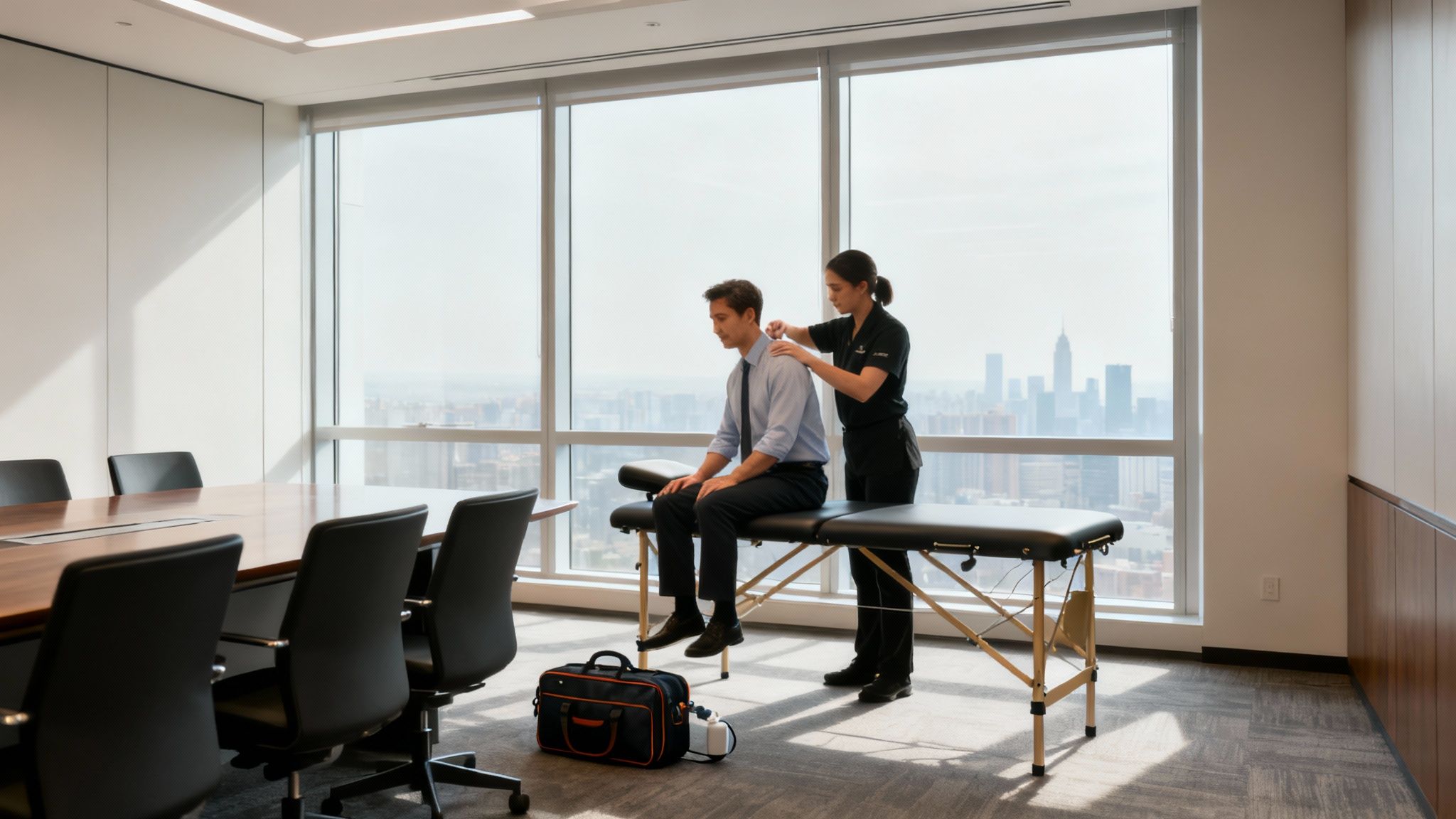
Corporate massage therapist providing shoulder treatment to office worker in modern conference room

These days, modern wellness has broken free from the clinic walls and is ready to meet you exactly where you are. Forget fighting traffic to get to an appointment. Mobile massage services bring professional sports massage therapy right to your doorstep—whether that’s your home office, a corporate boardroom, a hotel room, or even a yacht moored in Sydney harbour.

The whole model is built around your convenience. It saves precious time for busy professionals while delivering top-tier treatment in a private, comfortable setting. By removing logistical hassles, it makes consistent self-care not just possible, but easy. For many, this is the missing link to finally addressing persistent muscle tightness.

Transforming Corporate Wellness in Australia

Onsite sports massage is completely changing the game for corporate wellness programs across Australia. Forward-thinking companies are realising that employee wellbeing isn't just a perk; it's directly tied to productivity and morale. Bringing therapists into the workplace offers a tangible benefit that tackles the physical toll of office life head-on.

Regular in-office sessions can dramatically reduce employee stress, prevent common work-related niggles like carpal tunnel and tech neck, and boost overall focus. It’s a strategic investment in your people that pays dividends through less absenteeism and a more energised, resilient workforce. Discover more about bringing this professional care directly to your team with mobile massage therapy in Sydney.

By addressing muscle imbalances and tension before they become chronic issues, onsite sports massage shifts the focus from reactive treatment to proactive prevention. It’s about maintaining a healthy, high-performing team.

Preparing for Your Onsite Session

Getting the most out of a mobile massage couldn't be simpler. The therapist brings everything needed, from a professional table or ergonomic chair to lotions and linens. Your only job is to provide a quiet, private space where you can switch off and relax without interruption.

Here’s a quick, actionable checklist on how to prepare:

  • Designate a Space: A small conference room, a quiet office, or even a sectioned-off corner of a larger room works perfectly.
  • Communicate Your Goals: Be ready to tell your therapist about any specific aches, pains, or areas of tension you’re feeling. The more they know, the better the treatment.
  • Wear Comfortable Clothing: Loose-fitting attire is ideal, allowing for easy movement and access to key muscle groups.

This convenient, straightforward approach makes elite sports massage therapy accessible to everyone, ensuring you get the expert care you need, wherever you happen to be.

What to Expect During and After Your Session

Knowing what’s in store can make all the difference, especially if you’re new to sports massage. A typical session is a collaborative process designed to hit your specific goals, whether we’re seeing you in your home, hotel room, or as part of a corporate wellness day.

Your session will always kick off with a brief but crucial consultation. Your therapist will ask about your activity levels, any pain points or areas of tightness you're dealing with, and what you're hoping to achieve. This is your moment to point out that nagging shoulder tension from long hours at the desk or the calf tightness from your last run.

From there, communication is the most critical part of the treatment itself. A professional therapist will constantly check in with you about pressure and comfort. While you might feel some intensity on tight knots—what many call a ‘good pain’—it should never be unbearable. Your feedback is absolutely essential for tailoring the pressure to what your body actually needs.

Your Aftercare Checklist

The benefits of your sports massage don't just stop when the session ends. What you do in the hours and days that follow plays a huge role in maximising the results and helping your body recover properly. Think of it as homework that turns a great massage into a lasting wellness win.

Following a simple aftercare plan helps to flush out metabolic waste, reduce any potential soreness, and lock in that newfound flexibility and relief you’re feeling.

Maximising your recovery is simple but non-negotiable. Proper aftercare ensures your muscles heal correctly and you get the full value from your treatment, setting you up for better performance and less pain down the track.

Here are a few actionable steps to follow after your session:

  • Hydrate Generously: Drink plenty of water. Massage helps to release toxins from your muscles, and water is absolutely crucial for flushing them out of your system.
  • Gentle Movement: Hold off on any strenuous exercise for at least 24 hours. Instead, opt for light activities like a gentle walk or some simple stretches to keep the blood flowing and prevent stiffness.
  • Consider Temperature Therapy: If you feel any soreness, a warm bath can do wonders to soothe the muscles. For any acute inflammation, a cold pack applied for 10-15 minutes can be really beneficial.

By following this guidance, you're helping your body integrate all the work done during the session, making sure you feel the positive effects for days to come.

Your Sports Massage Questions, Answered

Let's get straight to it. Here are the answers to the most common questions we hear about sports massage. We've cut through the jargon to give you practical, straightforward advice, whether you're navigating the demands of corporate life in Australia or simply looking after your wellness at home.

Is Sports Massage Painful?

While it’s certainly more intense than a gentle relaxation massage, it should never be an unbearable ordeal. You might feel some discomfort—what many people call a ‘good pain’—especially when a therapist is working to release a stubborn muscle knot or break down old scar tissue.

But here’s the key: a skilled therapist works with you, not against you. They’ll always stay within your comfort threshold and will check in throughout the session to adjust the pressure. The goal is always to release tension and get your body moving properly again, not to cause unnecessary pain.

How Often Should I Get a Sports Massage?

There's no single magic number; the ideal frequency really comes down to your body, your goals, and your lifestyle. An athlete pushing through a heavy training block might find weekly sessions are non-negotiable for keeping their body in peak condition.

On the other hand, if you're an office worker looking to beat that chronic neck and shoulder tightness from sitting at a desk all day, a session once or twice a month might be the perfect maintenance schedule. Your therapist will help you figure out a plan that makes sense for your specific needs, whether that’s preventing injuries, maintaining performance, or just managing the strains of your job.

The real secret is consistency. Think of it as proactive maintenance for your body, not just a reactive fix. Regular, targeted treatments create lasting change in a way that scrambling for a massage only when the pain is severe simply can’t.

Can I Get a Sports Massage in My Office?

Absolutely. In fact, mobile sports massage is a game-changer for corporate wellness programs across Australia. A professional therapist can easily set up a specialised massage chair or a portable table in a quiet meeting room or empty office.

These onsite sessions are an incredibly efficient way to tackle the common aches and pains that come from office life—think tight necks, sore shoulders, and lower back strain. It’s a proven strategy for boosting employee wellbeing, slashing stress levels, and improving focus, all without anyone needing to leave the building.

Do I Need to Be an Athlete for This?

Not at all. This is easily one of the biggest myths out there. While the name has "sports" in it, sports massage is highly beneficial for anyone dealing with muscle issues, chronic pain, or tension from repetitive daily life.

It doesn’t matter if your "sport" is running marathons, sitting at a desk, working on a trade site, or even just spending weekends in the garden. The techniques are all about improving function, relieving muscle tightness, and helping you move better.


Ready to experience the benefits of expert sports massage where it’s most convenient for you? The Royal Masseur delivers premium, tailored treatments directly to your home, hotel, or office.

Book your mobile massage session today and discover a new level of wellness.
Posted on Leave a comment

Sports Remedial Massage for Peak Performance

Forget the fluffy spa treatment. Sports remedial massage is a specialised therapy focused on one thing: getting your body to work at its absolute best, whether you're at the office, at home, in a hotel room, or even on a yacht. It's a precision tune-up for your body, designed to correct imbalances, eliminate pain, and restore proper function so you can move freely and efficiently.

A Tune-Up for Your Body

Now, sports remedial massage isn’t just for elite athletes pulling on a green and gold jersey. It’s an essential tool for anyone who leads an active life. That includes weekend warriors hitting the park run, office workers battling postural strain from hours hunched over a desk, and anyone who simply wants to keep their body in top working order. The whole point is to dig deeper and treat the root cause of your pain or dysfunction, not just mask the symptoms.

Unlike a standard relaxation massage that’s all about general de-stressing, this is a form of manual therapy. It starts with a proper assessment of your muscles, tendons, ligaments, and connective tissues to find the specific imbalances that are causing you grief or holding you back. If you want to get a broader feel for this approach, you can check out our guide to understanding remedial massage. This clinical mindset is what makes it so powerful for both fixing injuries and preventing them in the first place.

More Than Just a Rubdown

The treatment itself is a dynamic, hands-on process. A qualified therapist will use a whole toolkit of specialised techniques to manipulate your soft tissues, aiming to get them back to a healthy, functional state. This might mean some deep tissue work to break down stubborn knots, trigger point therapy to release specific tight spots, or careful stretching to improve your flexibility.

By getting to the bottom of underlying biomechanical issues, sports remedial massage helps your body move the way it's supposed to. This not only slashes your risk of future injuries but also boosts your capacity to perform, whether that’s in the office, at home, or during a workout.

This kind of therapy is a massive part of physical wellness here in Australia. In fact, government data shows just how important it is, revealing that a huge number of patients—between 52% and 63%—receive three to five sessions to effectively manage their pain and dysfunction. You can learn more about the role of sports massage in Australian healthcare.

These days, the convenience of premium mobile services brings this expert care right to your doorstep. Whether you're at home, in a hotel, on a yacht, or even at the office, achieving peak performance and wellness has never been more accessible.

Choosing The Right Massage For Your Goals

Trying to figure out which massage you need can feel a bit like staring at a restaurant menu with way too many options. Do you go for a sports massage, a remedial session, or just a classic relaxation treatment? Knowing the difference is crucial to getting the results you’re after, whether that’s fixing a stubborn injury or just melting away the stress from a long week at the desk.

Let's break it down with a simple analogy. Think of a pre-event sports massage as the dynamic warm-up before a big game. It's energetic, fast-paced, and all about increasing blood flow to get your muscles primed for peak performance. On the flip side, sports remedial massage is the deep diagnostic work you get after the game to fix a specific problem. It’s less about general prep and all about assessment, treatment, and getting you back to full strength.

Then you have relaxation massage, which is in a league of its own. Its only goal is to calm your nervous system. Using long, flowing strokes, it helps you de-stress and properly unwind. It’s brilliant for managing general tension, but it’s not designed to address the underlying biomechanical issues that a remedial therapist is trained to pinpoint and treat.

Massage Comparison: Sports vs Remedial vs Relaxation

To make the choice even clearer, it helps to see the core differences laid out side-by-side. A sports massage is focused on athletic performance and recovery. A remedial massage is a clinical, diagnostic approach to treating specific pain or dysfunction, whether it’s from sport, your job, or just life. And a relaxation massage? That’s purely for soothing your mind and body.

This table cuts through the noise and compares the three main players.

Massage TypePrimary GoalKey TechniquesBest For
Sports MassageEnhance athletic performance, aid recoveryFast-paced strokes, stretching, compressionAthletes preparing for or recovering from an event
Remedial MassageDiagnose and treat specific pain/dysfunctionDeep tissue work, trigger point therapy, myofascial releaseChronic pain, injuries, postural issues (from sport or work)
Relaxation MassageReduce stress and promote general well-beingLong, flowing strokes (effleurage), gentle kneadingMental fatigue, stress relief, general muscle tension

Each one has a very specific job to do, and matching the right therapy to your goal is what delivers real, lasting results.

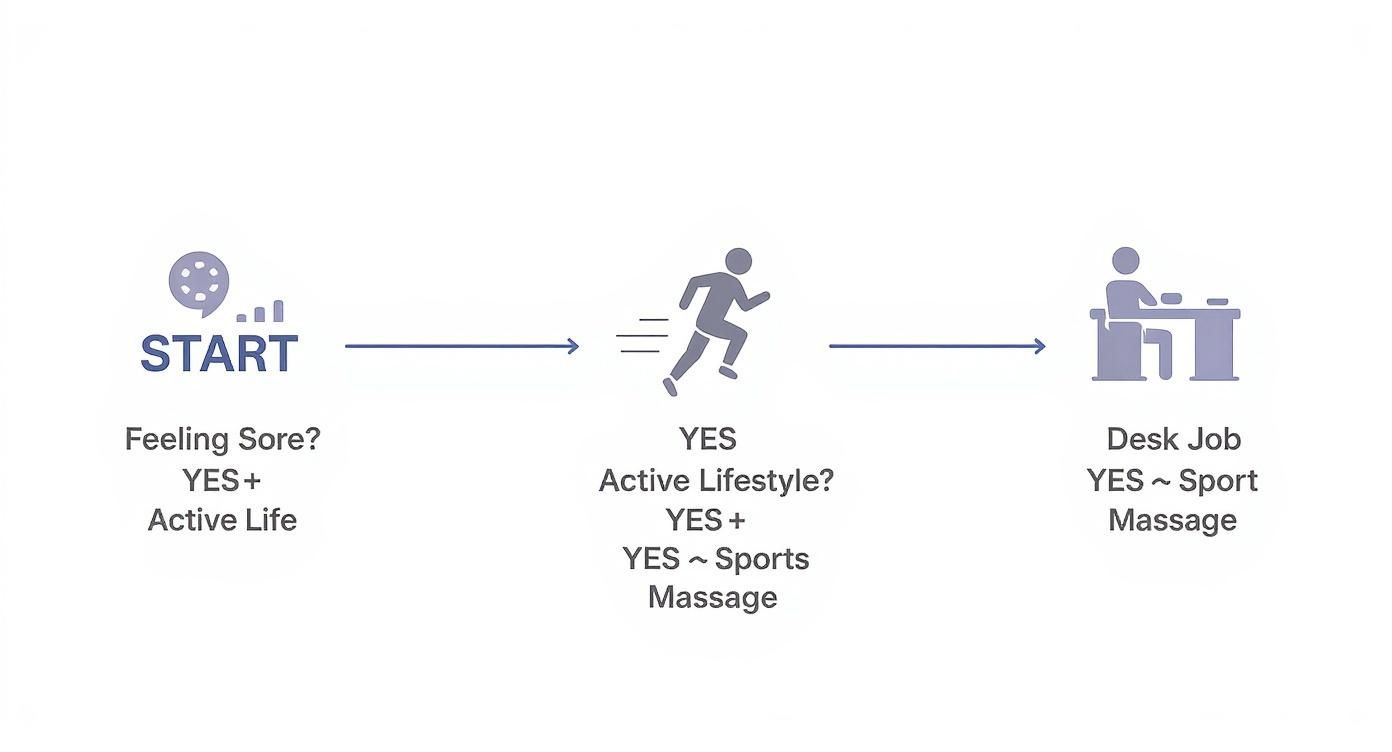
This simple decision tree can help you visualise whether a sports-focused massage is the right path for your current needs.

Infographic decision tree showing who needs sports massage based on soreness and lifestyle.

As the graphic shows, if you’re dealing with soreness and live an active lifestyle—or even a desk-bound one—you’re heading straight towards the benefits of targeted massage therapy.

Scenarios To Guide Your Choice

So, how does this play out in the real world? Your specific situation is always the best guide. Here are a few common scenarios that plenty of Australians can relate to:

  • You're an athlete gearing up for a marathon. A pre-event sports massage a day or two before the race is perfect for priming your muscles. Afterwards, a post-event session will kickstart recovery, while ongoing sports remedial massage throughout your training can tackle any niggles before they become full-blown injuries.
  • You've got that nagging lower back pain from your office chair. This is a classic case for sports remedial massage. A good therapist won't just rub the sore spot; they’ll assess your posture and muscle imbalances to treat the root cause of the pain, delivering lasting relief, not just a temporary fix.
  • You just feel mentally drained and tense all over. A relaxation massage is exactly what you need. The goal here isn't to fix a specific injury but to lower your stress hormones and bring on a genuine sense of calm and well-being.

The most effective approach is to match the therapy to your immediate goal. A targeted treatment plan will always deliver better, more lasting results than a one-size-fits-all massage.

Ultimately, once you understand the unique purpose behind each style, you can confidently choose the exact therapy your body is crying out for. This ensures your time and investment are laser-focused on hitting your specific wellness goals, whether that’s on the field, in your hotel room, or right in your home office.

The Science Behind How Massage Heals

Ever wondered what’s actually happening deep in your muscles during a sports remedial massage? It’s a world away from just a relaxing rub-down; it’s a targeted physiological process designed to kickstart your body's own powerful healing mechanisms. At its heart, this therapy is all about skilfully manipulating soft tissues to get them back to their peak condition.

Think of a stubborn muscle knot like a hopelessly tangled pair of headphone cords. If you just leave it, the knot gets tighter, restricts movement, and becomes a real source of irritation. A skilled therapist works methodically to untangle that knot, using specific techniques to release the built-up tension and guide the muscle fibres back into their correct alignment.

Unlocking Your Body's Healing Potential

Two of the most powerful tools in a therapist’s arsenal are myofascial release and trigger point therapy. Myofascial release zeroes in on the fascia—that intricate web of connective tissue wrapping around every single muscle and organ. By applying slow, sustained pressure, the therapist can stretch and loosen this fascial layer, which dramatically improves mobility and eases pain across entire muscle groups.

Trigger point therapy, on the other hand, is much more direct. It involves applying precise, firm pressure to a specific "trigger point," which is essentially a hyper-irritable spot within a tight band of muscle. This action interrupts the pain signals being sent to your brain and encourages the muscle to finally let go, often providing immediate, noticeable relief.

This targeted pressure does far more than just release knots, though. One of its most crucial benefits is the significant boost in blood circulation to the area being treated. It's like opening up a blocked highway, allowing a fresh wave of oxygen and nutrient-rich blood to flood the muscle tissue.

This enhanced circulation is absolutely vital for healing. It speeds up the removal of metabolic waste products, like lactic acid, that cause muscle soreness, while simultaneously delivering the essential building blocks your body needs for proper tissue repair.

Real-World Results from Scientific Principles

The physiological responses triggered by a sports remedial massage translate directly into tangible, real-world benefits you can actually feel. By breaking down those restrictive adhesions and old scar tissue, your muscles start to regain their natural pliability and length.

This leads to a very noticeable improvement in your range of motion and overall flexibility. It’s the reason you feel so much looser and more mobile after a session, whether you're reaching for something on a high shelf at work or warming up for a weekend run.

Another key outcome is the reduction of delayed onset muscle soreness (DOMS)—that all-too-familiar ache you feel a day or two after a tough workout. By flushing out the inflammatory by-products of intense exercise, massage can seriously shorten your recovery time, getting you back to your routine faster and with way less discomfort. Whether you get your treatment in a hotel room after a long-haul flight or in the comfort of your own home, understanding this science helps you appreciate how every technique is working to get you back to your best.

On-Demand Wellness with Mobile Massage

Imagine getting an expert remedial treatment without ever having to leave your comfort zone. The old way of doing things usually means a trip to a clinic, fighting through traffic, and circling for a park—all of which can add a fresh layer of stress to an experience that’s meant to get rid of it. This is where the modern approach of mobile massage completely changes the game.

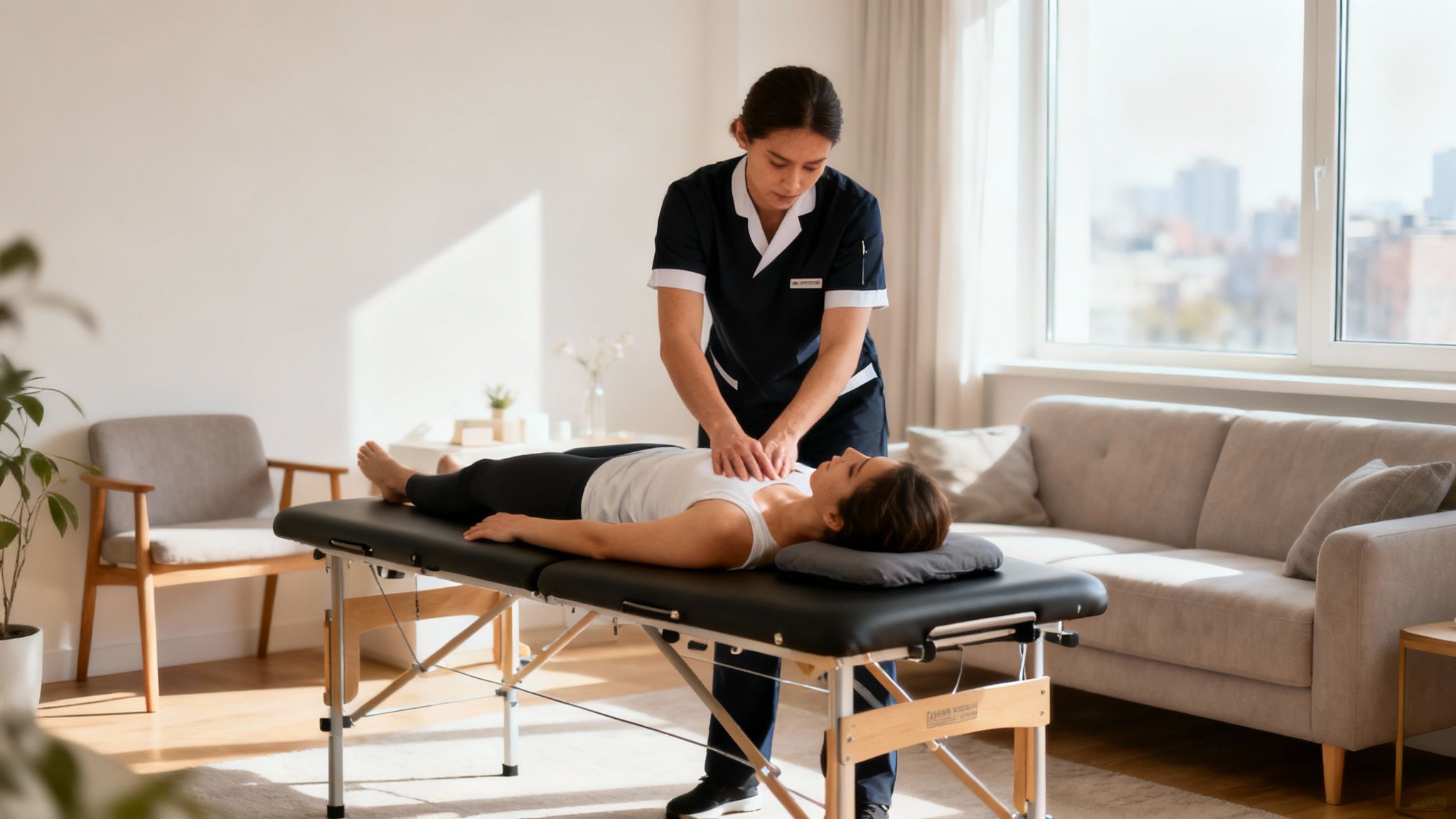
A massage therapist treats a client in a comfortable home setting.

This isn't just about luxury; it’s a seriously smart strategy for busy professionals, dedicated athletes, and anyone looking to weave high-level wellness into a packed schedule. The real win is cutting out the post-massage commute, which lets your body fully absorb the treatment and hold onto that state of relaxation for much longer.

Bringing The Clinic To You

Whether it's your home office, a hotel room after a long-haul flight, or even on a private yacht in Sydney Harbour, getting treated in your own space just makes the therapeutic benefits hit harder. It gets rid of all those logistical headaches that so often become a barrier to looking after yourself consistently.

This growing hunger for convenient, top-quality care is being seen right across Australia. The entire physiotherapy and massage therapy market is booming, thanks to a bigger focus on physical activity and wellbeing. According to IBISWorld reports, the Australian Physiotherapy Services industry, which has a significant overlap with remedial and sports remedial massage, is valued at around $3.9 billion as of 2024.

Wellness Integrated Into Your Environment

The setting for your massage can be adapted to exactly what you need, turning wellness into an easy part of your daily life rather than another time-consuming appointment to squeeze in.

  • In the Office: Corporate wellness programs with seated massage are perfect for tackling the postural strain of desk work. They can reduce tension in the neck and shoulders while giving team morale a real boost.
  • At Home: A mobile service brings all the professional gear, turning your living room into a private sanctuary where you can immediately relax the moment the treatment is finished.
  • In a Hotel Room: For travellers or business professionals, an in-room massage is the ultimate antidote to jet lag and the physical toll of being on the road.

By bringing expert therapy directly to you, mobile massage removes the friction between needing treatment and actually getting it. This on-demand approach makes consistent wellness not just possible, but practical.

Of course, choosing the right service is crucial for a safe and professional experience. For those in Sydney looking for a provider they can trust, it's important to understand how to find the right mobile massage therapist for your needs. At the end of the day, this model of care puts you back in control, letting you prioritise your health without blowing up your schedule. It's a powerful tool for modern, convenient self-care.

Common Pains Remedial Massage Can Relieve

Don’t let the name fool you. While sports remedial massage sounds like it’s just for elite athletes, it’s actually a powerhouse therapy for the aches and pains that hit everyday Australians. It’s a highly targeted approach designed to get to the root cause of your discomfort, whether it stems from the office, your home, or an active weekend.

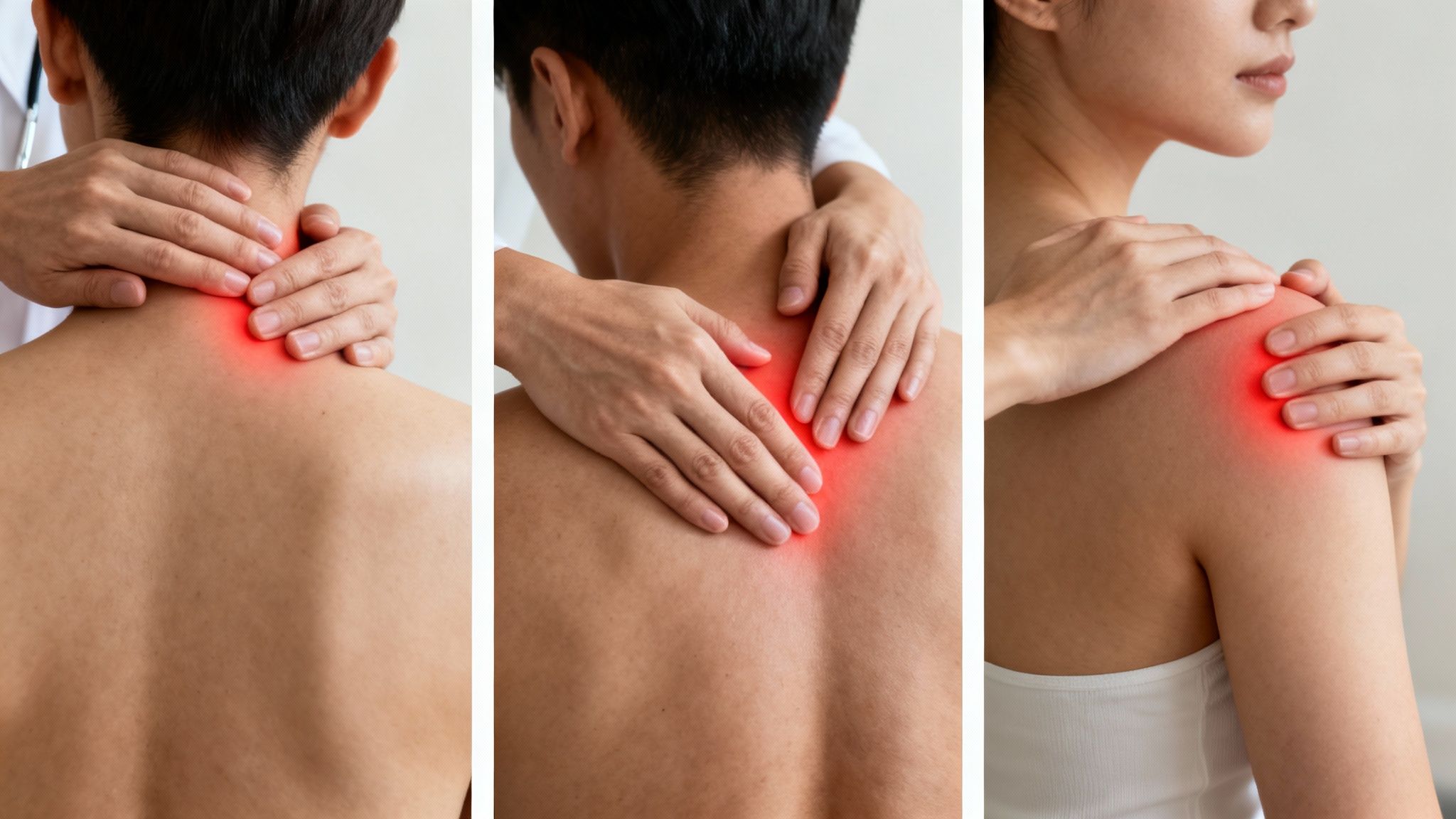
A client receives a sports remedial massage targeting their back muscles.

Think of it less as a general treatment and more as a detailed roadmap. A skilled therapist can identify your specific pain points and map out a clear path to lasting relief, moving way beyond temporary fixes by tackling the underlying muscular imbalances causing the problem in the first place.

Tackling Modern Ailments

So many of the chronic pains we put up with are a direct result of our modern lives. Long hours slumped at a desk, the constant downward gaze at a phone, or even repetitive daily movements can create serious musculoskeletal strain.

Here are a couple of the most common issues that remedial massage is brilliant at treating:

  • ‘Tech Neck’ and Shoulder Pain: That constant forward head posture we adopt for screens puts immense strain on the neck and upper back. A therapist uses precise techniques to release tension in the upper trapezius and levator scapulae muscles, helping to restore better alignment and ease that nagging ache.
  • Tension Headaches: These debilitating headaches often start from tightness in the neck and shoulders. By zeroing in on trigger points at the base of the skull and across the upper back, a therapist can relieve the muscular tension that is so often the real culprit.

Relieving Persistent Lower Back Pain

A nagging lower back is one of the most common complaints among adults, often tied to prolonged sitting, poor posture, or muscular imbalances from physical activity. It’s the kind of pain that can seriously disrupt your quality of life, making even simple tasks feel like a chore.

Sports remedial massage gets to the heart of the issue by assessing the entire kinetic chain—from your glutes and hamstrings to your hip flexors—to find and treat the source of the imbalance, not just the spot that hurts.

This intelligent approach helps release tight muscles, improve pelvic alignment, and bring back functional, pain-free movement. If you're struggling with this all-too-common problem, it's worth exploring the seven reasons why remedial massage is so effective for lower back pain in our detailed guide.

The use of massage therapy for these kinds of issues is incredibly common in Australia. Some studies show that usage rates can be as high as 56% among younger Australian women managing chronic pain conditions. This just goes to show how many people are turning to therapies like massage for real, effective relief. Whether your pain comes from a corporate office or a busy weekend, a skilled therapist can design a treatment that gets you moving freely again.

Your Sports Remedial Massage Questions Answered

Stepping into the world of sports remedial massage can bring up a few practical questions. To give you the confidence to book your first session, we’ve put together direct answers to some of the most common queries we hear. This way, you’ll feel fully prepared and know exactly what to expect, whether our therapist is visiting your office, hotel room, or home.

How Often Should I Get a Sports Remedial Massage?

Honestly, there's no single answer that fits everyone. The ideal frequency really comes down to your specific goals, your lifestyle, and what your body is telling you. But there are some solid guidelines we can follow.

For an athlete deep in a heavy training block, a weekly or fortnightly session can be a game-changer for speeding up recovery and catching potential injuries before they sideline you. It becomes a core part of the training cycle itself.

If you're looking to manage chronic pain or postural issues from long hours hunched over a desk, a session every three to four weeks is often the sweet spot. It's enough to maintain the benefits and keep those familiar aches from creeping back in. However, if you're dealing with a fresh, acute injury, your therapist will likely suggest more frequent sessions at the start—maybe once or twice a week—before tapering off as you start to heal. The key is to map out a personalised plan with your therapist during that first assessment.

Will a Sports Remedial Massage Hurt?

It's important here to draw a line between 'good pain' and 'bad pain'. A sports remedial massage is a deep and targeted treatment, so you will almost certainly feel some level of discomfort as the therapist gets to work on tight muscle bands and active trigger points.

This is what clients often call a 'good hurt'—a therapeutic discomfort where you can feel it’s productive and leading to relief. It should never be sharp, unbearable, or make you want to leap off the table.

Open communication is absolutely essential. A professional therapist will constantly check in with you about the pressure and adjust their technique to match your tolerance level. You should always feel completely in control of the session, from start to finish.

This constant feedback loop ensures the treatment is effective without ever being overly aggressive, allowing your muscles to release tension safely and efficiently.

What Should I Do After My Massage Session?

What you do after your session is just as important as the treatment itself for locking in the best possible results. Proper aftercare helps your body integrate all that therapeutic work and turbocharges the recovery process.

  • Hydrate Well: This is the most important step. Drink plenty of water to help your system flush out all the metabolic waste that was released from your muscle tissues during the massage.
  • Avoid Strenuous Activity: Give your body about 24 hours before you jump back into any intense exercise. This gives your muscles time to recover and adapt to the changes.
  • Have a Warm Bath: A warm bath, maybe with a good scoop of Epsom salts, can be incredibly soothing for any leftover muscle soreness and helps deepen that sense of relaxation.
  • Perform Gentle Stretches: Light, gentle stretching can also be a huge help, maintaining the new range of motion you’ve just gained. Your therapist will always give you specific aftercare advice tailored directly to your treatment and condition.

How Do I Find a Qualified Therapist in Australia?

Choosing a qualified and insured professional is non-negotiable for a safe and effective treatment, especially when you're inviting a mobile service into your space. In Australia, there are clear standards to look for.

A properly qualified therapist should hold a Diploma of Remedial Massage (HLT52015) or a higher qualification.

They should also be an active member of a recognised professional association, like Massage & Myotherapy Australia (M&MA) or the Association of Massage Therapists (AMT). This membership ensures they stick to a strict code of ethics and are committed to ongoing professional development. Reputable mobile services will always use fully qualified, insured, and vetted professionals, giving you complete peace of mind when you book.


Ready to experience the benefits of expert sports remedial massage in the comfort of your home, hotel, or office? The Royal Masseur delivers premium, five-star wellness treatments tailored to your exact needs. Our certified therapists bring everything required for a restorative session that reduces pain, improves mobility, and leaves you feeling revitalised.

Book your on-demand wellness experience today at https://theroyalmasseur.com.au.