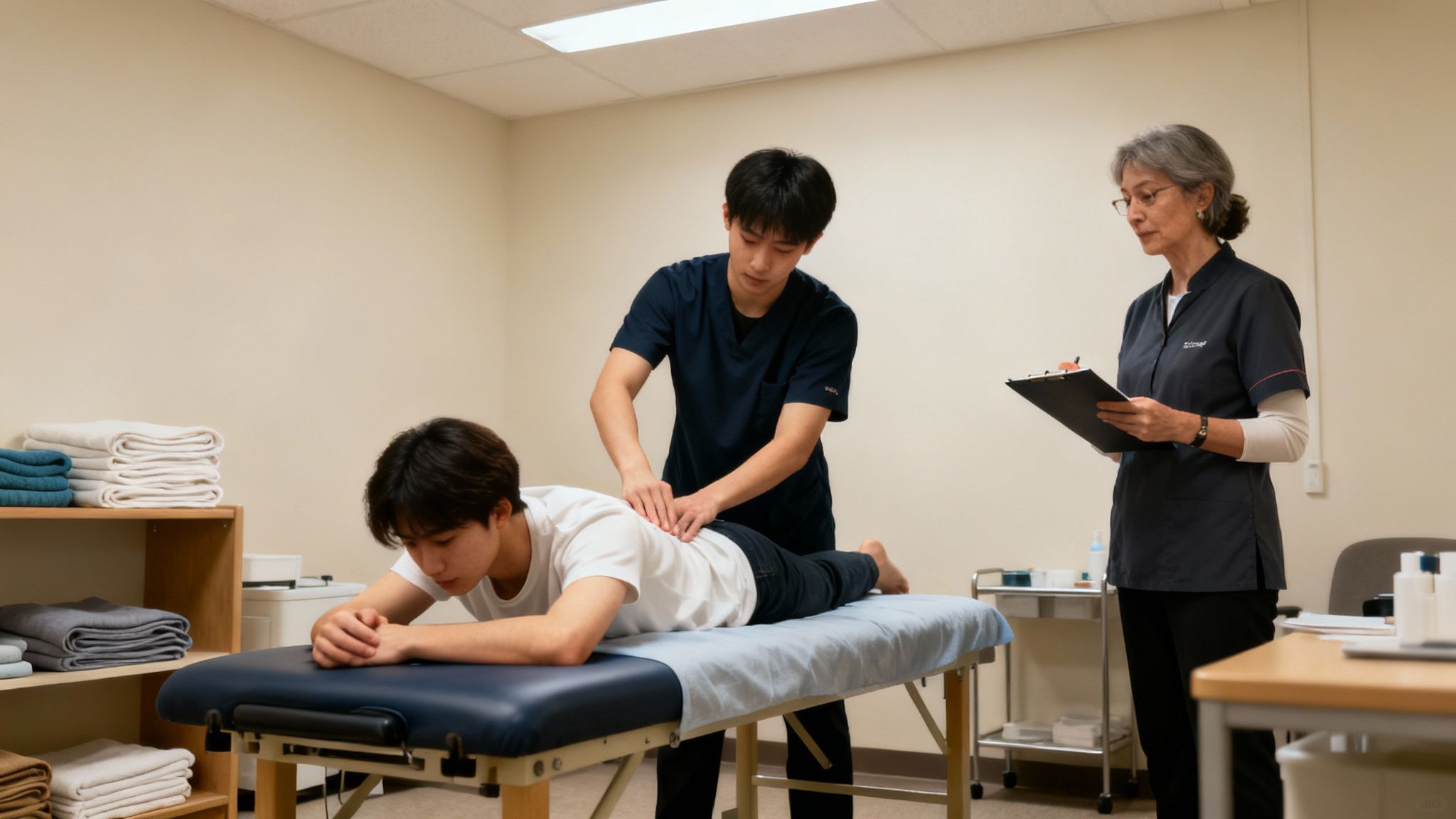
Deep tissue massage isn't your average, fluffy relaxation treatment. Think of it less as a gentle pampering session and more as a focused, powerful therapy designed to work on the deepest layers of your muscle and connective tissues. It’s a purposeful intervention, an essential tool for undoing chronic knots and releasing tension that’s been holding you back for months, or even years.
Unlocking Relief for Body and Mind
So, what does that actually mean in practice? Imagine your muscles are like a bundle of thick ropes. Day-to-day life—whether it's long hours hunched over a desk in a Sydney office or training for a marathon along the Gold Coast—can cause these ropes to become tangled, knotted, and shortened. A standard massage might smooth over the surface, but a deep tissue massage aims to methodically untangle each knot, fibre by fibre.

The technique itself involves slow, deliberate strokes with sustained, firm pressure. This allows your therapist to reach the underlying muscle layers and the fascia—that web of connective tissue wrapping around your muscles. The goal here isn't just relaxation; it's about physically breaking down adhesions, which you probably know as knots. These are bands of painful, rigid tissue that can trigger inflammation and seriously restrict your movement. By applying that focused pressure, we can break them down to restore proper movement and dial down the pain.
A Focus on Targeted Wellness
The real beauty of this approach is that it creates lasting change in your body. It goes far beyond just feeling good for an hour. It’s particularly effective for:
- Office Professionals: To combat the stubborn neck and back stiffness that builds up after hours spent staring at a computer. A mobile massage in your office can be a game-changer for resetting your posture.
- Active Individuals: To speed up recovery by targeting specific muscle soreness and improving your flexibility after intense physical activity.
- Anyone with Chronic Pain: To provide genuine relief from conditions like nagging lower back pain, sciatica, and persistent shoulder tension.
This style of massage is a powerful solution for those chronic aches and pains. It's not about gritting your teeth through pain, but rather working with a skilled therapist to find that therapeutic 'good hurt'—the kind of feeling that signals real, positive change is happening deep within the muscle tissue.
This focused approach is what makes deep tissue massage a true cornerstone of effective bodywork. It’s a way to get right to the source of your discomfort, providing profound and lasting relief. Whether you’re on a business trip in a Melbourne hotel or need a moment of recovery on a private yacht, the principle is the same: targeted pressure to release that deep-seated tension and restore your body's natural balance and mobility.
How Deep Tissue Massage Actually Works
To really get what deep tissue massage is all about, you need to picture what's happening just beneath the skin. This isn't about brute force; it's a careful conversation with your body’s deeper structures, encouraging them to release and repair. The entire session is built on slow, deliberate pressure that works with your muscles, not against them.
Think of a chronically tight muscle like a rope that’s been left out in the rain—it’s stiff, brittle, and tangled with dense knots. A good therapist’s goal is to carefully bring back that rope’s flexibility. They get there by first warming up the surface muscle layers, preparing the whole area for more focused work.
This first step is crucial. Diving straight into deep work on cold, tight muscles is a recipe for discomfort and doesn't get you very far. Instead, your therapist uses lighter strokes to boost blood flow, which brings warmth and oxygen to the tissues. This makes them more pliable and ready for the real work.
The Core Techniques Explained
Once your muscles are warmed up and receptive, the therapist will switch to a few key techniques to break down adhesions and release tension. These aren't just random movements; each one has a specific job to do, physically changing the muscle tissue for the better.
- Stripping: This is a deep, gliding movement that runs along the length of a muscle fibre. Imagine your therapist using their knuckles, forearm, or elbow to slowly "comb" through the tangled fibres of that stiff rope, coaxing them to realign and lengthen.
- Friction: This technique involves applying focused pressure across the grain of a muscle. It’s brilliant for breaking down adhesions—those stubborn knots—and scar tissue from old injuries that can seriously restrict your movement and cause pain.
These techniques are so effective because they trigger a physiological response. That sustained pressure sends a signal to your nervous system to finally relax its grip on a chronically tense muscle, giving it permission to let go.
The real magic happens when this pressure helps to break down adhesions. These are dense bands of painful, rigid tissue that can block circulation and cause inflammation. By physically separating these fibres, deep tissue massage restores mobility and allows vital nutrients to reach the damaged area.
Boosting Your Body's Natural Healing
Beyond just releasing knots, this whole process kicks off a cascade of healing effects. The intense, focused pressure dramatically improves circulation, flushing out metabolic waste from congested areas while drawing in a fresh supply of oxygen-rich blood. It's like supercharging your body's own repair crew.
This improved blood flow is why you might feel a little tender the next day, much like the soreness you feel after a good workout. It’s a sign that your body is actively repairing and rebuilding the tissue that was just worked on. For anyone dealing with those tiny, hyper-irritable knots known as trigger points, this approach is a game-changer. You can learn more about how a skilled therapist targets these specific spots to relieve pain that might be showing up elsewhere in your body.
Ultimately, deep tissue massage is an active partnership between you and your therapist. Whether you're getting a session in your hotel room after a long flight to Melbourne or in your office to undo a week of desk posture, the goal is the same. It's all about using precise techniques to reset your muscles, kickstart your body’s recovery systems, and deliver profound, lasting relief from the inside out.
Actionable Wellness for Modern Australian Life
Beyond that immediate feeling of relief, what is a deep tissue massage really doing for your health? For plenty of Aussies, it’s a powerful way to manage some of the most common and persistent physical issues we face. This isn't just about feeling good for an hour; it’s a practical, evidence-backed strategy for dealing with chronic back pain, nagging neck stiffness from office life, and even the daily grind of osteoarthritis.
The reality of modern life, especially in busy hubs like Sydney and Melbourne, often means long hours stuck in less-than-ideal postures. Whether you’re at a desk in a high-rise office or working from your kitchen table, this lifestyle leads to serious musculoskeletal strain. A skilled deep tissue therapist can directly tackle the consequences, offering targeted relief that goes far beyond a temporary fix.
Tackling Neck and Back Pain Head-On
For office workers, neck and back pain often feel like part of the job description. That constant ache at the base of your skull or the relentless stiffness in your lower back can absolutely drain your energy and focus. Deep tissue massage goes straight for the overworked trapezius and rhomboid muscles that are screaming for help after hours hunched over a keyboard.
The slow, deliberate pressure realigns muscle fibres and releases those nasty trigger points that can refer pain upwards, often causing tension headaches. An actionable insight? Book a 30-minute chair massage at your office. It's an incredibly efficient way to break the cycle of pain and postural dysfunction right where it begins.
Likewise, lower back pain is a massive problem for so many Australians. This therapy works to release the deep, hard-to-reach muscles like the quadratus lumborum and gluteus medius—common culprits in chronic lower back tension. By undoing these deep knots, the massage helps restore proper pelvic alignment and eases the constant load on your spine.
Managing Chronic Conditions Like Arthritis
While deep tissue massage can't cure conditions like osteoarthritis, it plays a vital role in managing the symptoms. The gentle, sustained pressure helps to increase blood flow to stiff joints, which can reduce inflammation and improve your range of motion. For someone living with arthritis, this can mean less pain and greater freedom in their daily life.
A key action here is to work with a therapist who understands how to adapt the pressure. The goal is to loosen the tight muscles surrounding the affected joint, which takes the pressure off the joint itself, rather than working directly on the inflamed area.
This targeted approach helps to improve function and quality of life. For the many Australians living with osteoarthritis, bringing deep tissue massage into their wellness routine can be a game-changing part of their pain management strategy. It provides a non-pharmaceutical option for tangible relief.
According to a report highlighted by Nine's Today Show, neck pain affects a significant number of patients seeking massage, making it one of the most frequently treated conditions. This reflects the common physical toll of modern work and lifestyle habits across Australia.
This infographic shows the core mechanical benefits a deep tissue massage delivers for your body.

As the visual shows, the therapy works on multiple fronts by releasing muscular tension, breaking down restrictive scar tissue, and boosting circulation to help your body heal faster.
Your Personalised Wellness Solution, Anywhere
The real value of deep tissue massage lies in its adaptability. It's a precise therapy that a great therapist can tailor to your exact needs, wherever you happen to be. Imagine finishing a brutal project and having a therapist come to your office for a session focused entirely on your neck and shoulders. Or unwinding in your hotel room after a long flight into Brisbane with a treatment that melts away all that travel stiffness.
For those enjoying some downtime, a session on your yacht can address the specific muscle strains that come from physical activity or just being on the water. It’s all about integrating professional-grade bodywork into your life, turning it from an occasional treat into a consistent part of your health strategy. This is what transforms deep tissue massage from a simple treatment into a powerful tool for maintaining a pain-free, active life.
Choosing the Right Massage for Your Needs
With so many different massage styles on offer, figuring out which one is right for you can feel overwhelming. Are you after gentle relaxation or targeted pain relief? Getting clear on the key differences is the first step to booking a session that actually meets your goals, whether you're at home, in the office, or even on a yacht.
This guide is here to cut through the confusion. We’ll directly compare deep tissue with other popular therapies like Swedish, remedial, and sports massage. The goal is to give you the confidence to select the treatment that will deliver the results you're looking for.
Deep Tissue vs Swedish Massage
The most common point of confusion is between deep tissue and Swedish massage. Think of it this way: a Swedish massage is your go-to for overall relaxation. It’s all about long, flowing strokes with light to moderate pressure, designed to release surface-level tension, calm your nervous system, and boost circulation. It’s the perfect choice for de-stressing after a hectic week.
A deep tissue massage, on the other hand, is a far more focused and intense treatment. Its primary goal isn't just relaxation, but to get to the root of chronic pain and stiffness in the deeper layers of your muscles and connective tissue. If you have specific problem areas—like a stubbornly tight lower back or knotted shoulders from office work—deep tissue provides the targeted pressure needed to break down those adhesions and restore your mobility.
Deep Tissue vs Remedial Massage
This is another common comparison, and the lines can sometimes blur. A deep tissue session is laser-focused on alleviating muscular tension and breaking down knots using firm, sustained pressure. The therapist hones in on tight areas to provide immediate relief.
A remedial massage is typically more diagnostic and often forms part of a broader treatment plan. While it frequently uses deep tissue techniques, the therapist also conducts assessments to understand the root cause of your pain. They might be working to correct a specific postural imbalance or help you recover from an injury. If you want to dive deeper, you can check out our detailed guide on what a remedial massage is and how it functions as a targeted clinical treatment.
Comparing Massage Styles What Is Right For You
To make the choice even clearer, let's lay out the main differences side-by-side. This simple table will help you quickly identify which style best aligns with what your body is crying out for right now.
| Massage Type | Primary Goal | Typical Pressure | Best For |
|---|---|---|---|
| Deep Tissue | To release chronic muscle tension and knots. | Firm to deep, highly focused. | Persistent pain, stiff muscles, and postural problems. |
| Swedish | General relaxation and stress reduction. | Light to moderate, flowing. | Unwinding, de-stressing, and improving overall wellbeing. |
| Remedial | To assess and treat specific injuries or dysfunctions. | Varies from light to deep, depending on the condition. | Injury recovery, managing chronic conditions, and corrective care. |
| Sports | To prepare for or recover from athletic activity. | Varies, can be deep and vigorous. | Athletes, improving performance, and preventing injuries. |
Ultimately, choosing the right massage comes down to your personal goals. Are you looking to completely switch off and relax in your hotel room? A Swedish massage is your ticket. Do you need a powerful intervention to fix that nagging shoulder pain that’s been bothering you at the office? Deep tissue is the answer.
By understanding these key distinctions, you can make an informed decision and ensure every session leaves you feeling exactly the way you hoped.
Preparing for Your Deep Tissue Session
Knowing what to expect can turn a deep tissue massage from something that sounds a bit intimidating into a truly empowering experience. A little preparation goes a long way, ensuring you get the absolute most out of your session, whether it's happening in your office, at home, or in a hotel room after a long flight. This isn't about just lying there and hoping for the best; it's an active partnership between you and your therapist.
Your session will always kick off with a brief but vital chat. Your therapist will want to know about your specific pain points, what you hope to get out of the treatment, and any relevant health history. This is your moment to be crystal clear about that nagging shoulder knot from your desk setup or the lower back stiffness that’s been bothering you for weeks. This initial conversation is what allows the therapist to truly customise the session to your body’s needs.
Understanding the Pressure
One of the biggest myths about deep tissue massage is that it has to be painful to work. That’s simply not true. While the pressure is definitely firm and focused, it should never feel sharp or unbearable. Open and honest communication throughout your session is absolutely essential.
Your therapist will check in with you, but you should always feel empowered to speak up if the pressure is too much. The goal is to find what therapists call a 'good hurt'—a therapeutic level of discomfort that signals a muscle is releasing, not a level of pain that forces you to tense up. Tensing against the pressure is counterproductive, so finding that perfect balance is key.
What Happens During the Session
Once you're comfortable on the table, your therapist will start by warming up the muscles with lighter, more general strokes. This is all about preparing the tissue for the more focused, deeper work to come. From there, they’ll use their forearms, knuckles, and even elbows to apply slow, deliberate pressure, targeting the knots and adhesions in your deeper muscle layers.
It's really important to focus on your breathing during these more intense moments. Taking slow, deep breaths helps calm your nervous system and encourages the muscles to let go more easily. Think of each exhale as an opportunity to release tension.
Your Role in a Successful Session
To get the most out of your experience, whether it's a quick wellness break at the office or a full recovery session on your yacht, a few simple steps can make a world of difference.
- Hydrate Well Beforehand: Well-hydrated muscles are more pliable and less likely to feel intensely sore afterwards. Try to drink plenty of water in the hours leading up to your appointment.
- Avoid a Heavy Meal: Having a large meal right before your massage can leave you feeling bloated and uncomfortable on the table. A light snack is a much better plan.
- Arrive with a Clear Mind: Do your best to let go of the day's stresses. The more relaxed you are mentally, the more receptive your body will be to the physical work.
Feeling a little sore for a day or two after a deep tissue massage is completely normal. Think of it like the muscle fatigue you feel after a really good workout. It’s a sign that your body has undergone significant therapeutic work and is now in the process of healing and realigning itself.
This post-session tenderness is actually a positive sign that the treatment has successfully broken down stubborn adhesions. Following a few simple aftercare steps will help you manage this and extend the incredible benefits of your session, leaving you feeling refreshed, realigned, and ready for whatever’s next.
Finding a Trusted Mobile Massage Therapist
The incredible results of a great deep tissue massage really come down to one thing: the skill and professionalism of the person providing it. Choosing the right therapist is the single most important decision you'll make for a safe, effective, and truly restorative experience. Here in Australia, that means looking past the business name and checking their credentials.
When you're searching, the gold standard to look for is a Diploma of Remedial Massage. This qualification tells you the therapist has gone through rigorous training in anatomy, physiology, and a whole suite of advanced techniques. It’s a solid sign that they have the expert knowledge to handle complex muscle issues properly.
You should also keep an eye out for memberships in professional bodies like Massage & Myotherapy Australia (MMA) or the Australian Natural Therapists Association (ANTA). These organisations hold their members to a strict code of conduct, ensuring they’re properly insured and committed to ongoing training.
Navigating the Industry with Confidence
It’s an unfortunate reality, but the massage industry in Australia has a real challenge separating legitimate, therapeutic services from the illicit ones. This creates a lot of confusion, making it tough for people to find a professional they can trust and, frankly, it undermines the value of what genuine therapists do.
This is a widespread issue. Industry bodies like Massage & Myotherapy Australia consistently work to educate the public, highlighting that a significant percentage of practitioners feel their profession is devalued because of this confusion. On the other hand, the demand for high-quality qualifications like the Diploma of Remedial Massage shows how dedicated the professional community is to maintaining high standards.
This is exactly where a premium mobile massage service cuts through all the noise. By choosing a reputable provider, you get to skip the guesswork. These services have already done all the vetting for you, making sure every single therapist on their team is qualified, insured, and an absolute professional.
Choosing a trusted mobile service removes the guesswork. It guarantees that the professional arriving at your door—whether it's your home, office, or hotel—is a vetted expert committed to the highest standards of therapeutic care.
The Convenience of Vetted Expertise, Anywhere
A premium mobile massage provider brings that five-star wellness experience right to you, slotting deep tissue therapy seamlessly into your life. The value is twofold: you get unparalleled convenience, plus total peace of mind.
- For Corporate Wellness: Picture this: you're organising a wellness day for your team at your Brisbane office. A mobile service can send a team of qualified therapists to provide targeted chair massages, instantly boosting morale and tackling the physical strains of desk work.
- For At-Home Recovery: After a massive week or a killer workout, having a vetted remedial therapist come to your Melbourne home means you can relax and recover in your own space, without the hassle of travelling.
- For Luxury Experiences: If you're kicking back on a private yacht in Sydney Harbour, a mobile therapist can deliver a session tailored to your needs, turning an already great day into something truly exceptional.
This model ensures you receive the same high standard of care, no matter where you are. For a deeper dive, our guide on how to find the right mobile massage therapist in Sydney for your needs offers more practical advice. At the end of the day, finding a therapist you trust is an investment in your safety, comfort, and wellbeing.
Got Questions About Deep Tissue Massage?
Even when you know what deep tissue massage is all about, it’s natural to have a few questions lingering. We get it. So, let's tackle the most common queries we hear, giving you straight-up answers so you can book your next session with total confidence—whether it's at your home, office, or hotel.
Does Deep Tissue Massage Hurt?
This is the big one, and the answer isn't a simple yes or no. A deep tissue massage shouldn't be painful in a bad way. Instead, you should feel a satisfying, therapeutic discomfort, what a lot of people call a ‘good hurt’.
That feeling is a sign that your therapist is successfully getting to those deep-seated knots and adhesions. The key is communication. Always let your therapist know how you're feeling; they can adjust the pressure to a level that’s intense and productive, but never unbearable.
How Often Should I Get One?
The ideal frequency really comes down to what you’re trying to achieve. There's no one-size-fits-all answer.
- For Chronic Pain Management: If you're wrestling with a persistent issue like lower back pain, starting with a weekly or fortnightly session is a good strategy to get on top of the problem.
- For General Maintenance: For those of us with demanding jobs in Sydney or Melbourne, a monthly session is a fantastic way to stop tension from building up and keep your posture in check.
- For Active Recovery: If you’re an athlete or just very active, a session every one to three weeks during peak training can make a huge difference in your recovery time.
Is It Safe For Everyone?
While it’s incredibly beneficial for most, it isn’t the right fit for absolutely everyone. It's best to steer clear of deep tissue massage if you have recent injuries, a history of blood clots, or certain skin conditions.
It's also smart to check with your doctor first if you’re pregnant or have a serious medical condition like osteoporosis. A truly professional therapist will always kick things off with a thorough consultation to make sure it's the right and safe choice for you.
The crucial difference between a remedial and deep tissue massage lies in the approach. Deep tissue focuses purely on releasing muscle tension, while a remedial session is more diagnostic, aiming to treat a specific injury or dysfunction as part of a larger treatment plan.
Ready to experience profound relief from pain and stress? The Royal Masseur brings expert, vetted therapists directly to your home, hotel, or office across Australia's east coast. Book your premium mobile deep tissue massage today at https://theroyalmasseur.com.au.