Posted on Leave a comment

What Is Therapeutic Massage and How Does It Work

Therapeutic massage is all about results. It’s a targeted treatment designed to relieve pain, sort out muscular imbalances, and get your body functioning properly again. This isn't your average relaxation massage; it’s a focused session with a clear physical goal, making it an incredibly powerful and actionable tool for your overall wellbeing, wherever you are.

Understanding Therapeutic Massage Beyond Relaxation
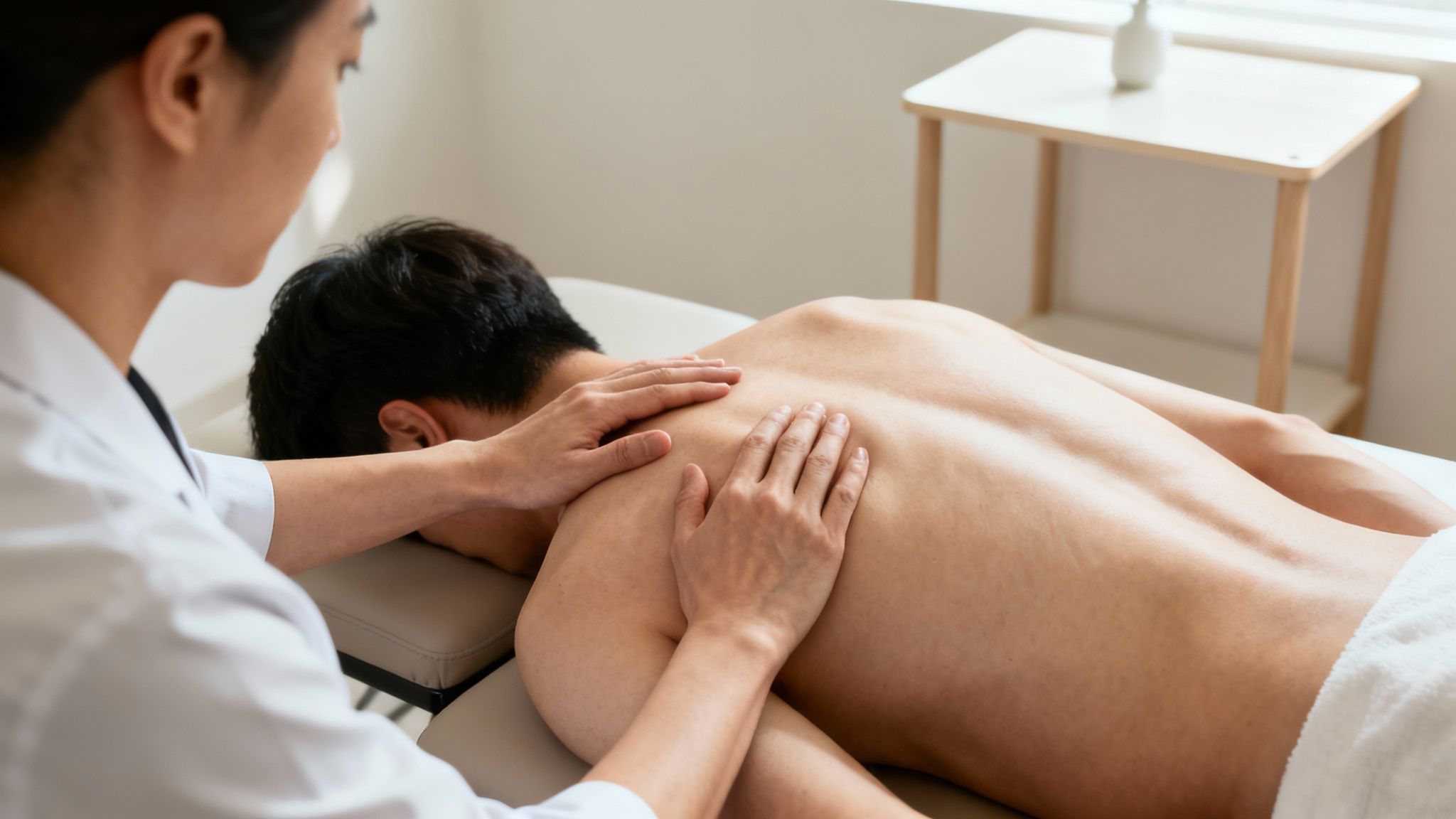
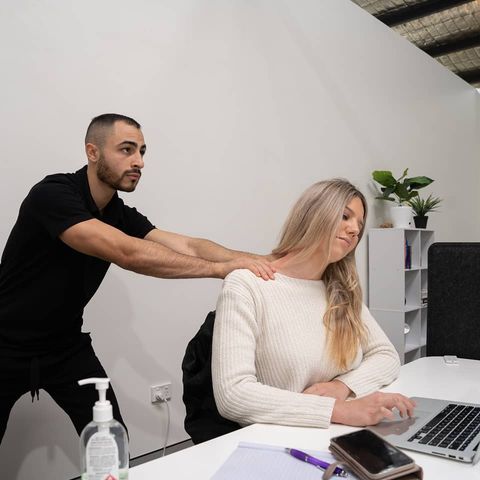
A person receiving a therapeutic massage on their shoulder in a calm setting.

Think about the difference between a casual stroll in the park and a session with a personal trainer. Both involve moving your body, but one is purely for gentle enjoyment, while the other is carefully structured to hit a specific fitness target. That’s the perfect way to think about therapeutic massage.

A relaxation massage is designed to soothe your nervous system and give you a general sense of calm. A therapeutic session, on the other hand, is a strategic intervention. It’s an outcome-driven treatment that gets to work on specific problems within your body’s soft tissues—your muscles, tendons, and ligaments.

This approach takes things beyond simple pampering and moves into the realm of structured physical care. The main goal isn't just to make you feel good for an hour; it's to create lasting changes that genuinely improve your quality of life.

A Focus on Specific Wellness Goals

What truly makes a massage "therapeutic" is its clear, defined purpose. Before your therapist’s hands even get to work, you’ll have a chat about what you want to achieve. This goal-oriented method makes it highly effective for a whole range of modern-day aches and pains.

Just look at the demands of modern life. Long hours hunched over a desk often lead to chronic neck and shoulder pain, a complaint so many Australians know all too well. An actionable insight is to book a therapeutic massage delivered right to your office. It can directly target those strained muscles, helping to improve your posture and reduce the risk of repetitive strain injuries.

It's the same if you’re recovering from a sports injury at home or managing a chronic condition. A mobile therapist can bring that specialised care right to your door. This convenience alone removes the stress of travel, letting your body put all its energy into healing. For those wanting the ultimate restorative experience, a session in a private hotel room or even on a yacht creates an environment of total tranquillity, amplifying the treatment's benefits.

A therapeutic massage is less about the setting and more about the intent. It applies professional, evidence-based techniques to achieve specific wellness goals, wherever you are.

The treatment is incredibly adaptable. While it’s quite different from general relaxation techniques, you can learn more about how various styles stack up by reading our complete guide to Swedish relaxation massage. Understanding this distinction helps you pick the right service for your needs, ensuring you book a session that’s perfectly in tune with your wellness goals.

The Evolution of Therapeutic Massage in Australia

Therapeutic massage might feel like a very modern solution, perfectly designed for our hectic lives. But the truth is, its core principles are anything but new. This is a discipline that's been tested and refined for millennia, with deep historical roots and a solid, evidence-based foundation. Its journey from an ancient healing art to a respected profession within Australia’s healthcare system is a real testament to just how effective it is.

Knowing this history helps build a sense of trust. It shows that the techniques used today, whether in a high-rise office or a quiet hotel room, aren’t just passing fads. They’re part of a legitimate field dedicated to physical wellbeing—a practice that has earned its place by getting real results, time and time again.

The simple idea of using touch to heal is ancient. Historical records show therapeutic massage has been around for about 2,500 years, with some evidence even pointing back to 2500 BCE. Here in Australia, it was first introduced as a complementary medical treatment in the late 1800s and early 1900s. Its role became much more official during the 20th century, especially during World War One and Two, when it was a key part of soldier rehabilitation programs. You can discover more about its early history and its journey into Australian healthcare.

From Battlefields to Boardrooms

Using massage to help soldiers recover was a massive turning point. It proved, on a large scale, the practice’s profound ability to restore function, manage pain, and speed up recovery from serious physical trauma. This wartime application offered powerful, real-world proof of its medical value, helping to shift how people saw it—from a simple comfort measure to a serious therapeutic tool.

After the wars, the profession just kept maturing. The mid-to-late 20th century saw the establishment of professional associations and formal training standards right across Australia. This was a critical step in cementing its credibility, making sure practitioners had a deep understanding of anatomy, physiology, and pathology.

Therapeutic massage moved from the fringes of complementary medicine into the mainstream of allied health, backed by scientific validation and a commitment to professional excellence.

This professionalisation meant that techniques like deep tissue massage, trigger point therapy, and myofascial release were no longer just intuitive practices. They became structured treatments, all based on a clinical understanding of how our soft tissues respond to targeted manipulation.

Therapeutic Massage in Modern Australia

Today, therapeutic massage is a core part of the Australian wellness landscape. It’s recognised for its ability to tackle the specific physical strains of modern life—from the “tech neck” that’s so common among office workers to the repetitive strain injuries we see in athletes.

And its evolution is still going, especially in how it’s delivered. The rise of premium mobile services has made expert care more accessible than ever, bringing targeted relief directly to where it’s needed most:

  • In the office: Corporate wellness programs now use seated massage to combat workplace stress and boost productivity.
  • At home: People managing chronic pain or recovering from an injury can now get treatment in a comfortable, private setting.
  • In luxury settings: High-end hotels and even private yachts now offer therapeutic sessions, providing the ultimate convenience and recovery for travellers and professionals.

This journey from an ancient tradition to modern, mobile healthcare really solidifies its status. It’s a powerful and legitimate tool for looking after your physical wellbeing, no matter the environment.

When most people hear the word "massage," they picture a tranquil spa day, all fluffy robes and cucumber water, designed for pure, blissful escape. While that's a fantastic experience, it's only one side of the story. The real game-changer is the intent behind the treatment, and understanding this difference is the secret to getting the results you're actually looking for.

Choosing between a therapeutic and a relaxation massage is a bit like deciding between a gentle yoga class and a targeted physiotherapy session. One is all about achieving a state of general calm and disconnecting from a stressful week; the other is about diagnosing and fixing a specific problem, like reconnecting a painful shoulder to its proper function. Both are incredibly valuable, but they serve entirely different masters.

This distinction is crucial whether you're looking to unwind in a hotel room, boost team focus with an office wellness program, or find deep restoration on a yacht. Knowing what you want to achieve ensures the session you book is perfectly aligned with your body's needs.

The Core Difference Is Intent

At its heart, the main thing separating these two styles is the goal of the session. A relaxation massage, which is often a Swedish massage, uses long, flowing strokes, gentle kneading, and rhythmic tapping. The primary objective is to soothe your nervous system, ease mild muscle tension, and leave you feeling peaceful and refreshed. It’s a full-body reset for your mind.

A therapeutic massage, on the other hand, always starts with a specific physical problem to solve. It’s a targeted, outcome-focused treatment that uses a whole toolbox of techniques to get to the root cause of pain, restore mobility, or correct muscular imbalances. It's less about a generalised feeling of calm and much more about achieving a measurable improvement in how your body works.

This little decision tree simplifies the choice right down to its most basic question.
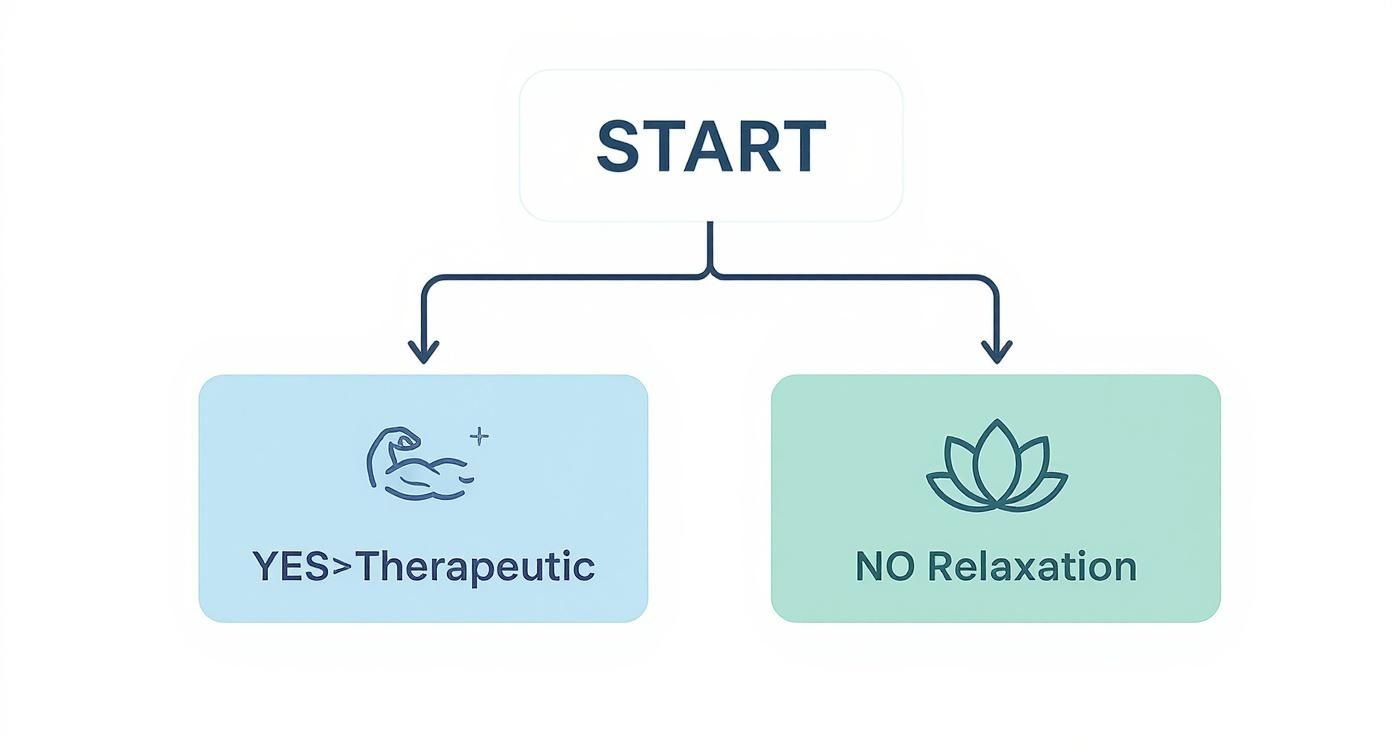
Flowchart illustrating a 'START' point leading to 'YES>Therapeutic' with a muscle icon or 'NO Relaxation' with a lotus icon.

As you can see, if pain or a specific physical issue is your main driver, a therapeutic approach is the most direct path to finding real relief.

Therapeutic vs Relaxation Massage Which Is Right for You?

To make the choice even clearer, let's break down the key differences side-by-side. This comparison shows just how much the session's ultimate goal shapes every single part of the experience.

AspectTherapeutic MassageRelaxation (Swedish) Massage
Primary GoalTo resolve a specific physical issue like chronic pain, limited mobility, or injury recovery.To reduce stress, promote general relaxation, and induce a sense of overall wellbeing.
Techniques UsedEmploys a diverse range of techniques, including deep tissue, trigger point therapy, and myofascial release.Primarily uses long, gliding strokes (effleurage), kneading (petrissage), and rhythmic tapping (tapotement).
Pressure AppliedVaries from light to deep and intense, depending on the issue being treated and your comfort level.Typically uses light to medium pressure, focused on creating a soothing, comfortable experience.
Client CommunicationInvolves active and ongoing dialogue. The therapist will ask for feedback on pressure and sensation to guide the treatment effectively.Generally involves minimal talking to allow you to fully disconnect and relax.
Area of FocusConcentrates on specific areas of the body that are causing pain or dysfunction.Usually a full-body treatment designed to address all major muscle groups equally.
Ideal ScenarioYou're dealing with a recurring stiff neck from your desk job or recovering from a sports-related strain.You’ve had a stressful week at work and need to mentally switch off and de-stress your body.

The most important thing to remember is that therapeutic massage is a partnership. It needs your active participation and communication to pinpoint problem areas and work towards a specific, functional outcome.

Ultimately, both styles of massage are powerful tools for managing your health. By understanding their distinct goals and methods, you can confidently choose the right treatment to meet your needs, ensuring every session—whether at home, in the office, or on the water—delivers exactly what your body and mind are crying out for.

Real-World Benefits of Therapeutic Massage for Your Lifestyle

We all know massage can help with pain, but the real power of therapeutic massage is how it delivers specific, targeted results that slot perfectly into your modern life. It's a practical fix for today's problems, offering tangible relief right where you need it, whether that's in a busy office or the quiet of your own home.

This is about getting past vague wellness promises and seeing genuine, real-world improvements. Instead of just "feeling less pain," imagine finally sorting out that nagging "tech neck" from a week of video calls, or easing the lower back ache that comes with constant travel. Therapeutic massage uses precise techniques to solve these exact issues.

Elevating Wellness in the Office

The modern workplace can be a real battleground for our bodies. Long hours hunched over a screen lead to rounded shoulders, a forward head posture, and chronic tension that settles deep in the neck and upper back. It's a huge issue—Safe Work Australia flags work-related musculoskeletal disorders as a major problem affecting thousands of employees every year.

This is exactly where corporate wellness massage programs make an immediate, noticeable difference. A skilled therapist can perform targeted chair massages right in the office, zeroing in on the exact muscle groups screaming for relief after a day at the desk. Here's an actionable insight: implementing a regular office massage program is a proactive way to combat these physical strains before they become chronic issues.

  • Beating Burnout: Regular sessions are a powerful circuit-breaker for stress, helping to lower cortisol levels and head off the mental and physical exhaustion that leads to burnout.
  • Sharpening Team Focus: When physical discomfort isn't a constant distraction, employees can concentrate better, which means a big boost in productivity and fewer mistakes.
  • Cutting Down on Sick Days: Proactively tackling musculoskeletal strain helps reduce the frequency of work-related pain, contributing to a healthier and more present team.

Finding Your Sanctuary at Home

For most of us, home is the ultimate place to relax and recover. Mobile therapeutic massage brings professional care directly into this sanctuary, which is a game-changer for anyone dealing with chronic conditions, recovering from an injury, or simply trying to manage a hectic schedule. No fighting traffic, no rushing to an appointment—the healing comes right to you.

This convenience is especially vital for new mothers navigating postnatal recovery or for individuals with mobility challenges. It simply removes the barriers to getting consistent care, which is often the secret to achieving lasting results. Our guide on remedial massage therapy goes deeper into how these focused treatments are adapted for your specific needs, even in a home environment. A session tailored to you, at home, ensures your body gets the focused attention it needs to heal properly.

The real beauty of at-home therapeutic massage is its ability to weave professional care into your personal space. It allows for a deeper state of relaxation and more effective recovery, without any of the added stress of getting to a clinic.

The Ultimate Recuperation in Premium Settings

Sometimes, the environment you're in is a massive part of the healing process. For those chasing the absolute highest level of recuperation, getting a therapeutic massage in a luxury setting—like a hotel room or even on a private yacht—can seriously amplify the benefits.

Picture this: you've just stepped off a long-haul flight, and a therapist arrives at your hotel to work out all that travel-induced stiffness. Or after a day out on the water, a targeted session on the deck of a yacht helps your muscles recover while you're surrounded by total tranquillity.

These premium experiences merge expert therapeutic techniques with an environment built for ultimate relaxation. This synergy doesn't just feel good; it accelerates physical recovery and delivers a mental reset that's hard to find anywhere else. It transforms a simple treatment into a truly restorative event, helping you bounce back faster and feel profoundly refreshed. By connecting the power of touch to your immediate surroundings, therapeutic massage becomes a practical, powerful tool for boosting your wellbeing, no matter what your lifestyle looks like.

What to Expect During Your First Session

Booking your first therapeutic massage can feel a bit like stepping into the unknown. You know you need relief, but you might not be sure exactly how the session will unfold. The great news is that the whole experience is a collaboration, designed entirely around your comfort, safety, and specific wellness goals.
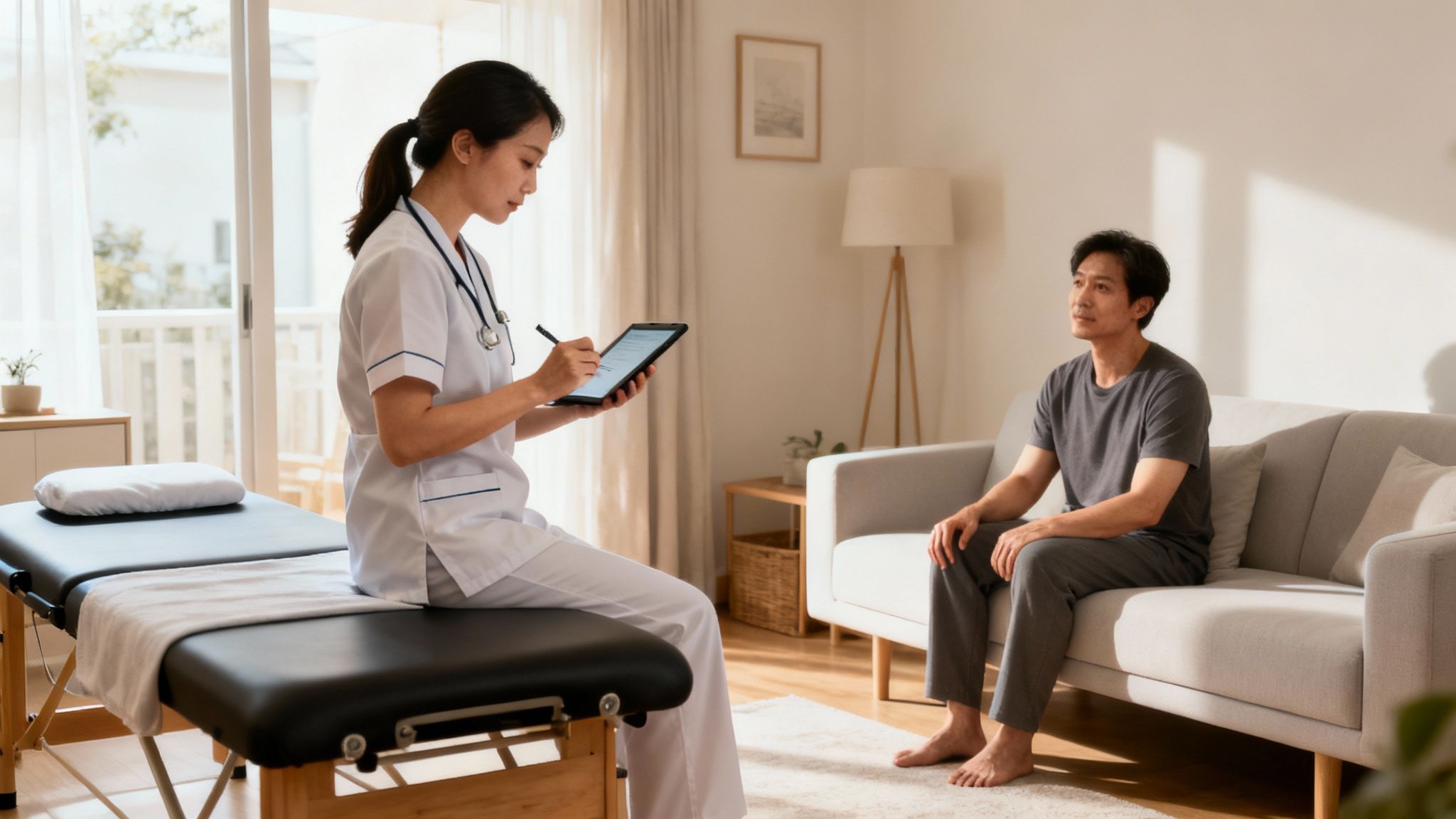
A healthcare professional consults with a male patient, taking notes on a tablet during a visit.

Whether your therapist is setting up in a corporate boardroom, your living room, or a hotel suite, the core structure of the session stays consistent. It’s all about creating a personalised treatment plan that actually works for you. Let’s walk through what you can expect, from start to finish.

The Initial Consultation

Every single therapeutic session begins with a conversation. This isn't just small talk; it's a vital part of the treatment where your therapist gets a proper understanding of your body and what you want to achieve.

You'll chat about your health history, any current injuries, and the specific areas causing you pain or discomfort. This is your time to be open and detailed. Are you dealing with stubborn neck tension from long hours at the computer? Or maybe lower back pain from a recent flight? This information helps the therapist build a mental map of your needs.

Your session is a two-way street. The more information you provide about your goals and comfort levels, the more effective and targeted your therapeutic massage will be.

This consultation is the foundation upon which a successful treatment is built, ensuring the session is tailored to you from the very first moment. It’s what turns a standard massage into a truly therapeutic experience.

The Treatment and Communication

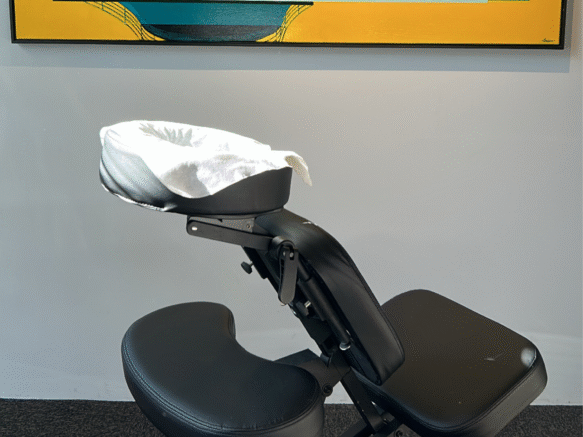
Once the plan is clear, the hands-on portion begins. The environment will be adapted to your location, of course. In a corporate setting, this might be a specialised massage chair designed for targeted neck and shoulder work. In the privacy of your home, yacht, or hotel room, your therapist will set up a professional massage table, complete with fresh, clean linens.

Throughout the session, communication is absolutely key. Your therapist will check in with you about the pressure they are applying, and it’s essential to provide feedback. What feels like effective pressure to one person might be far too intense for another.

Remember, a therapeutic massage can sometimes involve a sensation of "good pain" as the therapist works on tight knots, but it should never be sharply or unbearably painful. You are always in control of the session.

After the massage, your therapist will likely offer some post-session advice. This might include:

  • Stretches: Simple movements to maintain mobility in the areas that were just worked on.
  • Hydration: Drinking plenty of water is crucial to help flush out metabolic waste released from your muscles during the treatment.
  • Heat or Cold Therapy: Recommendations for using a heat pack or ice to soothe any residual tenderness.

This aftercare advice is designed to extend the benefits of your session long after the therapist has packed up, helping you feel empowered and confident in managing your own wellbeing.

How to Find a Qualified Massage Therapist in Australia

The true magic of a therapeutic massage isn't just in the techniques themselves; it flows from the skill, knowledge, and intuition of the person providing the treatment. In other words, the effectiveness of your session hinges entirely on the quality of your therapist.

Finding a properly qualified professional in Australia means looking beyond flashy websites and knowing what credentials actually matter. Investing a little time upfront to vet your therapist is the single most important step you can take to ensure you receive care that is safe, effective, and genuinely therapeutic. It’s what allows you to book with confidence, whether you need relief at home, in the office, or at your hotel.

Checking Credentials and Qualifications

Here in Australia, the massage industry has clear benchmarks for professional practice. When you’re on the hunt for a therapist, the first thing to check is their formal education. A Diploma of Remedial Massage is the gold standard, as it proves they’ve had comprehensive training in anatomy, physiology, and advanced assessment techniques.

Beyond their diploma, membership in a professional association is a massive green flag. These organisations don't just hand out memberships; they require their therapists to hold the right qualifications, maintain current first aid certifications, and be fully insured. It’s a strong sign of a therapist’s commitment to high standards.

Key Australian associations to look for include:

  • Massage & Myotherapy Australia (MMA): One of the country's leading and most respected professional bodies.
  • Association of Massage Therapists (AMT): Another top-tier organisation that holds its members to rigorous professional standards.

When a therapist is affiliated with one of these bodies, you can feel confident you're dealing with a true professional.

Practical Tips for Vetting a Therapist

Once you've got a shortlist, it's time to dig a little deeper. The demand for quality massage in Australia has skyrocketed, with employment in the sector jumping by 16.8 percent in the decade leading up to 2019. But with only 29.9% of practitioners working full-time, the field is filled with a mix of experience levels. You can read more on these trends in a government submission on the Australian migration system.

So, how do you find the best of the best? Start by reading online reviews and testimonials. What are past clients saying about their experience, the therapist’s professionalism, and the results they got?

Don't be shy about asking questions before you book, either. A great therapist will be more than happy to talk about their qualifications, their experience with your specific issue, and what a typical session with them looks like.

Using a reputable mobile massage service like The Royal Masseur gives you a huge advantage here. We do all the heavy lifting for you by pre-screening every single therapist on our team. We verify their qualifications, check their insurance, and confirm their professional memberships. This process guarantees you receive care from a vetted, high-calibre professional every single time.

Ultimately, finding a skilled practitioner is about making sure your investment in your wellbeing actually pays off. For more guidance on finding a pro, our article on locating the best massage therapists near you offers extra tips to make your search easier. Taking these simple steps ensures the hands you're in are both skilled and trustworthy.

Got Questions About Therapeutic Massage? We’ve Got Answers.

It’s completely normal to have a few questions before you dive into something new for your wellness routine. Whether you’re thinking about a session for your office, at home, or even in a luxury hotel room, getting clear answers helps you book with total confidence.

Let’s tackle some of the most common queries we hear.

How Often Should I Get a Therapeutic Massage?

Honestly, there’s no single magic number. The right frequency really comes down to your specific goals and what your body is telling you. It’s all about creating a schedule that’s tailored to your situation.

If you're dealing with an acute issue, like recovering from a sports injury or a sudden back pain flare-up, your therapist might suggest weekly sessions for a short burst to really accelerate the healing. For managing chronic conditions or as part of an ongoing corporate wellness program, fortnightly or monthly appointments are often the sweet spot for keeping tension under control. The best approach is always to chat with your therapist and create a personalised plan based on how your body responds.

Is Therapeutic Massage Supposed to Hurt?

You should expect to feel effective, focused pressure, but you should never be in sharp or unbearable pain. Some people describe the sensation during techniques like trigger point therapy as a “good pain”—that satisfying intensity you feel when a therapist is working on a stubborn knot that desperately needs to release.

The most important thing to remember is this: you are always in control of the session. Open and honest communication with your therapist is key. It ensures the pressure stays within your comfort zone while still being effective. Your comfort and safety are always the top priorities.

What’s the Best Way to Prepare for a Session?

A little preparation goes a long way and can make a huge difference to your results. To get the most out of your treatment, whether it’s at home or on a yacht, there are just a few simple things you can do.

First, make sure you’re well-hydrated by drinking water throughout the day leading up to your appointment. It also helps to have a clear idea of any specific issues or tight spots you want to focus on. Most importantly, just be ready to chat openly with your therapist about your goals and comfort levels.

What Should I Do After My Massage?

Aftercare is just as crucial as the massage itself for locking in the benefits. The first thing to do right after your session is drink plenty of water. This helps your body flush out any metabolic waste that’s been released from your muscles.

It's also a great idea to skip any strenuous exercise, heavy meals, or alcohol for several hours afterwards. Just give your body some time to rest and process the treatment. If you feel any lingering muscle tenderness, a warm bath with Epsom salts can work wonders to soothe it and extend that feeling of deep relief.


Ready to experience the targeted benefits of professional care in your own space? The Royal Masseur brings five-star therapeutic massage and wellness services directly to your home, hotel, or office. Book your session today and discover a new level of wellbeing.

Posted on Leave a comment

Postnatal Massage at Home an Australian Guide

A postnatal massage at home is your chance to heal and reconnect with yourself, all from the comfort of your own space. Forget the stress of travel; this is about creating a quiet sanctuary for recovery. It’s a supportive practice designed to gently address the aches, pains, and emotional shifts that come after childbirth, helping you feel more like yourself again.

Embracing Wellness After Birth With At-Home Massage

A serene mother sits on a bed, lovingly cradling her sleeping newborn baby in a sunlit room.

The postpartum period is a massive adjustment. Amidst the joy and beautiful chaos of a newborn, your body is working overtime to recover from the huge demands of pregnancy and birth. Bringing massage into your routine isn't just an indulgence—it’s a vital tool to support that healing process.

Whether it’s performed by a caring partner or a qualified mobile therapist, an at-home massage offers a moment to pause. It's a rare opportunity to just breathe and focus completely on your own wellbeing.

Why Prioritise Massage Postpartum

The benefits go so much deeper than simple relaxation. For so many new mums in Australia, the physical toll shows up as persistent back pain from feeding, shoulder tension from carrying your baby for hours, and just pure exhaustion. A targeted postnatal massage can get right to these specific issues, easing muscle strain and making you feel more comfortable in your own skin.

This practice also plays a huge role in your emotional wellbeing. In fact, Australian research has shown that even a massage from a partner can positively impact maternal mental health, with studies indicating it helps reduce symptoms of stress and anxiety.

Tailoring Wellness to Your Space

The real beauty of a postnatal massage at home is that it fits into your life, wherever you are. Wellness isn't confined to a spa; it's about carving out intentional moments for recovery in the spaces you already inhabit. Whether it’s a quiet corner of your bedroom, your home office during a lunch break, a hotel room while travelling, or even on a yacht for a true escape, the principles of creating a restorative environment remain the same. This flexibility makes it so much easier to actually prioritise your recovery.

Many of the core principles of prenatal care, like focusing on safety and comfort, carry right through to the postpartum period. You can read more on this in our guide to a safe pregnancy massage.

This journey is about more than just physical relief. It’s about carving out intentional moments for yourself, reconnecting with your changing body, and finding stillness amidst the beautiful chaos of new motherhood.

This guide will walk you through the practical steps and safety advice you need to confidently bring massage into your postpartum journey, helping you feel stronger, calmer, and more present for it all.

Right, let's turn your space into the perfect haven for a postnatal massage. You don't need a fancy spa room or anything elaborate. The whole point is to carve out a peaceful bubble where you can completely switch off and just be.

This is about making recovery work for you, whether that's in a quiet corner of your bedroom, your home office after hours, a hotel room if you're travelling, or even on a yacht if you're lucky enough to be away.

First things first, let's talk timing. Life with a newborn is beautifully unpredictable, so flexibility is your best friend here. A great time to aim for is right after a feed, when your little one is likely to be settled or snoozing. Don't get hung up on finding a perfect, uninterrupted hour. Honestly, even 15-20 minutes of focused, quiet time can feel like an absolute lifesaver.

Setting the Scene for Relaxation

Once you've got a potential window, it's all about the sensory details. Little tweaks to your environment are powerful cues for your mind and body to finally switch off from mum-duty. Dim the lights, pop your phone on silent (and put it somewhere you can't see it), and maybe play some calming music or a guided meditation. The goal is to strip away the distractions.

This works anywhere, by the way. If you've managed to book a mobile therapist to your office for a quick session, find a quiet meeting room and use headphones to block everything out. In a hotel? Just draw the curtains and hang the "do not disturb" sign. You can create a sanctuary almost anywhere with a bit of intention.

The location itself doesn't matter nearly as much as the act of consciously setting aside that space and time just for your own recovery. It's such a powerful form of self-care.

Getting Your Essentials Together

There's nothing worse than getting settled only to realise you need to get up for something. Having everything you need within arm's reach means you can sink into the massage without any interruptions. You don't need much, but the right items make all the difference for a postpartum body.

To make it super simple, here’s a quick reference guide to everything you need for a comfortable and effective at-home massage session.

Your At-Home Postnatal Massage Checklist

Item CategoryEssentialsPro Tip for New Mums
SupportSeveral pillows of different sizesGrab extra pillows to prop under your knees when lying on your back, or between your knees if you're side-lying. A rolled-up towel can offer great lower back support.
SurfaceA firm bed or a plush rug on the floorThe floor can offer more stability, which is great for deeper work on your back and hips. Just make sure you have plenty of cushioning.
LubricationA natural, unscented oil (sweet almond, jojoba, or coconut)Choose a fractionated coconut oil. It's light, non-greasy, and absorbs beautifully, plus it’s completely safe for baby's skin if you're breastfeeding.
ComfortA couple of soft, warm towelsPop a towel in the dryer for a few minutes before you start. The warmth feels incredible on sore back and shoulder muscles.

Once you have these few things ready, you’ve done more than just prepare for a massage. You’ve intentionally created a space for healing, turning a corner of your home, office, or hotel room into the perfect place for some much-needed restoration.

Safe Techniques for Your Postpartum Body

Your body has navigated some incredible changes through pregnancy and birth, so approaching any kind of massage requires a bit of mindfulness and care. Proper positioning and gentle techniques aren't just about comfort; they're absolutely essential for safe healing. The real focus is always on listening to what your body needs in this moment.

For a postnatal massage at home, comfort really dictates the best position. Many new mums find that lying on their side with pillows tucked between their knees and supporting their belly is the most comfortable option, especially if they're dealing with breast tenderness or recovering from a C-section. This position takes all the pressure off sensitive areas while still allowing for effective work on the back, hips, and shoulders.

Alternatively, lying face down might be possible with the right support. You can create a little "nest" with pillows to make space for tender breasts. Never push through discomfort—if a position doesn't feel right, adjust immediately.

Gentle Techniques for Common Postpartum Pains

After welcoming your baby, a whole new set of aches and pains can appear. Hours spent feeding, rocking, and carrying your little one often lead to some pretty intense tension in the upper back, neck, and shoulders.

Here are a few gentle, effective techniques to target these common spots:

  • For Upper Back and Shoulder Tension: Start with long, gliding strokes (effleurage) using the flat of your hand or palm, moving from the lower back up towards the shoulders. This warms up the muscles beautifully. Then, use gentle kneading motions (petrissage) around the shoulder blades and the base of the neck to release those stubborn knots.
  • For Lower Back Aches: While you're side-lying, use the palm of your hand to apply gentle, consistent pressure in circular motions over the lower back and gluteal muscles. You'll want to avoid any deep, pokey pressure, especially near the spine.

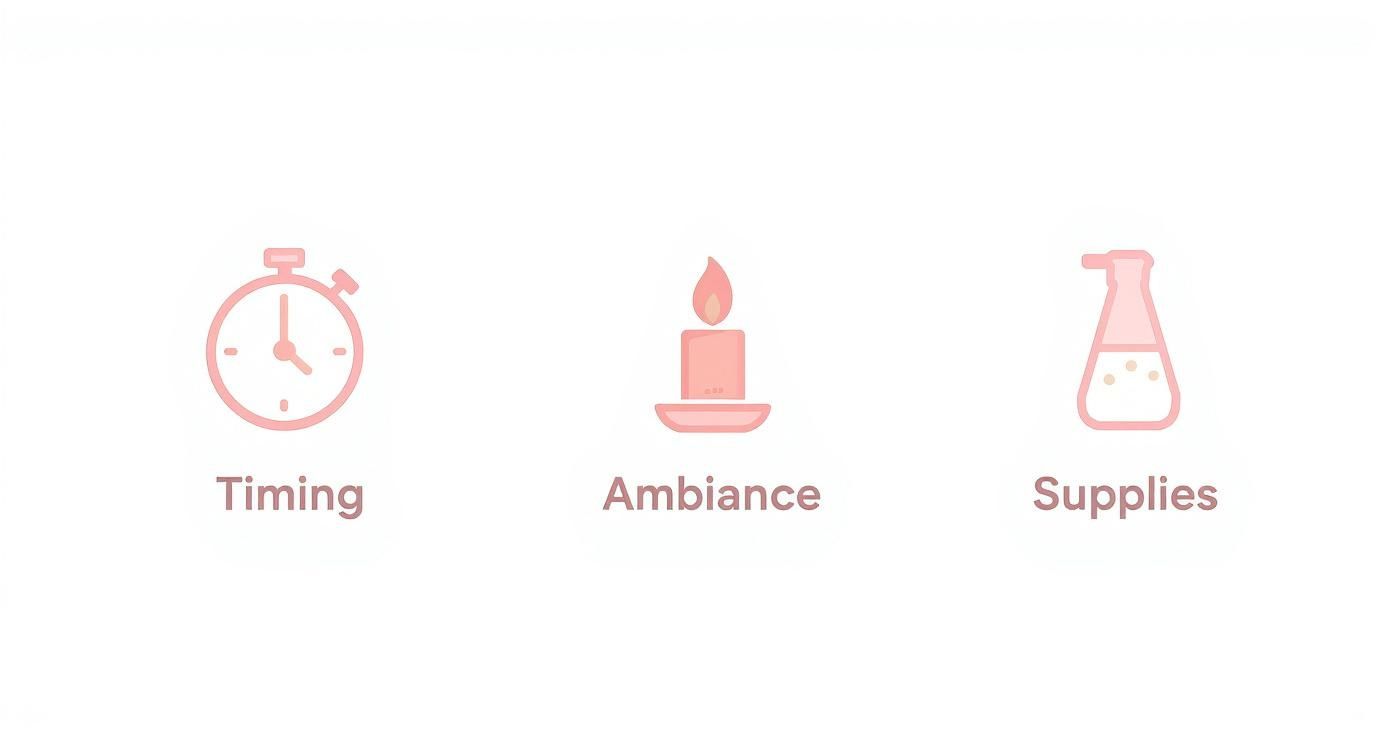
This little visual guide breaks down the key steps to prepare your space, making sure you have everything set for a relaxing session.

Three pink icons: a stopwatch for timing, a lit candle for ambiance, and a beaker for supplies.

It’s a simple reminder that a successful home massage is built on three pillars: choosing the right time, creating a calming atmosphere, and having your supplies ready to go.

Addressing Pelvic and Abdominal Recovery

Your core has done an amazing job and now needs some gentle encouragement to heal. Light, clockwise circular strokes around the abdomen can aid digestion and help stimulate uterine involution (the process of the uterus returning to its pre-pregnancy size). It's a wonderfully gentle way to reconnect with your belly.

For more targeted fluid reduction, you might be interested in learning about what is lymphatic drainage massage from our detailed guide.

Perineal massage is another technique widely supported in Australia. It's often recommended during late pregnancy to improve tissue elasticity and reduce trauma during birth. Postpartum, once you've healed and received clearance from your GP, gentle scar tissue massage can be beneficial for both perineal tears and C-section incisions.

C-Section Scar Care

If you've had a caesarean birth, it is absolutely critical to wait until your incision is fully healed and you have your doctor's approval before touching the area directly. This is usually around the 6-week mark, but everyone's recovery timeline is different.

Once you get the all-clear, you can begin with very gentle techniques.

Start by gently moving the skin around the scar, without touching it directly. Use your fingertips to make small circles above, below, and to the sides of the incision.

When you feel ready, use one or two fingers to apply light pressure directly on the scar itself. Gently move it up and down, side to side, and in small circles. If you're comfortable, you can gently try to lift the scar away from the underlying tissue.

The key is to start slowly and really listen to your body. If you feel any sharp pain, stop immediately. The goal here is to prevent adhesions and improve mobility, promoting a smooth and comfortable recovery.

Understanding When to Avoid Postnatal Massage

While a postnatal massage at home can be an absolute game-changer for your recovery, it isn't always the right move. Your body is in a profound state of healing, and some situations call for a pause to put safety first. Knowing when to hold off is just as crucial as knowing which techniques to use.

The golden rule is always to listen to your body and your medical team. If anything feels off, or if you're even slightly unsure, it's always best to wait. This ensures your wellness journey is truly supporting, not hindering, your postpartum recovery.

Critical Health Considerations

There are some specific medical situations where massage is a definite no-go and could be unsafe. We call these contraindications, and they’re essential red flags designed to protect your health. If you're experiencing any of the following, you absolutely must postpone any massage.

Getting clearance from your GP or a maternal health nurse before you begin is standard practice, especially if you had a complicated pregnancy or birth. It just makes sure everyone involved in your care is on the same page.

You should avoid massage completely if you have:

  • Fever or Infection: Your body is already working overtime to fight off illness. A massage can sometimes stir things up and make you feel worse.
  • High Blood Pressure or Pre-eclampsia: Massage has a direct effect on circulation and blood pressure, so it’s vital to have these conditions fully under control and cleared by a doctor before you even consider it.
  • Contagious Skin Conditions: This one’s straightforward—it's to prevent spreading any rash or infection.
  • Deep Vein Thrombosis (DVT): This is a blood clot, usually in the leg. Massage is strictly off-limits as it could dislodge the clot, which is extremely dangerous.

Always consult with your GP before starting any new wellness practice after birth. A quick chat with a trusted health professional, like those at Pregnancy Birth and Baby, provides peace of mind and keeps your recovery safe.

When to Seek Medical Advice First

Beyond those absolute no-go situations, there are other times when you need a doctor's green light before scheduling that at-home session. These scenarios require a bit more care to ensure the massage is adapted properly to your specific needs.

For instance, significant swelling (oedema) in just one leg needs immediate medical attention before any massage is considered. Likewise, if you have any open wounds, stitches that aren't fully healed, or areas of broken skin, those spots must be completely avoided.

Remember, this isn’t about putting up barriers to your self-care. It’s about making smart, empowered choices that truly honour your body's incredible postpartum journey.

Finding a Qualified Professional for Mobile Massage

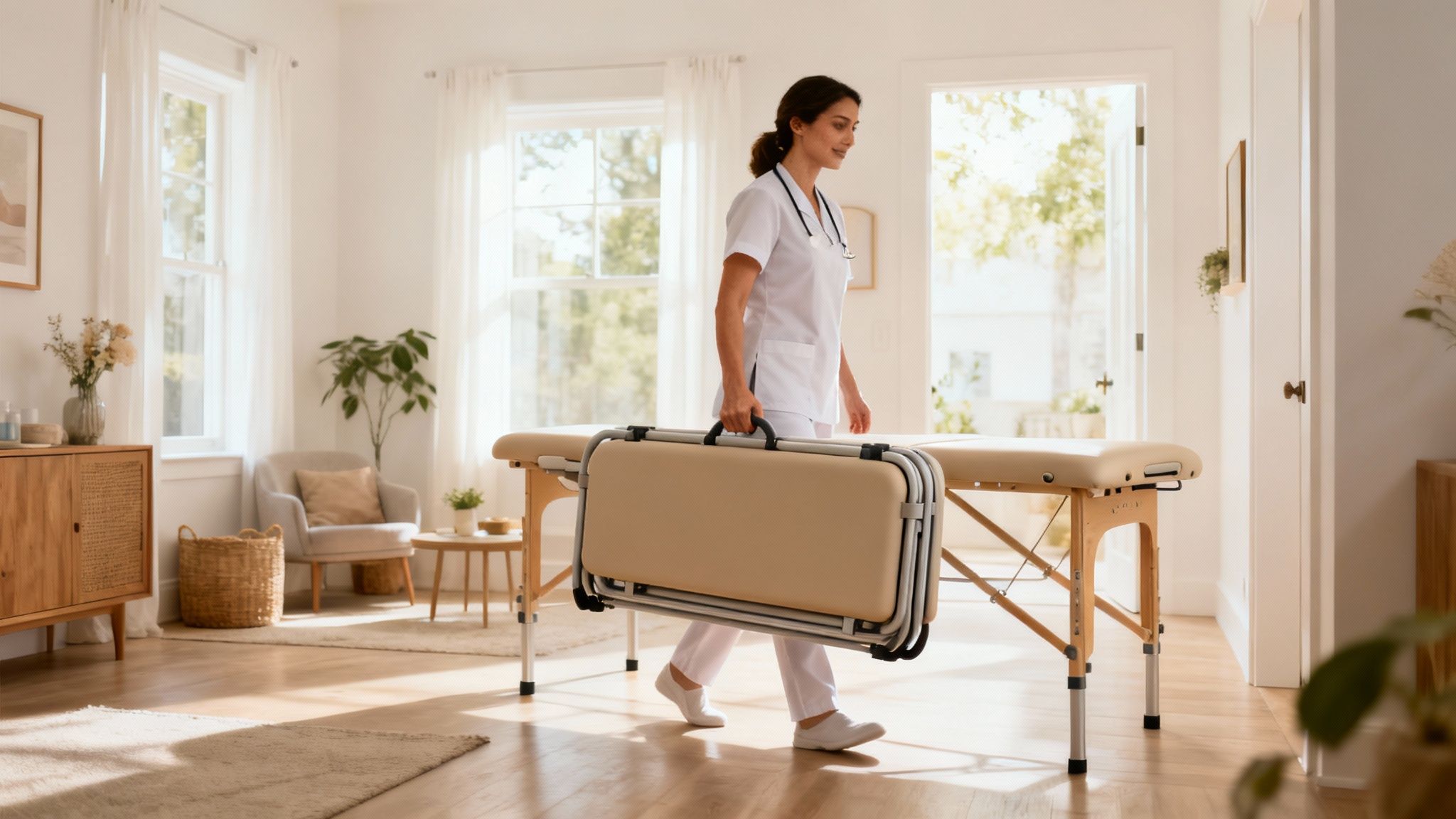
A professional therapist carries a folded portable massage table into a bright room with another table.

Sometimes, the most restorative thing you can do for yourself is to simply let an expert take over. Booking a professional for a postnatal massage brings specialised knowledge right to your door, taking all the guesswork and stress out of the equation.

It’s about getting that five-star wellness experience with the ultimate convenience. Whether that’s in your living room between feeds, your office for a midday reset, a hotel room for a proper escape, or even on a yacht, the right therapist can make it happen.

The key, though, is finding someone who truly understands the unique needs of a postpartum body. You’re not just looking for any massage therapist; you need a professional with specific training and hands-on experience in perinatal care. Their expertise is what ensures every technique is safe, appropriate, and genuinely beneficial for your stage of recovery.

Vetting Your Mobile Massage Therapist

When you start searching for the right professional in Australia, qualifications should be your first checkpoint. A great therapist will be completely transparent about their credentials and will be happy to answer any questions you have. Never hesitate to ask them about their experience with postpartum clients specifically.

Before you book, make sure you're clear on these points:

  • Qualifications and Specialisation: Look for certifications in pregnancy, prenatal, or perinatal massage. This shows they’ve done specific training beyond a general diploma.
  • Insurance and Association Membership: Make sure they are fully insured and a member of a recognised Australian professional body, like Massage & Myotherapy Australia (MMA) or the Australian Traditional Medicine Society (ATMS).
  • Postpartum Experience: Ask them directly how many postpartum clients they typically see and what common issues they help address.

A truly qualified therapist gets the physical and emotional landscape of the fourth trimester. They’ll know how to position you for comfort, especially after a C-section, and use techniques that support your healing rather than get in the way of it.

Questions to Ask Before Your First Session

Once you've shortlisted a potential therapist, a quick chat can confirm if they're the right fit. This is your chance to outline what you need and get a feel for their professionalism. Having a few questions prepared helps you make an informed decision and feel completely comfortable.

Consider asking things like:

  • "What specific techniques do you use for common postpartum issues like back pain from breastfeeding or pelvic discomfort?"
  • "How do you adapt the massage if I've had a C-section?"
  • "What is your policy if my baby wakes up and I need to pause the session?"
  • "What equipment do you bring, and is there anything I need to provide?"

Taking a few moments to properly vet your professional ensures your postnatal massage at home is not just convenient, but also safe, effective, and incredibly restorative. If you need more tips, check out our guide on how to find the right mobile massage therapist for your needs.

Your Postnatal Massage Questions, Answered

Even with all the benefits in front of you, it’s completely normal to have a few questions swirling around before you dive into a postnatal massage at home. This is your body and your unique recovery journey, so feeling confident and well-informed is the first step.

To clear things up, I’ve pulled together some of the most common queries I hear from new mums across Australia, along with some clear, practical answers. Think of this as your final checklist for peace of mind, making sure you’re ready to embrace this restorative practice as a key part of your postpartum wellness.

How Soon Can I Actually Start After Birth?

This is easily the question I get asked the most, and honestly, the answer really comes down to your individual birth experience.

For an uncomplicated vaginal birth, you can often begin with some very gentle massage on your back, shoulders, and feet within that first week. The real focus here is on relaxation and easing that initial tension that comes from labour and endless hours of feeding.

However, if you've had a C-section, patience is everything. It is absolutely vital to wait until your incision is well-healed—which is usually around the 6-week mark—and you've been given the all-clear from your GP. Until then, there should be no direct pressure applied to your abdomen or the scar tissue, period.

What Massage Oils Are Safe if I’m Breastfeeding?

When you're breastfeeding, whatever you put on your skin has the potential to come into contact with your baby. Because of this, it’s always best to stick with simple, natural, and unscented options.

You want a light, nourishing oil that's gentle on both your skin and your baby's.

  • Fractionated Coconut Oil: This is a fantastic choice. It’s non-greasy, absorbs beautifully, and is completely odourless.
  • Sweet Almond Oil: Another very popular option, known for being super hydrating.
  • Jojoba Oil: This one closely mimics the skin's natural sebum, making it a brilliant, non-irritating choice.

The key thing to remember is to avoid essential oils with strong scents, especially anywhere near your chest or hands. A baby's sense of smell is incredibly sensitive, and strong fragrances can be really overwhelming and even interfere with feeding cues.

Can My Partner Give Me a Massage?

Absolutely! In fact, having your partner give you a massage can be a really beautiful way to connect during that whirlwind postpartum period. It gives them a hands-on, practical way to offer support that directly contributes to your comfort and wellbeing.

They don't need to be a professional therapist. The focus should just be on simple, soothing strokes on your back, shoulders, and legs. Remind them to use the flats of their hands and gentle pressure, avoiding any deep or prodding movements, especially near your lower back and abdomen. Many Australian birthing centres and online parent resources offer great little tutorials on basic techniques.

How on Earth Do I Manage a Massage With a Newborn Around?

Flexibility is the name of the game when you have a newborn. The idea of an uninterrupted hour might seem like a fantasy, so the first step is to just let go of that expectation. Instead, aim for shorter, more frequent sessions.

Try to time your massage for when your baby is usually settled, like just after a feed. Keep the bassinet nearby so you can easily tend to them if you need to. If your baby wakes up mid-massage, you simply pause. No stress.

This is exactly why having a mobile therapist come to you is such a game-changer—it completely removes the stress of travel and rigid appointment times. It allows your wellness to fit around your new family life, not the other way around.


Ready to experience the healing benefits of expert care in your own home? The team at The Royal Masseur brings five-star postnatal massage directly to you in Sydney, Melbourne, Brisbane, and beyond. Book your session today and let us support your recovery journey.

Posted on Leave a comment

Thai Massage at Home: Your Actionable Guide to Deep Relaxation

Booking a Thai massage at home brings the ancient art of therapeutic stretching and acupressure right to your doorstep, cutting out the travel and weaving genuine wellness into your packed schedule. This is about transforming your personal space—whether it's your office for a midday reset, a hotel room while travelling, or even a yacht for the ultimate luxury—into a private sanctuary for deep relaxation and healing.

Why Mobile Thai Massage Is Transforming Australian Wellness

A smiling professional therapist enters a bright modern living room, carrying a yoga mat and basket.

The concept of wellness in Australia is shifting. It’s no longer a luxury saved for a rare spa trip; proactive self-care is becoming an essential part of a productive life. The rise of mobile Thai massage directly addresses the realities of modern living, where time is a premium resource and convenience is paramount.

For busy professionals in the office, parents managing family life, or anyone needing to decompress, the traditional wellness model can feel out of reach. This is where the practicality of an in-home or on-location service truly excels.

The Ultimate Convenience for a Modern Lifestyle

Imagine this: no battling city traffic, no searching for parking, and no clinical waiting rooms. Instead, a qualified therapist arrives at your location—be it your home, office, or hotel—fully equipped to create a professional treatment space. This isn't just a time-saver; it’s an energy-saver, allowing you to focus entirely on the restorative experience.

The actionable benefits of bringing wellness to you are significant:

  • Deep Relaxation in a Trusted Space: Being in a familiar environment like your home or a private office allows your nervous system to relax more quickly, enabling a deeper state of calm from the outset.
  • Total Privacy and Control: You dictate the environment. The lighting, temperature, and choice of music (or silence) are all tailored to your preference, creating a truly personalised session.
  • Seamless Integration: A massage can be scheduled during a work-from-home lunch break, booked for an evening at your hotel, or used as a restorative end to a long day on your yacht without disrupting your entire schedule.

This move toward convenience-based wellness is more than a trend. The mobile massage market is expanding across Australia, with strong networks in major hubs like Sydney and Melbourne. This growth is fuelled by consumer demand for practical solutions.

Considering many Australians spend significant time commuting, eliminating travel for a wellness appointment is a powerful efficiency hack. You can explore more on the benefits of mobile massage versus a traditional spa to see how this model provides tangible advantages.

By bringing therapy to your preferred location, a Thai massage at home, in the office, or at your hotel removes the logistical barriers that prevent consistent self-care. It’s a practical and effective way to manage stress, ease physical tension, and find genuine peace in a demanding world.

Setting the Scene for Your At Home Massage

An authentic Thai massage experience begins before the therapist arrives. The key is creating a sanctuary—a quiet bubble where your mind can switch off and your muscles can release tension. This preparation is crucial, whether you're clearing a space in your office for a professional visit or setting up in your living room.

Think of it as signalling to your body that it’s time to de-stress. A few simple, actionable tweaks can transform any room into a peaceful retreat, enhancing the therapeutic power of the massage.

Choosing and Preparing Your Space

First, find a room where you can have uninterrupted privacy. A living room, a quiet home office after hours, or a spacious hotel suite can be perfect. The most important requirement is ample floor space. Traditional Thai massage is performed on a mat, so you’ll need a clear area of at least 2 by 2.5 metres to accommodate the dynamic stretches and movements.

Once you have your space, focus on the surface. A hard floor is unsuitable, but an overly soft bed lacks the necessary stability.

  • The Ideal Surface: A firm yoga mat is a good foundation. A futon mattress or a thick, folded blanket over a rug provides the perfect balance of comfort and support.
  • Comfort Essentials: Have a couple of pillows and a light blanket on hand. Pillows offer excellent support under the knees or head, while a blanket is useful for staying warm as your body temperature can drop during deep relaxation.

Remember, the foundation of a great Thai massage at home is about function and simplicity. A quiet, clear, and comfortable floor space is the most critical element to arrange for yourself or your therapist.

Crafting the Perfect Ambience

With the physical space ready, it’s time to engage the other senses. These details elevate a simple massage into a restorative ritual.

Adjust the room temperature to be slightly warmer than usual, as you won't be moving. Dim bright overhead lights and use a soft lamp to create a calming glow.

Finally, consider sound. For some, a playlist of calming instrumental music or nature sounds works best. For others, pure, uninterrupted silence is the ultimate luxury. There is no right answer; choose what feels most relaxing for you.

Taking a few minutes for this setup creates an environment that amplifies the healing power of the massage, making your Thai massage at home a genuinely profound wellness experience.

Your At Home Thai Massage Preparation Checklist

Here’s an actionable checklist to ensure you have everything ready for a seamless and relaxing massage experience, whether you're hiring a professional or practising with a partner.

ElementProfessional Therapist VisitDIY/Partner MassagePro Tip
SpaceClear a 2 x 2.5 metre area on the floor.Clear a 2 x 2.5 metre area on the floor.Choose a room with a door you can close to minimise interruptions.
SurfaceHave a yoga mat or thick blanket ready.Have a firm yoga mat, futon, or folded blanket ready.A surface that's too soft (like a bed) won't provide the right support for Thai stretches.
ComfortProvide a few pillows and a light blanket.Have pillows and a blanket within easy reach.Pillows are great for supporting the knees, neck, or lower back during certain positions.
TemperatureSet the room to a comfortable, slightly warm temp.Make sure the room is warm enough to relax in without moving.A slightly warmer room prevents you from feeling chilled as your body relaxes.
LightingDim the lights or use a soft lamp.Dim the lights or use a soft lamp.Avoid harsh overhead lighting to help the eyes and mind rest.
SoundAsk the therapist if they bring music, or have a quiet space.Choose calming music or enjoy complete silence.Let your partner know your sound preference beforehand to avoid distractions.
ClothingWear loose, comfortable clothing like yoga pants and a t-shirt.Wear loose, comfortable clothing you can move freely in.Stretchy, breathable fabrics work best. Avoid jeans or restrictive clothing.

These small, actionable steps ensure that once the massage begins, your only task is to breathe, relax, and enjoy the full therapeutic benefits.

Mastering Simple Thai Massage Techniques with a Partner

Sharing the healing power of touch is an excellent way to connect with a partner. You don’t need extensive training to provide genuine relief and relaxation at home. Learning a few basic Thai massage techniques is simpler than you might imagine. The goal isn’t to replicate a professional treatment but to use simple, safe movements to help each other unwind.

The secret is to use your body weight for gentle, rhythmic pressure, rather than muscle strength. This makes the massage less tiring for the giver and more effective for the receiver. It becomes a collaborative practice that builds trust and communication while easing tension.

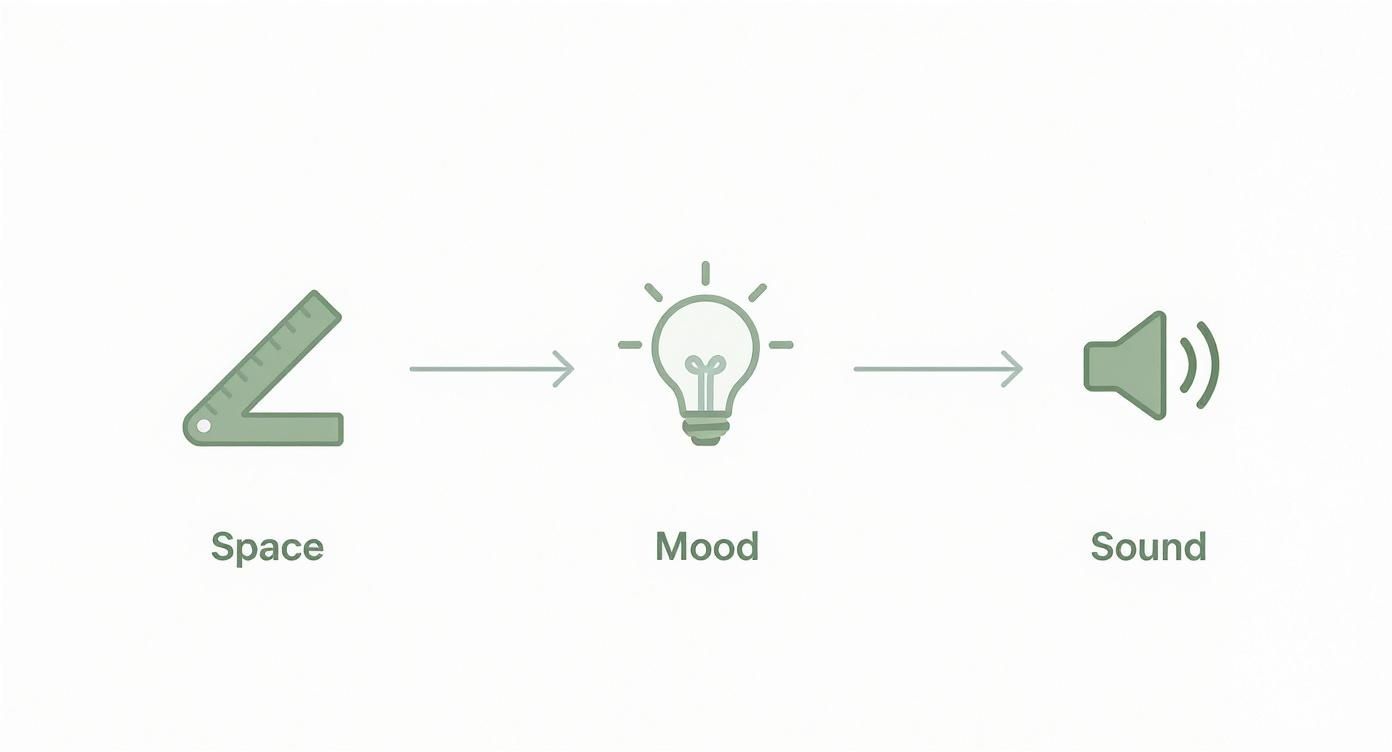
This visual guide shows the importance of environmental details. The right space, mood, and sound work together to create the perfect atmosphere.

A diagram illustrates space influencing mood, which then influences sound, using icons and text.

It highlights that a successful Thai massage at home starts with intentionally crafting a peaceful environment before any techniques are applied.

Foundational Moves Anyone Can Learn

First, have your partner lie comfortably on their back on a firm mat. Kneel beside them and take a few deep breaths together to sync up and settle into the moment. Always maintain open communication, checking in regularly about pressure and comfort.

A great starting point is the simple palm press.

  1. Place one hand over the other on your partner's thigh.
  2. Lean forward, using your body weight to apply slow, steady pressure. Focus on leaning, not pushing.
  3. Hold for three to five seconds, then release gently.
  4. "Walk" your hands up their leg in this manner, moving from the thigh towards the calf, avoiding the kneecap. This action warms the muscles and improves blood flow.

This technique can be used on the arms, back, and feet. The key is the slow, rhythmic application of pressure, which is very calming for the nervous system.

Remember, the goal is to create a space for relaxation and release, not to "fix" a problem. Your intention and gentle touch are your most powerful tools.

Simple Assisted Stretches for Shoulders and Back

Modern life, with its focus on screens, often leads to tight shoulders and aching backs. A few simple assisted stretches can provide incredible relief. For those seeking more targeted solutions, understanding professional approaches can be beneficial. You can learn more in our detailed guide to achieving neck and shoulder pain relief for deeper insights.

Here’s a safe and effective stretch to try together:

  • Gentle Spinal Twist: Have your partner lie on their back with knees bent and feet flat on the floor. Gently guide both knees to one side, encouraging them to keep both shoulders flat on the mat. Hold for a slow count of ten, then return to the centre and repeat on the other side.
  • Shoulder Opener: With your partner sitting cross-legged, kneel behind them. Place your hands on the front of their shoulders and gently draw them back to open up the chest. Hold for a few deep breaths, ensuring you're not pulling too hard.

Communication is non-negotiable. Thai massage can be intense, but it should never be sharply painful. Encourage your partner to speak up if the pressure is too much or a stretch feels uncomfortable. This feedback loop is essential for a safe and enjoyable experience for both of you.

Finding and Booking a Professional Mobile Massage Therapist

While practising with a partner is beneficial, there are times when the skill of a professionally trained therapist is needed for a truly therapeutic Thai massage at home. This is the best approach for addressing specific aches, chronic pain, and the deep-seated tension from modern life.

With many options available, especially in cities like Sydney and Melbourne, how do you find the right therapist? It's about knowing what to look for: qualifications, professionalism, and the right specialisation. This ensures you book a safe, effective, and deeply restorative experience.

Vetting Your Therapist for a Safe and Effective Session

Your peace of mind is paramount. When inviting a mobile massage therapist into your personal space, there are a few non-negotiables to verify. These credentials signify a professional committed to high standards of practice and client safety.

Before booking, ensure the therapist or their company can confirm the following:

  • Formal Qualifications: Look for a Diploma of Remedial Massage or an equivalent certification from a recognised Australian institution. This demonstrates a thorough understanding of anatomy and physiology.
  • Association Membership: Membership in a professional body like Massage & Myotherapy Australia (MMA) indicates adherence to a strict code of ethics and professional standards.
  • Current Insurance: Always confirm that the therapist holds current public liability and professional indemnity insurance. This is a crucial safety measure for both you and them.

A reputable therapist will be transparent about their qualifications and insurance. If this information isn't easily found on their website, don't hesitate to ask directly before booking. Your comfort and safety are the top priorities.

What to Expect During a Professional Home Visit

Once booked, the experience should be seamless and discreet. A professional mobile therapist understands they are entering your private space—be it your home, office, hotel room, or yacht—and will act with the utmost respect.

They will arrive with all necessary equipment, including a high-quality floor mat, fresh linens, and any bolsters or pillows needed for proper support. Their setup is quick and quiet, transforming your chosen space into a professional treatment area in minutes.

The session will begin with a brief consultation. This is your opportunity to discuss any issues, such as lower back tightness from sitting or shoulder tension from stress. Good communication allows the therapist to tailor the session to your specific needs. They will check in about pressure throughout the massage to ensure the intensity is right for you.

With a strong professional infrastructure in Australia, finding a qualified practitioner is straightforward. Thai massage is a sought-after specialty. New South Wales has 525 therapists, Victoria has 351, and Queensland has 196. As shown by data on Thai massage therapists in Australia, there is a significant, formally recognised workforce available.

Ultimately, the right choice is someone who meets professional standards and aligns with your wellness goals. For a deeper dive, our guide on how to find the right mobile massage therapist for your needs offers more practical tips. A little research upfront ensures you can book with confidence and receive the full benefits of a professional treatment.

The Unique Physical and Mental Benefits of Thai Massage

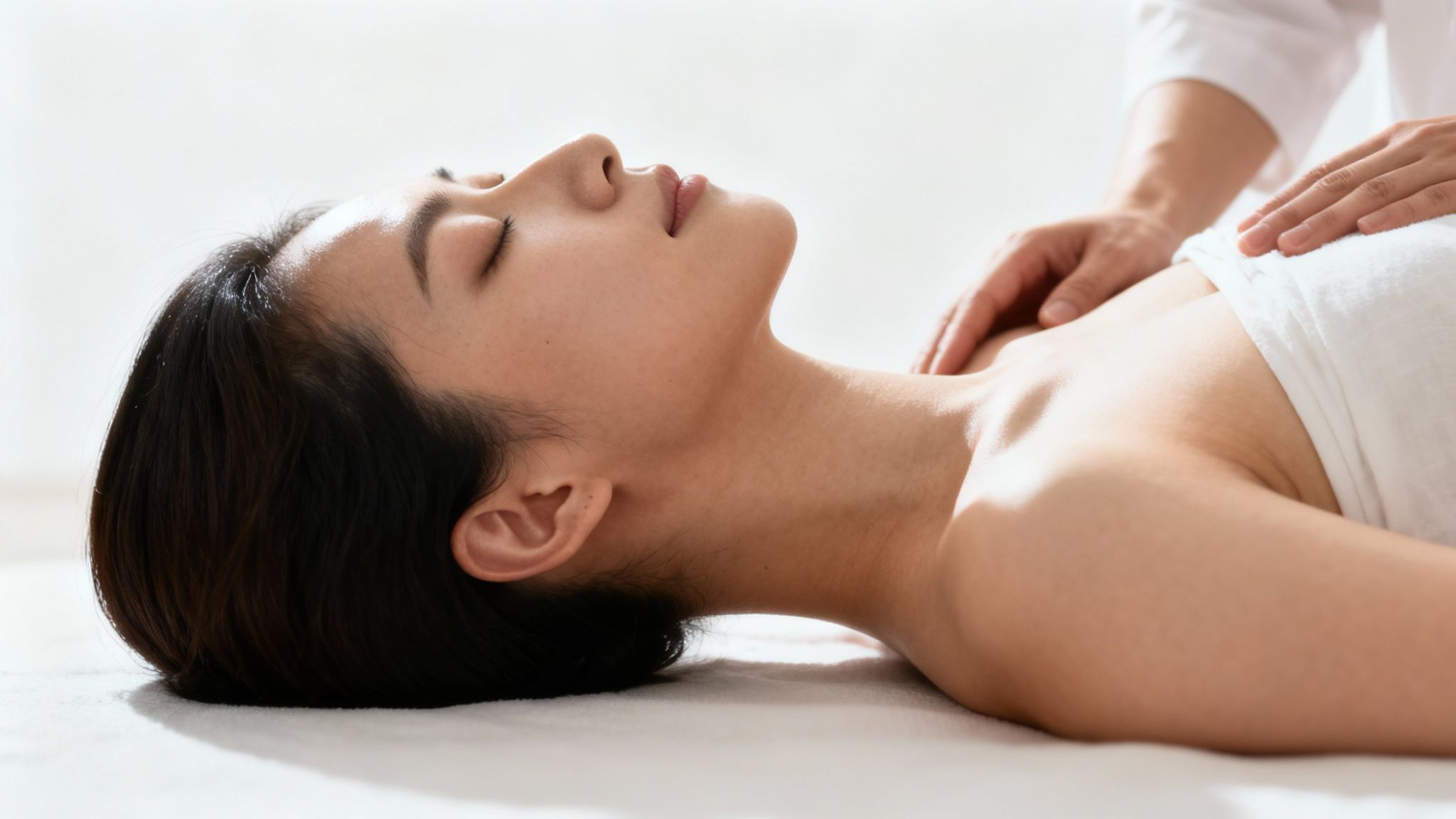
A serene young woman receiving a relaxing neck and shoulder massage from a therapist.

What makes a Thai massage at home feel so different from a standard massage? It’s the dynamic, whole-body approach that offers benefits beyond simple muscle relaxation. This isn’t a passive experience; it's an active, energising therapy that directly addresses the challenges of a modern, often sedentary lifestyle.

The unique combination of rhythmic acupressure, assisted yoga-like stretches, and gentle compression works on multiple levels. This method doesn't just knead sore muscles; it works systematically to unblock energy pathways, lengthen tight fascia, and create a sense of spaciousness in the body that lasts long after the session.

Releasing Modern-Day Tension

Consider your daily routine: hours hunched over a laptop in the office, constant phone use, or long commutes. These activities create specific patterns of tension. Thai massage is designed to counteract these modern ailments.

The deep, methodical stretches are particularly effective for issues like 'tech neck' and lower back pain from prolonged sitting. By mobilising the hips, elongating the spine, and opening the chest and shoulders, the massage helps restore natural posture and ease chronic stiffness. This not only relieves pain but also boosts energy by improving blood flow and releasing physical restrictions. For other ways to support your body's systems, check our guide on how to improve circulation naturally.

This active approach is why many people feel both deeply relaxed and invigorated after a session. It’s a complete reset for your body's physical structure and energy flow, leaving you feeling lighter, more flexible, and mentally clearer.

A Powerful Tool for Mental Clarity

The benefits are as much mental as they are physical. The rhythmic, meditative nature of the massage fosters a state of mindfulness, pulling your focus away from endless to-do lists and grounding you in the present. This focused attention helps quiet a busy mind, reduce stress, and promote a profound sense of calm.

This is particularly relevant for busy Australians, especially women balancing demanding careers and family life. Effective stress management has made practices like Thai massage a vital part of their wellness routine. Research shows that among mid-aged and older Australian women, 7.7% consulted a massage therapist in the last year. It’s not surprising that women represent 61.19% of the global market share for massage services in 2023.

This trend reflects a growing recognition of massage as a crucial tool for managing the physical and mental demands of a busy life. You can discover more about these findings on women's health and massage therapy.

Your At-Home Thai Massage Questions, Answered

Bringing the Thai massage experience into your own space for the first time can bring up a few practical questions. Sorting out the details beforehand is key to ensuring your session is seamless, comfortable, and tailored to your needs.

Here are straightforward answers to the most frequently asked questions.

What Should I Wear for a Thai Massage at Home?

For a traditional Thai massage, you remain fully clothed. The best attire is loose, comfortable clothing that allows for a full range of motion—similar to what you would wear for yoga or Pilates.

Lightweight tracksuit pants, leggings, or loose-fitting trousers and a t-shirt are ideal. Avoid restrictive clothing like jeans or items with belts, zips, and buckles. Your therapist needs to be able to move your limbs freely to guide you through the assisted stretches central to the practice.

Do I Need My Own Massage Table?

No, you do not. In fact, a massage table is not used in authentic Thai massage. This traditional therapy is always performed on a firm, padded mat on the floor.

When you book a professional mobile therapist, they arrive with all necessary equipment. This includes a high-quality, comfortable floor mat and any bolsters or pillows required for extra support. Your only responsibility is to ensure there is enough clear floor space for them to set up, typically around 2 metres by 2.5 metres.

Is Thai Massage Painful?

Thai massage is often described as intense, but it should never be outright painful. You will feel deep pressure and significant stretching, which can create a strong sensation in tight areas. Many clients refer to this as a "good pain" because it is accompanied by a powerful feeling of release.

Open communication is crucial. If any movement or pressure feels sharp or excessive, you must inform your therapist immediately. A skilled practitioner will adjust their technique to work within your comfort zone. Tensing up in pain is counterproductive to the goals of the session.

Certain health factors should also be considered. Thai massage is not recommended for individuals with serious heart conditions, recent surgeries, or severe osteoporosis. Always disclose your full health history before the session begins.

How Is a Mobile Massage in a Hotel or on a Yacht Different?

While the quality and technique of the massage remain the same, the logistics for unique locations like a hotel room or yacht differ slightly. For a hotel visit, you may need to arrange access for the therapist with the concierge or meet them in the lobby.

On a yacht, the primary considerations are space and stability. The therapist will require a flat, stable area to work, so scheduling the session while docked or in calm waters is essential for safety and comfort. Experienced mobile therapists are adept at discretion and skilled in adapting to these exclusive environments to provide a five-star experience, wherever you are.


Ready to experience the ultimate in convenience and relaxation? The Royal Masseur brings expert Thai massage and a full suite of wellness services directly to your home, office, or hotel. Book your session today at https://theroyalmasseur.com.au and discover a new level of wellbeing.
Posted on Leave a comment

Hot Stone Massage: Relaxation and Healing Benefits

Ever wondered what a hot stone massage actually feels like? Imagine the deep, comforting warmth of a heated blanket combined with the skilled hands of a massage therapist working out every knot. That’s the heart of it: a unique therapy where smooth, heated stones are placed on key points of your body and used to massage your muscles, creating a sense of profound relaxation.

What to Expect From a Hot Stone Massage

Image

A hot stone massage isn’t just a regular massage with a warm gimmick. It takes the experience to another level by incorporating thermotherapy—the therapeutic use of heat—to get deeper results.

Think of a tight, tense muscle like a cold knob of butter. A standard massage can try to work it out with pressure alone, but it takes a lot of effort. The heated stones, however, act like a warm knife, gently melting that tension away and making the muscle pliable and ready for more effective work.

This allows your therapist to get into the deeper layers of muscle tissue with much less pressure and discomfort than you might feel during a traditional deep tissue massage. The result is an experience that’s both intensely therapeutic and incredibly calming.

The Science Behind the Soothing Heat

The real magic is in how your body reacts to that controlled warmth. The heat from the stones triggers vasodilation, which is just a technical way of saying your blood vessels widen. This is a game-changer for a few reasons:

  • Better Blood Flow: Wider vessels mean more oxygen-rich blood can get to your muscles, helping to flush out toxins and speed up cellular repair.
  • Deeper Muscle Release: That penetrating warmth is a powerful signal to your muscles to let go of long-held tension, easing knots and tightness almost effortlessly.
  • A Calmer Nervous System: The gentle, consistent heat has a sedative effect, helping to dial down stress hormones and usher in a genuine sense of well-being.

A hot stone massage is less about brute force and more about using warmth as a key to unlock your body’s own ability to relax and heal. It creates the perfect conditions for your muscles to simply surrender.

The Royal Masseur Difference

While the idea of using hot stones sounds simple, the skill is all in the execution. Many places might just place the stones on your back as a passive heat treatment, but at The Royal Masseur, we see it as a true art form.

Our therapists are trained to use the stones as extensions of their own hands. They glide, knead, and work with them, performing fluid, targeted strokes that are customised to your body’s unique needs. We don’t follow a one-size-fits-all routine that you might find at a busy, impersonal spa. Instead, we map out the treatment based on your tension patterns for a far more effective and satisfying result.

You can dive deeper into our specific techniques on our hot rocks and massage page.

Massage therapy is a huge part of the wellness landscape here in Australia. In fact, around 20% of Australians have seen a massage therapist in the last year, showing just how much we value high-quality, effective treatments.

Of course, here is the rewritten section with a more natural, human-written tone, following all the specified requirements.


The Ancient Roots of Modern Heat Therapy

While a hot stone massage feels like a modern indulgence, its origins are actually deeply rooted in ancient history. This isn’t some new wellness fad; it’s a practice that’s been passed down through centuries and across different cultures. The central idea—using heated stones to heal and relax—really speaks to a timeless human connection with nature’s own remedies.

Long before we had day spas, ancient healers already understood the incredible power of focused heat. They knew that smooth, warm river stones could send soothing energy deep into sore muscles and a tired mind. This wasn’t just about the physical; it was a ritual to bring the body and spirit back into balance.

A Journey Through Time

The use of heated stones as a healing tool goes back thousands of years, with many cultures adding their own unique touch to the technique. This rich, multicultural heritage just goes to show how fundamental heat therapy is to our wellbeing.

The story starts over 5,000 years ago with the Hindus in India, where it was a key part of Ayurveda. Healers would use warm stones on Marma points—vital energy centres—to get the body’s life force flowing properly again.

But this knowledge didn’t stay put. Around 2000 BCE, the practice popped up in China. There, stones were placed on meridian points to improve the flow of Qi (energy) and get the circulation going. At the same time, Native American tribes were using hot stones in sweat lodge ceremonies and healing rituals to detoxify the body and ease muscle pain. Even traditional Hawaiian Lomi Lomi massage incorporated heated lava stones, believing they could clear out negative energy and restore harmony. If you’re curious about the full backstory, you can dive deeper into the origins of hot stone therapy.

The modern hot stone massage we know today was officially brought back to the Western world in 1993 by Mary Nelson with her LaStone Therapy. This is what really sparked its global popularity and established it as a recognised treatment here in Australia.

Thinking about this ancient lineage adds a whole new level of appreciation to the massage. Every stone carries a history of healing, connecting your session to a tradition that has been soothing bodies and minds for thousands of years.

Perfecting an Ancient Art at The Royal Masseur

While the history is fascinating, it’s the modern application where real skill and mastery come into play. Many places offer a very basic version, maybe just placing a few warm stones on your back. Here at The Royal Masseur, we honour that ancient tradition by perfecting it for today’s needs.

We don’t just place stones on you; our therapists integrate them as fluid extensions of their own hands. They are experts in using the weight, shape, and heat of each stone to perform targeted massage strokes, melting away tension in a way that hands alone simply can’t. This approach is so much more than a simple heat pack—it’s a dynamic, hands-on therapy that respects the ancient art while delivering far better results for you today.

Unlocking the Core Benefits of Hot Stone Massage

Image

So, what makes a hot stone massage so incredibly effective? It all comes down to the powerful duo of therapeutic heat and skilled massage techniques. This isn’t just about feeling good for an hour; it’s a therapy designed to create real, positive changes in both your body and your mind.

The real secret lies in the heat from the stones. Picture them as a key, unlocking the deeper layers of your muscles. This warmth allows your therapist to work more effectively without having to apply the intense, sometimes uncomfortable, pressure needed in other massage styles. It essentially coaxes your muscles into letting go of all that stored tension and tightness.

This simple act sets off a wonderful chain reaction of positive effects, from easing chronic pain right through to calming a frazzled nervous system. It’s a complete approach to wellbeing that tackles physical discomfort and mental stress at the same time, making it a hugely popular treatment in our fast-paced Aussie culture.

Melting Away Muscle Tension and Pain

One of the first things you’ll notice is the incredible relief from muscle tension and pain. The heat from the stones sinks deep into your muscle tissue, which in turn boosts blood flow to the area.

This rush of circulation delivers more oxygen to your muscles, helping to repair damage while flushing out the metabolic junk that makes you feel sore. For anyone dealing with chronic issues like fibromyalgia, arthritis, or a nagging backache, this can be an absolute game-changer. It’s a gentle yet powerful way to soothe those persistent aches.

The real beauty of hot stone massage is its efficiency. The heat does the heavy lifting, relaxing the muscles to a point where the therapist can zero in on knots and trigger points with more precision and less discomfort for you.

At The Royal Masseur, our therapists have truly mastered this technique. While some places might just plonk the stones on your back and leave them there, our practitioners use them as an extension of their own hands. They glide the heated stones over your body with deliberate strokes, using their unique shape and warmth to target tension with a level of accuracy that seriously amplifies the pain relief.

Calming the Nervous System for Stress Relief and Better Sleep

Beyond the purely physical, a hot stone massage works wonders for your mental state. The combination of penetrating warmth and soothing massage strokes has a profound calming effect on your entire nervous system.

It helps shift your body out of its stressed-out “fight-or-flight” mode and into a much-needed “rest-and-digest” state. As this happens, your levels of stress hormones like cortisol drop, and your body releases mood-boosting endorphins. It’s common for our clients to report feeling a deep sense of peace and mental clarity long after the session is over.

This deep relaxation can also pave the way for a much better night’s sleep. By calming your nervous system and relieving the physical aches that might be keeping you awake, a hot stone massage can help you drift off faster and enjoy more restorative rest. It’s a fantastic, natural way to tackle the root causes of many sleep problems.

Supporting a Healthy Body and Mind

The growing demand for treatments like hot stone massage is part of a bigger trend in Australian wellness. The national spa industry has seen massive growth; back in 2009, there were over 600 spas pulling in an estimated $465 million AUD in revenue. Even then, 15% of spas noted a significant rise in bookings for relaxation massages like hot stone therapy, showing just how much we value effective stress management.

This kind of therapy is much more than just a treat; it’s a proactive step towards managing your overall health. The benefits include:

  • Improved Circulation: The warmth widens your blood vessels, giving blood flow a healthy boost throughout your body.
  • Enhanced Flexibility: By relaxing muscles and the tissues that connect them, the massage can improve your overall range of motion.
  • Immune System Support: Some studies even suggest that massage can increase lymphocytes, the white blood cells that help your body fight off infection.

Of course, good posture is key to preventing many of these muscular issues from starting. You can dive deeper into this connection in our article on posture and its musculoskeletal effects. By choosing a therapy that actively looks after your muscle health, you’re making a smart investment in your long-term physical wellbeing.

What to Expect During Your Session

Stepping into a treatment room for any massage can feel a little uncertain, especially if it’s your first time. Knowing what’s ahead can transform any nerves into pure anticipation. A professional hot stone massage isn’t just a treatment; it’s a carefully orchestrated experience designed for your ultimate comfort and relaxation. From the moment you arrive, every detail is considered.

The process actually starts before you even get on the table. It begins with a conversation. This initial consultation is crucial and it’s something that sets a premium service apart. Some places might rush this, but we take the time to properly understand your needs, chat about any areas of tension or pain, and go over your health history. This ensures the treatment is perfectly suited and, most importantly, safe for you.

The Sanctuary Setup

Once the consultation is done, your therapist will show you to a tranquil, prepared space. You’ll usually find the room is dimly lit, with a comfortable, ambient temperature. Soft, calming music often plays in the background, setting a peaceful mood from the get-go.

The centrepiece is the massage table, always prepared with fresh, soft linens. Your therapist will then step out, giving you complete privacy to disrobe to your comfort level and get settled on the table, covering yourself with the sheet or towel provided. Your privacy and comfort are always the top priorities.

The Art and Science of the Stones

While you’re getting comfortable, your therapist is making the final preparations for the basalt stones. These aren’t just any old rocks; they’re specifically chosen for their smooth texture and amazing ability to hold heat. We use a professional-grade heater that keeps the stones in water at a very precise, therapeutic temperature—typically between 45-55°C.

This strict temperature control is a key difference you’ll find with a meticulous provider like The Royal Masseur, unlike some budget competitors who may use less reliable methods. It guarantees the stones are always comfortably warm and consistently effective, getting rid of any risk of them being too hot. Each stone is carefully dried before it touches your skin, ready to deliver that soothing warmth deep into your muscles.

The Massage Experience Unfolds

The session kicks off with your therapist applying a high-quality massage oil, which helps the stones glide smoothly across your skin. The first sensation you’ll likely feel is the placement of several warm, still stones on key energy points of your body—perhaps along your spine, in the palms of your hands, or even between your toes. This initial placement starts the process of warming and relaxing your muscles.

Next, your therapist will begin the active part of the massage.

  • Warmth in Motion: Using other heated stones as an extension of their hands, they’ll perform long, flowing massage strokes across your back, legs, and arms.
  • Targeted Pressure: The weight and warmth of the stones let the therapist work deeper into muscle tissue to release stubborn knots, but with less intense pressure than you might feel in a traditional deep tissue massage.
  • A Seamless Blend: Your therapist will fluidly switch between using the stones and their hands, creating a continuous, flowing experience that’s both deeply relaxing and incredibly effective.

People often describe the feeling as a wave of warmth that penetrates right into the muscles, melting away tension in a way that a hands-alone massage simply can’t match. It’s a profoundly grounding and calming sensation.

This customised approach is where a truly skilled therapist shines. Unlike a rigid, one-size-fits-all routine you might find at a chain spa, our therapists adapt their techniques in real-time based on how your body is responding. If they find a particularly tight spot, they might use the edge of a stone for more focused work or hold a stone in place to let the heat sink in deeper. This personalised, intuitive method ensures you get a treatment that is truly yours, delivering far better results and a more memorable, restorative session.

How Hot Stone Compares to Other Massages

With so many different massage therapies out there, figuring out the right one for you can feel a bit overwhelming. Are you looking for gentle relaxation, general tension relief, or a more intense treatment to tackle those chronic knots? Knowing the key differences between popular styles is the first step to finding your perfect match.

Each type of massage has its own unique approach, designed to achieve specific goals for your wellbeing. Let’s look at how a hot stone massage stacks up against two of the most well-known therapies: Swedish and Deep Tissue.

Image

This image really captures how the stones become a natural extension of the therapist’s hands, allowing for that seamless blend of deep heat and targeted pressure.

Hot Stone vs Swedish Massage

Often thought of as the classic relaxation massage, a Swedish massage uses long, gliding strokes, kneading, and gentle tapping with light to medium pressure. The main goal here is to relax the entire body, improve circulation, and ease surface-level muscle tension. It’s a fantastic choice for first-timers or anyone just seeking pure stress relief.

A hot stone massage takes this relaxation to a whole other level. It often incorporates those same Swedish techniques but adds the powerful element of therapeutic heat. The warmth from the stones penetrates deep into the muscles, relaxing them far more effectively than pressure alone ever could. This allows the therapist to work deeper without having to apply forceful pressure, making it a much more comfortable experience for many people.

Think of it this way: while a Swedish massage calms the surface, a hot stone massage uses heat to unlock and soothe tension right from the core. It’s the difference between a comforting blanket and a deep, penetrating warmth that completely melts your stress away.

Hot Stone vs Deep Tissue Massage

On the other end of the spectrum, you have deep tissue massage. This technique uses very firm pressure and slow, deliberate strokes to target the deeper layers of muscle and connective tissue. It’s specifically designed to address chronic aches and pains, stiff necks, upper back tension, and sore shoulders. While it’s highly effective, that intense pressure isn’t for everyone and can sometimes be uncomfortable.

This is where a hot stone massage offers a brilliant middle ground. The heat from the stones warms up your muscle tissue, making it more pliable and receptive. This pre-relaxation lets the therapist access those deeper muscle layers and release stubborn knots with significantly less discomfort for you. You get the therapeutic results of a deep tissue session, but within a far more soothing and gentle experience.

To help you visualise the differences, we’ve put together a simple table.

Choosing Your Ideal Massage Therapy

This comparison of Hot Stone, Swedish, and Deep Tissue massages can help you decide which treatment best suits your wellness goals.

FeatureHot Stone MassageSwedish MassageDeep Tissue Massage
Primary GoalDeep relaxation & tension relief with therapeutic heatGeneral relaxation & stress reductionTargeting chronic pain & deep muscle knots
Pressure LevelLight to firm (heat allows for deeper work with less pressure)Light to mediumFirm to deep
Key TechniqueHeated stones combined with massage strokesLong gliding strokes, kneading & tappingSlow, deliberate strokes with intense pressure
Best ForEasing deep muscle tension, improving sleep & calming anxietyFirst-time massage goers & overall stress reliefChronic pain, postural issues & specific problem areas
Client SensationSoothing, comforting warmth & deep releaseGentle, flowing & relaxingIntense, focused & can sometimes be uncomfortable

Ultimately, the right massage comes down to what your body is asking for. Whether it’s the gentle calm of Swedish, the intense focus of Deep Tissue, or the penetrating warmth of Hot Stone, there’s a perfect fit for your needs.

The Royal Masseur Advantage: A Hybrid Solution

Here at The Royal Masseur, we don’t believe these therapies have to be separate. We see our hot stone massage as a superior, hybrid solution that delivers the best of all worlds. It’s a multi-faceted treatment that a standard massage on its own often can’t match.

Our therapists are expertly trained to integrate the deep-reaching benefits of heat with the targeted pressure of traditional massage. This unique skill set lets them customise each session perfectly to what you need.

  • For pure relaxation: We can blend the gentle, flowing strokes of a Swedish massage with the soothing warmth of the stones for an unparalleled relaxation experience.
  • For pain relief: We can use the heat to prepare your muscles for deeper, more focused work, releasing chronic tension effectively and comfortably—without the intensity of a traditional deep tissue massage.

This intelligent combination ensures you receive a treatment that is both profoundly relaxing and genuinely therapeutic, addressing your wellness goals on multiple levels. It’s this commitment to a results-driven, personalised experience that truly sets our hot stone massage apart.

Extending Your Relaxation After the Massage

That incredible feeling of bliss from your hot stone massage doesn’t have to end the moment you step out the door. The best way to think about it is that the treatment is just the start of a deep relaxation process. The hours that follow are your chance to really maximise and prolong those wonderful benefits.

Proper aftercare is the key to letting the therapeutic effects truly settle into your body.

This is where The Royal Masseur’s commitment to your wellbeing really shines. We don’t see our job as done once the massage is over. Far from it. We see it as our responsibility to guide you on how to continue your wellness journey long after we leave. Our therapists provide a complete wellness experience, and that absolutely includes personalised aftercare advice.

Your Simple Aftercare Checklist

To help you get the most out of your session, we’ve put together a simple but powerful checklist. Following these steps helps your body process the treatment and lock in that sense of calm and relief.

  • Stay Hydrated: This is easily the most important step. Massage, especially one using heat, helps to get things moving and release metabolic waste from your muscles. Drinking plenty of water is what helps your system flush all of that out, preventing any post-massage sluggishness.
  • Avoid Strenuous Activity: Your muscles have just been deeply worked on and are in a state of relaxation. The last thing you want to do is jump straight into a tough workout or heavy lifting, as you could easily strain them. Give your body at least 24 hours to rest and integrate the benefits of the massage.
  • Listen to Your Body: You might feel deeply relaxed and a little sleepy, or you could feel surprisingly energised. There’s no right or wrong way to feel. Just pay attention to what your body is telling you. If you feel like napping, take a nap. If a gentle walk sounds good, that’s great too. Don’t push yourself.

The Royal Masseur Personalised Guidance

While that general advice is a fantastic starting point, our service goes a step further. We know that every single body is different. A generic, one-size-fits-all approach to aftercare just isn’t good enough.

The care you receive after your hot stone massage is just as important as the treatment itself. It’s the bridge between a temporary feeling of relief and lasting, tangible wellness benefits.

This is why our therapists provide personalised recommendations tailored specifically to you. They’ll base this on your unique needs and the tension patterns they noticed during your session. This might look like suggesting specific stretches for a tight shoulder they worked on, or advising on how to use a warm compress at home for that recurring lower back issue you mentioned.

This level of attentive, ongoing support is what sets us apart from app-based services or busy spas where you are just another appointment. We don’t just offer a service; we build a wellness partnership with you. This commitment to your long-term health ensures you receive maximum value from every hot stone massage, empowering you to maintain that feeling of balance and relaxation in your daily life.

Of course. Here is the rewritten section, crafted to sound like an experienced human expert, following the specific style and tone from your examples.


Your Hot Stone Massage Questions, Answered

Even after learning what a hot stone massage is all about, it’s completely normal to have a few questions before you book. Feeling confident and comfortable is a massive part of the experience, so we’ve pulled together some of the most common queries we hear.

Think of this as your quick guide to clearing up any final hesitations.

Will It Be Too Hot or Even Painful?

Absolutely not. When done by a professional, a hot stone massage should feel deeply soothing, never painful. The entire point of the heat is to relax your muscles, making the whole experience more comfortable, not less.

Our certified therapists at The Royal Masseur use professional-grade heaters that bring the smooth basalt stones to a very precise, therapeutic temperature. This ensures they provide a gentle, penetrating warmth that melts away tension without ever being hot enough to burn. Your safety and comfort are our top priorities, and we always encourage you to speak up—if the heat or pressure needs adjusting at any point, your therapist will sort it out immediately.

Is This Massage Suitable for Everyone?

While it’s a wonderful treatment for most, there are a few situations where we need to be cautious. A hot stone massage is a powerful therapy, and making sure it’s the right fit for your health is a critical step that less experienced providers might unfortunately overlook.

We always recommend having a chat with your doctor first if you have conditions like:

  • High blood pressure
  • Diabetes
  • Heart conditions
  • Varicose veins
  • Any skin conditions that are sensitive to heat

This treatment is also generally avoided during pregnancy. This is exactly why our pre-session consultation is so thorough. We take the time to go through your health history to guarantee the treatment is perfectly safe for you—a professional standard that really sets a client-focused service apart.

How Often Should I Get One?

The honest answer? It really depends on what you’re trying to achieve. There’s no single magic number, because the best schedule is one that lines up with your wellness goals, lifestyle, and budget.

For general stress management and just feeling good, a monthly session is a fantastic and sustainable routine. But if you’re working on something specific, like chronic back pain, stubborn muscle stiffness, or trouble sleeping, you might find that more frequent sessions—maybe every one to two weeks to start with—will get you better results, faster.

Your therapist at The Royal Masseur is more than just someone who gives a massage; they’re your wellness partner. They can help you map out a personalised treatment plan that actually makes sense for you, ensuring you get the most out of every single session.

This collaborative approach means your treatments are always targeted and effective, moving you closer to your health goals with every appointment.


Ready to feel the deep, restorative benefits for yourself? The The Royal Masseur team brings a premium, 5-star hot stone massage experience right to your home, hotel, or office. Book your session today and find a new level of relaxation. https://theroyalmasseur.com.au

Posted on 2 Comments

7 reasons why you should seek remedial massage therapy for lower back pain!

massage on a table in an office

7 Reasons Why You Should Seek Remedial Massage Therapist For Lower Back Pain!

Remedial massage therapy can be a viable option for addressing lower back pain in some cases, but it’s important to note that the effectiveness of remedial massage can vary from person to person. Here are a few considerations:

Muscular Tension and Relaxation

If your lower back pain is primarily due to muscle tension or tightness, remedial massage therapy can help. A skilled remedial massage therapist can work on releasing tension in the muscles, promoting relaxation, and improving blood circulation.

Caution with Underlying Conditions

If your lower back pain is caused by an underlying medical condition such as a herniated disc, arthritis, or spinal stenosis, remedial massage will assist with improving circulation and relieving tension around the affected area. However, referring to a Myotherapist, Physio, Osteo or Chiro would be better suitable for the job at hand as the experience and qualifications speaks volume.

There’s no One Size Fits All

Everyone has an opinion about what could be the problem or what could be wrong when it comes to someone’s body. Their friend had this and someone said to do this. Every human body is the same, yet so far apart from the individual next to you. We live different lives, we function differently, we eat different, we move differently and have different genes. Focus on yourself, get the right advice and support relating to you and you only.

Consult with a Healthcare Professional

When experiencing lower back pain, it’s advisable that you are seeking the correct professional help that can assess you and your body in a holistic approach to determine the root cause of the pain. With the correct assessment, they can help identify the root cause of your pain and recommend an appropriate treatment plan.

Complementary Approach

Remedial massage therapy can be used as a complementary approach alongside other treatments such as physical therapy, exercise, and medication. It’s often more effective when combined with a holistic treatment plan.

Qualified Remedial Massage Therapist

If you decide to try remedial massage therapy, make sure to choose a qualified and licensed massage therapist. They should have experience in treating musculoskeletal issues and a good understanding of anatomy. If not, seek out a Myotherapist, Physio, Osteo or Chiro who have a plethora of skills and knowledge in these areas.

Communication with the Therapist

Communication is vital. Communicate openly with the therapist about your specific symptoms, pain levels, and any concerns you may have. This will help them tailor the massage to your individual needs and create a structured plan accordingly.

Remedial massage therapy can be a helpful component of a comprehensive approach to managing lower back pain, especially when muscular tension is a significant contributor. However, it’s crucial to seek the correct healthcare professional and consider the underlying cause of your pain before relying solely on medication, doctors or from what other individuals say.

Taking the first step is better than taking no step at all. Look after your body as it’s the only place you have to live in forever.

massaging a person face down

Posted on 8 Comments

Mobile Massage Sydney – How To Find The Right Mobile Massage Therapist For Your Needs

massuers doing table massage

Mobile Massage Near You

massage table set outdoors

Sydney is packed with businesses offering all types of massage services, both on-site and mobile. The words ‘mobile massage’ can even have a sexual connotation. However,  for the readers of this blog, we are only interested in the best mobile massage offering a unique service that allows people to enjoy a relaxing massage in their home or office. There are all sorts of different styles of massage, from rehabilitative to therapeutic to deep tissue and Swedish massage. Some therapists use only natural oils and lotions/creams to provide a soothing experience for clients, whilst others provide ‘hot rocks’ and aromatherapy as well.

Here at The Royal Masseur, we offer massages in your home, office or hotel and also offer special rates for corporate massage and couples massages where you connect with family and friends to enjoy a phenomenal experience.

Why Do You Need A Mobile Massage?

There are many reasons why you might need a mobile massage. It could be because you’re looking to relax after a stressful day at work, or maybe you just want to unwind before bedtime.  Also, you may need to reduce pain, muscle soreness and tension from your repetitive daily movements. But over the years, we’ve figured out the trigger to why people need a mobile massage. It’s because we lack the time to go out and seek a massage elsewhere. Being at home or in your hotel or office, you have the convenience and comfortability to get treated on your time not someone else’s.  A proper massage also helps in improving circulation, energy and alertness. Lowering heart rate and blood pressure. Whatever the reason, there’s no better way to achieve that than by pampering yourself in the comfort of where you are.

What Are Some Of The Benefits Of Having A Mobile Massage? (And Which Ones Should Be Top Of Mind?)

The Royal Masseur massaging man on a massage tableIf you’ve never had a mobile massage before, then you probably aren’t aware of how much of an impact they can have not only on your body but on your time. The extra time you have not driving too and from the clinic, sitting in traffic and being stressed out for no good reason, and having the freedom to roll straight into bed or the couch after your session. In fact, most people report feeling addicted after having just one. This is because therapists use different techniques to help you relax and achieve your goals. These include dry-needling, cupping, Remedial, Swedish, deep tissue, sports, reflexology, and hot stone therapy. However, you should keep in mind the creditations of the masseurs and make sure they fully understand which type of massage would best suit you for your current situation, mindset and condition.
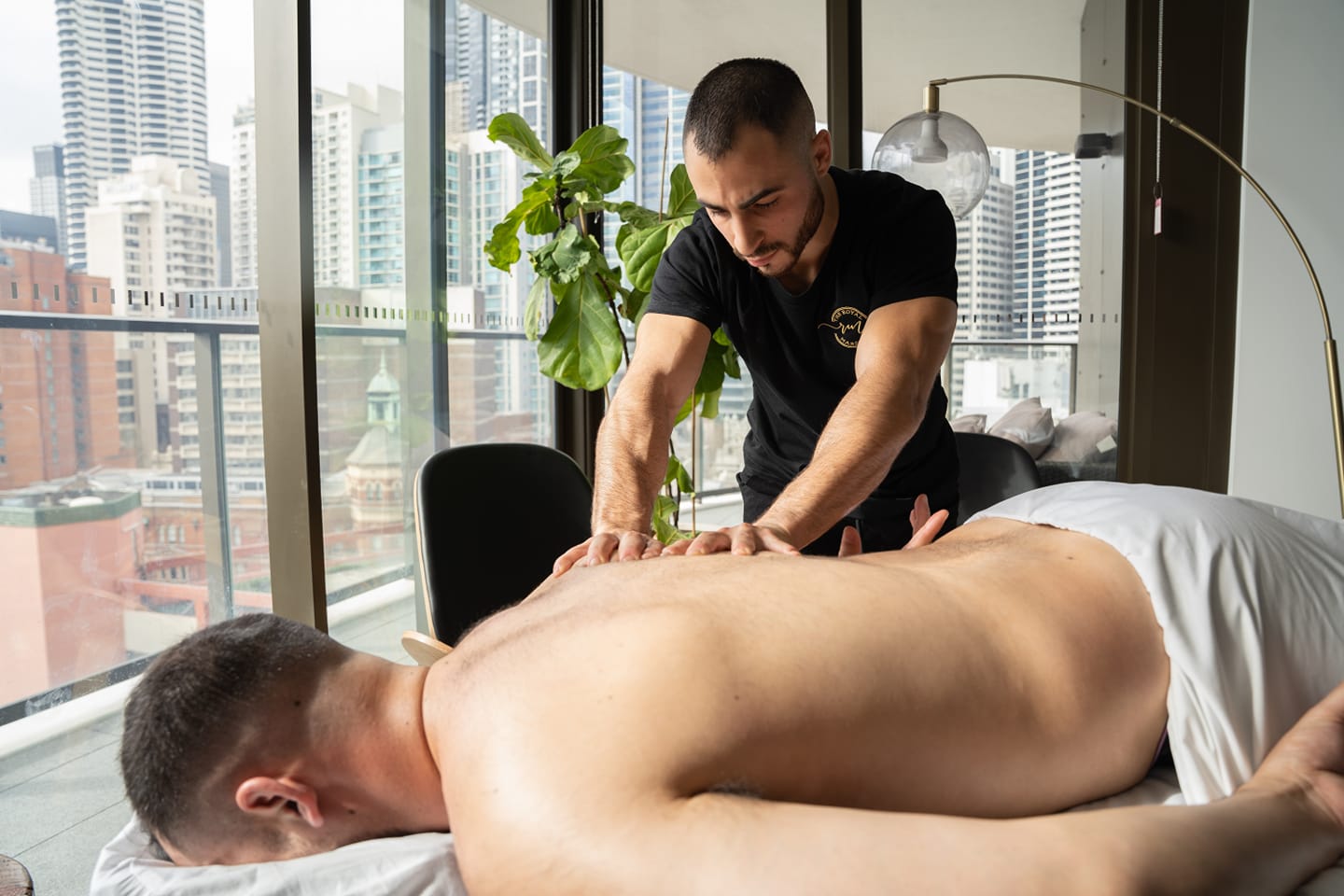
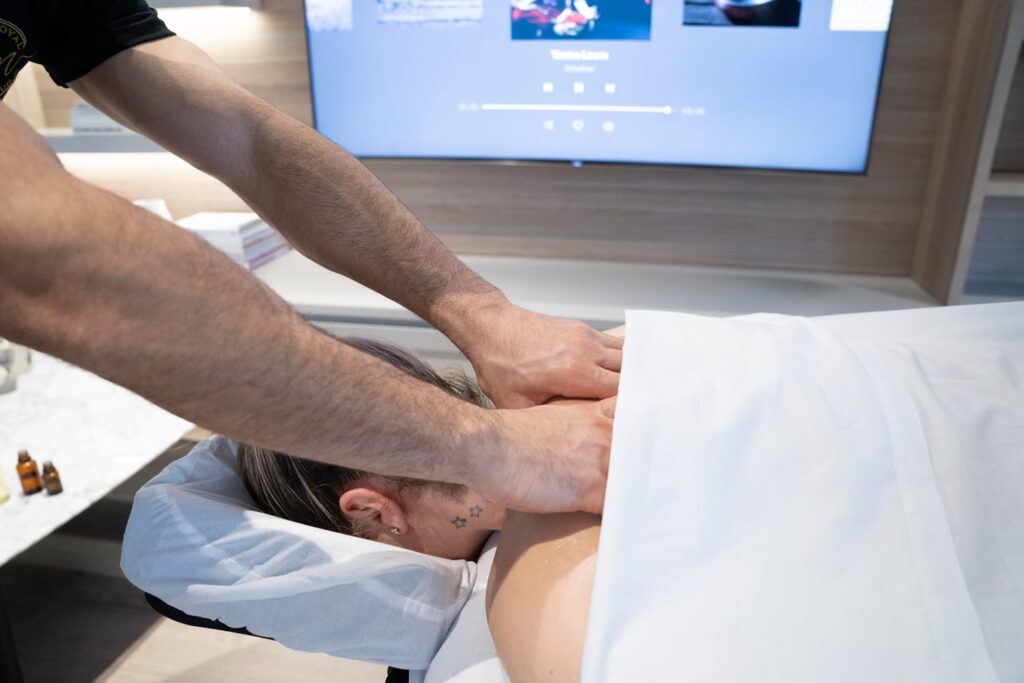
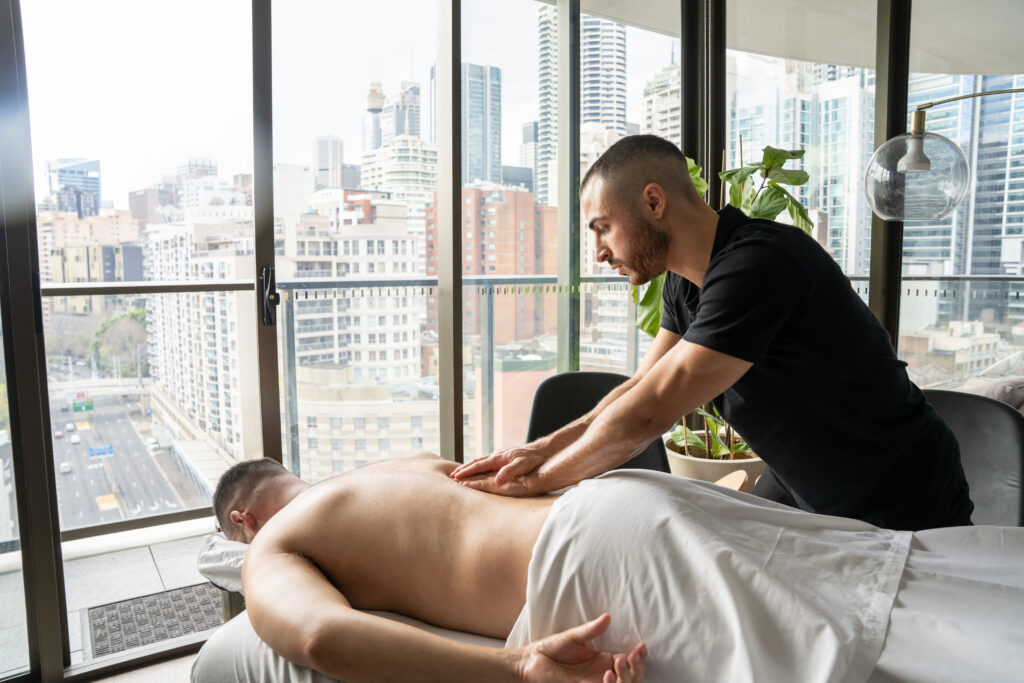
How Can I Find The Best Mobile Massage Therapists In My Area?

Finding the right mobile massage therapist for you isn’t as easy as it sounds. You need to consider several things when choosing a mobile massage therapist. First, make sure they’re licensed by the state where they practice. Next, find out whether they offer any additional services such as dry-needling, cupping and/or aromatherapy. Finally, ask them about their training, certifications and experience. You can find all these on our website. Also, are you possibly covered by your health fund, we take all these into consideration when booking your massage in Sydney and surrounding NSW areas.

How Long Does A Mobile Massage Take?

There’s no set length for a mobile massage session. It depends on how much work needs to be done and how long the client wants to have. Most clients will spend either 60 minutes or 90 minutes at a mobile massage session. We charge according to the duration of each session.

Is There Anything Else That I Should Know Before Booking My First Mobile Massage?

You’ll need to make sure that the mobile massage therapist has the right training and certification to perform the services you’re looking for. If you’re not comfortable with the idea of having a stranger enter your home, then you might want to consider a massage clinic instead. We are fully accredited, insured and have over 6 years of experience with sports, home and pregnancy massage.

Contact The Royal Masseur now and lets discuss your next massage ✔

Posted on 4 Comments

What Is A Remedial Massage?

the owner, Jeremy massaging a client

Remedial Massage

Remedial massage is basically a variety of therapeutic techniques which can be used to assess and treat damaged areas in your body, such as muscles, tendons, ligaments and connective tissues. Through this systematic approach we can assist the body in rehabilitation, pain and injury management.

massaging a person face down

What Is The Difference Between Remedial Massage & A General Massage?

There’s a big difference between massage and remedial massage. In general, massage is designed to relieve muscle tension and restore joint range of motion. Deep tissue and/ or relaxation massages are wonderful as they improve general health & well-being, whereas remedial massages focuses on the areas that need rehabilitation and/or managing pain within the body.

For best results, all sessions begins with a systematic assessment of the body to determine which treatment plan will be best suited for you. Whether that is a remedial massage or deep tissue/ relaxation massage, you will be left feeling highly satisfied and see an overall improvement within your body.

What Can I Expect From A Remedial Massage?

Remedial massage is one of the most effective treatments for a wide range of issues such as aches, pains, sports injuries and headaches.

There are several techniques that may be used to help you reduce pain or heal an injury, such as trigger point therapy, cupping, deep tissue massage. 

The main goals of remedial massage are:

  • to reduce muscle tensions to promote the return of normal soft tissue length & joint Range Of Motion.
  • to increase the flow of blood and lymph, particularly to injured areas.
  • remove any adhesion/tension, damaged cells and scar tissue resulting from injury.
  • to manage pain and injuries during rehabilitation.

What Is Better Deep Tissue or Remedial Massage?

Deep tissue massage is the best type of massage for those seeking an all-over body massage. It’s excellent for treating anxiety & muscle tension, tight joints, stimulating circulation, and also helps promote stress reduction & relaxation.

Remedial massage is a focused treatment and ideal for those with chronic pain and injuries that requires an in-depth approach and diagnosis.

The Royal Masseur massaging man on a massage table


Should You Be Sore After Remedial Massage?

Depending on the severity of your body’s condition will determine the ‘soreness’ you’ll be feeling post-massage.

You should definitely feel more energy after a massage and improved movement around your joints.

The initial pain you feel is your body repairing all the muscle tissues which were manipulated during your session. This is an automatic internal response as your body heals itself.

A massage is a great way to make your muscles feel relaxed. It can also help ease soreness, reduce injuries and relieve stiffness.

How Often Should You Get Remedial Massage?

Regular massage is essential for maintaining good health and well-being. It helps keep our systems working optimally, and it can prevent serious injury from repetitive strains and bad daily habits.

Maintenance massage is recommended every 3 weeks, otherwise monthly treatments will suffice depending on your life’s schedule.

Posted on 2 Comments

Mobile Massage Therapy

a person being massaged whilst outside in a massage tent

Is Mobile Massage worth it?

Mobile massage therapy offers valuable flexibility in terms of scheduling and placement, whether it be at work, in the office, at home, or also in hotels for weary travellers, business consultants and couples on a romantic holiday.

Jeremy massaging a lady at work
Massage sessions can be very rewarding, however it all depends upon the mental attitude of the masseuse and his/her ability to provide a genuine and memorable experience for their client. It takes years to succumb to providing a great practice and memorable experience that both you and your clients enjoy. There’s a broad spectrum of massage modalities such as Myotherapy, Remedial, Swedish, Relaxation and Therapeutic massage which expands the mobile massage business’s scope of service to account for all needs like The Royal Masseur.


Mobile Massage Therapy isn’t for everyone though. It is for those who want to create a memorable experience inside one’s home, hotel and/or office. The type of experience that even you the client will be questioning whether you’re in your own home. The mission is to create such an experience that one can only dream of having where they reside. It’s for those therapists who want to break out of the 4 walls & have the rewarding flexibility to bring value to our clients in the comfort of their place.

Being A Trusted Therapist

Sculpting skills that fit your character & skillset is an ongoing profession and until you absolutely immerse yourself in the craft of massage therapy itself, is when you will truely find your calling. In order for us mobile massage therapists to be able to enter a clients home, there needs to be an order of trust from the very moment you knock on that door. Here are 3 tips to help make the experience better and build a solid foundation:

  • SMILE – from the moment the door opens, no matter how bad your day has been, it is time to put your game face on and get to work. You are there to serve and the energy you project from the moment the door opens will set the tone for the whole treatment.
  • SHAKE HANDS & INTRODUCTION – another important gesture & sign of respect is to shake hands firmly with your client & introduce yourself. Hello my name is Jeremy & thank you for booking with us today/this evening. Absolutely looking forward to giving you the best experience (something that matches your energy & personality).
  •  GET TO KNOW YOUR CLIENT – whilst setting up get to know your client, feel the energy in the room & how their energy is and break the ice. A client intake form is highly recommended whether that’s online or paper, but the trick is, fill it out yourself whilst asking them the questions. You are the trusted authority, who cares a hell of a lot about them, make it known that you care & are interested in giving them the best experience ever.
  •  
  • empty massage chair set in a park

    Become the trusted client that everyone loves and wants to have treat them on a regular basis. Build that rapport & know your clients needs, what they love and hate, their passions, hobbies & everything in between. There’s no better feeling for a client when you can immerse yourself into your clients life for the duration that you’re in their home and make them feel amazing. Learn what works for you & grow from what doesn’t work for you. Stick to your strengths and utilise them the best you can, whilst knowing what your weaknesses are and how you can transform them into strengths too.

    Become the mobile massage therapist everyone wants to see.