Posted on 1 Comment

How to Find the Best Mobile Massage Therapist Near Me

Let's be real, carving out time for yourself when your schedule is already overflowing feels like a mission impossible. It’s exactly why so many Australians are now searching for a "mobile massage therapist near me". This isn’t just about the convenience factor; it's about integrating professional wellness into your life, on your terms—whether that's at home, in the office, or even in a hotel room.

The Rise of On-Demand Wellness in Australia

The idea of at-home services has completely flipped how we think about our well-being. A mobile massage is no longer a luxury; it’s a practical solution for busy professionals, parents, and anyone weaving relaxation into their life without the headache of traffic and waiting rooms.

This shift is about receiving expert care in a space where you feel most comfortable: your own. Imagine a skilled remedial massage in your living room to finally tackle that chronic back pain from long hours at your desk. Or a deeply relaxing session in your hotel room to shake off jet lag after a flight into Sydney. The entire experience is built around your specific needs, location, and schedule.

Why On-Demand Massage is Gaining Momentum

The appeal is obvious. Instead of disrupting your day to travel to a clinic, the clinic comes to you. This model delivers a level of comfort and personalisation that’s hard to beat, turning your chosen space into a genuine wellness sanctuary.

It’s an incredible tool for high-pressure workplaces, where bringing in a therapist for corporate wellness can give team morale an instant, noticeable lift through targeted seated massages. It also offers a unique touch for special occasions, like a couples massage on a private yacht to celebrate an anniversary in absolute style.

This trend is more than a fad; it represents a real change in how Australians are prioritising their health, blending professional care seamlessly into the rhythm of their daily lives.

This growing preference is changing the industry from the inside out. Over the last five years, massage therapy in Australia has leaned more into mobile practices. Professional bodies have noted a jump in therapists choosing flexible, independent work, making these on-demand services widely available. You can see this industry shift detailed in reports from associations like the Association of Massage Therapists.

Ultimately, choosing a mobile massage therapist in Sydney or any other major city is about reclaiming your time and wellness. It transforms a therapeutic necessity into a restorative ritual that fits perfectly into modern life, delivering profound benefits right to your doorstep.

Finding and Vetting Your Ideal Mobile Therapist

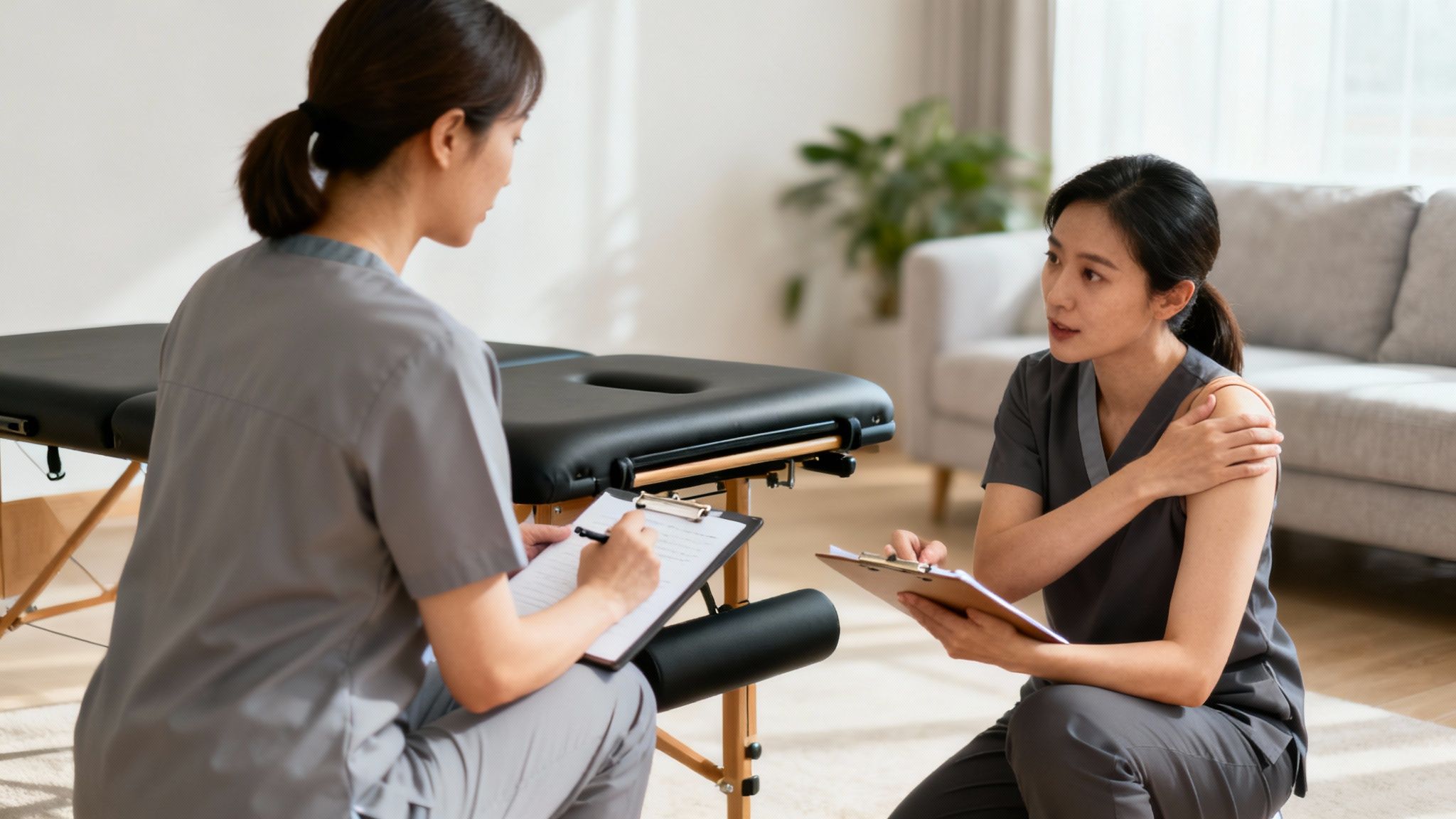
Knowing where to start your search for a "mobile massage therapist near me" is one thing, but knowing how to vet them properly is the key. You're inviting a professional into your home, office, hotel room, or even onto your yacht, and that requires a foundation of trust.

This means going beyond a quick search and digging a little deeper to ensure you're booking someone who is safe, qualified, and genuinely professional.

Tapping Into Professional Networks

A great starting point in Australia can be dedicated platforms like Blys, which handle much of the initial vetting for you. They connect you with a network of pre-screened therapists, adding a convenient layer of security.

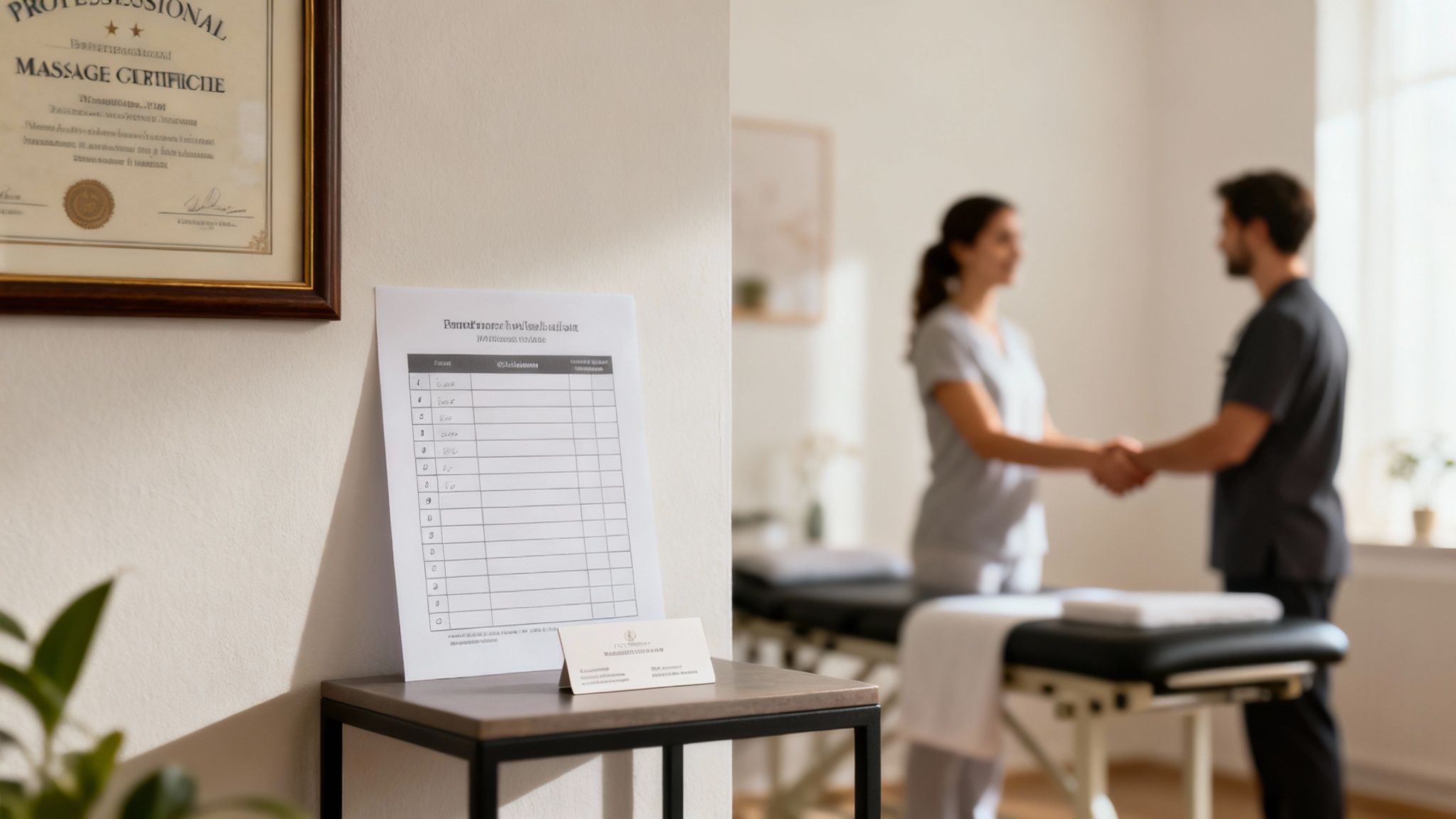
However, for a more direct approach, professional bodies are your best friend. Organisations like Massage & Myotherapy Australia maintain public registers of their members. Searching these databases is a brilliant move because it confirms any therapist you find is not only qualified but also bound by a strict code of ethics and required to hold current insurance.

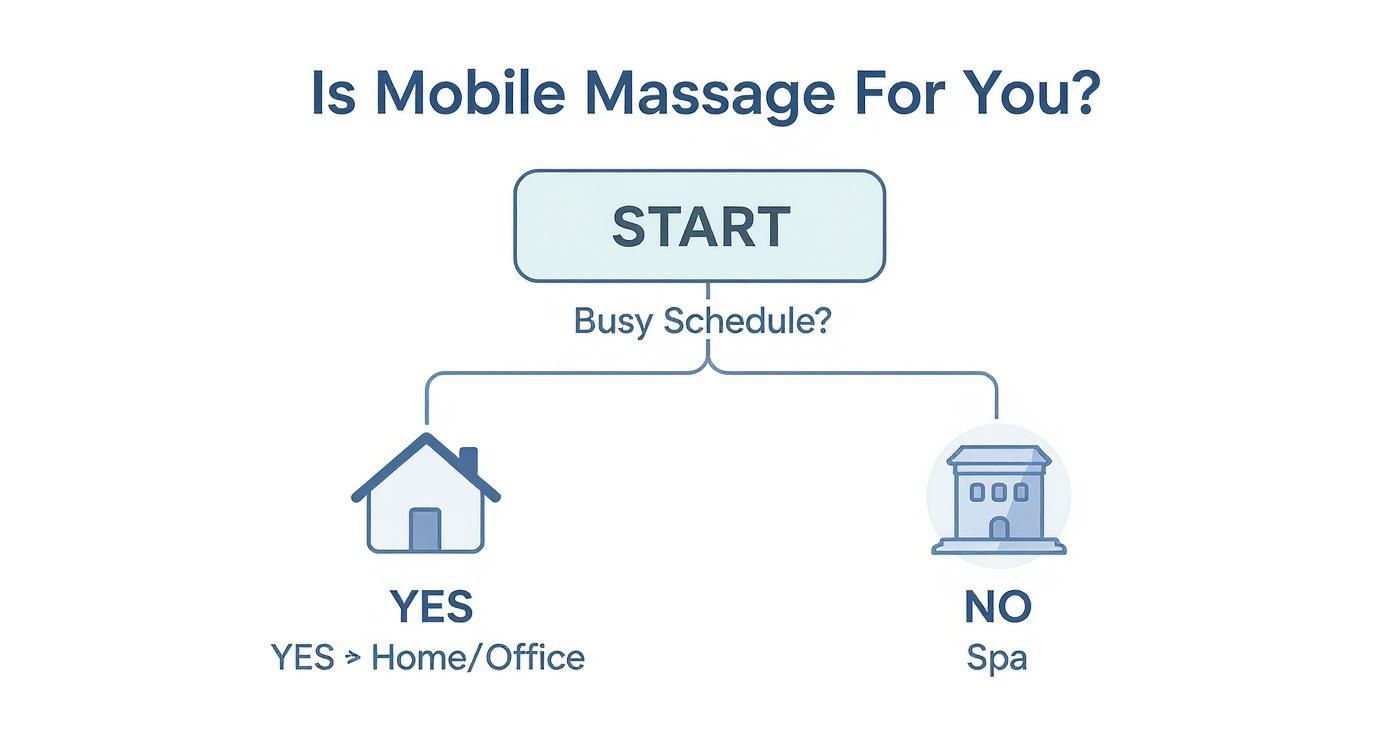
This flowchart can help you decide if an on-demand massage is the right fit for your schedule and location.
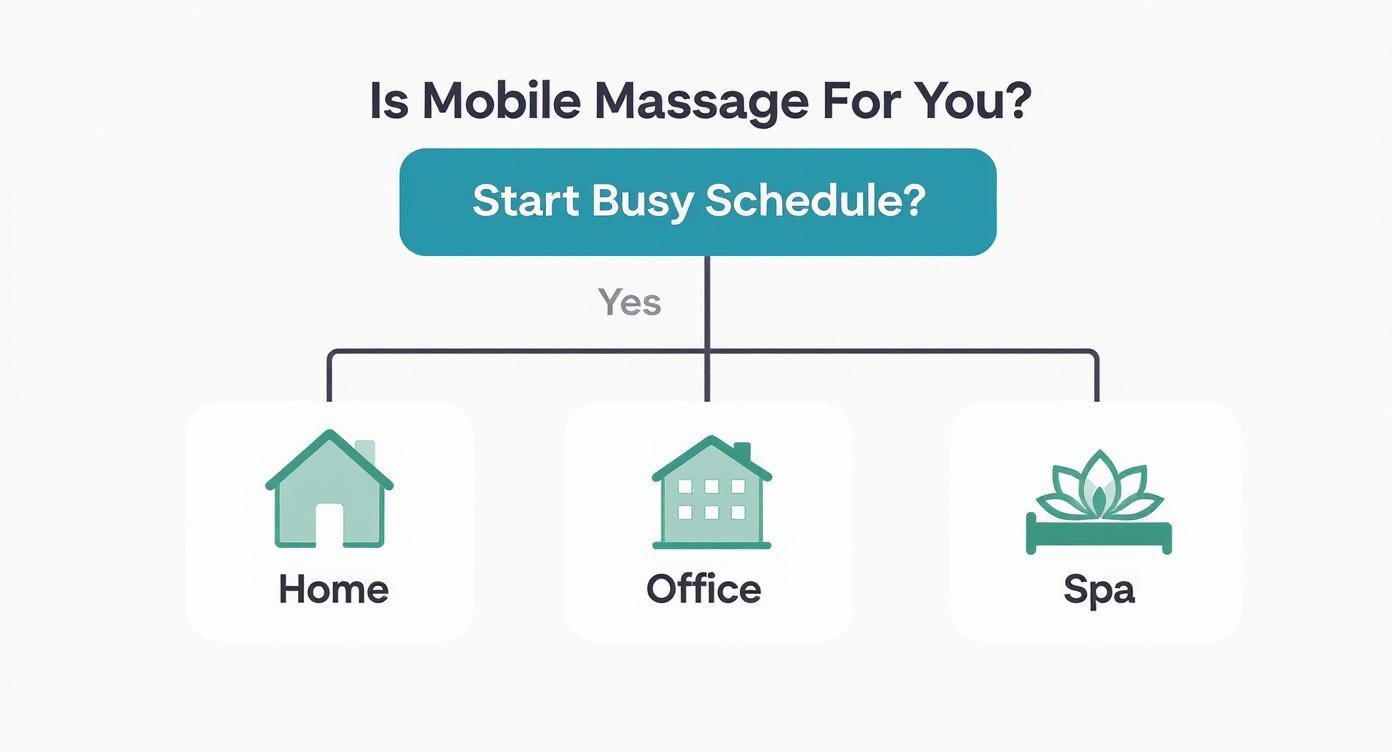
Flowchart illustrating if mobile massage is suitable, with options for home, office, or spa locations.

As the visual shows, mobile services bring wellness directly to you, whether at home, in the office, or at another private location, making it perfect for anyone with a demanding lifestyle.

And don't forget the power of word-of-mouth. Asking for recommendations in local community groups on social media can unearth some real gems and honest reviews from people right in your area.

Your Essential Vetting Checklist

Once you have a shortlist of potential therapists, it’s time to ask direct questions. This isn’t about being difficult; it's about being a savvy client and ensuring your own safety and peace of mind.

Being prepared with a few key queries gives you complete confidence before you book.

To make it easier, here’s a quick-reference table with the non-negotiables you should cover. This checklist ensures you're booking a qualified, insured, and professional therapist for your in-home, office, or hotel massage.

Essential Vetting Questions for Your Mobile Massage Therapist

Question CategoryWhat to AskWhy It Matters
Qualifications"What are your specific qualifications?" or "Which institution did you study at?"This confirms their level of training. For therapeutic work, look for a Diploma of Remedial Massage.
Professionalism"Are you a member of a professional association like Massage & Myotherapy Australia?"Membership shows a commitment to industry standards, ethics, and ongoing professional development.
Safety & Insurance"Do you hold current professional indemnity and public liability insurance?"This is a non-negotiable. It protects both you and the therapist in the unlikely event of an accident.
Health Funds"Can you provide a provider number for health fund rebates?"Essential if you want to claim your session back through your private health insurance. A "yes" is a strong sign of a legitimate, qualified practitioner.

Asking these questions upfront establishes a professional boundary and confirms you’re dealing with a legitimate practitioner. A true professional will be happy to provide this information, seeing it as a sign of a well-informed client.

A true professional will welcome these questions. In fact, they should. It shows you value their expertise and take your wellness seriously.

For those in major hubs like Sydney, understanding the local scene is also a huge advantage. You can find more specific advice in our guide on choosing a top-rated massage therapist in Sydney, which has plenty of tips that apply to Melbourne and Brisbane too.

Taking these extra steps ensures the therapist you invite into your space is not just skilled, but also thoroughly vetted and trustworthy. It's what sets the stage for a truly relaxing and secure experience.

Choosing The Right Massage For Your Setting

One of the best things about finding a great mobile massage therapist is that the experience is built around you—your needs, your goals, and your location. Not every massage style delivers the same result. Picking the perfect therapy for your environment can turn a simple treatment into a powerful wellness tool.

Let’s say you’ve just landed in Melbourne after a long flight. Your body is stiff and your mind is foggy. This is the perfect time for a gentle Swedish massage in your hotel room. It’s designed to calm the nervous system and boost circulation, helping you reset your body clock and unwind properly.
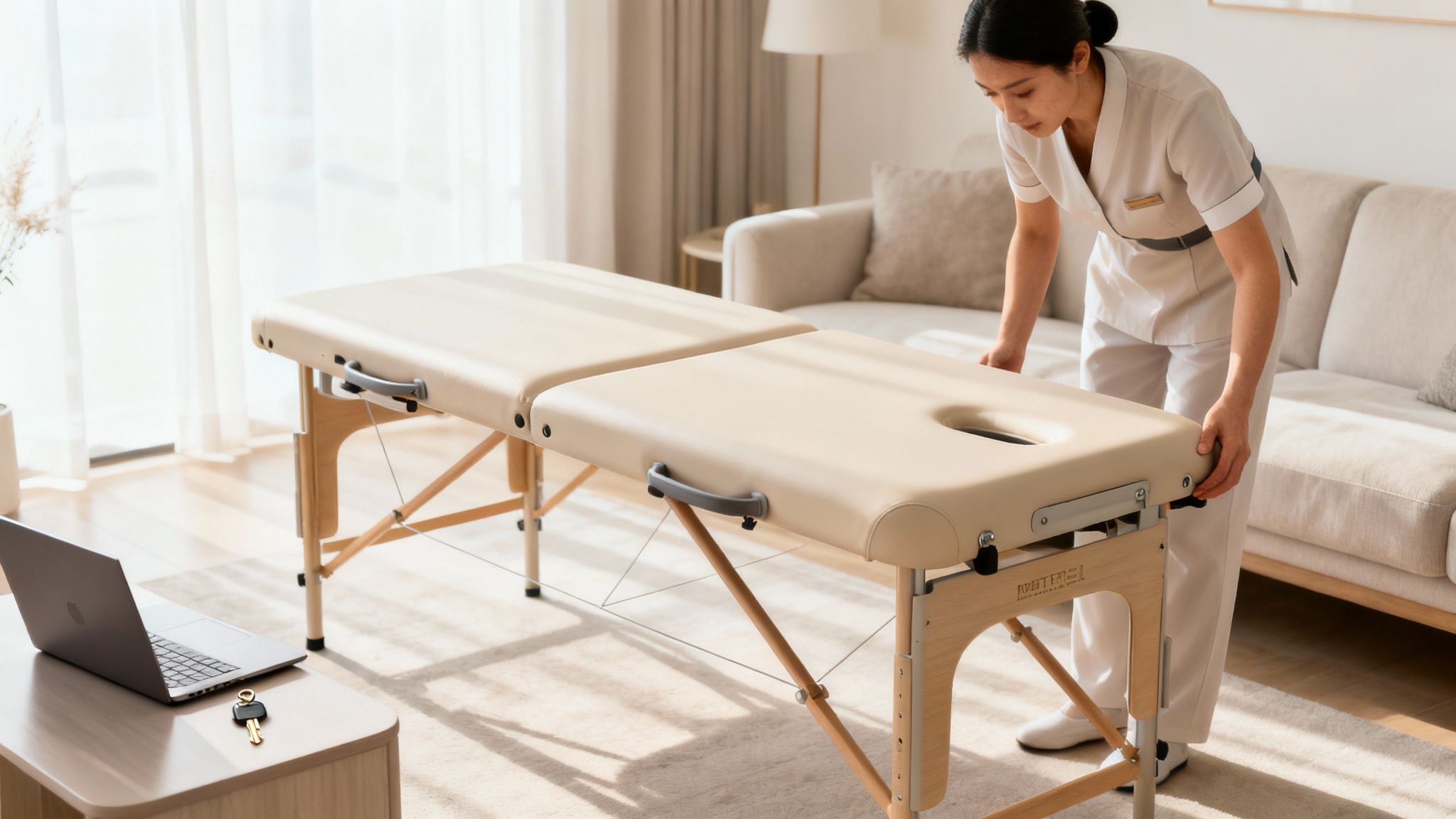
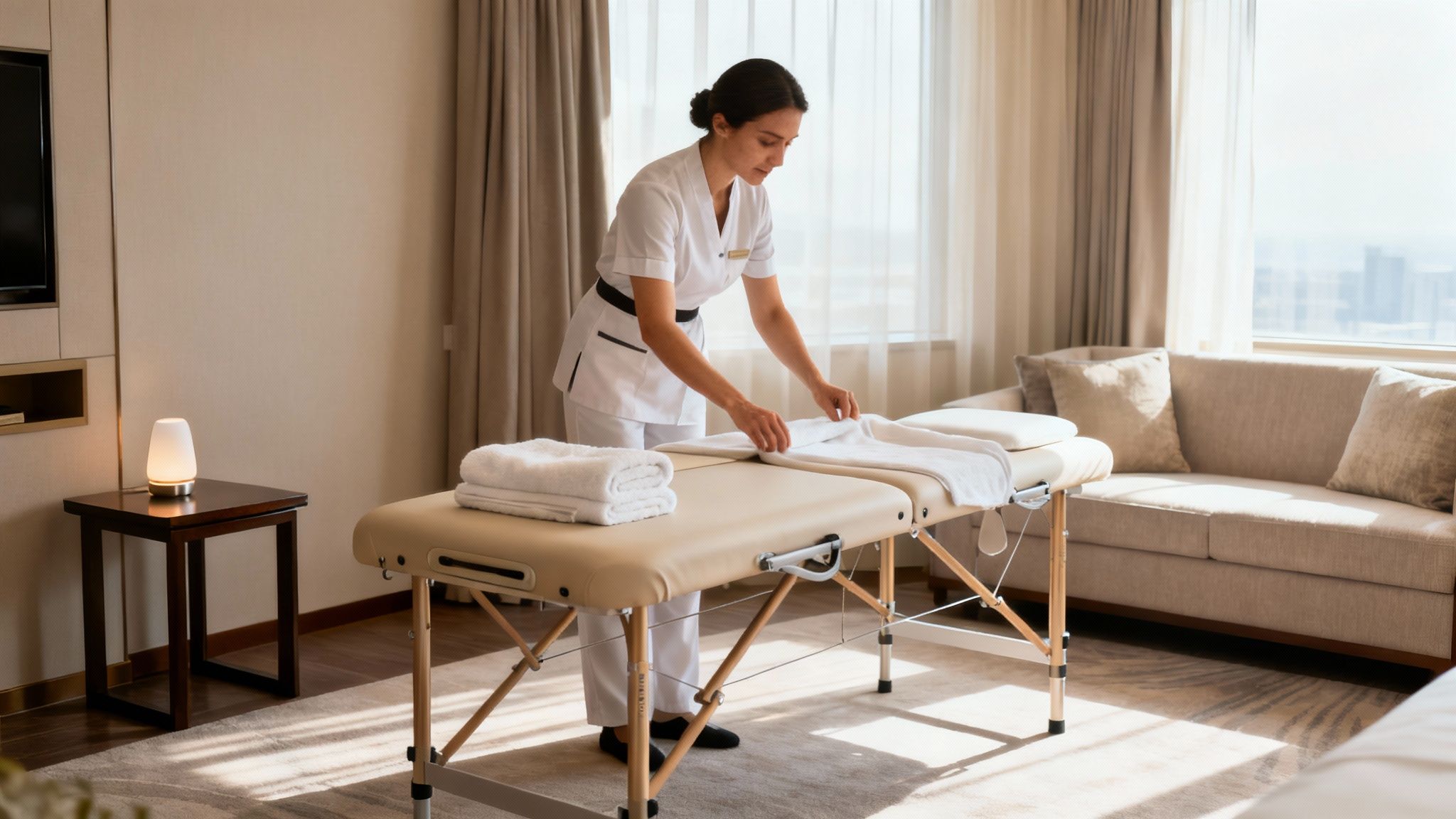
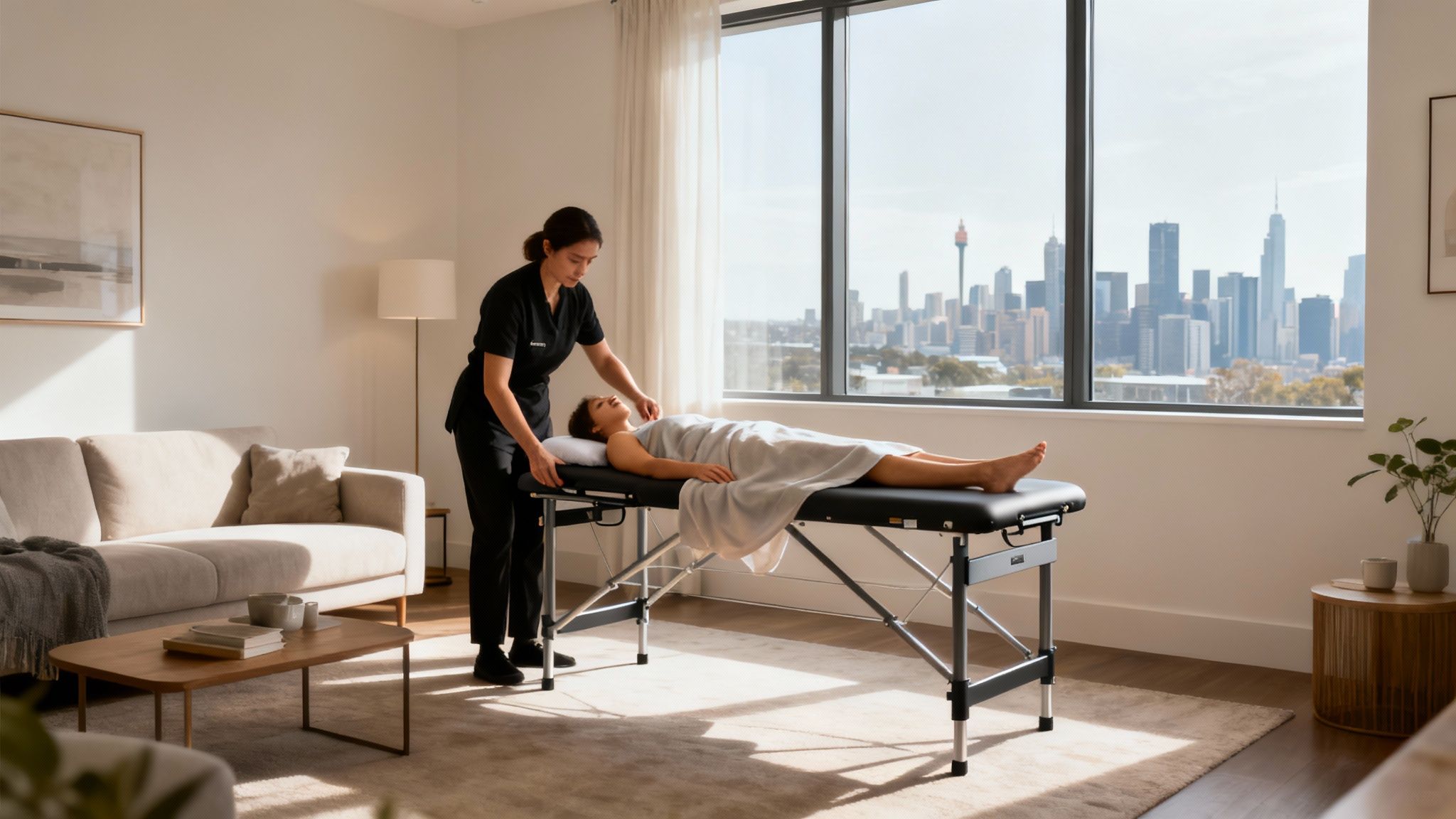
A massage therapist in uniform adjusts a portable massage table in a bright, modern living room.

Tailoring Massage To Your Home Environment

Your home is your sanctuary, making it the ideal setting for focused therapeutic work. If you're wrestling with chronic lower back pain from sitting at a desk or a nagging shoulder issue, a remedial or deep tissue massage is what you need. A skilled therapist can zero in on releasing specific muscle tension and addressing the root cause, all in a space where you can completely relax.

The home setting is also fantastic for creating unique experiences. A luxurious couples massage is an intimate way to celebrate an anniversary, a world away from the impersonal vibe of a busy spa. For expecting mothers, a specialised pregnancy massage provides incredible relief without the stress of travel.

Boosting Wellness In The Office And Beyond

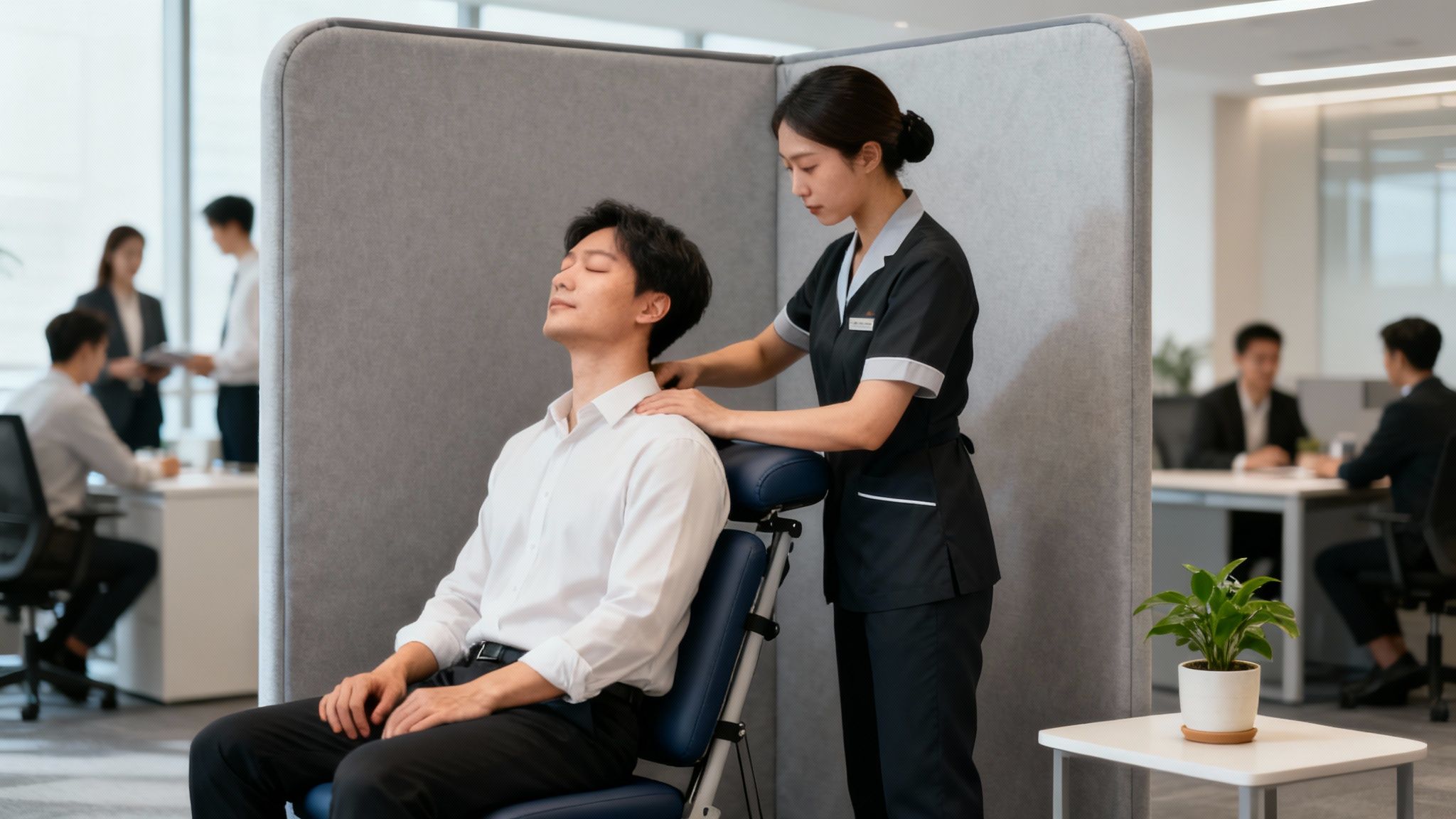
Corporate wellness is where mobile massage truly shines. During a high-pressure quarter, bringing a therapist into the office for seated massages can be a game-changer for team morale and productivity. These quick, 15-minute sessions focus on the neck, shoulders, and back—the exact spots that carry stress from long hours hunched over a computer. It’s a direct, effective way to show your team you value their well-being.

And the adaptability doesn't stop there. Imagine arranging for a therapist to come aboard a private yacht on the Gold Coast for a day of pure relaxation. It adds an unforgettable touch of class to any special occasion. The key is to match the style of massage to the moment.

The most effective mobile massage is one that aligns perfectly with your setting and your desired outcome. It’s about choosing a therapy that feels less like an appointment and more like a purpose-built solution for your well-being.

The demand for this kind of personalised care is growing fast across Australia. By 2023, mobile treatments made up around 15% of all massage sessions in the country, with younger clients often leaning towards Swedish styles while older clients tend to seek out deep tissue work.

If you're interested in trying different styles at home, you can learn more about the unique benefits and techniques in our guide to getting a Thai massage at home. This approach, with its blend of stretching and acupressure, offers a different kind of rejuvenation perfectly suited for a home setting.

Getting a Handle on Costs, Bookings, and Health Fund Rebates

Let's talk money and logistics. Understanding how costs and bookings work from the get-go makes the entire experience completely stress-free.

When you start searching for a "mobile massage therapist near me," you'll find prices are generally transparent, but they do shift based on a few key factors.

The final price usually comes down to the length of your session, the type of massage, and your location within cities like Sydney or Melbourne. A straightforward 60-minute relaxation massage will be priced differently than a 90-minute remedial session that requires more specialised training. Most professional services also have a clear cancellation policy. It’s always smart to check this before booking; typically, 24 hours' notice is required to avoid a fee.

Breaking Down the Costs and Surcharges

When you book, you’re not just paying for the therapist's time. The fee covers their travel, their expertise, and the convenience of having a professional setup brought to your door.

Here’s a rough guide to what you can expect for a standard 60-minute session in Australia’s major hubs:

  • Sydney & Melbourne: Typically in the range of $120 to $160.
  • Brisbane & Gold Coast: Often slightly lower, from around $110 to $150.

Keep in mind that bookings on public holidays or for late-night slots might have a small surcharge. This is always flagged upfront, so there are no surprises on the bill.

Making the Most of Health Fund Rebates

Now for the good part. One of the biggest perks of choosing a qualified therapist is the ability to claim a rebate through your private health fund. This can make regular therapeutic massage a much more affordable part of your wellness routine.

But not every massage qualifies. Here’s the key:

To claim a rebate, your treatment must be a remedial massage performed by a therapist who holds a Diploma of Remedial Massage and is registered with a recognised Australian association. This registration gives them a provider number, which is the golden ticket for your claim.

We're seeing a trend where more GPs refer patients for massage, cementing its place in Australia's primary healthcare system. This shift is backed by various insurance schemes, making these vital services more accessible. You can get more insights on this growing integration at Massage & Myotherapy Australia.

Before you book, just double-check that their remedial therapists can issue a receipt with a provider number. After your session, submit this receipt to your health fund via their website or app. It’s a simple process that can seriously cut down your out-of-pocket cost, making it easier to prioritise your health.

Creating The Perfect At-Home Wellness Sanctuary

Your mobile massage therapist brings the table, oils, and expertise, but the environment you create transforms the experience from an appointment into a restorative ritual. A few thoughtful preparations can make all the difference.

It’s all about setting the stage for total relaxation, turning your home, office, or hotel room into a true sanctuary.
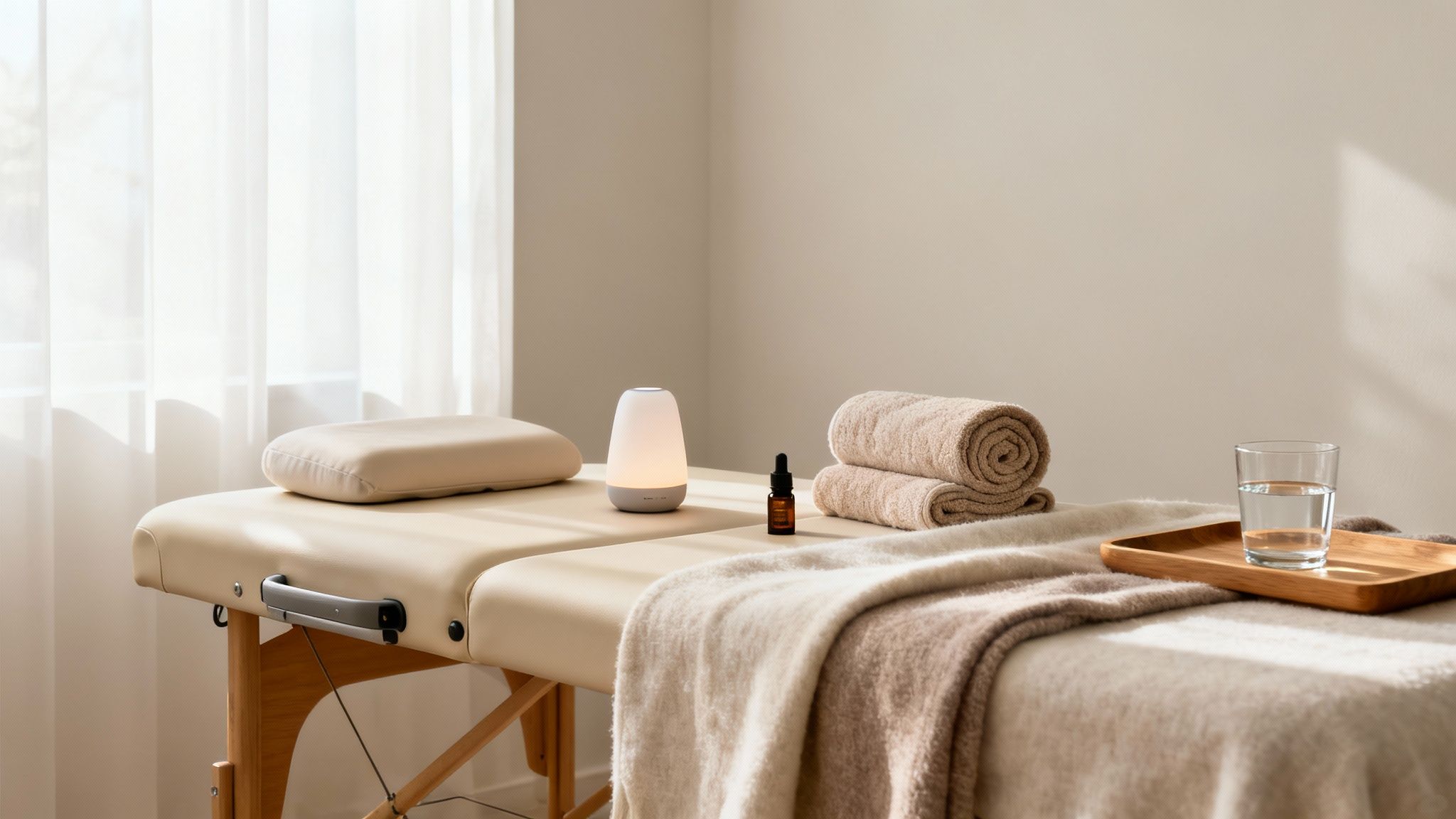
A tranquil spa room with a massage table, aroma diffuser, essential oils, towels, and water.

The main goal is to minimise distractions and maximise comfort. Start by picking a room with enough floor space for the therapist to set up and move around the massage table—an area of about 2×3 metres is usually ideal. A living room, quiet home office, or even a spacious hotel room works perfectly.

Crafting The Ideal Atmosphere

With the space chosen, fine-tune the sensory details. These small adjustments truly elevate the session.

  • Temperature Control: Set the room to a comfortable, slightly warm temperature. Your body temperature can drop during a massage as you relax, so a cosy environment is key.
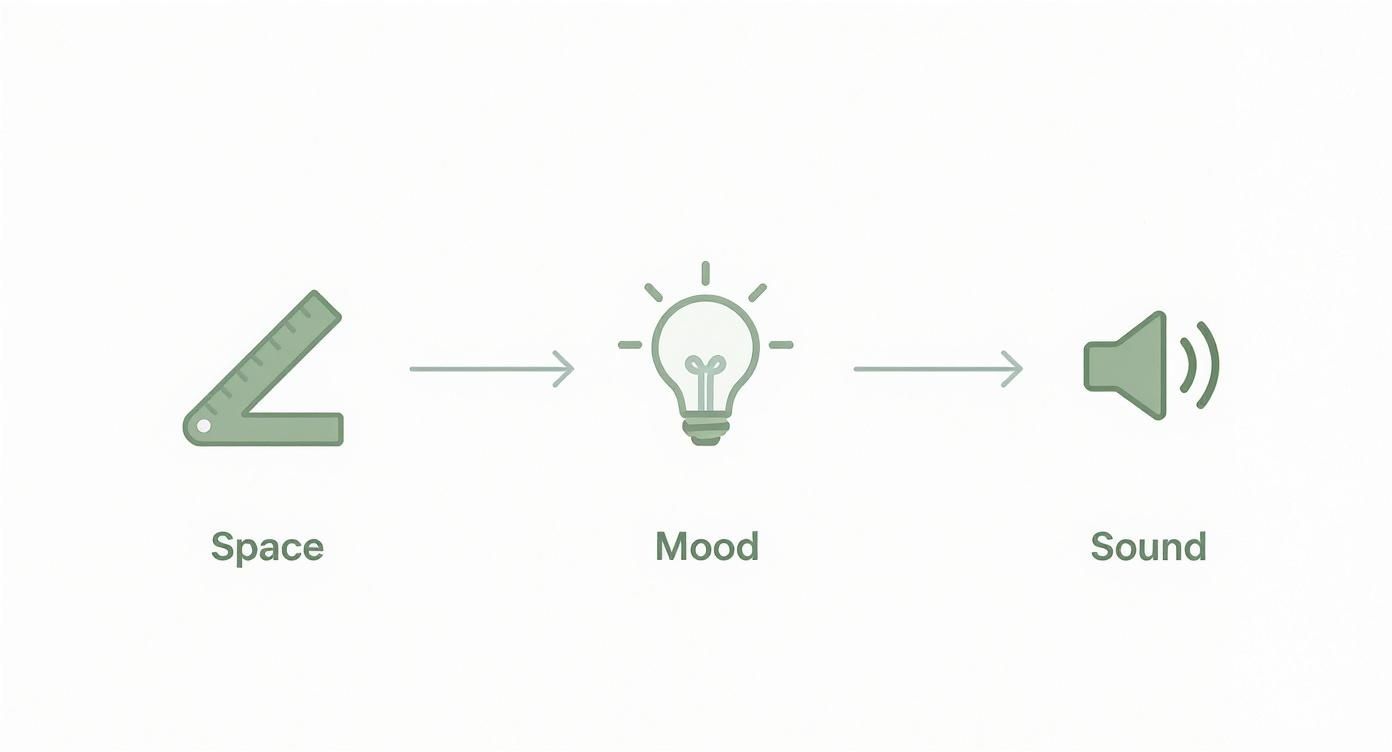
  • Lighting and Sound: Dim the lights or draw the curtains to create a soft, calming ambience. If your therapist doesn't bring music, have a relaxing playlist ready. Most importantly, put your phone on silent and tuck it away.
  • Minimise Interruptions: If you share your space, let others know you’ll be in a session and ask for an hour of uninterrupted quiet. This ensures you can fully switch off.

The most profound benefit of a mobile massage is receiving it in your own familiar space. By consciously preparing this space, you signal to your mind and body that it's safe to let go completely, enhancing the therapeutic effects of the treatment.

Preparing Yourself For The Session

How you prepare yourself is just as important as the room. Being ready allows you to sink into relaxation from the moment your therapist arrives.

Hydration is crucial, so drink plenty of water throughout the day before your appointment. Wear comfortable, loose-fitting clothing that is easy to remove and put back on. During the massage, you will be professionally draped, so you only need to undress to your personal comfort level.

Finally, take a moment before your therapist arrives to think about what your body needs. Are there specific areas of tension you want them to focus on? Communicating these needs clearly at the start ensures you get the exact treatment you’re looking for.

To extend the benefits of your mobile massage and address trigger points between sessions, consider incorporating self-massage tools like a dual hand massage tool into your at-home wellness routine.

Your Mobile Massage Questions Answered

Inviting a therapist into your home or hotel room for the first time? It's completely normal to have a few questions. Feeling comfortable and knowing what to expect is key to a truly relaxing experience, so let’s run through some common queries.

It’s smart to ask about safety, logistics, and what the therapist brings before you book. A true professional will be happy to give you clear answers and put your mind at ease.

Is It Safe To Have A Massage Therapist Come To My Home Or Hotel?

Yes, it absolutely is—provided you're booking through a reputable service or an accredited independent therapist. Vetted mobile massage companies perform background checks, verify qualifications, and ensure their entire team is fully insured.

For extra confidence, a quick scan of online reviews from past clients is always a good idea. It's also a simple but effective practice to let a friend or family member know you have an appointment booked.

What Equipment Does The Mobile Massage Therapist Bring?

A professional therapist arrives with everything needed to create a five-star spa experience in your space.

You can expect them to bring:

  • A sturdy, comfortable, portable massage table.
  • A complete set of fresh, clean linens and towels.
  • High-quality, professional-grade massage oils or lotions.
  • Often, they'll even have a portable speaker for calming background music.

All you really need to provide is a quiet, warm spot for them to work their magic.

How Much Space Do I Need For A Mobile Massage?

You'd be surprised how little room is actually needed. You don’t need to clear out a massive, empty room.

As a general rule, a clear floor space of about 2 metres by 3 metres is perfect. This gives the therapist enough room to set up their table and move around it freely. The corner of a living room, a spare bedroom, or even a home office usually works brilliantly. Therapists are masters of adapting to different spaces.

If you want to get a better handle on the different techniques a mobile therapist can offer, it’s worth learning a bit more about what is soft tissue therapy.

The real beauty of a mobile service is just how adaptable it is. The entire focus is on bringing a complete, professional setup to you, transforming your chosen space into a temporary wellness sanctuary without any fuss on your part.

Knowing what to expect takes all the guesswork out of it, letting you simply focus on the important part: relaxing and soaking up all the benefits of your session.


Ready to experience the ultimate convenience and care in your own space? The team at The Royal Masseur brings a five-star wellness experience directly to your door. Book your personalised mobile massage today at https://theroyalmasseur.com.au.
Posted on Leave a comment

Finding Mobile Massage Therapy Near Me: Your Ultimate Guide

Gone are the days of battling traffic to make your spa appointment. For busy Aussies, searching for "mobile massage therapy near me" has become the smarter way to find professional wellness without the stress. It’s a simple concept with a huge impact: a fully qualified therapist arrives at your door—whether it's your home, office, hotel room, or even a yacht—with everything needed to transform your space into a private sanctuary. They bring the professional massage table, fresh linens, and quality oils. You just relax.

This on-demand approach isn't just a luxury; it's a practical way to integrate genuine therapeutic care into the reality of modern life.

Why On-Demand Massage Is Changing the Wellness Game

Let's be honest, wellness shouldn't feel like another chore on your to-do list. The growing shift towards in-home services is about making self-care sustainable. When you remove the travel time and the stress of navigating a busy city, looking after yourself becomes a consistent, achievable habit rather than a rare treat.

Instead of being a once-a-year indulgence, on-demand massage turns professional bodywork into a regular part of your wellness routine. It’s a practical solution for managing chronic pain, unwinding from a hectic week at the office, or simply enjoying a moment of peace in a place you feel completely comfortable.

A New Level of Personalised Care

There’s a level of comfort and customisation you get with a mobile massage that a traditional spa can't replicate. When the therapist comes to you, the entire experience is built around your environment and your immediate needs, from the moment they walk in. This allows for a deeper level of relaxation and more targeted therapeutic benefits.

  • At Home: This is your sanctuary. You control the lighting, the music, and the temperature, allowing you to completely relax without the jarring experience of driving home afterwards. You can drift from the table straight to the sofa.
  • In the Office: Smart companies are catching on, offering seated massages to boost morale and productivity. It’s a powerful wellness perk that shows your team you genuinely care about their wellbeing and helps combat the physical strain of desk work.
  • In Your Hotel Room: For travellers, a mobile massage is the ultimate fix for jet lag or long days of meetings. You get top-tier relaxation without having to navigate an unfamiliar city or rely on the hotel's often-booked-out spa.
  • On a Yacht: For a truly premium experience, a professional therapist can set up on a private yacht. It adds a touch of pure luxury to any getaway, providing relaxation against the serene backdrop of the water.

This flexibility is driving serious growth. Platforms like Blys have noted huge booking increases in major Australian cities, a trend that lines up with ABS lifestyle data showing how much Aussies value services that cut down on travel and fit into busy lives. For many, it's simply a better, more effective choice than a conventional spa visit.

The real power of mobile massage therapy is how it removes the barriers to self-care. By bringing wellness directly to you, it makes consistent physical and mental wellbeing achievable for busy professionals, parents, and anyone else who might otherwise let it slide.

Ultimately, the rise of on-demand massage shows a deeper understanding of modern wellness. It acknowledges that true relaxation begins when you take logistical stress out of the equation. For anyone looking for premium mobile massage therapy in Sydney and other major cities, this is the most seamless way to better health.

How to Find and Vet a Trusted Mobile Therapist

Finding a reliable mobile massage therapist is different from booking a session at a local spa. You're inviting a professional into your personal space—your home, office, or hotel room. That requires a layer of trust. Taking a few extra minutes to do your homework can be the difference between a good massage and an exceptional wellness experience. It's about ensuring you're booking someone who is not only skilled but also safe, qualified, and professional.

This simple decision tree helps clarify if the on-demand model suits your lifestyle.

A flowchart titled 'Is Mobile Massage For You?' asking 'Busy Schedule?', leading to 'Home/Office' for yes and 'Spa' for no.

As you can see, a packed schedule is one of the biggest reasons people choose the convenience of an in-home or in-office massage over a trip to a traditional spa.

Start With Reputable Booking Platforms

While a quick Google search for "mobile massage therapy near me" will yield plenty of names, it's smart to start with reputable Australian platforms and directories. These services do much of the initial vetting for you by pre-screening therapists. In Australia, platforms like Blys have become a popular first stop. They simplify the process by handling background checks and verifying qualifications, which is a massive time-saver and provides immediate peace of mind.

Booking through an established service gives you an instant layer of security. They typically require therapists to provide:

  • Proof of Qualification: This is usually a Diploma of Remedial Massage or an equivalent certification from a registered training organisation.
  • Professional Insurance: Public liability and professional indemnity insurance are non-negotiable.
  • Police Checks: An essential safety measure when you're inviting someone into your personal space.

Even when using these platforms, it’s still wise to do your own research. Take a moment to read through a therapist’s profile and what past clients have to say in the reviews.

Verifying Credentials and Qualifications

If you book directly with an independent therapist, you'll need to verify their credentials yourself. Don't feel awkward about asking for this information; a true professional will have it ready and will be happy to share it. A therapist's qualifications tell you a lot about their areas of expertise, whether it's general relaxation or more targeted remedial work for a specific issue.

Here in Australia, qualified remedial massage therapists are increasingly recognised as part of the broader healthcare system. This growing integration helps build public trust. A survey by Massage & Myotherapy Australia showed that more therapists are getting referrals directly from GPs, which cements their role in mainstream health.

A great sign of a dedicated professional is their membership in an Australian industry association like Massage & Myotherapy Australia (MMA) or the Association of Massage Therapists (AMT). These organisations have strict codes of conduct and require members to keep up with ongoing professional development.

When you find a therapist affiliated with one of these bodies, it’s a strong signal they are committed to providing high-quality, ethical care.

Mobile Therapist Vetting Checklist

Checklist ItemWhy It MattersWhere to Check
QualificationsConfirms they have the necessary training and skills (e.g., Diploma of Remedial Massage).Therapist’s website, booking platform profile, or ask them directly.
Association MembershipShows commitment to professional standards and ethics (e.g., MMA, AMT).Look for logos on their website or check the association’s public register.
Professional InsuranceProtects both you and the therapist in case of an accident. It's non-negotiable.Ask to see a copy of their Certificate of Currency.
Police CheckAn essential safety step for any professional entering your private space.Reputable platforms often verify this; independent therapists should provide it on request.
Genuine ReviewsProvides real-world insight into their skills, professionalism, and client experience.Google, booking platforms, and their own website (look for specific, detailed feedback).
Clear CommunicationProfessionalism in communication from the start is a good indicator of their overall service.Pay attention to their responsiveness and clarity during the booking process.

Using this checklist gives you a solid framework for making an informed decision, leading to a much safer and more relaxing experience.

Reading Between the Lines of Reviews

Client reviews are invaluable, but you need to know what to look for. Go beyond the simple star rating and dive into the actual comments. Pay attention to reviews that describe the therapist’s approach and how they handled specific needs. For example, a review saying, "Sarah was amazing at targeting the knots in my shoulders from sitting at a desk all day," is far more useful than a generic "Great massage!" It tells you about the therapist’s specific skills.

Look for repeated mentions of professionalism, hygiene, and punctuality—all critical for in-home sessions. You can learn a lot about finding the best massage therapists near me by analysing what previous clients have taken the time to write.

Creating The Perfect Massage Setting Anywhere

A serene massage room with a massage table, folded towels, and an aromatherapy diffuser.

The real beauty of searching for "mobile massage therapy near me" is its versatility. A top-tier therapist can work their magic just about anywhere, but with a little prep, you can elevate the experience from great to transformative. It’s all about turning your chosen space into a personal sanctuary for mind and body.

Whether you're booking for your living room, the office, or a hotel, a few simple tweaks to the environment can make all the difference. When you're truly comfortable, you can let go completely, allowing your therapist to do their best work.

Setting The Scene At Home

Your home is already your safe space, making it the perfect backdrop for a restorative massage. The goal is to create an atmosphere that signals to your mind and body it’s time to switch off. While a professional mobile therapist brings all the necessary equipment, you are the master of the environment. A few simple touches are all it takes:

  • Lighting: Dim the overhead lights and use a soft lamp or natural light from a window. This creates a much calmer vibe.
  • Sound: Ask your therapist if they bring music, or curate your own calming playlist. Gentle instrumental or ambient nature sounds work wonders to quiet a busy mind.
  • Temperature: Ensure the room is comfortably warm. Your body temperature can drop slightly during a massage, so a cosy space is essential for deep relaxation.

Crafting a therapeutic environment at home is key, whether a mobile therapist is visiting or you're using other wellness tools. While nothing replaces a therapist's skilled hands, for those considering other home-based massage solutions, explore the benefits of a massage chair as a way to supplement your routine between professional sessions.

Optimising Your Office Space

Corporate wellness is no longer a buzzword; it's a genuine strategy for forward-thinking Australian companies. Bringing a massage therapist into the office for seated massages is a brilliant way to tackle workplace stress and boost team morale. The setup here is about efficiency and creating a private escape from the daily grind.

All you need is a quiet corner or an unused meeting room. A space of just 2m x 1.5m is plenty for a massage chair. The most important thing is finding a spot away from the office hustle, allowing employees to properly disengage, even if just for a 15-minute reset.

Creating A Retreat In A Hotel Or On A Yacht

There's a special kind of luxury in booking a mobile massage for your hotel room or private yacht. It transforms a pleasant stay into an indulgent one. The process is simple, but clear communication is key to a smooth experience.

For a hotel session, just provide your therapist with the room number and any specific hotel access rules when you book. They are seasoned professionals, expert at providing a discreet, five-star service. If you’re on a yacht, ensure there’s a stable, clear area for the massage table—a cabin or a sheltered deck space, away from wind and crew activity, is ideal.

No matter the location, the single most important element is communication. Clearly expressing your needs—whether it's focusing on a sore neck or preferring a specific type of pressure—is what transforms a standard massage into a truly personalised therapeutic treatment.

Ultimately, the perfect setting isn’t about having a fancy room. It’s about the atmosphere you help create. By preparing your space, you set the stage for you and your therapist to get the absolute most out of every session, turning any location into your own private wellness haven.

Boosting Workplace Morale with Corporate Massage

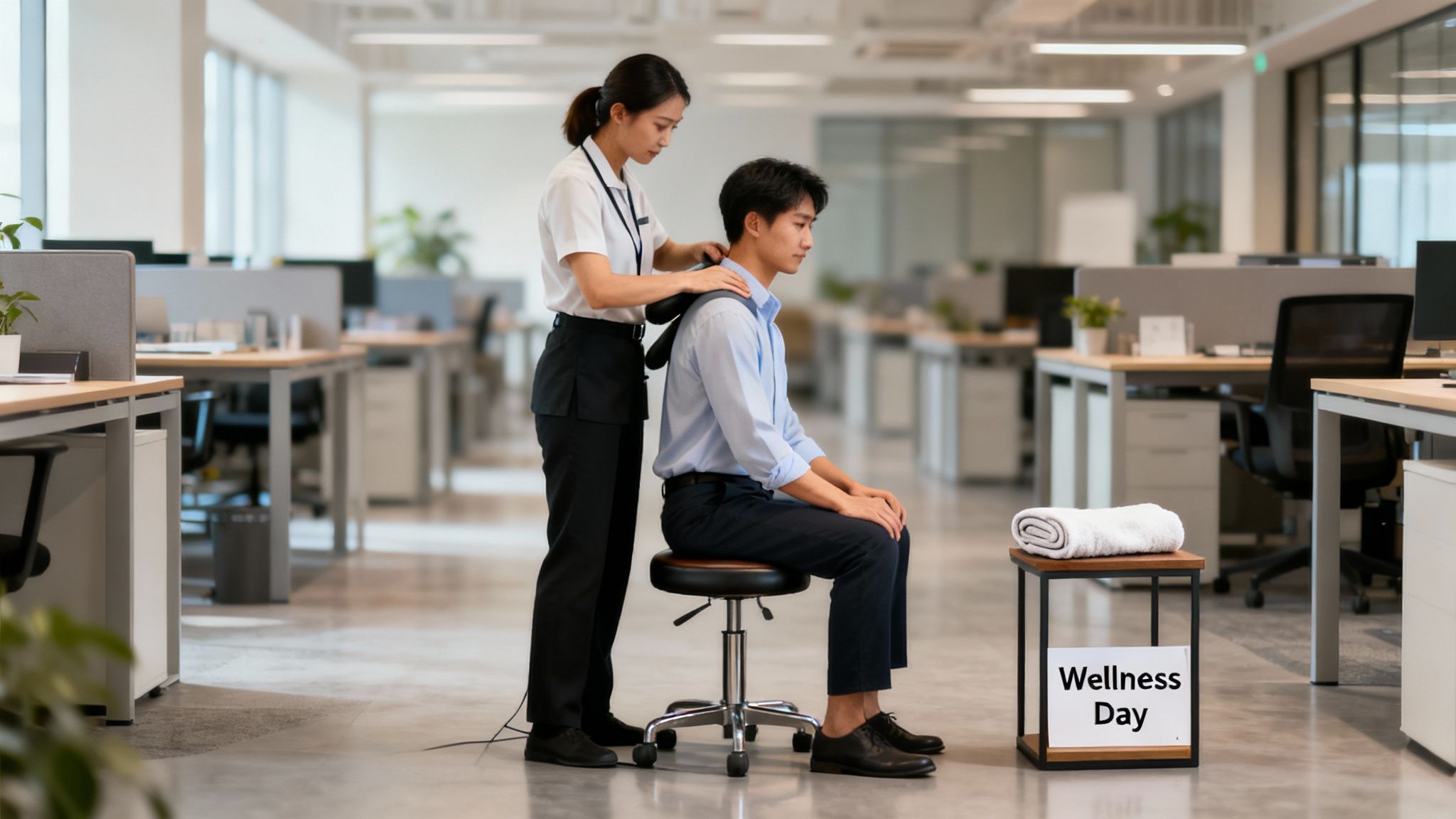
A woman gives a man a shoulder massage with a device in a modern office for a "Wellness Day" event.

Smart companies across Australia are catching on to one of the best ways to invest in their teams: bringing wellness right into the workplace with mobile massage therapy. This isn't just a fleeting perk. It's a genuine strategy to tackle stress, prevent burnout, and build a positive company culture that attracts and retains top talent.

For business leaders and HR managers in busy hubs like Sydney or Melbourne, offering corporate massage is a tangible way to show employees they're valued. The results are almost immediate—you can feel the shift in the office atmosphere as people become calmer, more focused, and genuinely more appreciative. It's a simple idea with a massive impact on morale and productivity.

The Real Return on Your Wellness Investment

Bringing regular seated massages into your workplace delivers clear and measurable benefits. In fast-paced environments, even a quick 15-minute massage can act as a crucial circuit breaker, enough to reset an employee's focus and boost their productivity for the rest of the day.

The positive effects ripple outwards, creating a more supportive and less stressful environment for everyone. Companies that prioritise employee well-being often see a drop in absenteeism and a welcome increase in staff retention. It sends a clear message: we care about your health, both physical and mental.

Planning Your Corporate Massage Event

Organising an office massage day is surprisingly straightforward. The key is to partner with a reputable provider who understands the corporate environment and can manage the logistics without disrupting workflow.

Here’s what to think about for a seamless experience:

  • Space Requirements: You don't need a dedicated wellness room. A quiet corner or a small, unused meeting room is perfect. A space of about 2m x 1.5m is all that's needed for a professional massage chair setup.
  • Scheduling: Work with your provider to set up a simple booking system. A shared spreadsheet or an online schedule lets employees sign up for a time slot without any fuss.
  • Communication: Announce the event in advance to build excitement. Explain the benefits and make it clear this is a company-sponsored initiative to support their well-being.

The convenience of a professional therapist coming directly to your office makes it an incredibly accessible wellness tool. If you want to dive deeper, you can learn more about how chair massage therapy is a convenient workplace wellness solution in our detailed guide.

A well-organised corporate massage event is more than a physical treatment; it's a shared positive experience. It fosters a sense of community and gives employees a chance to decompress, returning to their desks feeling refreshed, appreciated, and ready to tackle their next challenge.

Understanding Corporate Pricing and Packages

When you search "mobile massage therapy near me" for corporate services, most providers offer packages based on the number of hours booked, not per person. This model offers excellent value and makes budgeting simple and predictable.

Typically, you'll see an hourly rate with a minimum booking time, often two or three hours. A single therapist can usually provide four 15-minute massages per hour, allowing you to easily calculate the time needed based on your team size. Many providers also offer discounts for regular bookings—like weekly or fortnightly visits—making wellness a consistent part of your company culture, not just a one-off treat.

Bringing mobile massage into your workplace is a proactive investment in your most valuable asset: your people. It's an impactful action that boosts morale, reduces stress, and helps build a healthier, happier, and more productive team.

Where We Go and What It Costs

Figuring out the cost and availability of a mobile massage shouldn't be a mystery. Let's talk straight about what you can expect to pay for a premium in-home treatment and where you can find us along Australia’s east coast. Unlike a traditional day spa with a confusing menu of add-ons, our pricing is refreshingly simple. It comes down to the length of your session and the specific therapy you need. A longer, more specialised treatment will naturally be priced differently than a standard relaxation massage.

What Goes Into the Price?

The final cost of your session is more than just the time on the table. Think of it as a complete wellness experience delivered right to your door. The price covers our therapist's travel time, their professional equipment (table, fresh linens, oils), and of course, their specialised expertise.

Here’s a quick look at what shapes the price:

  • How long you book for: We typically offer 60-minute and 90-minute sessions. The 90-minute option is a crowd favourite—it gives us enough time for a thorough full-body treatment while still having extra time to really focus on your specific problem spots.
  • The type of massage: A general Swedish or relaxation massage might have a different price point than a highly skilled remedial or sports massage. Those more advanced therapies require deeper training and a rock-solid understanding of anatomy.
  • Your location: Where you are matters. We’re readily available in central hubs like Sydney or Melbourne. Bookings in outer suburbs or beautiful regional areas like the Central Coast or Wollongong might include a small travel surcharge to cover the extra time and fuel.
  • When you book: Some services might have slightly different rates for peak times like weekends or public holidays to account for the higher demand.

This upfront approach means you know exactly what you’re paying for before we even knock on your door. No surprise fees, no awkward up-sells.

Where Can You Find Us?

The sheer convenience of mobile massage has made it a lifesaver in major metro and coastal areas where busy lives are the norm. You’ll find our top-tier therapists ready to go in all the key locations.

Our network is strong across:

  • Sydney: From the CBD to the suburbs.
  • Melbourne: Throughout the city and its surrounding areas.
  • Brisbane: Servicing the greater Brisbane region.
  • Gold Coast: Covering the coast from Coolangatta to Coomera.

This means that whether you're in a high-rise apartment, a suburban home, or a beachfront hotel, a professional therapist can get to you.

Mobile Massage vs Day Spa: A True Cost Comparison

At first glance, the price for a mobile massage session might look similar to what you'd pay at a day spa. But when you start to factor in all the other costs, the incredible value of an in-home service becomes crystal clear. The true cost of a spa day goes way beyond the price on the menu.

Let's break down the real-world expenses side-by-side.

FactorMobile Massage at HomeTraditional Day Spa
Treatment CostA transparent, all-inclusive price.The base price, often with potential up-sells.
Travel TimeZero. Your therapist comes to you.Can be 30-60+ minutes each way, depending on traffic.
Travel CostsNone. No fuel or public transport fees.Fuel, tolls, and rideshare fees can add $10-$30+ to your day.
ParkingFree. You're already at home.Often expensive, easily adding another $15-$40 in a city centre.
Your TimeYou only need to account for the session itself.You lose 1-2 hours of your day just in travel and logistics.
Overall ValueHigh. Maximum relaxation with zero logistical stress.Moderate. The treatment is relaxing, but the journey can be stressful.

When you actually do the maths, a mobile massage almost always delivers superior value. You’re not just paying for a treatment; you’re investing in a seamless, stress-free experience that gives you back your valuable time.

The convenience of having a professional transform your own space into a wellness retreat is a modern luxury that is, surprisingly, one of the most cost-effective ways to truly look after yourself.

Getting Ready For Your First In-Home Massage

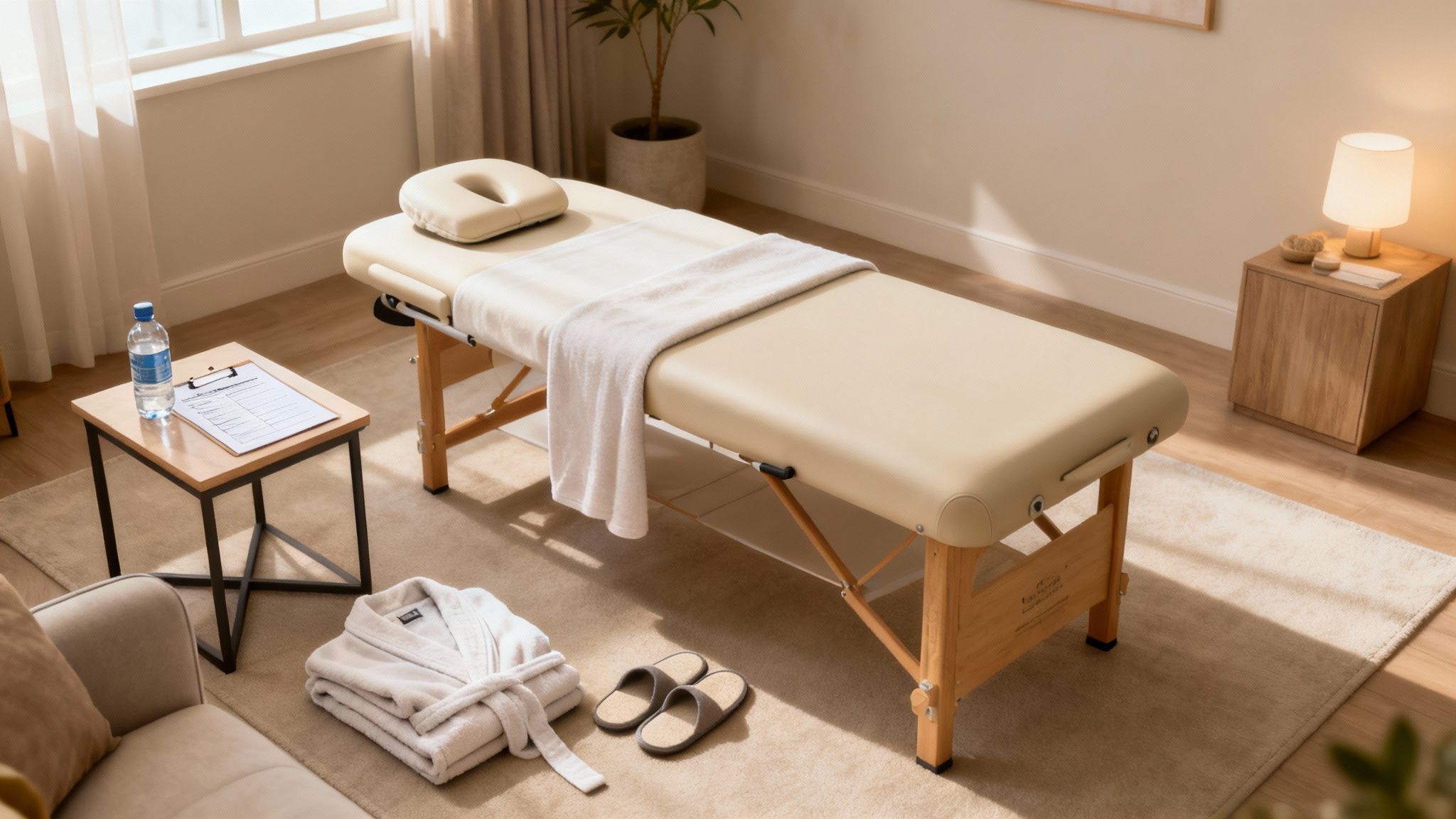
A serene massage therapy room with a light-colored massage table, water, form, bathrobe, and slippers, ready for a session.

Feeling unsure about what to expect when a massage therapist comes to your home for the first time? That’s completely normal. The experience is designed to feel comfortable, professional, and incredibly relaxing from the moment your therapist arrives. A little preparation goes a long way. It’s nothing complicated—just a few simple things will help ensure you get the absolute most out of your treatment.

Before Your Therapist Arrives

Your main job is to clear a quiet space for the massage table. A clear area of about 2 metres by 1.5 metres is perfect. This gives your therapist enough room to move around the table effectively. Next, think about comfort. Wear something loose and easy to change out of. During the massage, you’ll be professionally draped with towels or sheets at all times, with only the area being worked on ever exposed.

Making your booking should also be stress-free. Getting comfortable with a reliable booking system is a small step that makes a big difference, ensuring everything is locked in and clear well before your appointment.

During Your Appointment

This is your time, and good communication is what turns a decent massage into a fantastic one. Before getting started, your therapist will have a quick chat with you. This is your chance to share any key information.

Make sure you mention:

  • Any health stuff: Let them know about old injuries, allergies, or any medical conditions.
  • Areas of focus: Point out exactly where you hold your tension, whether it’s your neck, shoulders, or lower back.
  • Pressure preference: Never be shy about saying if you’d like the pressure lighter or firmer. This is crucial!

Your therapist genuinely wants you to have the best experience possible. Clear feedback during the session isn’t just welcome—it’s encouraged. It helps them tailor the treatment perfectly to what your body needs.

After the Massage Wraps Up

Once your treatment is complete, take your time getting up from the table. There’s no rush. Your therapist will step out of the room to give you complete privacy while you get dressed. The most important thing to do post-massage is to stay hydrated. Drinking plenty of water helps your body flush out any metabolic waste that was released from your muscles during the session.

Try to avoid any strenuous activity for the rest of the day. This lets your body fully absorb the benefits of the massage. A gentle walk or a warm bath later on can be a wonderful way to extend that incredible feeling of relaxation.

Your Mobile Massage Questions, Answered

Booking a massage that comes to you is a game-changer, but it’s natural to have a few questions if you've never done it before. Feeling confident and completely at ease is a huge part of the experience, so let’s clear up some of the most common queries.

First up, what do you actually need to have ready? The simple answer: almost nothing. Your therapist arrives with everything required for a five-star treatment—a professional massage table, fresh linens, high-quality oils, and even music to set the mood. All you need to do is provide a quiet space in your home, office, or hotel room.

Safety, Trust, and Professionalism

Another question we hear a lot centres on safety and trust. It’s a completely valid concern when you’re inviting a professional into your personal space. Reputable Australian mobile massage services are built on a foundation of trust. Every therapist should be fully qualified, insured, and have passed a police check. Never hesitate to ask to see these credentials. A true professional will be more than happy to show you. It’s all part of building rapport and ensuring you feel comfortable.

Finally, what’s the experience actually like? Here are a few quick points to put your mind at ease:

  • What should I wear? You can undress to whatever level you’re comfortable with. You’ll be professionally draped with towels the entire time, and only the area being worked on is ever exposed. Your privacy is paramount.
  • Do I need to make conversation? Only if you feel like it. Your therapist will check in about pressure and comfort, but otherwise, this is your time. Feel free to close your eyes, drift off, and just relax.
  • What if I have pets at home? It’s usually best to have them in another room. This ensures a calm, uninterrupted session for both you and your therapist, letting you get the most out of your treatment.

The entire experience is designed around your complete comfort and privacy. From a discreet setup in your office to creating a serene spa atmosphere right in your living room, the goal is to deliver an incredible wellness treatment without any of the usual spa-day hassles.


Ready to experience the ultimate convenience in wellness? The Royal Masseur brings professional, five-star massage therapy directly to you. Book your session today and discover a new level of relaxation.

Posted on Leave a comment

Finding a Prenatal Massage Near Me in Australia

When you find yourself searching for a “prenatal massage near me,” you’re not just looking for a bit of relaxation. You’re looking for specialised, convenient care from someone who truly understands the massive changes your body is going through. And honestly, the best solution is a mobile prenatal massage. A certified therapist brings the entire calming experience directly to you, cutting out the stress of travel and stuffy waiting rooms. It’s about transforming your own space—be it your home, office, hotel room, or even a yacht—into a private sanctuary built purely for your comfort.

Why Mobile Prenatal Massage Is a Game Changer

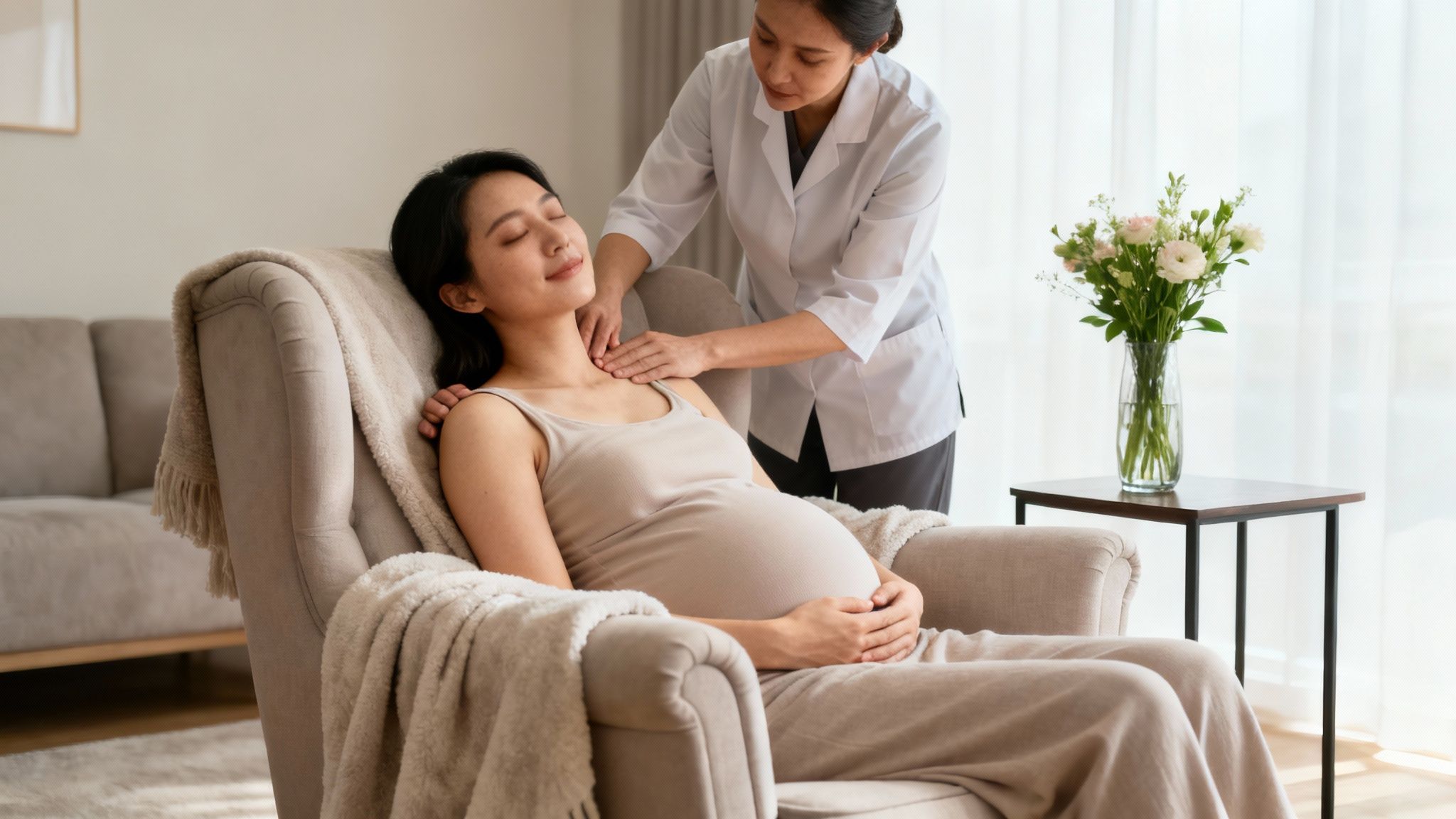
A pregnant Asian woman enjoys a relaxing neck and shoulder massage from a therapist.

Pregnancy is an incredible journey, but let’s be real—it brings its own set of physical and emotional hurdles. The absolute last thing you need is the hassle of fighting traffic, hunting for a parking spot, or waiting around in an unfamiliar clinic. Mobile massage simply removes all those barriers, delivering professional, attentive care right to your doorstep.

Just picture it: a fully qualified therapist arrives at your home, office, or hotel room with a specialised pregnancy massage table, fresh linens, and calming oils. In minutes, your chosen space becomes a haven of tranquillity, set up just for you. This is the real magic of an in-home service—it meets you exactly where you are, completely on your terms.

The Ultimate Convenience and Comfort

For many expecting mums, comfort is everything. Swollen feet, a sore back, and general exhaustion can make even a quick trip feel like running a marathon. A mobile service means you can sink into deep relaxation in your own familiar space, without the jolt of a commute home right after your massage. Even better, you can schedule a session in your office during a lunch break, or unwind in your hotel room while travelling.

This isn't just a luxury; it's a crucial part of supporting your mental health during a demanding time. In fact, research shows that around 20 percent of pregnant women in Australia experience significant anxiety or depression, making accessible self-care more important than ever. A mobile massage strips away the logistical headaches, making it that much easier to put your own wellbeing first.

In-home prenatal massage isn't just about dodging traffic. It's about creating a seamless wellness experience where your comfort and privacy are the top priorities, allowing you to relax more deeply and get far more out of the treatment.

Personalised Care in Your Own Space

A mobile session is inherently more personal. The therapist is focused entirely on you, without the usual distractions of a busy clinic. This one-on-one attention means the treatment is perfectly tailored to your specific aches and pains, whether it's sciatica flaring up from long hours at your desk, shoulder tension from a new sleeping position, or just general muscle soreness.

Choosing this kind of service puts you in complete control of the environment—you set the lighting, the temperature, and the music. This level of personalisation helps you fully let go, which in turn maximises the benefits of the massage. For more tips on finding a great professional, check out our guide on how to find the right mobile massage therapist for your needs.

The Real Benefits of Pregnancy Massage (Backed by Science)

Pregnancy is an incredible journey, but let's be honest—it can be tough on your body. The persistent backaches, swollen ankles, and general muscle tension are very real. While a prenatal massage definitely feels like a well-deserved treat, its benefits run much deeper than just relaxation. They're grounded in real physiology, offering tangible relief when you need it most.

When you get a proper prenatal massage from a qualified therapist, they’re not just rubbing your back. They use specific, gentle techniques designed to handle the unique strains of pregnancy. These strokes are all about boosting your circulation, which is the key to reducing that uncomfortable swelling (oedema) in your legs, ankles, and feet. By helping your body move that excess fluid along, the massage directly tackles one of the most common complaints of the third trimester.

Easing Aches and Helping You Sleep

Beyond the battle with swelling, a targeted massage can be a game-changer for muscle and nerve pain. As your centre of gravity shifts forward, your lower back and pelvic muscles are suddenly working overtime. This often leads to sciatica—that sharp, shooting pain that runs down your leg. A skilled therapist knows exactly how to gently release the tight muscles putting pressure on the sciatic nerve, bringing some much-needed relief.

This kind of physical relief has a wonderful ripple effect on your emotional wellbeing and, crucially, your sleep.

  • Hormone Balance: Massage has been shown to lower levels of cortisol, the body’s main stress hormone.
  • Mood Boost: At the same time, it can increase serotonin and dopamine, the "feel-good" chemicals that help stabilise your mood.
  • Deeper Rest: When you’re in less pain and feeling less stressed, it’s so much easier to fall asleep and get the deep, restorative rest your body is crying out for.

Making Wellness Practical in a Hectic World

The positive impact on mental health is clear. Yet, for so many expecting mothers in Australia, finding the time for self-care feels almost impossible. Interestingly, studies on partner-delivered massage found that even a 20-minute session once a week could help reduce anxiety and stress. But here’s the revealing part: the same studies showed that 39 percent of women who signed up later had to withdraw, with most saying they just didn't have the time. This really highlights the challenge for busy mums-to-be and makes a strong case for convenient, accessible options like an in-home or in-office massage. You can read more about these findings on massage and maternal mental health.

By tackling physical discomfort head-on, prenatal massage creates a positive chain reaction. It calms your nervous system, eases your mind, and helps create a more serene environment for both you and your growing baby.

Ultimately, looking for a "prenatal massage near me" is about more than just a bit of pampering; it’s a proactive investment in your overall health. It’s a science-backed way to manage pain, dial down stress, and embrace your pregnancy with more comfort and calm. Whether you’re at home, in a hotel, at the office, or even on a yacht, the benefits are clear.

Your Guide to a Safe Prenatal Massage Experience

When you’re expecting, the safety of you and your baby is everything. It's the number one priority. This is precisely why it’s absolutely essential to choose a therapist who isn't just good at their job, but is specifically trained and certified in prenatal massage.

A standard massage therapist, no matter how skilled they are, simply won't have the specialised knowledge of the crucial modifications needed during pregnancy. A certified prenatal therapist, on the other hand, has completed dedicated training on the unique physiological changes your body is going through. They understand exactly how to position you safely to avoid putting any pressure on your abdomen or major blood vessels—a skill that becomes more and more critical as your belly grows.

This expertise isn't just a nice-to-have; it's a fundamental requirement for your peace of mind and well-being.

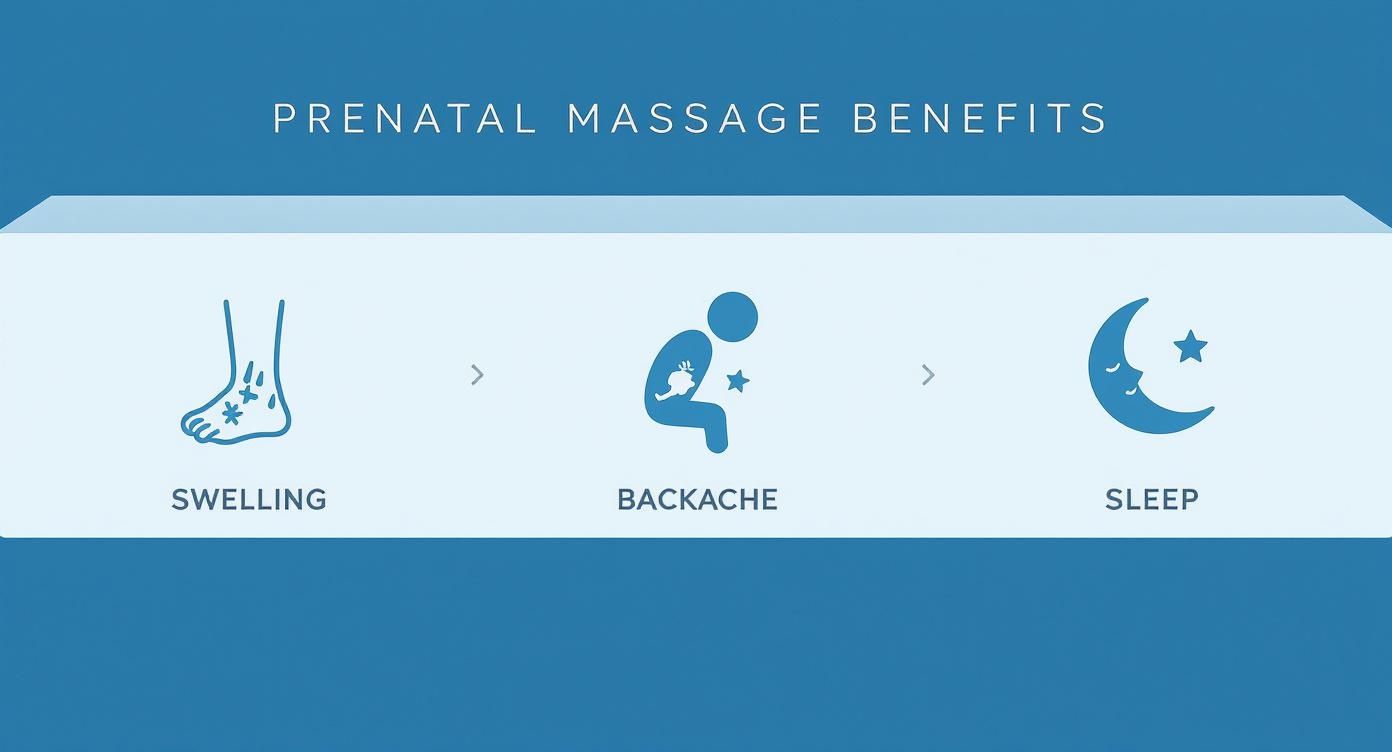
Infographic showing prenatal massage benefits: reduced swelling, relief from backache, and improved sleep.

As you can see, a safe and professional prenatal massage is all about targeting the most common discomforts of pregnancy, providing relief where you need it most.

Trimester-Specific Safety and Techniques

As your pregnancy progresses, your body's needs change dramatically. A truly qualified therapist knows this and adapts their entire approach for each trimester to ensure you get the maximum benefit in the safest way possible, whether they're setting up in your home, office, or hotel room.

Let's break down what that looks like.

Prenatal Massage Safety Checklist by Trimester

A professional massage therapist will tailor every session to your specific stage of pregnancy. Here’s a quick overview of what you can expect in terms of positioning, focus areas, and key safety considerations as your body changes.

TrimesterRecommended PositioningAreas of FocusImportant Precautions
First (Weeks 1-12)Side-lying or modified supine (semi-reclined) with plenty of supportive cushions.Gentle, relaxing strokes to ease stress and manage early pregnancy fatigue. Focus on neck, shoulders, and light leg work.Extra cautious approach. No deep abdominal work and avoidance of specific acupressure points linked to uterine contractions.
Second (Weeks 13-27)Primarily side-lying, supported by pillows to ensure spinal alignment and comfort for your growing belly.Relieving lower back pain, hip tension, and leg cramps. Can incorporate slightly deeper work on the back and shoulders.Avoid lying flat on the back for extended periods to prevent pressure on the vena cava.
Third (Weeks 28-40)Exclusively side-lying with extensive pillow support to take all pressure off the abdomen and lower back.Reducing swelling (oedema) in the legs, feet, and hands. Alleviating sciatica and preparing muscles for labour.Focus is on comfort and promoting circulation. Deep pressure on the legs is avoided, using gentle, upward strokes instead.

This adaptive approach ensures that every touch is both safe and supportive, honouring your body's week-by-week journey.

The core difference in prenatal massage isn't just about avoiding certain areas. It's a proactive, knowledgeable approach that adapts to your body's incredible journey, ensuring every touch is both safe and deeply supportive.

When to Consult Your Doctor First

While prenatal massage is perfectly safe for most, some conditions do require a green light from your doctor before you book a session. It’s crucial to be completely open and honest with both your healthcare provider and your massage therapist.

Always seek medical advice first if you have:

  • A high-risk pregnancy
  • Preeclampsia or high blood pressure
  • Gestational diabetes
  • Severe swelling, persistent headaches, or dizziness
  • Placenta previa or other placental issues

Clear communication is key. It ensures your therapist can make the right modifications or, if needed, postpone the massage until it's absolutely safe to proceed. A true professional will always put your health and your baby's health above everything else, empowering you to make confident choices for your wellbeing.

What to Expect from Your In-Home Massage Session

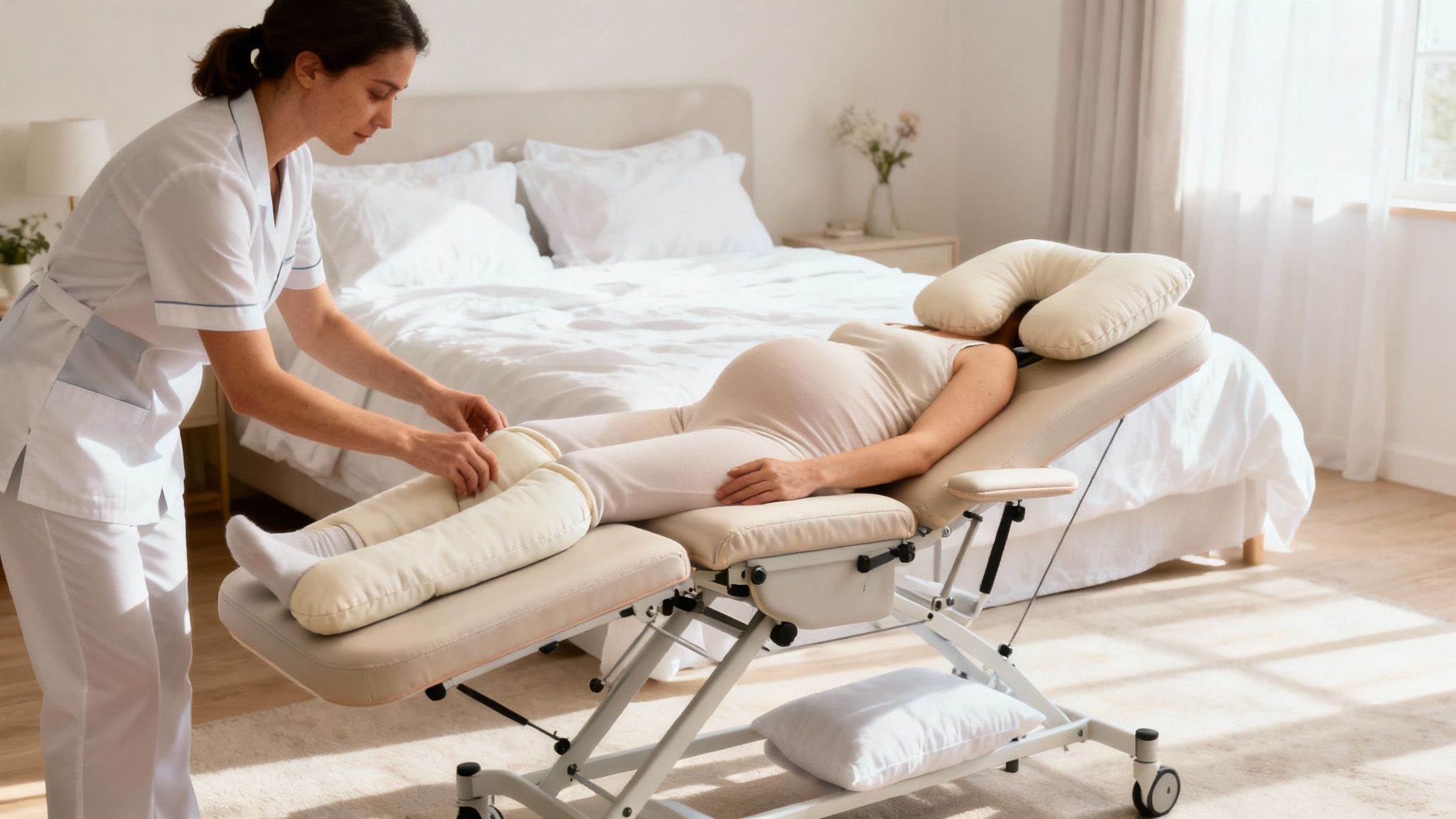
A professional therapist gives a prenatal massage to a pregnant woman on a portable bed in a bright bedroom.

Booking your first in-home prenatal massage can feel like a bit of an unknown, but a good mobile service is designed to make the whole process incredibly easy and comfortable from the second your therapist walks through the door. The whole point is to bring the spa to you.

Your chosen space—whether it’s a quiet corner of the living room, your home office, or even a hotel room—is transformed into a professional treatment space. The idea is to take every bit of stress out of the equation so all you have to do is relax.

Your therapist arrives with absolutely everything needed for a top-tier session. This isn’t just a flimsy portable table; they bring a professional-grade setup, complete with specialised bolsters and pregnancy cushions. These supports are the secret to getting you positioned safely and comfortably, taking all the pressure off your belly and lower back.

The Initial Consultation and Setup

Before the massage even starts, your therapist will have a brief but important chat with you. This is where you get to offload. Tell them exactly what’s going on—the nagging ache in your hips, the tension in your shoulders from sleeping awkwardly, or those swollen ankles.

This conversation is absolutely key for a few reasons:

  • It’s All About You: It lets the therapist tailor the massage to what your body needs on that specific day.
  • Safety First: They can double-check that everything is perfectly safe for your stage of pregnancy and that there are no red flags.
  • Building a Connection: It helps you feel comfortable and builds a professional, caring rapport so you can properly switch off.

While you're talking, they’ll be quietly and efficiently setting up the table with fresh, clean linens and getting their high-quality, unscented oils ready. The whole setup is discreet and professional. It should feel like a little pocket of calm has just appeared in your chosen space.

The goal of an in-home session is to deliver a deeply therapeutic experience without you lifting a finger. From the specialised equipment to the personalised consultation, every detail is handled to create a bubble of pure calm just for you.

During the Massage

Once you’re settled on the table—usually lying on your side, propped up comfortably with all those pillows—the massage can begin. Your warmth and modesty are the top priority throughout the session.

Your therapist will use expert draping techniques, which just means that only the part of your body being worked on is uncovered. The rest of you stays tucked in and warm.

The massage itself will use gentle, rhythmic, and effective strokes. The pressure is always calibrated to your comfort level, using techniques proven to boost circulation, release tight muscles, and soothe your nervous system. You are always in the driver's seat. If you need anything adjusted at any point, just say the word. This is your time, and the entire experience is built around your wellbeing.

How to Find the Best Therapist in Your Area

A hand holds a smartphone displaying a healthcare booking app with a map of Australia and a booking button.

When you search for a "prenatal massage near me," you’re not just looking for any therapist. You’re searching for a trusted professional who genuinely understands the unique demands of pregnancy. Vetting your therapist is easily the most important step to ensure a safe, relaxing, and beneficial experience wherever you are.

Finding the right person can feel a bit overwhelming, but asking a few targeted questions will quickly separate the true specialists from the generalists. Don't ever feel shy about asking directly about their qualifications and experience. This is all about your peace of mind.

Key Questions to Ask a Prenatal Massage Therapist

Before you even think about booking, make sure you get clear answers to these non-negotiable questions. A real professional will be more than happy to provide this information.

  • "Are you certified in prenatal massage?" This is the big one. A general massage qualification just isn't enough; you need to see specific training in prenatal and postnatal care.
  • "How much experience do you have with pregnant clients?" Get specific. Ask how many years they’ve been practising and how often they work with expectant mothers.
  • "Do you have experience with high-risk pregnancies?" Even if your pregnancy is low-risk, their answer reveals their depth of knowledge and how cautious they are.
  • "Are you fully insured?" Professional liability insurance is an absolute standard for any reputable therapist and protects both of you.

These questions help you build confidence in your choice, ensuring the person arriving at your door is a highly skilled expert. You can discover a range of vetted massage therapists near you who already meet these professional standards.

Simplifying Your Search in Major Australian Hubs

The great news for mums-to-be is that finding a qualified therapist is easier than you might think. The massage therapy workforce in Australia is quite accessible, with 55 percent of experienced therapists operating in metropolitan areas. This helps ensure fantastic service availability for women seeking prenatal care.

A great mobile massage service simplifies everything. Instead of you doing all the searching, they provide a vetted, certified, and insured professional who comes directly to you, taking all the guesswork out of finding quality care.

Services like The Royal Masseur offer a direct solution, providing expert prenatal massage across major Australian hubs. This means you can get consistent, high-quality care whether you are at home, in the office, or travelling for business.

Our mobile wellness services cover:

  • Sydney
  • Melbourne
  • Brisbane
  • Gold Coast
  • Central Coast
  • Wollongong

This extensive coverage makes finding a top-tier "prenatal massage near me" simple and stress-free, connecting you with the right professional every single time.

Your Prenatal Massage Questions Answered

Pregnancy is an amazing journey, but let's be honest, it can bring up a lot of questions, especially when it comes to looking after your body. When you start searching for a "prenatal massage near me," you want clear, straight answers so you can book with total confidence. Here’s a breakdown of the most common queries we hear from mums-to-be, with advice you can trust.

Is Prenatal Massage Safe in the First Trimester?

This is easily the most common question we get, and for very good reason. Many therapists prefer to wait until the second trimester, once the general risks of pregnancy are naturally lower. But to be clear, massage itself isn't known to cause problems when it's done correctly by a trained professional.

A properly certified prenatal therapist knows the crucial precautions for those first 12 weeks. They understand what to avoid, like deep work on the abdomen and certain acupressure points that are best left alone during pregnancy. Still, the golden rule is to always have a chat with your doctor or midwife before starting any new therapy in early pregnancy. A truly professional therapist will insist on a detailed health intake form before they even begin, making sure the session is 100% safe for you.

How Often Should I Get a Pregnancy Massage?

Honestly, the ideal frequency comes down to you—your individual needs, your budget, and how your body is feeling from one week to the next.

For general wellness and to keep stress in check, a session once a month can be a game-changer. It helps keep those common aches and pains from building up and gives you a dedicated moment to reconnect with your changing body.

Once you head into the third trimester, you might notice things getting a bit more uncomfortable—more back pain, hip tension, or swelling. At this stage, bumping up your sessions to every two weeks, or even weekly, can provide some serious relief and help prepare your body for labour. The best advice is always to listen to your body and chat with your therapist and healthcare provider to find a schedule that works for you.

Consistency is often the key to unlocking the best results for managing pain and stress throughout your pregnancy. A regular massage can become a cornerstone of your prenatal self-care routine, whether at home, in the office, or even in a hotel room.

What if I Have a High-Risk Pregnancy?

If your pregnancy is considered high-risk due to a condition like preeclampsia or gestational diabetes, getting full clearance from your obstetrician is non-negotiable before you even think about booking a massage. A high-risk label doesn't automatically mean massage is off the table, but it absolutely means that specific modifications are essential for safety.

It's vital that you tell your massage provider about your condition right when you book. A specially trained therapist will know exactly how to adapt, using modified techniques, careful positioning, and adjusted pressure to ensure total safety for you and your baby. Clear, open communication between you, your doctor, and your therapist is the most important part of the entire process.

Do I Need to Provide Anything for an In-Home Massage?

Not a single thing. The whole point of a premium mobile service is that the complete spa experience comes directly to you. Your therapist will arrive with a professional, sturdy massage table, fully kitted out with pregnancy-specific bolsters and cushions designed for perfect support and comfort.

They also bring all the fresh linens, high-quality unscented oils, and often some calming music to create just the right atmosphere. All you need to do is point them to a quiet, warm space—whether that’s at home, in your office, or on a yacht—with enough room to set up the table. Your therapist handles everything else, so you can just switch off, relax, and enjoy every moment. And as you plan for your journey after birth, you might also be interested in the benefits of a specialised postnatal massage at home.


Ready to experience the deep relaxation and relief of a professional prenatal massage without leaving your home? The Royal Masseur brings five-star wellness directly to you. Book your session today and let our certified therapists take care of you.

Posted on Leave a comment

Your Guide to the Perfect Massage Gift Certificate

A massage gift certificate is more than just a piece of paper or a digital code. It’s a tangible invitation for someone to press pause on their hectic schedule and genuinely prioritise their wellbeing. It stands out as a thoughtful, incredibly versatile gift that offers a real escape, with benefits that last long after the massage itself has finished.

The Ultimate Gift of Wellness and Experience

In a world overflowing with possessions, giving an experience makes a far more meaningful impact. A massage gift certificate is the perfect answer for almost any occasion—a birthday, anniversary, a corporate reward for a job well done, or just a simple way to show someone you truly care.

It’s a gesture that clearly says, “You deserve this break.”

This kind of gift is ideal for everyone, from a stressed-out executive in a high-rise office to a new parent who desperately needs a quiet moment at home. It bypasses the guesswork of finding the right size or colour and instead, offers a guaranteed opportunity for pure rejuvenation.

Why Experiences Trump Things

Gifting an experience like a professional massage offers something that material items simply can't match. It’s dedicated time for the recipient to disconnect, de-stress, and focus completely on their own health. This focus on wellness is something more and more Australians are actively seeking.

The shift towards valuing experiences over objects is a powerful one. A massage certificate doesn't just provide a service; it gives a memory, a feeling of being cared for, and a much-needed pause in a busy life.

You can see this shift in the growing demand for wellness services right here in Australia. The health and wellness spa industry is on track to hit AUD 624 million by 2025, driven largely by a greater awareness of self-care and a desire for premium relaxation experiences. This shows just how perfectly a massage gift certificate aligns with modern values. Learn more about Australian wellness industry trends.

A Flexible Gift for Any Setting

One of the best things about a mobile massage gift is its sheer adaptability. The relaxation isn't confined to a spa. A professional therapist can create a tranquil, five-star environment almost anywhere.

  • At Home: Transforming a living room into a private sanctuary for ultimate comfort.
  • In the Office: Providing a much-needed wellness break to combat workplace stress and boost team morale.
  • In a Hotel Room: Adding a touch of luxury and convenience for travellers.
  • On a Yacht: Offering an exclusive wellness experience surrounded by serene waters.

This incredible flexibility ensures the gift is not just thoughtful but also practical, fitting seamlessly into the recipient's life, wherever they happen to be.

How to Choose and Purchase the Right Massage Certificate

Ready to give the gift of pure relaxation? Fantastic choice. Picking out the perfect massage gift certificate is a straightforward process once you know what you’re looking for. It all starts with thinking about the person you're buying for.

What’s their lifestyle like? Are they an athlete constantly dealing with sore muscles? A busy professional who spends too much time hunched over a laptop? Or maybe just someone who truly deserves a moment of absolute calm. Thinking about their specific needs is the key to matching them with an experience that feels personal and genuinely beneficial.

Matching the Massage to the Person

Every person's path to wellness is different, which makes your choice of massage style an important part of the gift. A deep tissue or remedial massage is a game-changer for someone with specific aches and pains, while a gentle relaxation massage can be the mental and physical reset they've been craving.

Here’s how you can tailor the experience, whether they’re at home, in the office, or even on a yacht.

  • For the Stressed Executive: Think relaxation or aromatherapy massage. It's the perfect antidote to a brutal work week and can melt away tension right in their office or hotel room, getting them recharged between meetings.
  • For the Fitness Enthusiast: A sports or remedial massage is the way to go. It’s designed to target muscle recovery and boost mobility, which can make a huge difference to their training.
  • For the New Parent: A gentle, restorative massage delivered right to their home is more than a gift; it’s a rare chance for some much-needed self-care without the stress of leaving the house.
  • For a Special Occasion: A luxurious couples massage turns a great gift into a shared, memorable experience. It’s perfect for an anniversary or any big celebration.

Getting these details right ensures your gift really hits the mark. If you want to dive deeper, our guide on choosing a top-rated massage therapist in Sydney is packed with tips to help you find the right skills for your recipient's needs.

For a clearer picture, here’s a quick comparison to help you nail the perfect choice.

Choosing the Right Massage Type for Your Gift

A comparison of popular massage styles to help you select the perfect experience for your recipient's wellness needs.

Massage TypeBest ForExperience LevelKey Benefit
RelaxationThe chronically stressed, first-timers, or anyone needing a mental break.Gentle & SoothingCalms the nervous system and provides an immediate sense of peace.
RemedialAnyone with specific aches, chronic pain, or postural issues from work.Targeted & TherapeuticAddresses the root cause of pain for long-term relief and improved function.
SportsAthletes, gym-goers, and active individuals needing to boost performance.Focused & IntenseSpeeds up muscle recovery, prevents injury, and enhances flexibility.
CouplesAnniversaries, special celebrations, or partners needing to reconnect.Shared & LuxuriousCreates a shared memory and allows two people to unwind together.

This table should make it easy to see which style aligns best with the person you have in mind, ensuring the gift is both thoughtful and effective.

A Simple and Secure Purchase Process

Once you’ve got the perfect experience in mind, buying the certificate online is designed to be completely straightforward and secure. You have two great options for delivery, depending on the situation.

An e-voucher is your saviour for any last-minute gifts, as it lands in their inbox instantly. If you want something a bit more special, a beautifully presented physical certificate sent by post adds a tangible, elegant touch to your thoughtful gesture.

This diagram really captures the essence of what you're giving—not just a massage, but a powerful tool for stress relief and wellness.

Diagram illustrates a gift box surrounded by icons representing stress relief, gift certificates, and various occasions.

As the visual shows, a single gift can deliver so many powerful benefits, making it a versatile and meaningful choice for almost any occasion. During the online checkout, you’ll just need to pop in the recipient's details, select the massage duration, and add a personal message to make the gift complete. It’s that easy.

Elevating Corporate Gifting with Wellness

It's time to move beyond the usual box of chocolates or generic gift cards. A massage gift certificate is a modern, meaningful way for Australian businesses to show they genuinely appreciate their employees and clients. It’s a direct investment in their wellbeing, which speaks volumes about a corporate culture that values health and work-life balance.

This kind of gift sends a clear message: you care about your people on a human level. It’s a powerful tool to combat workplace stress, a massive problem that costs the Australian economy an estimated $14.2 billion every year in lost productivity. Giving your staff a tangible way to de-stress isn't just a nice perk; it’s a smart business move.

Fostering Loyalty and Boosting Productivity

When employees feel properly valued, their engagement and loyalty skyrocket. Gifting a wellness experience like a professional massage is a high-impact reward that genuinely boosts morale and helps build a positive workplace. It’s a world away from an impersonal cash bonus, creating a memorable experience that directly helps reduce stress and sharpen focus.

The benefits go far beyond just feeling good. A relaxed and rejuvenated team is a productive one. When you integrate wellness rewards, you'll likely see:

  • Reduced absenteeism by tackling stress and burnout before they become serious issues.
  • Increased focus and creativity as employees come back to work feeling mentally refreshed.
  • Stronger team cohesion when wellness becomes a visible, valued part of the company culture.
  • Enhanced employee retention, because people are far more likely to stick with an employer that invests in their health.

A Smart Investment in Your Team

The Australian massage therapy sector is growing fast, with a projected compound annual growth rate of 7% or higher from 2025 through 2035. This growth reflects a huge public demand for premium wellness services, making a massage gift certificate a highly desirable reward. Discover more insights about the massage therapy market.

Investing in employee wellness is no longer an optional extra—it’s a core component of a successful business strategy. A massage certificate is a simple, effective way to show your team that their health is a priority, leading to a happier, more resilient workforce.

For businesses looking to make a real impact, bulk purchasing options for a massage gift certificate make managing rewards programs easy. You can use them to celebrate big milestones, acknowledge outstanding performance, or as a thoughtful client gift that strengthens professional relationships. It's a premium perk that resonates deeply and shows you're a forward-thinking organisation. To see how this fits into a broader strategy, check out our guide on workplace wellness program ideas.

The Luxury of a Massage Anywhere You Are

Imagine the pure convenience of a five-star wellness experience arriving right at your doorstep. A massage gift certificate for a mobile service isn't just a present; it's the key to unlocking total relaxation without the hassle of travel, finding a park, or trying to squeeze it into a packed schedule. This is the modern way to do self-care—a professional, spa-quality massage that fits perfectly into anyone’s day, wherever they might be.

The real magic of this gift lies in its incredible versatility. It has the power to transform any space into a private sanctuary of calm. A skilled therapist brings everything needed—a comfortable table, fresh linens, and soothing oils—to create a tranquil atmosphere, whether it's in a familiar living room, a high-rise office, a hotel suite or even on a yacht.

Wellness That Fits Any Lifestyle

Think about the different ways this exclusive experience can unfold. Each scenario shows just how seamlessly a mobile massage can integrate into life, making wellness accessible and immediate. It’s all about meeting people where they are, both physically and mentally.

For the busy executive in Sydney’s CBD, a massage gift certificate can mean an hour of vital stress relief between back-to-back meetings. Instead of rushing across town, they can simply book a session in a quiet corner of their office and emerge clear-headed, focused, and ready to tackle the rest of the day. This isn't just a break; it's a powerful tool for staying at the top of their game.

A masseuse in a white uniform prepares a massage table with fresh towels in a bright room.

From Hotel Rooms to Harbour Views

The possibilities for relaxation are almost endless, stretching far beyond the typical home or office setting.

  • The Hotel Escape: For a couple visiting Melbourne or the Gold Coast, a massage in their hotel room adds another layer of luxury to their getaway. It's the perfect way to unwind after a day of sightseeing, creating a shared, memorable experience without ever leaving their suite.
  • The Ultimate Opulence: Picture a day out on a yacht in Sydney Harbour. Adding a professional massage service elevates the whole experience. Guests can enjoy the serene water views while a therapist works to release tension, creating a truly unforgettable day of indulgence.

A mobile massage gift certificate removes the biggest barrier to self-care—inconvenience. It delivers a premium wellness experience directly to the recipient, making it one of the most thoughtful and practical gifts imaginable.

This level of service turns a simple gift into a standout memory. By bringing the spa to them, you’re not just giving a massage; you’re giving the precious gift of time, comfort, and effortless rejuvenation. For those curious about the specifics of arranging such a service, exploring options for a mobile massage therapy session in Sydney can provide a clearer picture of how this premium experience is delivered.

Ultimately, a gift certificate for a mobile massage shows you truly understand what the recipient needs. It acknowledges their busy life and provides the perfect, stress-free solution for their wellbeing, ensuring they feel cared for, valued, and completely refreshed.

Making Your Gift Certificate Truly Memorable

A massage gift certificate is already a wonderful gesture, but it’s the personal message that turns it from a good gift into a truly great one. The words you choose can deepen the sense of care and anticipation, making the person feel genuinely seen and appreciated. It’s that small, personal touch that elevates the entire experience, transforming a simple voucher into a memorable moment.

This isn’t about writing a long essay; a few sincere sentences are all it takes. The goal is to connect the gift of massage to a specific reason you're giving it. Whether it's for a birthday, a work milestone, or just because, your message sets the tone and makes the gift feel personal and heartfelt.

A light-colored 'Massage Gift' certificate with a golden ribbon and a delicate rose petal.

Crafting the Perfect Message for Any Occasion

Finding just the right words can sometimes feel tricky, so here are a few simple templates to get you started. Feel free to adapt these for any situation, whether you’re sending encouragement to a colleague or a loving note to your partner. The key is simply to be genuine.

For a Partner’s Birthday or Anniversary:

  • “Happy Birthday! You do so much for everyone else, so this is a moment just for you. Time to relax and recharge. Love you always.”

For a Colleague’s Achievement:

  • “Congratulations on the huge success with the project! You’ve earned a proper break. Hope you enjoy this chance to unwind.”

For a Friend Needing Support:

  • “Thinking of you and everything you’re juggling. I hope this gives you a quiet hour to switch off and feel cared for. You deserve it.”

A well-crafted message bridges the gap between the physical gift and its emotional impact. It tells the recipient not just that you bought them something, but why you thought of them, making the experience feel special from the moment they read your note.

Simple Steps to Add Your Personal Note

Adding your message when you buy a massage gift certificate online is designed to be completely straightforward. As you go through the checkout process, you’ll find a dedicated field where you can type your personal note. This message will then be beautifully included with either the digital e-voucher or the physically posted certificate.

Presentation also matters. A thoughtfully presented physical certificate with your handwritten note adds a classic, personal touch. For an instant e-voucher, your typed words provide the warmth and connection that makes the digital delivery feel just as special, ensuring your thoughtful gift makes a lasting impression.

How to Redeem a Massage Voucher for Pure Relaxation

So, you've been given a massage gift certificate—the perfect ticket to a well-deserved escape. The whole point of a gift like this is pure, effortless relaxation, and that starts from the moment you decide to book. We've made the process incredibly simple, so there's nothing standing between you and your moment of calm.

With just a few clicks, you can turn that voucher into a premium massage experience delivered right to your door, whether you're at home, in the office, staying at a hotel, or even out on a yacht.

Your Step-by-Step Booking Guide

The quickest and easiest way to lock in your session is by booking online. We've designed the entire process to feel smooth and intuitive, building that sense of anticipation for the treatment ahead.

  1. Head to the Booking Page: Jump onto our website’s online booking portal.
  2. Pick Your Service and Time: Choose the type of massage and the session length that’s listed on your gift certificate.
  3. Enter Your Details: Let us know your location and when you'd like your appointment.
  4. Pop in Your Voucher Code: At the checkout, you'll see a field for a "Gift Certificate" or "Promo Code." Simply type in your unique code, and the value will automatically be taken off the total.
  5. Confirm and Get Ready to Relax: Once that's done, you'll get a confirmation email with all the details. Simple as that.

This way, turning a thoughtful gift into a reality is completely stress-free.

Planning Your Session

With a network of highly skilled therapists, finding a time that works for you is a breeze. The wellness industry in Australia is booming, with an estimated 18,900 massage therapists expected to be working by 2025. The highest concentration of these professionals is in New South Wales (37.9%) and Victoria (23.6%), which means we have excellent availability right across the major cities. If you’re a numbers person, you can see more data on wellness professionals over at the Jobs and Skills Australia website.

Your only job is to clear your schedule and prepare to completely unwind. On the day, your therapist will arrive with everything needed to transform your space into a tranquil, spa-like sanctuary.

Just remember to check the validity period on your voucher—it’s typically three years, which gives you plenty of time to find that perfect moment for your wellness escape.

Your Massage Gift Certificate Questions, Answered

Thinking about giving the gift of a five-star massage? It’s a brilliant idea, but it’s completely normal to have a few practical questions pop up. We've put together some quick, clear answers to the most common queries we get, so you can feel totally confident you’re giving the perfect present.

How Long Is the Certificate Valid For?

Life gets busy, we get it. That's why, in line with Australian consumer law, our gift certificates are valid for a very generous three years from the day you buy them. This gives your lucky recipient all the flexibility they need to book their session at a time that truly works for them, ensuring they can completely switch off and enjoy the experience.

Can the Recipient Choose Their Massage Style?

Of course! A gift certificate from us is a ticket to a specific amount of time, not a specific type of massage. The person you’re gifting it to is always encouraged to have a chat with their therapist right before the session. This way, they can choose the exact treatment that suits what their body needs on the day – whether it’s pure relaxation at home, deep tissue work in their hotel, or some remedial therapy to ease office aches.

Which Areas Do You Service?

We bring our luxury mobile massage experience right to the doorstep in Australia’s major metro areas, including Sydney, Melbourne, Brisbane, and the Gold Coast. Our therapists are experts at creating a peaceful sanctuary just about anywhere, from a private home or corporate office to a hotel room or even a yacht on the harbour.

Is a Couples Massage an Option?

Yes, and it’s an incredibly popular choice for anniversaries, birthdays, or just a special shared treat. You can easily select the couples massage option when you purchase a gift certificate online. It’s a wonderful way to give the gift of a shared relaxation experience they won’t forget.


Ready to give an unforgettable wellness experience? Purchase the perfect gift of relaxation from The Royal Masseur and let us deliver a five-star treatment directly to their door. https://theroyalmasseur.com.au

Posted on Leave a comment

Thai Massage at Home: Your Actionable Guide to Deep Relaxation

Booking a Thai massage at home brings the ancient art of therapeutic stretching and acupressure right to your doorstep, cutting out the travel and weaving genuine wellness into your packed schedule. This is about transforming your personal space—whether it's your office for a midday reset, a hotel room while travelling, or even a yacht for the ultimate luxury—into a private sanctuary for deep relaxation and healing.

Why Mobile Thai Massage Is Transforming Australian Wellness

A smiling professional therapist enters a bright modern living room, carrying a yoga mat and basket.

The concept of wellness in Australia is shifting. It’s no longer a luxury saved for a rare spa trip; proactive self-care is becoming an essential part of a productive life. The rise of mobile Thai massage directly addresses the realities of modern living, where time is a premium resource and convenience is paramount.

For busy professionals in the office, parents managing family life, or anyone needing to decompress, the traditional wellness model can feel out of reach. This is where the practicality of an in-home or on-location service truly excels.

The Ultimate Convenience for a Modern Lifestyle

Imagine this: no battling city traffic, no searching for parking, and no clinical waiting rooms. Instead, a qualified therapist arrives at your location—be it your home, office, or hotel—fully equipped to create a professional treatment space. This isn't just a time-saver; it’s an energy-saver, allowing you to focus entirely on the restorative experience.

The actionable benefits of bringing wellness to you are significant:

  • Deep Relaxation in a Trusted Space: Being in a familiar environment like your home or a private office allows your nervous system to relax more quickly, enabling a deeper state of calm from the outset.
  • Total Privacy and Control: You dictate the environment. The lighting, temperature, and choice of music (or silence) are all tailored to your preference, creating a truly personalised session.
  • Seamless Integration: A massage can be scheduled during a work-from-home lunch break, booked for an evening at your hotel, or used as a restorative end to a long day on your yacht without disrupting your entire schedule.

This move toward convenience-based wellness is more than a trend. The mobile massage market is expanding across Australia, with strong networks in major hubs like Sydney and Melbourne. This growth is fuelled by consumer demand for practical solutions.

Considering many Australians spend significant time commuting, eliminating travel for a wellness appointment is a powerful efficiency hack. You can explore more on the benefits of mobile massage versus a traditional spa to see how this model provides tangible advantages.

By bringing therapy to your preferred location, a Thai massage at home, in the office, or at your hotel removes the logistical barriers that prevent consistent self-care. It’s a practical and effective way to manage stress, ease physical tension, and find genuine peace in a demanding world.

Setting the Scene for Your At Home Massage

An authentic Thai massage experience begins before the therapist arrives. The key is creating a sanctuary—a quiet bubble where your mind can switch off and your muscles can release tension. This preparation is crucial, whether you're clearing a space in your office for a professional visit or setting up in your living room.

Think of it as signalling to your body that it’s time to de-stress. A few simple, actionable tweaks can transform any room into a peaceful retreat, enhancing the therapeutic power of the massage.

Choosing and Preparing Your Space

First, find a room where you can have uninterrupted privacy. A living room, a quiet home office after hours, or a spacious hotel suite can be perfect. The most important requirement is ample floor space. Traditional Thai massage is performed on a mat, so you’ll need a clear area of at least 2 by 2.5 metres to accommodate the dynamic stretches and movements.

Once you have your space, focus on the surface. A hard floor is unsuitable, but an overly soft bed lacks the necessary stability.

  • The Ideal Surface: A firm yoga mat is a good foundation. A futon mattress or a thick, folded blanket over a rug provides the perfect balance of comfort and support.
  • Comfort Essentials: Have a couple of pillows and a light blanket on hand. Pillows offer excellent support under the knees or head, while a blanket is useful for staying warm as your body temperature can drop during deep relaxation.

Remember, the foundation of a great Thai massage at home is about function and simplicity. A quiet, clear, and comfortable floor space is the most critical element to arrange for yourself or your therapist.

Crafting the Perfect Ambience

With the physical space ready, it’s time to engage the other senses. These details elevate a simple massage into a restorative ritual.

Adjust the room temperature to be slightly warmer than usual, as you won't be moving. Dim bright overhead lights and use a soft lamp to create a calming glow.

Finally, consider sound. For some, a playlist of calming instrumental music or nature sounds works best. For others, pure, uninterrupted silence is the ultimate luxury. There is no right answer; choose what feels most relaxing for you.

Taking a few minutes for this setup creates an environment that amplifies the healing power of the massage, making your Thai massage at home a genuinely profound wellness experience.

Your At Home Thai Massage Preparation Checklist

Here’s an actionable checklist to ensure you have everything ready for a seamless and relaxing massage experience, whether you're hiring a professional or practising with a partner.

ElementProfessional Therapist VisitDIY/Partner MassagePro Tip
SpaceClear a 2 x 2.5 metre area on the floor.Clear a 2 x 2.5 metre area on the floor.Choose a room with a door you can close to minimise interruptions.
SurfaceHave a yoga mat or thick blanket ready.Have a firm yoga mat, futon, or folded blanket ready.A surface that's too soft (like a bed) won't provide the right support for Thai stretches.
ComfortProvide a few pillows and a light blanket.Have pillows and a blanket within easy reach.Pillows are great for supporting the knees, neck, or lower back during certain positions.
TemperatureSet the room to a comfortable, slightly warm temp.Make sure the room is warm enough to relax in without moving.A slightly warmer room prevents you from feeling chilled as your body relaxes.
LightingDim the lights or use a soft lamp.Dim the lights or use a soft lamp.Avoid harsh overhead lighting to help the eyes and mind rest.
SoundAsk the therapist if they bring music, or have a quiet space.Choose calming music or enjoy complete silence.Let your partner know your sound preference beforehand to avoid distractions.
ClothingWear loose, comfortable clothing like yoga pants and a t-shirt.Wear loose, comfortable clothing you can move freely in.Stretchy, breathable fabrics work best. Avoid jeans or restrictive clothing.

These small, actionable steps ensure that once the massage begins, your only task is to breathe, relax, and enjoy the full therapeutic benefits.

Mastering Simple Thai Massage Techniques with a Partner

Sharing the healing power of touch is an excellent way to connect with a partner. You don’t need extensive training to provide genuine relief and relaxation at home. Learning a few basic Thai massage techniques is simpler than you might imagine. The goal isn’t to replicate a professional treatment but to use simple, safe movements to help each other unwind.

The secret is to use your body weight for gentle, rhythmic pressure, rather than muscle strength. This makes the massage less tiring for the giver and more effective for the receiver. It becomes a collaborative practice that builds trust and communication while easing tension.

This visual guide shows the importance of environmental details. The right space, mood, and sound work together to create the perfect atmosphere.

A diagram illustrates space influencing mood, which then influences sound, using icons and text.

It highlights that a successful Thai massage at home starts with intentionally crafting a peaceful environment before any techniques are applied.

Foundational Moves Anyone Can Learn

First, have your partner lie comfortably on their back on a firm mat. Kneel beside them and take a few deep breaths together to sync up and settle into the moment. Always maintain open communication, checking in regularly about pressure and comfort.

A great starting point is the simple palm press.

  1. Place one hand over the other on your partner's thigh.
  2. Lean forward, using your body weight to apply slow, steady pressure. Focus on leaning, not pushing.
  3. Hold for three to five seconds, then release gently.
  4. "Walk" your hands up their leg in this manner, moving from the thigh towards the calf, avoiding the kneecap. This action warms the muscles and improves blood flow.

This technique can be used on the arms, back, and feet. The key is the slow, rhythmic application of pressure, which is very calming for the nervous system.

Remember, the goal is to create a space for relaxation and release, not to "fix" a problem. Your intention and gentle touch are your most powerful tools.

Simple Assisted Stretches for Shoulders and Back

Modern life, with its focus on screens, often leads to tight shoulders and aching backs. A few simple assisted stretches can provide incredible relief. For those seeking more targeted solutions, understanding professional approaches can be beneficial. You can learn more in our detailed guide to achieving neck and shoulder pain relief for deeper insights.

Here’s a safe and effective stretch to try together:

  • Gentle Spinal Twist: Have your partner lie on their back with knees bent and feet flat on the floor. Gently guide both knees to one side, encouraging them to keep both shoulders flat on the mat. Hold for a slow count of ten, then return to the centre and repeat on the other side.
  • Shoulder Opener: With your partner sitting cross-legged, kneel behind them. Place your hands on the front of their shoulders and gently draw them back to open up the chest. Hold for a few deep breaths, ensuring you're not pulling too hard.

Communication is non-negotiable. Thai massage can be intense, but it should never be sharply painful. Encourage your partner to speak up if the pressure is too much or a stretch feels uncomfortable. This feedback loop is essential for a safe and enjoyable experience for both of you.

Finding and Booking a Professional Mobile Massage Therapist

While practising with a partner is beneficial, there are times when the skill of a professionally trained therapist is needed for a truly therapeutic Thai massage at home. This is the best approach for addressing specific aches, chronic pain, and the deep-seated tension from modern life.

With many options available, especially in cities like Sydney and Melbourne, how do you find the right therapist? It's about knowing what to look for: qualifications, professionalism, and the right specialisation. This ensures you book a safe, effective, and deeply restorative experience.

Vetting Your Therapist for a Safe and Effective Session

Your peace of mind is paramount. When inviting a mobile massage therapist into your personal space, there are a few non-negotiables to verify. These credentials signify a professional committed to high standards of practice and client safety.

Before booking, ensure the therapist or their company can confirm the following:

  • Formal Qualifications: Look for a Diploma of Remedial Massage or an equivalent certification from a recognised Australian institution. This demonstrates a thorough understanding of anatomy and physiology.
  • Association Membership: Membership in a professional body like Massage & Myotherapy Australia (MMA) indicates adherence to a strict code of ethics and professional standards.
  • Current Insurance: Always confirm that the therapist holds current public liability and professional indemnity insurance. This is a crucial safety measure for both you and them.

A reputable therapist will be transparent about their qualifications and insurance. If this information isn't easily found on their website, don't hesitate to ask directly before booking. Your comfort and safety are the top priorities.

What to Expect During a Professional Home Visit

Once booked, the experience should be seamless and discreet. A professional mobile therapist understands they are entering your private space—be it your home, office, hotel room, or yacht—and will act with the utmost respect.

They will arrive with all necessary equipment, including a high-quality floor mat, fresh linens, and any bolsters or pillows needed for proper support. Their setup is quick and quiet, transforming your chosen space into a professional treatment area in minutes.

The session will begin with a brief consultation. This is your opportunity to discuss any issues, such as lower back tightness from sitting or shoulder tension from stress. Good communication allows the therapist to tailor the session to your specific needs. They will check in about pressure throughout the massage to ensure the intensity is right for you.

With a strong professional infrastructure in Australia, finding a qualified practitioner is straightforward. Thai massage is a sought-after specialty. New South Wales has 525 therapists, Victoria has 351, and Queensland has 196. As shown by data on Thai massage therapists in Australia, there is a significant, formally recognised workforce available.

Ultimately, the right choice is someone who meets professional standards and aligns with your wellness goals. For a deeper dive, our guide on how to find the right mobile massage therapist for your needs offers more practical tips. A little research upfront ensures you can book with confidence and receive the full benefits of a professional treatment.

The Unique Physical and Mental Benefits of Thai Massage

A serene young woman receiving a relaxing neck and shoulder massage from a therapist.

What makes a Thai massage at home feel so different from a standard massage? It’s the dynamic, whole-body approach that offers benefits beyond simple muscle relaxation. This isn’t a passive experience; it's an active, energising therapy that directly addresses the challenges of a modern, often sedentary lifestyle.

The unique combination of rhythmic acupressure, assisted yoga-like stretches, and gentle compression works on multiple levels. This method doesn't just knead sore muscles; it works systematically to unblock energy pathways, lengthen tight fascia, and create a sense of spaciousness in the body that lasts long after the session.

Releasing Modern-Day Tension

Consider your daily routine: hours hunched over a laptop in the office, constant phone use, or long commutes. These activities create specific patterns of tension. Thai massage is designed to counteract these modern ailments.

The deep, methodical stretches are particularly effective for issues like 'tech neck' and lower back pain from prolonged sitting. By mobilising the hips, elongating the spine, and opening the chest and shoulders, the massage helps restore natural posture and ease chronic stiffness. This not only relieves pain but also boosts energy by improving blood flow and releasing physical restrictions. For other ways to support your body's systems, check our guide on how to improve circulation naturally.

This active approach is why many people feel both deeply relaxed and invigorated after a session. It’s a complete reset for your body's physical structure and energy flow, leaving you feeling lighter, more flexible, and mentally clearer.

A Powerful Tool for Mental Clarity

The benefits are as much mental as they are physical. The rhythmic, meditative nature of the massage fosters a state of mindfulness, pulling your focus away from endless to-do lists and grounding you in the present. This focused attention helps quiet a busy mind, reduce stress, and promote a profound sense of calm.

This is particularly relevant for busy Australians, especially women balancing demanding careers and family life. Effective stress management has made practices like Thai massage a vital part of their wellness routine. Research shows that among mid-aged and older Australian women, 7.7% consulted a massage therapist in the last year. It’s not surprising that women represent 61.19% of the global market share for massage services in 2023.

This trend reflects a growing recognition of massage as a crucial tool for managing the physical and mental demands of a busy life. You can discover more about these findings on women's health and massage therapy.

Your At-Home Thai Massage Questions, Answered

Bringing the Thai massage experience into your own space for the first time can bring up a few practical questions. Sorting out the details beforehand is key to ensuring your session is seamless, comfortable, and tailored to your needs.

Here are straightforward answers to the most frequently asked questions.

What Should I Wear for a Thai Massage at Home?

For a traditional Thai massage, you remain fully clothed. The best attire is loose, comfortable clothing that allows for a full range of motion—similar to what you would wear for yoga or Pilates.

Lightweight tracksuit pants, leggings, or loose-fitting trousers and a t-shirt are ideal. Avoid restrictive clothing like jeans or items with belts, zips, and buckles. Your therapist needs to be able to move your limbs freely to guide you through the assisted stretches central to the practice.

Do I Need My Own Massage Table?

No, you do not. In fact, a massage table is not used in authentic Thai massage. This traditional therapy is always performed on a firm, padded mat on the floor.

When you book a professional mobile therapist, they arrive with all necessary equipment. This includes a high-quality, comfortable floor mat and any bolsters or pillows required for extra support. Your only responsibility is to ensure there is enough clear floor space for them to set up, typically around 2 metres by 2.5 metres.

Is Thai Massage Painful?

Thai massage is often described as intense, but it should never be outright painful. You will feel deep pressure and significant stretching, which can create a strong sensation in tight areas. Many clients refer to this as a "good pain" because it is accompanied by a powerful feeling of release.

Open communication is crucial. If any movement or pressure feels sharp or excessive, you must inform your therapist immediately. A skilled practitioner will adjust their technique to work within your comfort zone. Tensing up in pain is counterproductive to the goals of the session.

Certain health factors should also be considered. Thai massage is not recommended for individuals with serious heart conditions, recent surgeries, or severe osteoporosis. Always disclose your full health history before the session begins.

How Is a Mobile Massage in a Hotel or on a Yacht Different?

While the quality and technique of the massage remain the same, the logistics for unique locations like a hotel room or yacht differ slightly. For a hotel visit, you may need to arrange access for the therapist with the concierge or meet them in the lobby.

On a yacht, the primary considerations are space and stability. The therapist will require a flat, stable area to work, so scheduling the session while docked or in calm waters is essential for safety and comfort. Experienced mobile therapists are adept at discretion and skilled in adapting to these exclusive environments to provide a five-star experience, wherever you are.


Ready to experience the ultimate in convenience and relaxation? The Royal Masseur brings expert Thai massage and a full suite of wellness services directly to your home, office, or hotel. Book your session today at https://theroyalmasseur.com.au and discover a new level of wellbeing.

Posted on Leave a comment

Finding the Best Massage for Your Back Pain: A Practical Guide

Back pain is more than a minor ache; it's a persistent issue that can sabotage productivity in the office, disrupt a holiday, or simply make daily life a struggle. With a confusing number of therapies available, finding the truly best massage for back pain can feel impossible. This guide simplifies the process, offering a practical roadmap for Australians seeking effective, convenient relief—whether you're at home, in a hotel, on a yacht, or even at work. We move beyond generic advice to provide a detailed breakdown of specific massage techniques tailored to different types of back pain and real-life situations.

This isn't just a list; it's an actionable resource for your busy lifestyle. We’ll explore eight distinct methods, from the targeted pressure of remedial massage to the holistic approach of Shiatsu. We will detail what to expect during a session, which conditions each therapy best addresses, and how you can maximise the benefits afterwards.

The focus is on real-world application, whether you need to organise corporate wellness for your team in a Sydney high-rise, book a therapeutic session for your hotel room in Melbourne, or arrange a five-star treatment on a private yacht. You will learn not just what works, but how to integrate these powerful wellness practices into your life. We provide insights from leading Australian health sources and practical guidance for accessing premium mobile services like The Royal Masseur, who bring expert therapists directly to you, ensuring relief is always within reach. Let's find the right solution for your back.

1. Swedish Massage

Often seen as the classic Western massage, the Swedish technique is an excellent starting point for anyone seeking relief from general back pain. It focuses on relaxing the entire body using a series of specific, therapeutic strokes. It is perhaps the most well-known style, making it a reliable and accessible choice whether you’re at home, in a hotel, or as part of a corporate wellness program in a busy Sydney office.

This technique is characterised by five primary strokes: long, gliding strokes (effleurage), kneading (petrissage), rhythmic tapping (tapotement), friction, and vibration. For back pain, these movements work together to warm up muscle tissue, release tension, and break down minor muscle knots. The long, flowing strokes are particularly effective at soothing the nervous system and reducing the stress that often contributes to a tight, sore back.

A woman receives a relaxing back massage with lotion applied, looking peaceful in a spa setting.

Why It's One of the Best Massages for Back Pain

Swedish massage excels at addressing vague, non-specific back pain caused by muscular tension and poor circulation. By increasing oxygen in the blood and decreasing muscle toxins, it helps shorten recovery time from muscular strain. This circulatory boost is a key reason it’s considered an effective massage for back pain. To explore more ways to enhance your body's circulation, you can learn more about improving circulation naturally.

It is the ideal choice for individuals new to massage or those sensitive to deep pressure. If your back pain stems from long hours at a desk, general stress, or mild overuse, the gentle yet firm approach of a Swedish massage can provide significant relief without the intensity of more targeted therapies.

Actionable Tips for Your Session

To get the most out of your Swedish massage, follow these practical steps:

  • Be Specific: Before the session begins, point out the exact areas of your back that are causing discomfort. Use a pain scale from 1 to 10 to help your therapist understand the intensity.
  • Book for Maintenance: For chronic but mild back tension, a single session offers temporary relief. Booking regular appointments—perhaps monthly—helps manage muscle tension proactively. This is easily arranged for corporate wellness days or as a regular home visit.
  • Hydrate After: Drink plenty of water after your massage. Hydration helps your muscles and fascia stay pliable and assists in flushing out metabolic waste released during the session.
  • Prepare Your Space: If booking a mobile service, have a quiet, warm space ready. A warm shower or a few gentle stretches before your therapist arrives can also help relax your muscles, allowing for a more effective massage.

2. Deep Tissue Massage

For those suffering from chronic back pain, deep tissue massage offers a more intensive and targeted approach. Unlike the broad, relaxing strokes of Swedish massage, this technique focuses on the deeper layers of muscle and connective tissue, known as fascia. Using slow, deliberate strokes and firm, concentrated pressure, therapists work to release chronic muscle tension and break down painful adhesions (knots) that often cause persistent back issues.

This method is particularly powerful for addressing specific problem areas in the back, such as a stiff lower back or sore, tight shoulders from long hours at a computer. It's a go-to therapy for individuals dealing with recurring pain, making it a valuable service whether you're recovering from a strain at home in Melbourne or seeking relief from occupational stress in a high-rise Brisbane office.

A person receiving a professional back massage for pain relief on a mat.

Why It's One of the Best Massages for Back Pain

Deep tissue massage is highly effective because it addresses the root causes of many types of chronic back pain. By breaking up scar tissue and physically releasing muscle knots, it can improve range of motion, reduce inflammation, and alleviate pain. This makes it an excellent choice for conditions like chronic lower back pain, postural problems, and muscle injuries.

It's the ideal massage for back pain when general relaxation isn't enough. If your discomfort is localised, persistent, and feels deep within the muscle, the focused pressure of a deep tissue session can provide significant and lasting relief. It is frequently used by athletes and therapists treating desk workers with deep-seated tension.

Actionable Tips for Your Session

To ensure your deep tissue massage is both safe and effective, here’s how to prepare:

  • Communicate Your Comfort Levels: Deep tissue should be firm, but it shouldn't be excruciating. Use a "stoplight" system: let your therapist know if the pressure is "green" (good), "yellow" (intense but tolerable), or "red" (too painful).
  • Allow for Recovery: Your muscles need time to heal after an intense session. Avoid strenuous activity for at least 24 hours afterwards.
  • Warm Up and Cool Down: Applying a heat pack to your back for 10-15 minutes before your session can help warm up the muscles. If you experience soreness afterwards, an ice pack can help reduce inflammation.
  • Focus on Posture: Maintain the benefits between sessions by being mindful of your posture at your desk or while driving. This helps prevent the muscles from tightening up again.

3. Trigger Point Therapy

Trigger point therapy is a highly targeted technique designed to locate and deactivate specific "trigger points"—hyperirritable knots within a tight band of muscle. These points can cause both direct pain at the site and referred pain in other parts of the body, a common source of confusing backaches. The therapy involves applying sustained, direct pressure to these knots to release tension and break the pain-spasm cycle.

Unlike a full-body relaxation massage, this method is focused, zeroing in on the root cause of the discomfort. For back pain, a therapist might identify a trigger point in the hip that is referring pain down your leg, or a knot in the trapezius causing tension across your upper back and neck. This precision makes it an incredibly effective massage for back pain when the issue stems from specific muscular dysfunction. It's a treatment that can be conveniently performed in various settings, from a quiet room in your Gold Coast home to a dedicated wellness space in your office.

Why It's One of the Best Massages for Back Pain

Trigger point therapy excels at resolving complex, nagging back pain that doesn’t respond to broader massage techniques. By directly addressing the source of referred pain, it can alleviate symptoms in areas that aren't even being touched. This approach is invaluable for conditions like sciatica-like symptoms or chronic upper back pain from poor posture at a desk.

This therapy is ideal for individuals experiencing specific, localised pain or stiffness. If you can point to a distinct "spot" that hurts, or if your pain radiates from one area to another, trigger point therapy offers a diagnostic and therapeutic solution that can provide profound and lasting relief.

Actionable Tips for Your Session

To get the most from your trigger point therapy session, follow these practical steps:

  • Communicate Pain Levels: This therapy can be intense. Use a pain scale from 1 to 10 and let your therapist know when the pressure reaches a "good pain" level (around a 7) versus an intolerable one.
  • Breathe Through the Pressure: When the therapist applies pressure, focus on deep, slow breathing. This helps relax the muscle and makes the release more effective and less painful.
  • Manage Post-Session Soreness: Expect some mild soreness for 24-48 hours, similar to post-workout fatigue. Apply a cold pack for 10-15 minutes to reduce inflammation if needed.
  • Incorporate Self-Care: Use a tennis or lacrosse ball to apply gentle pressure to accessible trigger points between sessions. A few minutes daily can prolong the benefits of your professional treatment.

4. Shiatsu Massage

Originating from Japan, Shiatsu is a therapeutic bodywork technique that translates to "finger pressure." It is deeply rooted in Traditional Chinese Medicine and works to restore the body's energy flow, or qi. Unlike oil-based Western massages, a Shiatsu session is typically performed with the recipient fully clothed, using rhythmic and sustained pressure from fingers, thumbs, and palms. This method is exceptionally effective for back pain as it targets specific acupressure points along the body’s energy channels.

The therapist applies pressure in a continuous, flowing sequence to release blockages and rebalance energy. For someone suffering from a stiff lower back or tension in the shoulders, this approach works to calm the nervous system, promote deep relaxation, and encourage the body’s natural healing capabilities. It’s a holistic treatment that addresses not just the site of the pain but the underlying imbalances contributing to it, making it an excellent choice for a restorative session at home or as part of a comprehensive corporate wellness day.

Why It's One of the Best Massages for Back Pain

Shiatsu stands out because it addresses both the physical muscles and the body's energetic system. It is particularly beneficial for chronic pain linked to stress, fatigue, or postural imbalances. By stimulating acupressure points along the spine, a Shiatsu therapist can help alleviate deep-seated tension and improve flexibility.

This technique is ideal for those who prefer an oil-free massage or feel more comfortable remaining clothed. If your back pain feels persistent and is accompanied by a sense of low energy, the focused, grounding pressure of Shiatsu can provide profound relief, restoring both physical comfort and overall vitality.

Actionable Tips for Your Session

To get the most from your Shiatsu massage, consider these practical recommendations:

  • Wear Loose, Comfortable Clothing: Choose breathable, non-restrictive garments like yoga wear or sweatpants to allow for easy movement and application of pressure.
  • Communicate Pressure and Points: While Shiatsu can be intense, it should never be painful. Let your therapist know if the pressure is too much and point out the specific areas along your back where you feel the most discomfort.
  • Embrace a Full-Body Approach: Shiatsu treats the body as an interconnected system. The therapist will likely work on your legs, arms, and neck to address the root cause of the imbalance, even if your pain is localised in your back.
  • Rest and Rehydrate Afterwards: Allow yourself some quiet time after the session. Drinking water helps to flush toxins and support the body’s energetic rebalancing process.

5. Myofascial Release

Going beyond the muscles, myofascial release targets the fascia: the tough, web-like connective tissue that surrounds every muscle, bone, and organ. When this tissue becomes tight due to injury, inflammation, or poor posture, it can exert immense pressure, causing significant back pain and stiffness. This technique uses sustained, gentle pressure and slow, stretching movements to release these fascial restrictions and restore mobility.

This approach is less about broad strokes and more about specific, sustained holds on areas of fascial tension. A therapist will use their hands, knuckles, or elbows to slowly sink into the tissue until they feel a release, helping to rehydrate the fascia and improve its elasticity. This makes it a powerful option for chronic pain that hasn't responded to traditional muscle-focused massage, offering relief right in your home or hotel room.

A woman on a yoga mat using a black foam roller for back pain relief and stretching.

Why It's One of the Best Massages for Back Pain

Myofascial release is exceptionally effective for back pain stemming from postural imbalances, such as those from prolonged sitting. By addressing the root cause within the connective tissue, it provides longer-lasting relief than simply relaxing the muscles. Poor posture is a common culprit of fascial restrictions, and you can discover more about posture's musculoskeletal effects to better understand this connection.

This technique is ideal for individuals with chronic, nagging back pain, limited range of motion, or pain that feels deep and widespread. It's also beneficial for post-surgical rehabilitation, helping to break down scar tissue and restore normal movement patterns.

Actionable Tips for Your Session

To get the most from a myofascial release session or your own at-home practice, consider these tips:

  • Go Slow at Home: If using a foam roller, move very slowly. When you find a tender spot, pause on it for 30-60 seconds, breathing deeply until you feel the tension ease.
  • Don't Push Through Sharp Pain: Myofascial release can be intense, but it should never be sharply painful. Communicate with your therapist if the pressure is too much, or ease off if you are self-treating.
  • Stay Hydrated: Fascia is primarily made of water. Drinking plenty of water after your session is crucial to help the tissue rehydrate and remain pliable.
  • Combine with Movement: For lasting results, follow your myofascial release work with gentle stretching. This helps the newly released fascia and muscles lengthen into their new, improved range of motion.

6. Remedial/Sports Massage

Remedial and sports massage offer a highly targeted, assessment-based approach to treating specific musculoskeletal issues. This is less a pampering session and more a clinical treatment designed to remedy the root cause of your back pain. A therapist will assess your posture and range of motion to devise a treatment plan that addresses injuries, imbalances, and chronic dysfunction.

This modality is a powerful fusion of various techniques, including deep tissue work and trigger point therapy, tailored precisely to your needs. For back pain, this might involve focused work on a strained lower back muscle from a sports injury or correcting postural imbalances from hours spent hunched over a desk in a Sydney high-rise. The goal is not just to alleviate pain but to restore optimal function and prevent recurrence.

Why It's One of the Best Massages for Back Pain

Remedial and sports massage are exceptionally effective for back pain that stems from a specific injury, postural strain, or repetitive overuse. Unlike more generalised massages, the treatment is strategic, focusing on the muscles, tendons, and ligaments directly contributing to your discomfort. It's the ideal choice for athletes managing strains, office workers suffering from "tech neck" radiating down their back, or anyone recovering from a specific incident.

By systematically breaking down scar tissue, improving muscle flexibility, and correcting imbalances, this approach provides lasting relief and enhances your body's resilience. It is a problem-solving massage that equips you with the tools for long-term recovery.

Actionable Tips for Your Session

To get the most from your remedial or sports massage, a proactive approach is key:

  • Be Specific About Your Goals: Clearly explain the nature of your back pain. Was it a sudden injury? Is it a dull ache that worsens throughout the day? The more detail you provide, the more customised your treatment will be.
  • Request a Postural Assessment: Ask your therapist to assess your posture and movement patterns at the start of the session. This provides a baseline and helps them identify underlying imbalances.
  • Commit to the Plan: Remedial therapy often requires a series of sessions. Adhere to the recommended treatment schedule to achieve cumulative and lasting results.
  • Follow Through with Homework: Your therapist will likely provide you with a home care plan, including specific stretches or strengthening exercises. Diligently performing these exercises is crucial for reinforcing the benefits of the massage.

7. Thai Massage

Often called “lazy person’s yoga,” Thai massage is an ancient and dynamic healing practice that offers a unique approach to alleviating back pain. This technique combines acupressure, Ayurvedic principles, and assisted yoga postures. Unlike oil-based massages performed on a table, a Thai massage is conducted on a floor mat with the client fully clothed in loose, comfortable attire.

The therapist uses their hands, thumbs, elbows, and even feet to apply firm, rhythmic pressure along the body’s energy lines. This is combined with a series of deep, passive stretches that pull, rock, and compress the body. For those with back pain, this method works to decompress the spine, increase flexibility, and release deep-seated tension, making it one of the best massages for back pain related to stiffness and poor mobility.

Why It's One of the Best Massages for Back Pain

Thai massage is exceptionally effective for back pain caused by muscular tightness, poor posture, and a lack of flexibility. The comprehensive stretching mobilises the joints and elongates the spine, which can relieve nerve compression and correct postural imbalances from sitting at a desk all day. Studies cited by sources like Nine.com.au have highlighted its benefits for improving flexibility and reducing pain.

This modality is ideal for active individuals or those who feel their back pain is linked to overall body stiffness. It offers a more engaging and energising experience, leaving you feeling both relaxed and invigorated. This makes it a great choice for a corporate wellness program in a dynamic Brisbane office or for improving range of motion.

Actionable Tips for Your Session

To ensure a safe and beneficial Thai massage experience, consider these tips:

  • Wear Appropriate Clothing: Opt for loose, comfortable clothing that allows for a full range of movement, such as yoga wear or light cotton trousers and a t-shirt.
  • Communicate Your Limits: Be vocal with your therapist about any injuries, areas of pain, or limitations in your flexibility. They can modify the stretches to suit your body.
  • Breathe Through the Stretches: Focus on deep, steady breathing, especially during the more intense stretching movements. This helps your muscles relax and prevents you from tensing up.
  • Stay Hydrated: As with any massage, drinking water before and after your session is crucial for helping your body flush out toxins and rehydrate muscle tissue.

8. Chiropractic Manipulation/Adjustment

While not a traditional massage, chiropractic adjustment is a powerful, related therapy often integrated with massage for comprehensive back pain management. This profession focuses on the musculoskeletal system, particularly the spine. A chiropractor uses controlled, sudden force to manipulate spinal joints, aiming to improve alignment, restore mobility, and reduce nerve irritation.

This practice is built on the principle that proper spinal alignment is crucial for the body's overall function. Chiropractors often combine these adjustments with soft tissue therapies like therapeutic massage and stretching. This combined approach is particularly effective because massage can relax the muscles surrounding the spine, making the joints more receptive to adjustment and enhancing the overall result.

Why It's One of the Best Approaches for Back Pain

Chiropractic manipulation excels at addressing back pain that stems from structural and biomechanical issues, such as misaligned vertebrae or joint dysfunction. By directly targeting the source of nerve compression, an adjustment can provide rapid relief from sharp, localised pain and improve range of motion.

This method is ideal for individuals experiencing acute back strains from an injury, chronic pain related to poor posture, or sciatica-like symptoms. When combined with therapeutic massage, it creates a powerful synergy. The massage warms and relaxes tight muscles, while the adjustment realigns the skeletal structure, making it a cornerstone of many integrated wellness programs.

Actionable Tips for Your Session

To ensure a safe and effective chiropractic experience, consider these practical steps:

  • Verify Credentials: Only seek treatment from a licensed chiropractor registered with the Australian Health Practitioner Regulation Agency (AHPRA).
  • Provide a Full History: Be transparent about your medical history, including any previous injuries, surgeries, or underlying conditions.
  • Request Integrated Care: Ask your practitioner if they combine adjustments with massage therapy. This integrated approach often yields the best results.
  • Follow Your Exercise Plan: Your chiropractor will likely prescribe specific exercises to support your treatment. Consistently performing these movements is key to long-term stability; you can discover some effective strengthening exercises to complement your care.

Top 8 Massages for Back Pain — Comparison

ModalityImplementation Complexity 🔄Resource Requirements ⚡Expected Outcomes ⭐📊Ideal Use Cases 💡Key Advantages
Swedish MassageLow 🔄 — foundational strokes, easy to deliverLow ⚡ — massage table, oil/lotion, basic training⭐⭐⭐ 📊 — relaxation, improved circulation, mild–moderate pain reliefMild–moderate back pain, relaxation, post-workout recoveryWidely available; non‑invasive; gentle
Deep Tissue MassageHigh 🔄 — advanced pressure techniques, careful controlModerate ⚡ — skilled therapist, longer sessions⭐⭐⭐⭐ 📊 — reduces deep knots, improves mobility, longer reliefChronic back pain, deep muscle adhesions, athletesTargets root causes; breaks scar tissue/adhesions
Trigger Point TherapyModerate–High 🔄 — precise point identification & sustained pressureLow–Moderate ⚡ — trained therapist; simple home tools for follow‑up⭐⭐⭐ 📊 — targeted pain reduction; often immediate reliefReferred pain (sciatica), localized knots, post‑injury referral patternsHighly targeted; pairs well with self‑care
Shiatsu MassageModerate 🔄 — meridian-based pressure, rhythmic techniquesLow ⚡ — mat, practitioner; client clothed (no oils)⭐⭐📊 — tension reduction, energy balance; variable evidenceStress‑related back pain, holistic care, clients preferring clothed sessionsHolistic, non‑invasive; integrates stretching and joint work
Myofascial ReleaseModerate 🔄 — sustained, slow fascial workLow–Moderate ⚡ — therapist or foam roller for self‑care⭐⭐⭐ 📊 — improved mobility, reduced fascial restrictions, postural gainsPostural dysfunction, restricted mobility, chronic tensionAddresses fascia (root causes); strong self‑management options
Remedial / Sports MassageHigh 🔄 — assessment + multi‑technique treatment plansHigh ⚡ — skilled clinician, assessment tools, exercise programs⭐⭐⭐⭐ 📊 — functional restoration, injury rehab, preventionAthletes, post‑injury rehabilitation, movement dysfunctionComprehensive assessment + education; integrates rehab exercises
Thai MassageModerate–High 🔄 — assisted stretching, rhythmic pressure, movement patternsLow ⚡ — padded mat, experienced practitioner; client clothed⭐⭐⭐ 📊 — increased flexibility, range of motion, relaxationStiffness, mobility issues, those seeking movement‑based therapyCombines stretching and acupressure; meditative and dynamic
Chiropractic Manipulation / AdjustmentHigh 🔄 — manual spinal techniques with diagnostic assessmentHigh ⚡ — licensed D.C., imaging, clinical setting⭐⭐⭐⭐ 📊 — rapid relief for certain acute/nerve compression issuesAcute back pain, radiculopathy, alignment problemsQuick symptom relief; often combined with massage and rehab

Your Next Step: Integrating Targeted Massage into Your Wellness Routine

Navigating the world of therapeutic massage to find the perfect solution for your back pain can be complex, but the power lies in targeted, informed choices. We've explored a spectrum of methods, from the relaxing strokes of Swedish massage for general tension to the precise work of Trigger Point Therapy for stubborn knots. The key takeaway is that there is no single "best massage for back pain"; instead, there is a best massage for your back pain, and identifying it is the first step towards lasting relief.

Your back pain is unique. It might be the dull ache from long hours at a desk in your Sydney office, the sharp twinge from an athletic pursuit on the Gold Coast, or the specific postural strain of pregnancy. By understanding the distinct mechanisms of each massage type, you are now equipped to match the therapy to your symptoms and lifestyle.

Making an Informed Decision: From Theory to Practice

The true value of this knowledge comes from its application. The most effective approach is proactive and personalised. Rather than waiting for discomfort to become debilitating, integrating regular, targeted massage into your routine can serve as a powerful preventative measure.

Consider these actionable steps to move forward:

  • Self-Assessment: Revisit the descriptions. Does your pain feel like a deep, muscular issue (suggesting Deep Tissue or Remedial), a series of specific, tender points (Trigger Point Therapy), or a broader sense of stiffness (Myofascial Release or Thai Massage)? Pinpointing the nature of your discomfort will guide your selection.
  • Consult a Professional: A qualified therapist is your most valuable resource. They can perform an assessment, discuss your work habits, and recommend a treatment plan. This is crucial for chronic or severe pain.
  • Embrace Convenience: One of the biggest barriers to consistent treatment is time. Mobile massage services bring the clinic to you, whether it's your corporate office in Melbourne for a wellness day, your home for post-work relaxation, or even your hotel room or yacht for a seamless experience.

Key Insight: Effective back pain management isn’t about a one-off fix. It's about creating a sustainable wellness strategy where targeted massage is an accessible part of your health regimen, not an afterthought.

Beyond Relief: The Broader Impact of Targeted Massage

Choosing the best massage for your back extends beyond alleviating physical symptoms. By addressing the root cause of your discomfort, you unlock a cascade of benefits. Reduced pain leads to improved sleep, which boosts energy and cognitive function. For busy professionals, this means enhanced focus and productivity. For athletes, it means faster recovery and improved performance. For new mothers, it means greater comfort and capacity to care for your newborn.

Ultimately, investing in the right massage therapy is an investment in your overall quality of life. It’s a commitment to moving freely, thinking clearly, and living without the constant presence of pain. The journey from discomfort to relief begins with a single, informed step. You now have the map; it’s time to choose your path.


Ready to experience personalised, expert relief delivered directly to you? The Royal Masseur specialises in providing premium mobile massage services across Sydney, Melbourne, Brisbane, and the Gold Coast, making it simple to find the best massage for your back pain. Book your in-home, in-office, or in-hotel session today and let our certified therapists design a treatment plan for your unique needs at The Royal Masseur.

Posted on 1 Comment

Actionable Neck and Shoulder Pain Relief Anywhere

If you’re battling that persistent, nagging ache in your neck and shoulders, you are not alone. Achieving real neck and shoulder pain relief isn’t about a single magic fix. It’s about a smart, actionable combination of immediate techniques, simple environmental adjustments, and, when needed, targeted professional care that fits your lifestyle—whether you’re at home, in the office, in a hotel room, or even on a yacht.

Think of this guide as your practical plan to tackle discomfort head-on, no matter where you are.

Why Your Neck and Shoulders Hurt

That dull throb at the base of your neck or the tight, burning line across your shoulders is a common complaint for a reason. It’s your body signalling that something is out of balance. More often than not, this discomfort is a direct result of the demands of modern life.

Long hours hunched over a desk, endless scrolling on our phones (hello, ‘tech neck’), and even the low-hum of daily stress can force the muscles in your neck and shoulders—like the trapezius and levator scapulae—to become chronically overworked and tight.

The Modern Causes of Discomfort

The root causes of this widespread problem are usually woven right into our daily routines. Sound familiar?

  • Prolonged Sitting: Spending hour after hour locked in one position, especially with less-than-ideal posture, puts a relentless strain on your upper back and neck muscles.
  • Repetitive Stress: Simple actions we barely think about, like typing, using a mouse, or slinging a heavy bag over the same shoulder, lead to muscle fatigue and stubborn, painful knots.
  • Mental and Emotional Stress: When you’re stressed, your body tenses up. It’s a primal reaction. The neck and shoulders are notorious for holding this tension, leading to chronic stiffness and pain.

The link between how we hold ourselves and how we feel is undeniable. Over time, these habits can create significant musculoskeletal imbalances. You can learn more about the deep connection between your posture and its musculoskeletal effects in our detailed guide.

This isn’t just a feeling; it’s a significant issue. A South Australian survey found shoulder symptoms affect around 22% of adults, with a lifetime prevalence as high as 67%. This highlights the substantial burden it places on working-age individuals, impacting quality of life and psychological wellbeing.

Quick Relief Techniques for Any Location

When that familiar ache in your neck and shoulders flares up, you need something that works right now, whether you’re stuck in a marathon meeting, trying to unwind in a hotel room, or even out on the water.

The good news is that you can get a handle on it with a few targeted techniques you can perform anywhere.

The main culprits are usually the trapezius, the large muscle running from your neck across your shoulders, and the levator scapulae, connecting your neck to your shoulder blade. They bear the brunt of our screen-focused lives.

It’s a straightforward cycle: our daily habits create the problem, and a direct, hands-on solution is often what’s needed to fix it.

This simple flow shows how common activities like desk work lead directly to physical pain, which is why a hands-on approach is often the quickest way to feel better.

Actionable Stretches for Immediate Relief

Simple, controlled movements are your first line of defence against creeping stiffness. These stretches are designed to be done anywhere, anytime, making them perfect for getting quick neck and shoulder pain relief.

  • The Chin Tuck: The ultimate antidote to ‘tech neck’. Sit or stand tall, look straight ahead, and gently draw your chin straight back, creating a double chin. Feel a gentle stretch at the base of your skull. Hold for five seconds and repeat five times to help realign your head over your shoulders.
  • The Doorway Stretch: A lifesaver for opening up a tight chest. Stand in a doorway, place your forearms on the frame with your elbows slightly below shoulder height, and take a gentle step forward until you feel a stretch across your chest. Hold for 20-30 seconds.
  • Upper Trapezius Stretch: Gently tilt your head to one side, bringing your ear towards your shoulder. To deepen it, place the hand on the same side on top of your head and apply minimal pressure. Hold for 30 seconds on each side to release tension down the side of your neck.

Remember, these movements should create a gentle, sustained stretch, not sharp pain.

Self-Massage to Target Stubborn Knots

Sometimes, stretching isn’t enough for those deep, stubborn knots known as trigger points. This is where self-massage can work wonders by applying direct pressure to encourage them to release.

Imagine you’re in a hotel room after a long day. A simple tennis ball can be your best friend. Place it between your upper back and a wall, then gently roll it over the tight spots between your shoulder blades. When you find a tender area, hold the pressure for about 30 seconds while taking deep breaths. It’s a fantastic way to get targeted relief.

“The most effective self-care techniques are those you can seamlessly integrate into your day. A two-minute stretch at your desk or a quick self-massage against a hotel room wall can make the difference between managing your discomfort and letting it control your day.”

You don’t even need equipment. With your right hand, gently squeeze and knead the muscle at the top of your left shoulder (the upper trapezius). This is especially useful when you’re stuck in one spot, like an office chair or an aeroplane seat.

Wellness on the Go: At the Office, Hotel, or On a Yacht

Finding relief isn’t limited by your location. The same principles apply whether you’re at home, in a five-star hotel, or enjoying the view from a yacht. The goal is always to interrupt the cycle of tension with mindful movement and targeted pressure.

Actionable Tips for Any Setting:

  • In the Office: Set a timer to remind you to stand up and do a doorway stretch every hour. Leading Australian companies are embracing corporate wellness with seated massage, recognising that comfort boosts productivity.
  • In a Hotel: After a long flight or day of meetings, use a tennis ball against the wall for self-massage. Better yet, mobile massage services can bring a professional therapist directly to your room for deeper, lasting relief.
  • On a Yacht: Don’t let tension ruin your leisure time. The same stretches and self-massage techniques work perfectly on board. For the ultimate in relaxation, mobile therapists can even provide remedial massage on the water, ensuring your escape is truly restorative.

By arming yourself with these simple yet powerful techniques, you can take control of your neck and shoulder pain relief whenever and wherever it strikes.

Building Your Pain-Free Workspace

Your workspace holds surprising power over your physical wellbeing. It can either be the source of your daily aches or your best defence against them. It’s time to move past generic advice and dig into the practical details that deliver real, lasting neck and shoulder pain relief.

The link between our work environment and physical pain is impossible to ignore. For countless Australians, the modern workday is a recipe for strain. Neck pain is a huge contributor to disability nationwide, and office-based roles are hit the hardest.

Research shows that nearly half of all Australian office workers will experience neck pain over a 12-month period. Some studies report a 1-year incidence rate as high as 49%. This means simple workplace adjustments are absolutely essential.

Nailing Your Monitor and Chair Setup

The most common mistake is looking down at a screen. This forward head posture, or ‘tech neck’, puts incredible strain on the muscles holding up your head.

The fix is straightforward. Position your monitor so the top of the screen is at, or just slightly below, your eye level. This encourages your head to stay in a neutral position, stacked right over your spine. If you’re a laptop user, a separate keyboard, mouse, and a laptop stand are non-negotiable for long-term comfort.

Your chair is the next critical piece. A good setup supports the natural ‘S’ curve of your spine.

  • Height: Feet flat on the floor, knees at a 90-degree angle.
  • Depth: Two or three fingers should fit between the back of your knees and the seat edge.
  • Lumbar Support: The chair’s curve should fit the small of your back. A rolled-up towel is a perfect stand-in if needed.

Simple Ergonomic Fixes for Immediate Impact

A perfect ergonomic setup isn’t always possible. In these situations, adaptability is key. The goal is to replicate the ideal angles as closely as you can, no matter where you are. This quick-reference table covers common issues and how to solve them.

Problem AreaCommon MistakeQuick Fix Solution
Monitor HeightLooking down at a laptop or low screenUse a stack of books or a sturdy box to raise the screen to eye level.
Chair HeightFeet dangling or not flat on the floorUse a footrest or a stack of books to bring the “floor” up to your feet.
Keyboard/MouseHunching over a laptop keyboardUse an external keyboard and mouse to keep your shoulders relaxed.
Back SupportSlouching in a chair with no lumbar curveRoll up a towel or use a small cushion to support your lower back’s natural curve.
Desk HeightReaching up or hunching down to the deskAdjust your chair height first. If the desk is still too high/low, consider a standing desk converter.

These small adjustments are vital for preventing the repetitive strain that leads to chronic pain. For more proactive measures, explore our guide on how to prevent repetitive strain injury.

The best workspace is not static. Your body was designed to move. The most ergonomic chair won’t prevent discomfort if you stay locked in it for eight hours straight. True workplace wellness is about dynamic posture.

Build movement into your day. Set a reminder to stand up, stretch, and walk around for a few minutes every hour. This simple act resets your posture and gives your muscles a much-needed break.

The Power of Corporate Wellness and Onsite Massage

Forward-thinking Australian companies are realising that employee wellbeing is directly tied to productivity. This has sparked a rise in corporate wellness programs designed to tackle the physical toll of office work head-on.

These programs often include onsite services like seated remedial massage, a highly effective way to provide targeted neck and shoulder pain relief without disrupting the workday. A qualified therapist can address specific areas of tension, release trigger points, and offer personalised advice on posture.

Bringing wellness into the office transforms it from a place of potential strain into one that actively supports health. It’s a powerful statement that shows a company values its people, helping to reduce sick days and build a more energised, resilient team.

Building Strength for Long-Term Prevention

While immediate relief from stretches and massage feels fantastic, the real victory is stopping the pain from returning. To do that, we need to shift from reacting to pain to proactively building resilience. A simple, consistent strengthening routine is your most powerful weapon for long-term neck and shoulder pain relief.

Think of the muscles in your upper back and around your shoulder blades—the rhomboids and lower trapezius—as the heroes of good posture. When these are weak, your upper shoulders and neck are forced to pick up the slack. Strengthening this support system helps pull your shoulders back and down naturally.

The goal isn’t to become a bodybuilder. It’s about waking up often-neglected muscles with targeted, low-impact exercises. Consistency will always beat intensity.

Foundational Exercises for a Stronger Upper Body

Forget complicated gym routines. Some of the most effective movements are the simplest ones, making them easy to fit into your life whether you’re at home or travelling. These exercises are specifically picked to fight the effects of prolonged sitting.

Scapular Retractions (Shoulder Blade Squeezes)
This is the ultimate posture-correcting exercise, directly targeting the muscles between your shoulder blades.

  • How to do it: Sit or stand tall with arms relaxed. Without shrugging, gently squeeze your shoulder blades together as if holding a pencil between them.
  • Why it works: It trains your rhomboid and trapezius muscles to hold your shoulders in a healthier position, taking strain off your neck.
  • Hold for 5 seconds, relax, and aim for 10-15 repetitions.

Resistance Band Pull-Aparts
This adds resistance to strengthen the muscles across your upper back and the back of your shoulders.

  • How to do it: Hold a light resistance band with both hands, palms facing down. Extend your arms straight out in front at shoulder height.
  • Why it works: Keeping your arms straight, pull the band apart by squeezing your shoulder blades together. This move activates the posterior deltoids and rhomboids, crucial for countering rounded shoulders.
  • Perform 2-3 sets of 15 repetitions.

The key to these exercises is mindful activation. It’s not about how far you pull, but about feeling the correct muscles doing the work. Focus on the sensation between your shoulder blades, not in your neck.

Creating Your Simple Weekly Routine

Consistency builds muscle and forges new postural habits. The best routine is the one you’ll stick to. Perform these exercises 3-4 times per week on non-consecutive days.

Here’s a straightforward plan:

DayActivityFocusDuration
MondayStrengtheningScapular Retractions & Band Pull-Aparts10 minutes
TuesdayActive RecoveryGentle Stretching (e.g., Doorway Stretch)5-10 minutes
WednesdayStrengtheningScapular Retractions & Band Pull-Aparts10 minutes
ThursdayActive RecoveryLight walk and mindful posture checks15-20 minutes
FridayStrengtheningScapular Retractions & Band Pull-Aparts10 minutes
WeekendRest & RecoverFocus on relaxation and mobilityAs needed

This simple schedule requires less than 15 minutes on strength days, making it easy to fit into any schedule. You could do it in the morning, during a lunch break, or while watching your favourite show on ABC iView.

Integrating Strength with Professional Care

Building a strong foundation works even better when paired with professional care. Regular remedial massage can release deep-seated knots that exercises alone might not resolve. A qualified therapist can pinpoint specific areas of weakness, giving you personalised advice.

Think of it this way: massage resets the muscles and releases tension. Your strengthening exercises then build on that foundation, training your muscles to maintain a healthier alignment. This powerful combination is the most effective strategy for achieving lasting neck and shoulder pain relief.

When Professional Hands Are What You Need

Sometimes, stretching and self-care just can’t reach that deep, persistent ache. This is when calling a professional isn’t a luxury, but a crucial step toward genuine, lasting neck and shoulder pain relief. If you’re dealing with pain that won’t quit, it’s time to let an expert take over.

A professional remedial massage therapist does more than just rub sore muscles. They are trained to assess the musculoskeletal system, figure out the why behind your discomfort, and treat the root cause, not just the symptoms.

Unlocking Deeper Healing with Remedial Techniques

Unlike a general relaxation massage, a remedial session is a targeted treatment. Your therapist will use specific clinical techniques to address the underlying issues causing your pain.

Two of the most powerful techniques are:

  • Trigger Point Therapy: Applying direct, sustained pressure to those stubborn “knots” in your muscle tissue. These trigger points are often the source of referred pain—a knot in your shoulder could be the real culprit behind your tension headaches.
  • Myofascial Release: Your muscles are wrapped in connective tissue called fascia. Injury, stress, and poor posture can cause this fascia to become tight and restricted. Myofascial release uses slow, sustained pressure to stretch and free up this tissue, restoring mobility and easing discomfort.

Understanding these methods helps you appreciate the depth of care you’re receiving. To learn more, our guide explains what remedial massage therapy is and how it works.

The Tipping Point: When to Seek Professional Help

Knowing when to escalate your care is key. Here are clear signs it’s time to book an appointment:

  • The pain is persistent and doesn’t improve with stretches or rest.
  • Your range of motion is limited—you struggle to turn your head fully or lift your arm.
  • You’re getting frequent headaches, numbness, or tingling in your arms or hands.
  • The pain is disrupting your sleep or daily life.

In Australia, the prevalence of shoulder pain rises with age, from 8.6% in the 30–39 age group to 18.5% in those aged 50 and over. More significantly, chronic shoulder pain—lasting over three months—jumps from 15.8% to a staggering 65.3% in people aged 70 and above. These statistics highlight why professional intervention is vital for managing musculoskeletal conditions effectively.

The Ultimate Convenience: Mobile Massage Comes to You

Life is busy. Travelling to a clinic can be a barrier to getting the care you need. That’s why mobile massage has become such a valued service across Australian cities like Sydney, Melbourne, and the Gold Coast. It brings the full therapeutic experience directly to you.

Imagine finishing a long day of meetings in your hotel room and having a professional therapist arrive to work on the tension from travel. Or picture a corporate wellness program bringing seated massage right to your desk—a midday reset that boosts comfort and focus.

Even unconventional locations are no longer an obstacle. For those enjoying downtime on a yacht, a mobile therapist can come aboard to deliver a five-star remedial massage. This level of accessibility makes consistent, professional care a practical reality.

By bringing the clinic to your door—whether at home, the office, or on holiday—mobile massage integrates seamlessly into your life, making it easier than ever to find lasting neck and shoulder pain relief.

Your Questions About Neck and Shoulder Pain, Answered

When you’re dealing with neck and shoulder pain, a lot of questions pop up. Getting clear, practical answers is the first step toward feeling confident about your recovery plan, whether you’re considering a massage at home or setting up a wellness day for your office.

Here are some of the most common queries we hear from our clients across Australia.

How Often Should I Get a Massage for Chronic Neck Pain?

For persistent pain, an intensive start can make all the difference. We often find that beginning with weekly remedial massage sessions for the first two to three weeks helps break the stubborn pain cycle and release long-held tension. This initial frequency allows your therapist to make meaningful progress.

Once you feel significant improvement, you can move to a maintenance schedule. For most people, a professional massage every two to four weeks is the sweet spot for keeping symptoms at bay and preventing flare-ups.

Consistency is what turns a massage from a temporary treat into a powerful, long-term wellness strategy.

Should I Use Heat or Ice for My Shoulder Pain?

The right answer depends on the type of pain.

  • Ice is for new, sharp injuries. If you’ve just strained a muscle and are dealing with sharp pain and swelling (within the first 48 hours), use an ice pack. It helps constrict blood vessels, reducing inflammation and numbing the area. Wrap it in a thin towel and apply for 15-20 minutes at a time.
  • Heat is for chronic stiffness and achy muscles. For that deep, dull ache from tight, overworked muscles, heat is your best friend. It increases blood flow, helping tense muscles relax and soothing soreness. A heat pack for 15-20 minutes before stretching can make a world of difference.

Think of it this way: ice for a fresh injury, heat for ongoing tightness. Never apply heat to a new, swollen injury, as it can worsen inflammation.

What Is the Most Important Ergonomic Change I Can Make?

If you’re looking for the one change that will give you the most impact, it’s this: adjust your monitor height. This is the single most effective fix for immediate neck and shoulder relief.

The top of your screen should be at, or just slightly below, your eye level.

This one adjustment stops you from craning your neck forward and down all day—the posture that causes “tech neck.” If you’re working from a laptop, getting this right is nearly impossible on its own. An external keyboard, a separate mouse, and a good laptop stand are non-negotiable tools for anyone spending serious time on a laptop.

Are the Knots in My Shoulders a Serious Issue?

Those tight, tender bumps in your shoulders are almost always trigger points. While not usually a “serious” medical issue on their own, they are a major cause of musculoskeletal pain and daily discomfort.

These irritable spots in muscle fibres can refer pain to other parts of your body. Famously, they are a primary cause of tension headaches that feel like a tight band around your head.

They are often the result of poor posture, repetitive strain, or stress. The good news is that regular stretching and targeted remedial massage are incredibly effective at releasing these knots and ending the pain they cause.


Ready to stop asking questions and start finding real, lasting relief? The experienced therapists at The Royal Masseur deliver premium remedial massage directly to your home, hotel, or office. Book your session today and let our expert hands create a restorative experience tailored just for you.

Posted on Leave a comment

Preventing Workplace Injuries: Actionable Wellness Strategies for Your Team

Stop thinking about workplace injuries as something you deal with after the incident report. That reactive, compliance-only mindset is outdated and costly. A truly proactive approach means identifying risks before they turn into harm and building a culture that genuinely values employee well-being.

This is about more than policies. It's about practical support, like bringing in corporate massage therapy to manage physical and mental strain. It’s about understanding a simple truth: a team that feels cared for is a productive, resilient, and present team. This guide offers actionable insights to make wellness a core part of your injury prevention strategy, whether your team is in the office, at home, or even on a yacht for a corporate event.

Why Proactive Wellness is Your Best Defence

Waiting for injuries to happen is a flawed and expensive strategy. In today's Australian business world, just ticking the compliance boxes simply isn't good enough. The real cost of workplace injuries goes way beyond the obvious financial hit from compensation claims and lost workdays.

It’s a silent drain on your organisation, slowly chipping away at team morale and even damaging your reputation as an employer.

When your approach to safety is purely reactive, it sends a clear message to your team: their well-being is an afterthought. This fosters a culture of silence, where people work through pain because they don't want to be seen as a problem. It’s a dangerous cycle. Minor strains escalate into chronic conditions, absenteeism climbs, and you can feel the engagement in the room take a nosedive.

The True Cost of Inaction

Ignoring proactive prevention has consequences that ripple through every part of your business. They show up not just in direct financial costs but in subtle, powerful ways that can stifle growth.

  • The Financial Drain: It's not just about workers' comp. Think about the hidden costs: hiring and training temps, paying overtime to cover absences, and the potential for legal fees down the line.
  • Morale and Culture: A workplace that feels unsafe breeds anxiety and disengagement. Your best people will eventually leave for companies that visibly invest in their well-being.
  • Reputational Damage: Word gets around. A reputation for a high injury rate makes it incredibly difficult to attract top talent and can even make clients think twice.

Understanding the Australian Risk Landscape

This isn't just a hypothetical problem; it's a measurable reality across Australia. The data is clear: the burden of workplace injuries is heavily concentrated in specific sectors. In fact, a staggering one-third of Australian jobs are responsible for over half of all serious injury claims.

To give you a clearer picture, let's break down the industries feeling the most strain.

Australia's High-Risk Injury Sectors

This table highlights the industries with the highest rates of serious injury claims, helping you understand where prevention efforts are most critical.

High-Risk IndustryShare of Serious ClaimsCommon Injury Causes
Health Care & Social Assistance19.9%Manual handling (lifting patients), slips, trips, falls, psychological stress
Construction12%Falls from height, muscular stress from lifting, being hit by moving objects
Manufacturing10.1%Repetitive motion injuries, muscular stress from handling objects, machinery incidents

This data paints a stark picture of where the biggest challenges lie. For a deeper dive, you can explore detailed breakdowns of Australian occupational health and safety statistics.

What this tells us is that a one-size-fits-all safety policy is doomed to fail. A smart, proactive strategy needs to be tailored to the specific risks your team faces, whether they’re in a high-rise office, a busy construction site, or working from a home office.

The most effective strategy for preventing workplace injuries is one that is woven into your company culture. It moves beyond a policy document and becomes a shared responsibility, championed by leadership and embraced by every team member.

When you start seeing prevention as a strategic investment rather than a compliance cost, you lay the foundation for a healthier, more resilient, and far more productive organisation. The next sections will walk you through the actionable steps to build exactly that.

Practical Risk and Ergonomic Assessments

Alright, let's move from the high-level theory to what you can actually do on the ground. Real, effective injury prevention isn’t about dusty safety manuals; it’s about what you can see and measure in your own workspace. It means getting hands-on and learning to spot the small problems before they balloon into a serious incident.

The key is to catch those subtle, creeping strains that eventually lead to major issues. We're talking about the tiny discomforts that, day after day, grind an employee down until they develop a chronic condition. These are the things that fly completely under the radar until someone is forced to take significant time off.

And the good news? This process doesn't need a huge budget or a team of expensive consultants. It just takes a keen eye and a bit of focus on how your team actually interacts with their environment.

Spotting the Subtle Signs of Strain

Most office-related musculoskeletal problems don't just appear out of nowhere. They’re the slow-burn result of poorly set-up workstations forcing the body into unnatural positions for eight hours a day. Knowing what to look for is your first line of defence.

Your main focus should be on the usual suspects of bad ergonomics:

  • Monitor Height: Is your team member hunched over like a gargoyle or craning their neck up to see their screen? The top of the monitor should be at or just a fraction below eye level.
  • Chair Support: Does the chair actually support their lower back, or is there a gap? Their feet should be flat on the floor, with their thighs roughly parallel to the ground.
  • Keyboard and Mouse Placement: Look at their wrists. Are they bent at a weird angle? Wrists should be straight, with elbows bent at a comfortable 90-degree angle, tucked in close to the body.

The most powerful tool you have is creating a culture where people feel safe enough to mention a little niggle or discomfort early on. An assessment should feel like a supportive chat, not an interrogation. This proactive conversation is your secret weapon for preventing injuries.

When an injury does happen, the fallout goes way beyond the individual employee. It creates ripples that affect the entire organisation’s financial health, team morale, and even its public reputation.

This diagram shows how quickly the damage can cascade.

Three arrow diagram showing progression from financial problems through morale to reputation damage

It starts with direct financial costs, which then eat away at team morale, and ultimately tarnish the company's reputation. This makes prevention a critical business function, not just an HR task.

Conducting Simple and Effective Assessments

You really don't need to be a certified ergonomics expert to make a huge difference. A simple, structured observation can tell you almost everything you need to know about what an individual needs. This process empowers you to make your workplace a safer, more responsive space.

Here's a practical checklist to get you started:

  1. Observe From a Distance First: Before you dive in, just watch how someone works naturally when they don't feel like they're being watched. Notice their posture, how often they fidget or stretch, and if they look generally comfortable.
  2. Start a Conversation: Kick things off with open-ended questions. Try something like, "How are you feeling at your desk by the end of the day?" or "Is there anything about your setup that feels a bit awkward?"
  3. Review the 'Big Three': Go through the monitor, chair, and keyboard/mouse setup with them. Make small adjustments on the spot where you can—even using a stack of books to raise a monitor is a great temporary fix.
  4. Document and Follow Up: Keep a quick, simple record of what you saw and the changes you made. Then, crucially, check in with them a week later to see if the adjustments actually helped.

This hands-on approach does more than just fix a wonky chair; it shows your team you are genuinely invested in their wellbeing. It turns "safety" from a static policy into an ongoing, collaborative effort. Repetitive strain, in particular, often stems directly from these minor, unaddressed ergonomic issues. To get a much deeper insight into this specific risk, you can learn more about how to prevent repetitive strain injury in our detailed guide.

By actively engaging with your people and their physical workspace, you build a foundation of trust and create an environment where small problems get fixed long before they become big ones.

Making Massage a Cornerstone of Your Wellness Strategy

Policies and ergonomic checklists are your foundation, but a truly injury-proof culture is built on daily habits and genuine support. This is where you go beyond just preventing problems and start actively promoting wellbeing. Bringing therapeutic massage into your company’s routine isn’t just a nice-to-have perk; it's a smart strategy for tackling the physical and mental strains that lead to injuries in the first place.

A strong wellness culture makes employee health visible and accessible. When your team sees massage chairs set up in the break room or gets reminders about remedial therapy benefits, it sends a clear message: their health is a priority. It normalises self-care and gives people the nudge they need to address small aches before they spiral into chronic conditions that mean time off work.

Professional massage therapist providing shoulder massage to office worker in modern workplace wellness area

This section is all about making massage a cornerstone of your injury prevention plan. Let's look at some practical ways to roll out programs that are effective, convenient, and genuinely valued by your entire team.

The Immediate Impact of On-Site Seated Massage

For most Australian offices, the easiest and most effective way to dive into corporate wellness is with on-site seated chair massage. This isn’t just about feeling good; it’s a direct hit against the usual suspects of office strain: a tight neck, hunched shoulders, and an aching back.

These are short, sharp sessions, usually around 15-20 minutes, done right over clothing, making them ridiculously easy to slot into a busy day. There's no major disruption, no one has to leave the building, and the immediate drop in stress levels is something you can practically feel in the air. A skilled therapist can quickly work through the key tension points that build up from hours at a desk, boosting circulation and releasing muscle tightness on the spot.

By bringing the service directly to your people, you remove every single barrier. It becomes a visible, appreciated part of the work week that helps break up long stretches of sitting and resets both mental and physical fatigue. It's a fantastic tool for stopping the slow creep of musculoskeletal stress that so often ends in an injury claim. You can learn more about why chair massage therapy is a convenient workplace wellness solution in our dedicated article.

Going Deeper with Remedial Therapy

While seated massage is brilliant for maintenance and busting stress, some of your team will have more specific or nagging issues that need a more clinical eye. This is where remedial massage becomes a vital part of a complete wellness program.

Remedial massage is a targeted treatment that assesses and addresses specific musculoskeletal problems. It's the perfect solution for staff dealing with chronic lower back pain, recurring tension headaches, or the early signs of a repetitive strain injury (RSI). A qualified therapist uses a whole range of techniques to find and help repair damaged tissues, restoring normal function and easing pain.

Integrating remedial therapy shows a serious commitment to individual employee health. It gives people a path to get expert help for those niggling issues that could otherwise become serious, long-term injuries, directly supporting your goal of preventing workplace injuries.

You can offer this in a few ways:

  • On-Site Clinics: Set aside a private room for a remedial therapist to visit on a regular schedule, say, once a month.
  • Wellness Stipends: Give employees a budget to use for approved remedial massage therapists near where they live.
  • Partnership Programs: Team up with a trusted provider who has a network of clinics across Sydney, Melbourne, or Brisbane.

This kind of flexibility ensures everyone, including your remote workers, can get the specific care they need to stay healthy, productive, and pain-free.

Flexible Wellness for a Modern Workforce

Today’s workplace isn't just one building anymore. Your team could be working from home, flying for business, or even attending a corporate event out on the harbour. A truly effective wellness strategy has to be adaptable enough to meet them wherever they are.

This modern approach shows that your commitment to preventing workplace injuries goes far beyond the office walls. It recognises the different realities of your team's work lives and provides support that actually fits their situation. True wellness is about providing high-quality care that is also incredibly convenient.

Here’s how you can extend your program to every corner of your business:

  • At Home: For remote staff, offering a wellness stipend or partnering with a mobile massage service lets them book treatments on their own terms. This is crucial for tackling the unique ergonomic challenges that pop up in home office setups.
  • In a Hotel Room: Travelling execs and sales teams are especially prone to stress and physical strain. Arranging for a professional therapist to provide an in-room massage helps them decompress, recover from the journey, and stay sharp.
  • On a Yacht: For corporate retreats, team-building events, or entertaining clients on a yacht, having a massage therapist on board is an exceptional touch. It’s a unique way to reward your team and promote relaxation in a memorable setting, reinforcing your company's dedication to a premium wellness culture.

By thinking creatively about how you deliver these services, you make sure no one gets left out. This inclusive approach strengthens your culture and turns your wellness program into a genuinely valuable benefit for every single employee.

Enhancing Resilience with Corporate Yoga and Pilates

Massage therapy is brilliant for tackling muscle tension and helping the body recover, but a truly bulletproof injury prevention strategy needs to be proactive, not just reactive. While massage helps repair existing aches and pains, structured movement builds the physical resilience needed to stop them from happening in the first place.

This is exactly where corporate yoga and Pilates come in. They are powerful additions to your wellness program, creating a complete cycle of care.

Office workers practicing yoga stretches on mats in bright modern workplace wellness room

Building a Stronger Defence Against Injury

Think of poor posture as the gateway to most office-related injuries. All those hours spent hunched over a keyboard weaken core muscles, tighten the hips, and round the shoulders, setting the stage for pain. Yoga and Pilates directly attack this problem by rebuilding foundational strength and improving body awareness.

Pilates, for instance, is phenomenal for developing deep core strength. I'm not talking about building a six-pack; this is about firing up the small, stabilising muscles around the spine. It creates a natural corset of support that shields the lower back from strain.

Yoga is the perfect partner to this, focusing on improving flexibility and balance. Gentle, guided stretches help release tension in those chronically tight spots like the hamstrings and shoulders—areas that can pull the body out of alignment and cause pain elsewhere.

By improving core stability and functional flexibility, you're essentially giving your employees a physical toolkit to better withstand the daily demands of their jobs. It’s a direct investment in their long-term physical health and a smart move for preventing workplace injuries.

Making Yoga and Pilates Accessible

The key here is convenience. Just like your seated massage program, these practices need to be ridiculously easy for your team to access. People are busy, so if it's not simple, it won't happen.

Fortunately, there are a few great ways to bring yoga and Pilates into your workplace culture.

Here are a few models I've seen work really well:

  • On-Site Mat Classes: This is the most popular option for a reason. You bring a qualified Australian instructor into the office for a weekly class—think a 45-minute session at lunchtime or just after work in a spare boardroom.
  • Virtual Live Sessions: Perfect for remote or hybrid teams. Live-streamed classes are a fantastic way to keep everyone connected, ensuring staff working from home in Brisbane or Melbourne feel just as included as those in the Sydney head office.
  • On-Demand Content: Partner with a provider who offers a library of pre-recorded yoga and Pilates sessions. This gives your team the freedom to squeeze in a quick 15-minute stretch or a full class whenever their schedule allows.

This multi-pronged approach means that no matter where an employee is or how packed their calendar is, they have a way to participate.

From Proactive Movement to Lasting Wellness

A truly holistic wellness program addresses both the symptoms and the root causes of workplace strain. And while Australia has made great strides in reducing serious incidents—the fatality rate dropped by 24% over a decade to 1.3 deaths per 100,000 workers—the focus must now expand to preventing those chronic, non-fatal injuries that chip away at productivity and well-being. To get a better sense of the current landscape, you can explore more about recent Australian work health and safety statistics.

When you combine the restorative benefits of massage with the strengthening power of yoga and Pilates, you create a formidable defence. It’s a strategy that not only helps in preventing workplace injuries but also boosts energy, improves focus, and sends a clear message to your team that you are genuinely invested in their overall well-being.

How to Measure Your Program's Real Impact

To keep your wellness initiatives thriving, you need to show they’re actually working. Let's be honest, justifying the budget for things like corporate massage or yoga means going beyond simply counting injury claims. A genuine measure of success is about telling a compelling story with data—showing leadership how these programs are building a healthier, more productive, and resilient team.

This isn’t about getting lost in complex analytics. It’s about tracking the right things. The subtle but powerful shifts in your workplace culture and employee well-being that really matter. By focusing on a few key metrics, you can clearly demonstrate the return on your investment in preventing workplace injuries.

Moving Beyond Injury Claims

While a drop in formal injury claims is the ultimate prize, it’s what we call a lagging indicator. It can take months, sometimes even years, for that number to show a significant change. To prove your program is working now, you need to focus on the leading indicators—the metrics that predict a healthier future for your workplace.

These are the numbers that reveal the day-to-day impact of your wellness efforts:

  • Employee Morale and Engagement: Are people happier and more connected? You can track this over time with simple, anonymous pulse surveys.
  • Absenteeism Rates: Keep an eye on unplanned absences. A drop in "sickies," especially for those minor aches and pains, is a strong sign that your programs are making a real difference.
  • Participation Rates: How many people are actually showing up for the massage, yoga, or Pilates sessions? High uptake is a powerful data point in itself.

By tracking these forward-looking KPIs, you're not just measuring outcomes; you're proving that your strategy is actively building a more positive and present workforce. It completely shifts the conversation from "How much did we spend?" to "Look at the value we're creating."

Collecting Meaningful Feedback

Numbers only ever tell part of the story. The qualitative feedback—the personal stories and comments from your team—is what really brings your data to life. This is where you uncover the real-world impact of your wellness initiatives.

The most effective feedback mechanisms are simple and direct. Think about setting up a short, optional survey that pops up after someone attends a wellness session. Keeping your finger on the pulse of employee sentiment can also help you shape future events, like designing effective R U OK? Day massage workshops that genuinely resonate with your team.

Ask a few open-ended questions to gather those rich insights:

  • "How did the seated massage session affect your stress levels today?"
  • "Have you noticed any changes in your posture or back pain since starting Pilates?"
  • "What is one thing you've learned from the yoga classes that you use during your workday?"

This direct feedback provides powerful, human testimonials for your reports. A quote from an employee saying they no longer get afternoon tension headaches is far more persuasive than any statistic.

Creating Compelling Wellness Reports

Your final step is to pull all this information together into a clear, concise quarterly wellness report for the leadership team. The goal here is to present a narrative that connects your wellness activities directly to key business objectives like productivity and employee retention.

Structure your report to tell a clear story. Kick it off with an executive summary highlighting the key wins, then dive into the data. Use simple charts and graphs to visualise trends in things like absenteeism or survey scores. Most importantly, sprinkle in those powerful employee testimonials to add that crucial human element.

This report becomes your evidence. It’s the proof that your investment in massage, yoga, and other wellness services isn't just a perk—it's a core part of your strategy for preventing workplace injuries and building a high-performing team.

Your Questions Answered

When you're rolling out a wellness program aimed at preventing workplace injuries, questions are a good sign. It means your team is engaged and thinking through the details. Here are some of the most common queries we hear from managers and employees across Australia, along with straight-to-the-point answers to help you move forward.

How Can We Justify The Cost Of A Corporate Massage Program?

The key is to stop thinking of it as an expense and start seeing it as an investment in productivity and risk management. It's a strategic move, not just a perk.

Start by gathering the real numbers on what workplace injuries are currently costing your Australian business. Look at lost workdays, rising compensation claims, and even the subtle but damaging dip in team morale.

Then, put the modest cost of a preventative program like seated massage right next to those much larger figures. The comparison is usually pretty stark. To really drive the point home, talk about the immediate benefits your team will feel—things like reduced stress, sharper focus, and fewer of those daily aches and pains. If the budget is tight, propose a small-scale pilot program. Track simple metrics like self-reported stress levels or short-term absenteeism to show a tangible return before you ask for a bigger commitment.

Are Wellness Services Like Massage A Taxable Fringe Benefit In Australia?

This is a nuanced area, so your first port of call should always be your accountant. They'll give you advice tailored to your specific business.

Generally speaking, if services like massage or yoga are provided on your business premises with the clear goal of promoting employee health and preventing injury, they can often be exempt from Fringe Benefits Tax (FBT). This usually falls under the 'work-related preventative health care' exemption.

The context, however, is everything. Off-site services or programs that look purely recreational might be viewed differently by the ATO. The best way to stay on the right side of things is to clearly document your program's primary objective: preventing workplace injuries. This clarifies its work-related nature and strengthens your case for tax purposes.

What Is The Real Difference Between Seated Massage And Remedial Massage?

They both play a role in a solid wellness strategy, but they serve two very different needs. One is for maintenance, the other is for repair.

  • Seated Office Massage: Think of this as your proactive, preventative tool. It’s a quick 15-20 minute session done over clothes while the employee sits in a specially designed ergonomic massage chair. It hits all the high-tension spots like the neck, shoulders, and back, offering immediate stress relief and a mental reset during a busy workday.

  • Remedial Massage: This is a targeted, clinical treatment for a specific musculoskeletal issue or chronic pain. It's a longer session on a proper massage table where a qualified therapist assesses and treats an underlying problem.

In short, seated massage is about keeping your team feeling good and stopping problems before they start. Remedial massage is the targeted solution you bring in when a specific issue has already surfaced.

How Do We Include Our Remote And Traveling Staff In Our Wellness Program?

A truly effective wellness program has to be flexible enough to support everyone, no matter where they clock in from. Building an inclusive plan for preventing workplace injuries means thinking beyond the head office.

For your remote crew scattered across cities like Sydney or Melbourne, offering a wellness stipend is a fantastic option. They can use it for local services like remedial massage or yoga, and partnering with a national provider network in Australia can make this completely seamless.

For your executives on the road, arranging in-hotel massage services is a brilliant way to help them manage the physical toll and mental fatigue of travel. It helps them recover faster and stay sharp for those crucial meetings. Another great, location-independent option is providing easy access to high-quality virtual yoga or Pilates classes, ensuring every single team member feels valued and included in your company's commitment to their well-being.


At The Royal Masseur, we specialise in creating flexible corporate wellness programs that support your team wherever they work. From on-site seated massage in your office to in-home remedial therapy for remote staff, we help you build a culture of well-being that actively prevents injuries. Discover our corporate wellness solutions.

Posted on 1 Comment

What Is Remedial Massage Therapy

Ever felt a nagging pain that just won't go away? A tight shoulder from too many hours at the desk, or an old sports injury that flares up when you least expect it? That’s where remedial massage comes in. It’s much more than your average relaxation massage; it’s a targeted, clinical approach designed to get to the root of the problem.

Think of it as a form of physical therapy that uses highly specialised hands-on techniques. The goal isn’t just to provide temporary relief, but to assess and treat the muscles, tendons, ligaments, and connective tissues that are causing you grief. It’s all about rehabilitation, pain management, and restoring your body to its best.

Understanding Remedial Massage Therapy

Physical therapist performing remedial massage therapy on patient's upper back and shoulder area

The best way to think of a remedial massage therapist is as a highly skilled ‘body mechanic’. Their job is to perform a proper diagnosis to figure out what’s really going on, and then create a treatment plan specifically for you. This focus on finding and fixing the source of your discomfort is what truly sets it apart from a general rub-down.

It doesn’t matter if your pain comes from hunching over a laptop, a strain from your weekend warrior activities, or just chronic, built-up tension. The treatment is laser-focused on resolving that underlying issue, not just putting a band-aid on the symptoms. It’s about getting your body working the way it should again.

Before we dive deeper, here's a quick overview to get you started.

Remedial Massage At a Glance

This table gives you a snapshot of what makes remedial massage a unique and effective therapy.

AspectDescription
Primary GoalTo treat specific pain, injuries, or musculoskeletal conditions.
ApproachClinical and systematic. Involves assessment, diagnosis, and a tailored treatment plan.
Techniques UsedDeep tissue work, trigger point therapy, myofascial release, muscle energy techniques, and more.
Best ForChronic pain, sports injuries, postural problems, sciatica, and headaches.
Therapist's RoleA qualified health professional who diagnoses and treats the root cause of the issue.

This goal-oriented approach is why remedial massage has become such a respected part of the healthcare landscape.

A Professional Approach to Wellness

This focus on clinical results has cemented remedial massage as a legitimate health profession in Australia. It’s a field with a huge, skilled workforce, trusted by thousands of Aussies for effective pain relief. The main industry body, Massage & Myotherapy Australia, now represents over 8,500 qualified members, which shows you just how mainstream it’s become.

Modern wellness is all about integrating this kind of specialised care into our busy lives. Mobile services have made it incredibly convenient, bringing expert treatment right to your door and turning any space into your own private clinic.

  • In your office: Perfect for sorting out that neck and back pain caused by desk work.
  • At your home: Ideal for managing chronic conditions in a comfortable, private setting.
  • In a hotel room: A fantastic way to recover from the stiffness of travel.
  • On a yacht: The ultimate wellness luxury while you’re taking time out.

This on-demand model makes professional-grade therapy genuinely accessible. It’s about weaving high-level body maintenance into your own schedule so you can stay on top of your game, no matter where you are. At the end of the day, remedial massage is a smart investment in your long-term health, offering a strategic fix for pain and dysfunction.

How Remedial Massage Actually Heals Your Body

A proper remedial massage is a systematic process that kicks off long before any hands-on work begins. Think of your therapist as a detective investigating a case; the first step is always to gather the clues to understand the real story behind your pain or discomfort.

This initial phase is a thorough assessment. Your therapist will chat with you about your health history and lifestyle—like your desk setup at the office or how you train for a sport—and then perform a physical evaluation. This isn't just a quick look; they might analyse your posture or ask you to perform simple movements to test your range of motion. This diagnostic approach ensures the treatment is aimed squarely at the source of the problem, not just the symptoms.

Unpacking the Core Techniques

Once the therapist has a clear picture of what’s happening in your body, they'll select the right techniques to address the issue. These methods are the tools of their trade, each designed for a different purpose but all working toward the clinical goals of reducing your pain and restoring proper function.

Some of the most common techniques you’ll encounter include:

  • Deep Tissue Massage: This involves applying firm pressure using slow, deliberate strokes. The aim here is to reach the deeper layers of muscle and the connective tissue around them, known as fascia. It’s incredibly effective for chronic aches and pains and those really contracted areas like a stiff upper back, neck, or tight leg muscles.

  • Trigger Point Therapy: Ever felt a small, super-irritable "knot" in a muscle that shoots pain to another area when you press it? That's a trigger point. This therapy involves applying direct, sustained pressure to these spots to convince them to release their tension.

  • Myofascial Release: Picture fascia as a web of connective tissue that wraps around every muscle and organ in your body. When it gets tight or restricted, it can cause widespread pain and stiffness. Myofascial release uses gentle, sustained pressure to stretch and smooth out this web, improving your mobility and easing discomfort.

The Journey from Assessment to Relief

To truly get your head around how these techniques work together, let's use an analogy. Imagine a rope with a stubborn, tight knot in it. That knot is your trigger point, and the rope is your muscle.

A therapist using trigger point therapy is like someone carefully working to undo that knot. They apply precise pressure, not just randomly yanking at it, until the fibres finally let go. Once the knot is gone, the rope (your muscle) can function properly again—it’s longer, more flexible, and no longer pulling on everything it’s attached to.

This targeted process is what makes remedial massage so effective. It’s a deliberate journey from a detailed assessment to a personalised treatment plan. For instance, if you're dealing with persistent lower back pain from sitting in your office chair, the therapist might identify tight hip flexors and weak glutes during the assessment. Their treatment would then focus on releasing those hip flexors with deep tissue work and helping you activate your glutes, providing a lasting solution, not just a quick fix.

The ultimate goal is always clinical. It’s about restoring your body’s natural alignment and function, whether you’re recovering from an injury at home, managing work-related tension in a hotel, or optimising your physical wellness on a yacht.

Key Differences Between Massage Styles

With so many different massage styles out there, it can feel a bit overwhelming trying to figure out which one is right for you. The key to choosing the right treatment really boils down to one simple question: are you just looking to unwind and de-stress, or are you trying to fix a specific physical problem?

Understanding this difference is everything. A relaxation massage is designed to soothe your nervous system, while a remedial massage is a clinical treatment laser-focused on resolving a diagnosed issue. It’s the difference between a calming tune-up and a detailed mechanical repair for your body.

The image below shows the focused, three-step clinical process that really defines remedial therapy.

Three-step remedial massage therapy process: assess with magnifying glass, treat with hands, heal with heart symbol

This visual really captures the journey from assessment and diagnosis to hands-on treatment and, finally, healing and restoration.

Comparing Common Massage Modalities

To help you make an informed choice, let’s break down the most popular options you’ll come across. Each one has a very different job to do.

This table gives a quick snapshot of four common types of massage, comparing their goals and who they’re best suited for.

Remedial vs Relaxation vs Sports vs Myotherapy

Therapy TypePrimary GoalKey TechniquesBest For
Remedial MassageTo diagnose and treat specific musculoskeletal injuries and pain conditions.Deep tissue, trigger point therapy, myofascial release, and postural assessment.Chronic pain (e.g., back pain, sciatica), sports injuries, and postural imbalances.
Relaxation (Swedish)To promote general relaxation, reduce stress, and improve circulation.Long, flowing strokes (effleurage), kneading (petrissage), and gentle tapping.Stress relief, improving sleep, and general wellness maintenance.
Sports MassageTo prepare the body for athletic activity, aid recovery, and prevent injuries.A mix of techniques including deep tissue, stretching, and targeted pressure.Athletes, fitness enthusiasts, or anyone preparing for or recovering from a physical event.
MyotherapyTo assess, treat, and manage musculoskeletal pain and associated conditions.Broader scope including remedial techniques, plus dry needling, cupping, and corrective exercises.Complex chronic pain conditions that require a multi-faceted treatment approach.

As you can see, each style has a distinct purpose. A sports massage might be perfect before a big game, but for that nagging "tech neck" from your desk job, remedial therapy is designed to deliver a much more targeted solution.

Myotherapy A Deeper Level of Care

Myotherapy often gets confused with remedial massage, but it’s best understood as a more advanced clinical discipline. Think of it this way: a myotherapist has a much broader toolkit. They often incorporate remedial techniques as part of a larger treatment plan that might also include things like dry needling or detailed exercise prescription.

If your condition is complex or just isn't responding to other treatments, myotherapy could be the next logical step. For a more detailed breakdown, you can explore the key differences between myotherapy and remedial massage to see which path is right for you.

Practical Benefits for Your Modern Lifestyle

Let's move past the clinical definitions for a moment. The real magic of remedial massage therapy is how it slots right into your day-to-day life. Think of it as a practical tool for handling the physical toll of a modern lifestyle, delivering real benefits whether you're in a high-rise office in Sydney or a quiet hotel room on the Gold Coast.

If you're an office professional, you know the daily grind all too well. Hours hunched over a keyboard create that classic ‘tech neck’ or a nagging ache deep in your lower back. A mobile remedial massage therapist can tackle these issues right where they start—at your workplace, turning an unused meeting room into your own private treatment space.

Professional massage therapist providing remedial therapy treatment to patient seated on massage table in modern clinic

This kind of targeted treatment gets right to the source, releasing muscle tension, boosting circulation to starved tissues, and correcting postural imbalances before they snowball into chronic problems. The result? Less pain, sharper focus, and better productivity all week long.

Your Private Wellness Retreat Anywhere

The sheer convenience of mobile remedial massage transforms any location into a sanctuary for healing. It’s an on-demand wellness solution built for hectic schedules, bringing expert, personalised care directly to your door.

  • At Home: Manage ongoing conditions or recover from an injury in the comfort and privacy of your own space.
  • In a Hotel: Fight off the stiffness and fatigue that comes with travel, making sure you’re sharp and ready for that big meeting or day of sightseeing.
  • On a Yacht: Integrate elite body maintenance into your downtime, turning your escape into a truly restorative and luxurious experience.

This flexibility means looking after your physical wellbeing no longer has to disrupt your life. Instead, it becomes a seamless part of it.

Boosting Performance and Recovery

For anyone with an active lifestyle, managing muscle strain is everything. Remedial massage is a powerful ally here, addressing minor strains and imbalances before they have a chance to become serious, performance-killing injuries.

Regular sessions can lead to faster recovery times, increased flexibility, and improved overall athletic output. By reducing the stress hormone cortisol and promoting blood flow, the therapy creates an optimal environment for your muscles to repair and rebuild stronger.

This isn't just about feeling good in the short term; it's a strategic investment in your long-term health and physical capabilities. In fact, its power in pain management is getting serious attention. The therapy's role in Australian healthcare is strongly supported by the public and professionals, as outlined in this AAMT research report on wellness.

Whether you’re dealing with lower back pain from sitting at a desk or you're aiming to elevate your physical performance, remedial massage is a smart, effective solution. If that nagging discomfort is holding you back, it's worth discovering these seven key reasons to seek remedial massage for lower back pain and taking a proactive step towards lasting relief.

What to Expect During Your Mobile Massage Session

Booking a mobile remedial massage brings professional, clinical care straight to your door, whether you're at home, in the office, or staying in a hotel. Knowing what's involved can help you relax and get the absolute most out of your session. The whole experience is designed to be seamless, professional, and completely focused on your body’s needs.

Massage therapist consulting with patient about shoulder pain during remedial therapy assessment session

Your therapist will arrive with a professional massage table and all the necessary gear; all they need from you is a quiet space to set up. Before anything else, the session kicks off with a brief but thorough consultation. They’ll chat with you about your health history, what’s bothering you right now, and what you’re hoping to achieve.

This initial chat is vital. It’s what allows the therapist to create a treatment plan specifically for you, whether you’re dealing with a stiff neck from long hours at the desk or tight hamstrings from your last workout.

During and After Your Treatment

Once you're settled and comfortable on the table, the hands-on work begins. Communication is everything here. Your therapist will check in about the pressure, making sure it’s effective but always well within your comfort zone. This isn't a passive experience; your feedback is what guides the treatment and guarantees the best results.

Don't hesitate to speak up if the pressure is too much or not enough. An open dialogue with your therapist is the most important part of what is remedial massage therapy, ensuring the treatment is both safe and effective for your body.

After the massage, your therapist will arm you with some personalised aftercare advice. Think of these as simple tips to lock in the benefits of the session and give your body the best chance to heal.

Common post-massage recommendations often include:

  • Hydration: Drinking plenty of water is crucial. It helps to flush out all the metabolic waste that gets released from your muscles during the massage.
  • Gentle Stretching: Your therapist might show you a few specific stretches to help maintain that newfound flexibility and freedom in your muscles.
  • Rest: Give your body some time to process the work that’s been done. Don't rush straight into a heavy workout.

It’s completely normal to feel a bit of soreness for a day or two afterwards, much like you would after a good gym session. This is just a sign that your muscles are adjusting and healing. Having your session in a familiar place like home makes it so much easier to relax and follow this advice. If you're looking for an exceptional at-home experience, you can learn more about booking a professional mobile massage therapy session in Sydney and see just how convenient it is.

How to Choose Your Ideal Massage Therapist


Finding the right remedial massage therapist is probably the single most important step in your whole wellness journey. This is especially true when you’re booking a mobile service to come to your office, home, or hotel.

Your choice really does dictate the quality of your treatment. Taking a moment to check a therapist’s credentials can be the difference between a fantastic, effective session and a disappointing one. Not all massage providers are created equal, so it pays to know what you’re looking for.

Start with the basics: their formal qualifications. Here in Australia, a reputable therapist must hold at least a Diploma of Remedial Massage. This isn't just a piece of paper; it's your assurance that they've gone through extensive training in anatomy, physiology, and the specific assessment and treatment techniques that make remedial massage what it is.

Vetting Your Mobile Therapist

Beyond that diploma, there are a few more boxes to tick to make sure you’re booking a true professional. These quick checks give you peace of mind, so you know the person arriving at your door is skilled, insured, and accountable.

  • Professional Association Membership: Look for membership in a recognised Australian industry body like Massage & Myotherapy Australia (MMA) or the Association of Massage Therapists (AMT). Being part of these organisations means they have to follow a strict code of ethics and commit to ongoing professional development.

  • Comprehensive Insurance: Your therapist absolutely must have current professional indemnity and public liability insurance. This is a non-negotiable standard for any healthcare provider, protecting both you and them.

  • Positive Client Reviews: Check for genuine testimonials on their website or third-party platforms. Hearing what previous clients have to say offers invaluable insight into their professionalism, reliability, and how effective they are at treating issues similar to yours.

Finalising Your Booking

Once you’ve verified their credentials, the last step is to have a quick chat before locking it in. A great therapist will be more than happy to discuss their experience with your specific problem, whether it's that nagging neck strain from the office or a sports injury.

Ask about their approach and just make sure you feel comfortable with them. This is also the perfect time to clarify pricing for their mobile service and ensure there are no hidden travel fees.

Taking these simple, practical steps empowers you to book with confidence, knowing you’ve found a skilled practitioner who can meet your wellness needs, wherever you are.

Your Remedial Massage Questions, Answered

It's completely normal to have a few questions before you dive into a new therapy. Feeling confident and prepared is a huge part of the experience, so let’s clear up some of the most common queries we hear about remedial massage.

Is Remedial Massage Supposed to Hurt?

Let’s be honest: when a therapist is working on a stubborn knot or damaged muscle tissue, you’re definitely going to feel it. But there’s a world of difference between therapeutic discomfort and genuine pain. It should never be painful.

Think of it like a good stretch—you feel the tension, but it’s a productive, releasing sensation. A professional therapist is trained to work right up to your tolerance level, never past it, and will constantly check in with you about the pressure. It's also quite normal to feel some mild soreness for a day or two afterwards, much like the satisfying ache you get after a solid gym session.

How Often Should I Get a Session?

The real answer? It depends entirely on what your body needs and what you’re trying to achieve.

If you're dealing with a fresh, acute injury, your therapist might suggest weekly sessions to get on top of it quickly. For managing a long-term chronic condition or just keeping desk-job posture in check, a session every two to four weeks is often the sweet spot for effective maintenance. After your first assessment, your therapist will chat with you and recommend a plan that’s actually tailored to you.

A quick note on health funds: Most Australian private health funds with 'extras' cover offer rebates for remedial massage. For your claim to be eligible, your therapist must be a registered provider with your specific fund. Always check your level of cover and make sure you get a receipt with the therapist’s provider number.


Ready to feel the difference that expert, personalised remedial massage can make? The Royal Masseur brings a five-star treatment experience directly to your home, office, or hotel along Australia's east coast.

Book your session at https://theroyalmasseur.com.au and take the first real step towards lasting relief and wellbeing.

Posted on Leave a comment

Finding Your Melbourne Wellness Escape: An Actionable Guide to Affordable Massage

Trying to find an affordable massage in Melbourne that genuinely leaves you feeling revitalised can seem like a challenge, but it's entirely achievable. The key is to shift your mindset from 'cheap' to 'high-value'. This isn't about compromising on quality; it's about making a smart, actionable investment in your personal wellbeing.

Whether you need a quick reset at the office, a full therapeutic session at home, a touch of luxury in your hotel room, or even an unforgettable experience on a yacht, Melbourne's wellness scene has a solution for every budget if you know the right strategies.

Decoding Melbourne's Affordable Massage Scene

Let's get practical: what does "affordable" truly mean for a quality massage in Melbourne? It's not about chasing the lowest possible price. It's about understanding the realistic costs for different types of treatments so you can align your budget with the genuine therapeutic outcomes you need.

Several factors will always influence the price: the therapist's expertise, the specific modality you choose, and the environment. A session at a premium CBD day spa will command a higher price than a treatment from a mobile therapist who brings the wellness experience directly to your home or office, minus the overheads. Your goal is to find that perfect intersection where exceptional care meets a price that doesn't create new tension.

Understanding the Price Spectrum

From no-frills student clinics to premium mobile services that cater to your schedule, Melbourne offers a full range of options. A quick survey of local providers gives a clear picture. For instance, a standard one-hour relaxation massage typically sits around the AUD $80 mark.

For more specialised treatments, like a traditional Thai massage, prices can range from AUD $70 for a 45-minute session to AUD $160 for a comprehensive two-hour experience. Even a shared couples massage can be found for a reasonable AUD $160 for an hour for two people, making it an accessible indulgence. You can get a better sense of massage pricing in Melbourne on acaciathaimassage.com.au.

To make it even clearer, here’s a quick rundown of what you can expect to pay for a 60-minute massage in Melbourne.

Melbourne Massage Price Guide at a Glance

This table gives you a quick comparison of typical massage costs across different service types in Melbourne, helping you set a realistic budget.

Service TypeTypical Price Range (60 mins)Best For
Relaxation Massage$80 – $110General stress relief and first-timers.
Traditional Thai Massage$90 – $130Improving flexibility and energy flow.
Remedial/Deep Tissue$100 – $150Targeting specific knots and chronic pain.
Couples Massage$160 – $220 (for two)Shared relaxation experience.
Mobile Massage (At-Home)$120 – $180Ultimate convenience and comfort.

This shows that while specialised or convenient options cost a bit more, quality bodywork is well within reach across the board.

As you can see, a simple relaxation massage is the most wallet-friendly starting point, while specialised treatments or shared experiences carry a higher—but still very fair—price tag.

Where You Get Your Massage Matters

The location of your treatment plays a massive part in the final cost, and convenience is a huge factor. A mobile massage service that comes directly to your home, office, or even a hotel room or yacht, completely eliminates your travel time and associated costs.

While the session price might look slightly higher upfront, the overall value is immense when you factor in saved petrol, parking fees, and your own valuable time.

A truly affordable massage isn't just about the dollar amount—it's about the overall value it adds to your day. The convenience of an at-home or in-office session often outweighs a slightly lower price at a clinic you have to travel to.

This is especially true for corporate wellness. Arranging for a therapist to visit the office for seated chair massages is an incredibly cost-effective strategy to boost team morale and productivity. It's a high-impact perk that benefits everyone without straining the budget.

Smart Strategies for Securing Lower Prices

Finding a great, affordable massage in Melbourne isn’t about luck; it’s about strategy. By understanding the industry's rhythm, you can secure a top-tier wellness experience—whether at your office, home, hotel, or even on a yacht—without the premium price.

The most direct tactic? Timing. Every massage practice has quieter periods. By booking your session during these off-peak hours, you'll often find more competitive rates.

Consider mid-afternoons from Tuesday to Thursday. Most of Melbourne is occupied with work. A 2 PM appointment on a Wednesday is almost always going to be more budget-friendly than a 6 PM slot on a Friday or a Saturday morning. It's a simple adjustment that yields real savings.

Hunt for Value Beyond Single Sessions

A single massage is a wonderful treat, but a commitment to regular wellness pays off—literally. Many therapists and mobile services offer multi-session packages or memberships that significantly reduce the per-session cost. Paying for five or ten sessions upfront can lock in a substantial discount of 10-20%.

This is a powerful strategy for managing chronic pain or integrating massage into your regular health routine, making consistent therapy far more sustainable. Always ask if a package deal is available; it's one of the easiest ways to increase value.

An introductory offer is a nice hook, but a multi-session package is a genuine investment in your long-term health. It ensures you don't just feel good once, but consistently maintain your wellbeing at a lower cost per treatment.

Also, keep an eye out for introductory offers. They are designed to attract new clients and provide a perfect, low-risk opportunity to trial a new therapist or service. Just be sure to read the terms to understand exactly what you're getting.

Leverage the Power of Group Bookings

Here is a highly effective strategy for unlocking affordability: book as a group. This is where corporate wellness truly excels. Arranging for a therapist to visit your office for a day of seated chair massages brings the cost per person down dramatically.

It's a fantastic employee perk that, as you'll see discussed in publications like the Australian Financial Review, is a proven method for boosting team morale and reducing workplace stress. The same logic applies to private events. Planning a wellness day with friends at home, or organising a unique experience on a yacht for a special celebration? Negotiating a group rate can make a luxurious occasion surprisingly accessible.

  • Corporate Wellness Days: Ask for a custom quote based on your number of employees. A half-day or full-day booking is far more cost-effective than sending everyone out for individual appointments.
  • Private Group Events: For hens' parties, birthdays, or weekend get-togethers, a mobile therapist can create a package that suits your group's needs and budget.

Thinking collectively unlocks a level of value that individual bookings simply cannot match, transforming a premium service into a shared, affordable wellness experience.

Embracing Wellness on Your Terms with Mobile Massage

Modern wellness is about integrating self-care seamlessly into your life, not contorting your schedule to fit a clinic's hours. This is where the true value of mobile massage becomes clear. The ultimate actionable insight is this: have a skilled, professional therapist come to you, bringing the full wellness experience to your chosen environment.

Imagine finishing a stressful day and, instead of facing traffic, you simply prepare for relaxation to arrive at your doorstep. This model is perfectly adapted to the demands of a busy Melbourne lifestyle.

The True Value Beyond the Price Tag

At first glance, a mobile massage might seem more expensive than a standard clinic visit. But when you start to calculate the real-world value, that picture changes pretty quickly. Think about the hidden costs of a traditional appointment: the petrol for your car, potential parking fees, and most importantly, your valuable time spent just getting there and back.

A service like The Royal Masseur cuts all of that out. The price you see is for a complete, stress-free experience delivered to your chosen location—whether that’s your home, a hotel room, or even a yacht on the Yarra. That convenience transforms the service from a simple treatment into a genuine time-saving, stress-reducing investment.

The most affordable massage is one that respects your time as much as your budget. When you factor in travel and stress, a premium mobile service often proves to be the most cost-effective choice for genuine relaxation.

This approach gives you a private, personalised, and uninterrupted session where you are the sole focus. There’s no noisy reception area or pressure to leave quickly once you're done. It's a premium experience that is surprisingly accessible.

Corporate Wellness Redefined in the Office

The convenience of mobile services also completely changes the game for workplace wellness. Bringing professional massage therapists into the office is a powerful and surprisingly affordable massage melbourne solution for boosting team morale and productivity. Companies are finally realising that investing in employee wellbeing pays serious dividends, a trend you'll often see highlighted in business publications across Australia.

Corporate wellness packages offer incredible value. By booking a therapist for a day of seated chair massages, the cost per employee becomes remarkably low. This simple perk can help:

  • Reduce workplace stress: A quick 15-minute massage can significantly lower tension and sharpen focus.
  • Boost employee morale: It’s a clear sign that the company genuinely cares about its team's health.
  • Increase productivity: A relaxed and refreshed team is a more effective team.

Instead of a one-size-fits-all approach, a tailored corporate wellness program makes regular therapeutic care an easy and affordable part of the work week. This focus on convenience and on-site care is a key reason so many companies now prefer mobile solutions. While our Melbourne team sets the standard, you can learn more about how this model works by exploring our insights on mobile massage therapy in Sydney. This is how you transform the office from a place of stress into a hub of relaxation and productivity.

Finding Melbourne's Hidden Massage Gems

When you hear "affordable massage Melbourne," it's easy to picture a place that cuts corners on quality. But some of the city's best-kept secrets offer professional, therapeutic treatments at a fraction of the usual cost. You just need to know where to look beyond the usual clinics and high-end spas.

One of the most valuable yet overlooked options is a student clinic at a reputable massage therapy school. Don't let the word "student" fool you. These aren't first-years fumbling their way through; they are final-year therapists-in-training, meticulously supervised by seasoned, qualified instructors. Think of it as getting high-quality care while supporting the next generation of Melbourne's wellness professionals.

A massage therapist applies gentle pressure to a client's back in a serene setting.

Why Student Clinics Offer Unbeatable Value

These clinics provide a safe, structured environment where students apply their classroom knowledge to real-world clients. Every technique, from draping to pressure application, is performed under the watchful eye of an expert who ensures professional standards are not just met, but exceeded. This setup is a genuine win-win: students gain essential hands-on experience, and you receive an incredibly low-priced massage without sacrificing safety or professionalism.

The Melbourne Institute of Massage and Myotherapy (MIMT) is a perfect example of this model in action. Their student clinic offers treatments at significantly lower rates than commercial spas, making regular bodywork accessible to almost everyone. A one-hour relaxation massage is just AUD $30, with remedial and myotherapy options also available at budget-friendly prices. You can explore the full details and see how MIMT supports student therapists and clients on mimt.edu.au.

What to Expect From a Student Massage

Your experience at a student clinic will feel very similar to a professional one, but with a few key differences that actually enhance the quality of care.

  • Thorough Assessments: Expect a detailed initial chat. Students are trained to be extremely thorough in their assessments as part of their learning process, so they won't miss a thing.
  • Instructor Check-ins: A supervising instructor may quietly enter the room to observe a technique or offer guidance, ensuring you're receiving the best possible treatment.
  • Constructive Feedback: You'll likely be asked for feedback at the end of your session. This is vital for the student’s development and helps them refine their craft.

Booking with a student clinic is one of the smartest wellness hacks in Melbourne. You're not just saving a significant amount of money; you're actively participating in the education of a future industry professional, all while receiving a carefully supervised, high-quality treatment.

While student clinics are a fantastic option for general wellness, they are just one piece of the puzzle. For those seeking different levels of experience or specific expertise, it's also important to know how to find the right independent therapist. If you're looking for other vetted professionals, our guide to finding massage therapists near you offers practical tips for making an informed choice. This combination of strategies ensures you can always find a high-value massage that fits your needs and budget.

How to Vet Your Therapist for Quality and Safety

Finding an affordable massage in Melbourne is one thing; finding a treatment that’s safe, professional, and genuinely effective is another beast entirely. The best value always comes from a therapist who truly knows their craft, whether they’re setting up in your office, hotel room, or home. Think of your wellness as an investment—a little due diligence upfront ensures it pays off.

The first, non-negotiable step is to check for professional affiliations. Here in Australia, a properly qualified therapist will almost always be a member of a recognised professional body. Keep an eye out for memberships with organisations like Massage & Myotherapy Australia (MMA) or the Association of Massage Therapists (AMT).

These aren't just fancy logos for a website. They mean the therapist is held to strict standards for their education, practice, and ongoing professional development. It’s your guarantee of quality and accountability.

Image

Credentials and Real-World Experience

Beyond the memberships, don't feel awkward about asking for their specific qualifications. A Diploma of Remedial Massage is a common and highly respected qualification in Australia. This level of training means your therapist has a deep understanding of anatomy and physiology, so they can do more than just help you relax—they can actually address the root cause of specific aches and pains.

It’s also helpful to understand the landscape of the massage industry here. Research shows that massage therapy is often a part-time profession. One study on Australian therapists found that 73.8% work 20 hours or less per week, and most are self-employed. This can affect their availability and pricing, but it says nothing about their skill.

This is precisely why vetting is so important. You’re looking for a dedicated professional, no matter how many hours they work a week.

Questions to Ask Before You Book

To make sure you’ve found a good fit, have a few key questions ready before you hit that "confirm" button. This simple check can save you from a seriously underwhelming experience.

  • What are your qualifications and professional memberships? This is the foundation for checking safety and quality.
  • What’s your experience with [your specific issue]? If you have shoulder tension from sitting at a desk all day or need post-marathon recovery, ask if they’ve worked with that before.
  • What does the session price include? It's always smart to confirm if there are extra charges for things like travel (for mobile services) or specific oils.

A confident, professional therapist will always be happy to answer questions about their qualifications and experience. If you get vague answers or hesitation, consider it a red flag.

Reading online reviews is another great tool, but try to look beyond the simple star rating. Dig into the detailed testimonials that talk about the therapist’s technique, their professionalism, and the results the client actually felt. This gives you a much clearer picture of what to expect and helps ensure your hunt for an affordable massage melbourne leads you to a truly great practitioner.

For more detailed advice on this, check out our guide on choosing a top-rated massage therapist.

Your Questions on Affordable Massage Answered

A person lies relaxed on a massage table while a therapist works on their shoulders.

Jumping into the world of affordable massage in Melbourne can definitely bring up a few questions. To help you book your next session with total confidence, here are some straightforward answers to the queries we hear most often.

What Should I Expect to Pay for a Good 60-Minute Massage in Melbourne?

For a quality hour-long session, the price can vary quite a bit across the city. At the most budget-friendly end, you might find a supervised student clinic offering treatments for around $30-$40, which is incredible value.

A more standard rate at a professional clinic or for a mobile service will typically land in the $90-$130 range. The final cost really depends on things like the therapist's years of experience, the specific type of massage you're after, and whether you're in the CBD or the suburbs. It's always a good idea to confirm what’s included in the price to make sure you're comparing apples with apples.

Are Mobile Massages Worth the Extra Cost Compared to Clinics?

In many cases, absolutely. While the ticket price for a mobile massage might look a little higher at first glance, it often works out to be far better value when you consider the whole picture. You're not just paying for a treatment; you're investing in pure convenience.

Think about the hidden costs of a clinic visit: your travel time, petrol, and any parking fees you rack up. A mobile service that comes straight to your home, office, or hotel completely eliminates all that hassle. For corporate or group bookings, the per-person cost becomes even more attractive, making it a seriously efficient way to organise wellness for a team.

The sheer comfort and convenience of having a professional therapist come to you—whether it's at home after a long day or for a midday reset at the office—provides a level of value that many find well worth a small price difference.

How Do I Ensure a Cheaper Massage Is Still High Quality?

A lower price tag doesn't have to mean a drop in quality. The key is to do your homework and look for proper credentials and genuine client feedback. A qualified therapist should be a member of a professional body like Massage & Myotherapy Australia, which holds them to high industry standards.

Always take the time to read recent, detailed client testimonials, not just the star ratings. And if you're booking at a student clinic, remember that the students are always supervised by experienced professionals. A lower price often just reflects a smart booking strategy or a structured training environment, not a compromise on the quality of your treatment.

Can I Claim a Cheap Massage on My Private Health Insurance?

This one depends entirely on your level of cover and the type of massage you get. Generally, you can only claim for remedial massage from a registered provider, and only if it's included in your private health extras.

Relaxation massages are usually not claimable. The best bet is to check with both the therapist and your health fund before you book to confirm if you’re eligible for a rebate.


Ready to experience the ultimate convenience and quality in mobile massage? The Royal Masseur brings five-star treatments directly to your Melbourne home, office, or hotel. Book your session today at https://theroyalmasseur.com.au.
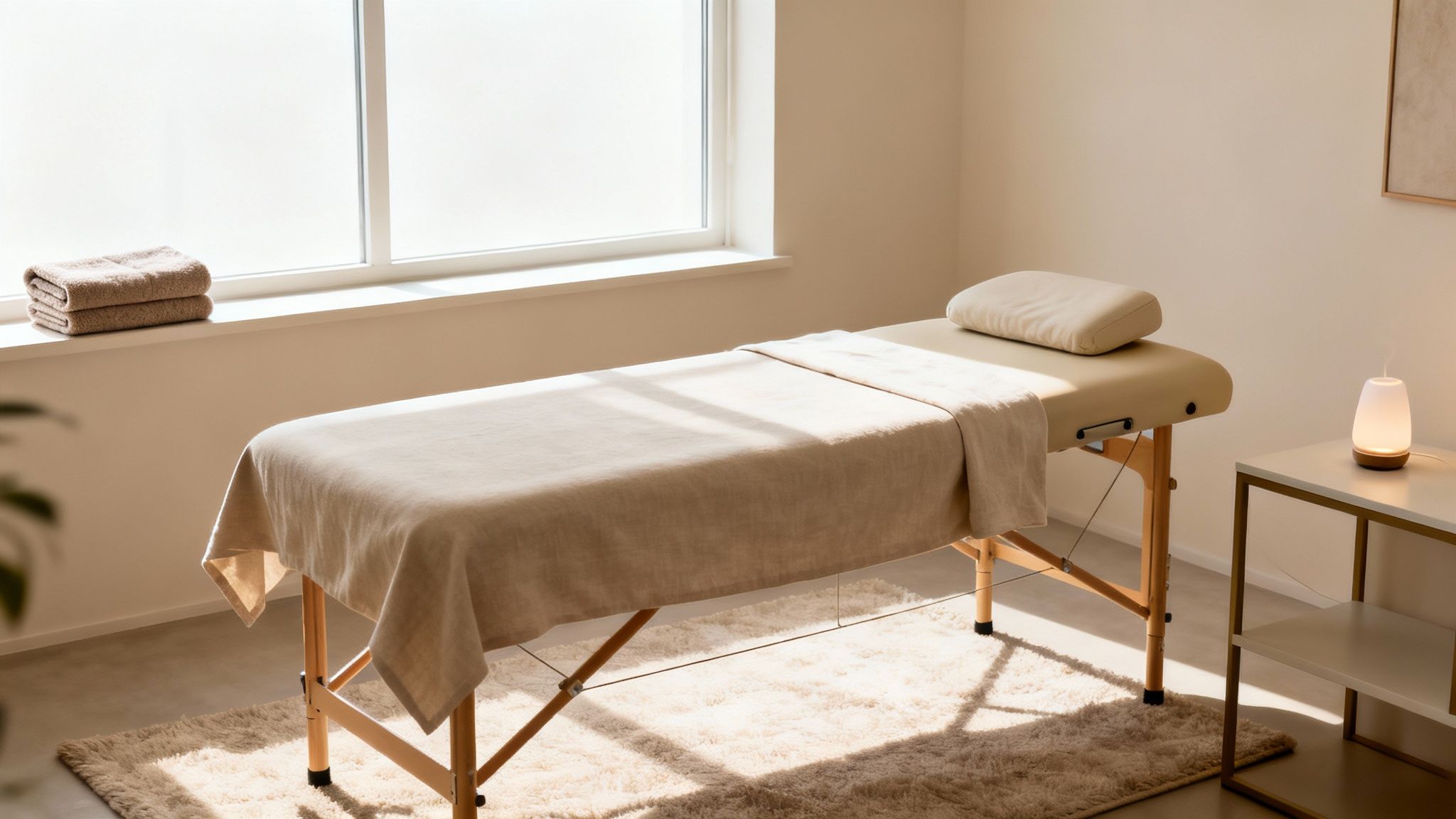
Posted on Leave a comment

Sports Remedial Massage for Peak Performance

Forget the fluffy spa treatment. Sports remedial massage is a specialised therapy focused on one thing: getting your body to work at its absolute best, whether you're at the office, at home, in a hotel room, or even on a yacht. It's a precision tune-up for your body, designed to correct imbalances, eliminate pain, and restore proper function so you can move freely and efficiently.

A Tune-Up for Your Body

Now, sports remedial massage isn’t just for elite athletes pulling on a green and gold jersey. It’s an essential tool for anyone who leads an active life. That includes weekend warriors hitting the park run, office workers battling postural strain from hours hunched over a desk, and anyone who simply wants to keep their body in top working order. The whole point is to dig deeper and treat the root cause of your pain or dysfunction, not just mask the symptoms.

Unlike a standard relaxation massage that’s all about general de-stressing, this is a form of manual therapy. It starts with a proper assessment of your muscles, tendons, ligaments, and connective tissues to find the specific imbalances that are causing you grief or holding you back. If you want to get a broader feel for this approach, you can check out our guide to understanding remedial massage. This clinical mindset is what makes it so powerful for both fixing injuries and preventing them in the first place.

More Than Just a Rubdown

The treatment itself is a dynamic, hands-on process. A qualified therapist will use a whole toolkit of specialised techniques to manipulate your soft tissues, aiming to get them back to a healthy, functional state. This might mean some deep tissue work to break down stubborn knots, trigger point therapy to release specific tight spots, or careful stretching to improve your flexibility.

By getting to the bottom of underlying biomechanical issues, sports remedial massage helps your body move the way it's supposed to. This not only slashes your risk of future injuries but also boosts your capacity to perform, whether that’s in the office, at home, or during a workout.

This kind of therapy is a massive part of physical wellness here in Australia. In fact, government data shows just how important it is, revealing that a huge number of patients—between 52% and 63%—receive three to five sessions to effectively manage their pain and dysfunction. You can learn more about the role of sports massage in Australian healthcare.

These days, the convenience of premium mobile services brings this expert care right to your doorstep. Whether you're at home, in a hotel, on a yacht, or even at the office, achieving peak performance and wellness has never been more accessible.

Choosing The Right Massage For Your Goals

Trying to figure out which massage you need can feel a bit like staring at a restaurant menu with way too many options. Do you go for a sports massage, a remedial session, or just a classic relaxation treatment? Knowing the difference is crucial to getting the results you’re after, whether that’s fixing a stubborn injury or just melting away the stress from a long week at the desk.

Let's break it down with a simple analogy. Think of a pre-event sports massage as the dynamic warm-up before a big game. It's energetic, fast-paced, and all about increasing blood flow to get your muscles primed for peak performance. On the flip side, sports remedial massage is the deep diagnostic work you get after the game to fix a specific problem. It’s less about general prep and all about assessment, treatment, and getting you back to full strength.

Then you have relaxation massage, which is in a league of its own. Its only goal is to calm your nervous system. Using long, flowing strokes, it helps you de-stress and properly unwind. It’s brilliant for managing general tension, but it’s not designed to address the underlying biomechanical issues that a remedial therapist is trained to pinpoint and treat.

Massage Comparison: Sports vs Remedial vs Relaxation

To make the choice even clearer, it helps to see the core differences laid out side-by-side. A sports massage is focused on athletic performance and recovery. A remedial massage is a clinical, diagnostic approach to treating specific pain or dysfunction, whether it’s from sport, your job, or just life. And a relaxation massage? That’s purely for soothing your mind and body.

This table cuts through the noise and compares the three main players.

Massage TypePrimary GoalKey TechniquesBest For
Sports MassageEnhance athletic performance, aid recoveryFast-paced strokes, stretching, compressionAthletes preparing for or recovering from an event
Remedial MassageDiagnose and treat specific pain/dysfunctionDeep tissue work, trigger point therapy, myofascial releaseChronic pain, injuries, postural issues (from sport or work)
Relaxation MassageReduce stress and promote general well-beingLong, flowing strokes (effleurage), gentle kneadingMental fatigue, stress relief, general muscle tension

Each one has a very specific job to do, and matching the right therapy to your goal is what delivers real, lasting results.

This simple decision tree can help you visualise whether a sports-focused massage is the right path for your current needs.

Infographic decision tree showing who needs sports massage based on soreness and lifestyle.

As the graphic shows, if you’re dealing with soreness and live an active lifestyle—or even a desk-bound one—you’re heading straight towards the benefits of targeted massage therapy.

Scenarios To Guide Your Choice

So, how does this play out in the real world? Your specific situation is always the best guide. Here are a few common scenarios that plenty of Australians can relate to:

  • You're an athlete gearing up for a marathon. A pre-event sports massage a day or two before the race is perfect for priming your muscles. Afterwards, a post-event session will kickstart recovery, while ongoing sports remedial massage throughout your training can tackle any niggles before they become full-blown injuries.
  • You've got that nagging lower back pain from your office chair. This is a classic case for sports remedial massage. A good therapist won't just rub the sore spot; they’ll assess your posture and muscle imbalances to treat the root cause of the pain, delivering lasting relief, not just a temporary fix.
  • You just feel mentally drained and tense all over. A relaxation massage is exactly what you need. The goal here isn't to fix a specific injury but to lower your stress hormones and bring on a genuine sense of calm and well-being.

The most effective approach is to match the therapy to your immediate goal. A targeted treatment plan will always deliver better, more lasting results than a one-size-fits-all massage.

Ultimately, once you understand the unique purpose behind each style, you can confidently choose the exact therapy your body is crying out for. This ensures your time and investment are laser-focused on hitting your specific wellness goals, whether that’s on the field, in your hotel room, or right in your home office.

The Science Behind How Massage Heals

Ever wondered what’s actually happening deep in your muscles during a sports remedial massage? It’s a world away from just a relaxing rub-down; it’s a targeted physiological process designed to kickstart your body's own powerful healing mechanisms. At its heart, this therapy is all about skilfully manipulating soft tissues to get them back to their peak condition.

Think of a stubborn muscle knot like a hopelessly tangled pair of headphone cords. If you just leave it, the knot gets tighter, restricts movement, and becomes a real source of irritation. A skilled therapist works methodically to untangle that knot, using specific techniques to release the built-up tension and guide the muscle fibres back into their correct alignment.

Unlocking Your Body's Healing Potential

Two of the most powerful tools in a therapist’s arsenal are myofascial release and trigger point therapy. Myofascial release zeroes in on the fascia—that intricate web of connective tissue wrapping around every single muscle and organ. By applying slow, sustained pressure, the therapist can stretch and loosen this fascial layer, which dramatically improves mobility and eases pain across entire muscle groups.

Trigger point therapy, on the other hand, is much more direct. It involves applying precise, firm pressure to a specific "trigger point," which is essentially a hyper-irritable spot within a tight band of muscle. This action interrupts the pain signals being sent to your brain and encourages the muscle to finally let go, often providing immediate, noticeable relief.

This targeted pressure does far more than just release knots, though. One of its most crucial benefits is the significant boost in blood circulation to the area being treated. It's like opening up a blocked highway, allowing a fresh wave of oxygen and nutrient-rich blood to flood the muscle tissue.

This enhanced circulation is absolutely vital for healing. It speeds up the removal of metabolic waste products, like lactic acid, that cause muscle soreness, while simultaneously delivering the essential building blocks your body needs for proper tissue repair.

Real-World Results from Scientific Principles

The physiological responses triggered by a sports remedial massage translate directly into tangible, real-world benefits you can actually feel. By breaking down those restrictive adhesions and old scar tissue, your muscles start to regain their natural pliability and length.

This leads to a very noticeable improvement in your range of motion and overall flexibility. It’s the reason you feel so much looser and more mobile after a session, whether you're reaching for something on a high shelf at work or warming up for a weekend run.

Another key outcome is the reduction of delayed onset muscle soreness (DOMS)—that all-too-familiar ache you feel a day or two after a tough workout. By flushing out the inflammatory by-products of intense exercise, massage can seriously shorten your recovery time, getting you back to your routine faster and with way less discomfort. Whether you get your treatment in a hotel room after a long-haul flight or in the comfort of your own home, understanding this science helps you appreciate how every technique is working to get you back to your best.

On-Demand Wellness with Mobile Massage

Imagine getting an expert remedial treatment without ever having to leave your comfort zone. The old way of doing things usually means a trip to a clinic, fighting through traffic, and circling for a park—all of which can add a fresh layer of stress to an experience that’s meant to get rid of it. This is where the modern approach of mobile massage completely changes the game.

A massage therapist treats a client in a comfortable home setting.

This isn't just about luxury; it’s a seriously smart strategy for busy professionals, dedicated athletes, and anyone looking to weave high-level wellness into a packed schedule. The real win is cutting out the post-massage commute, which lets your body fully absorb the treatment and hold onto that state of relaxation for much longer.

Bringing The Clinic To You

Whether it's your home office, a hotel room after a long-haul flight, or even on a private yacht in Sydney Harbour, getting treated in your own space just makes the therapeutic benefits hit harder. It gets rid of all those logistical headaches that so often become a barrier to looking after yourself consistently.

This growing hunger for convenient, top-quality care is being seen right across Australia. The entire physiotherapy and massage therapy market is booming, thanks to a bigger focus on physical activity and wellbeing. According to IBISWorld reports, the Australian Physiotherapy Services industry, which has a significant overlap with remedial and sports remedial massage, is valued at around $3.9 billion as of 2024.

Wellness Integrated Into Your Environment

The setting for your massage can be adapted to exactly what you need, turning wellness into an easy part of your daily life rather than another time-consuming appointment to squeeze in.

  • In the Office: Corporate wellness programs with seated massage are perfect for tackling the postural strain of desk work. They can reduce tension in the neck and shoulders while giving team morale a real boost.
  • At Home: A mobile service brings all the professional gear, turning your living room into a private sanctuary where you can immediately relax the moment the treatment is finished.
  • In a Hotel Room: For travellers or business professionals, an in-room massage is the ultimate antidote to jet lag and the physical toll of being on the road.

By bringing expert therapy directly to you, mobile massage removes the friction between needing treatment and actually getting it. This on-demand approach makes consistent wellness not just possible, but practical.

Of course, choosing the right service is crucial for a safe and professional experience. For those in Sydney looking for a provider they can trust, it's important to understand how to find the right mobile massage therapist for your needs. At the end of the day, this model of care puts you back in control, letting you prioritise your health without blowing up your schedule. It's a powerful tool for modern, convenient self-care.

Common Pains Remedial Massage Can Relieve

Don’t let the name fool you. While sports remedial massage sounds like it’s just for elite athletes, it’s actually a powerhouse therapy for the aches and pains that hit everyday Australians. It’s a highly targeted approach designed to get to the root cause of your discomfort, whether it stems from the office, your home, or an active weekend.
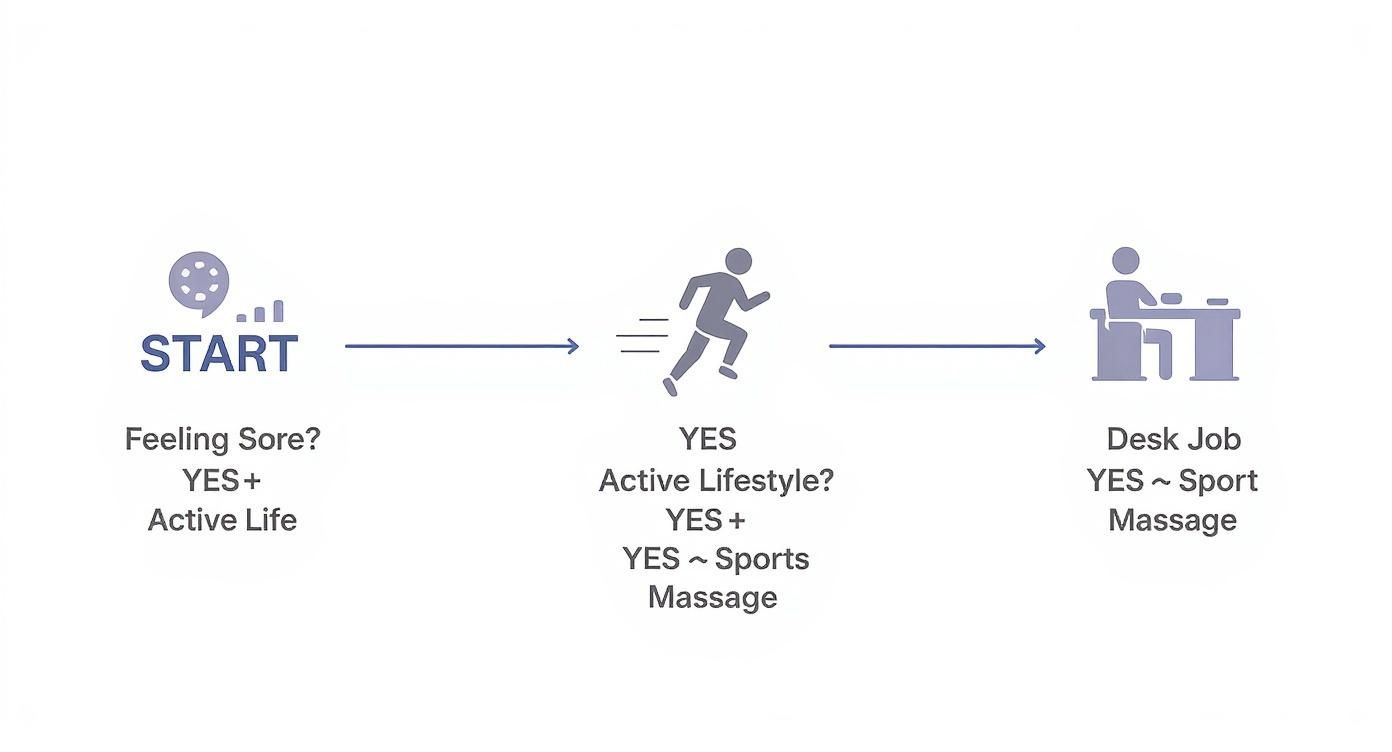
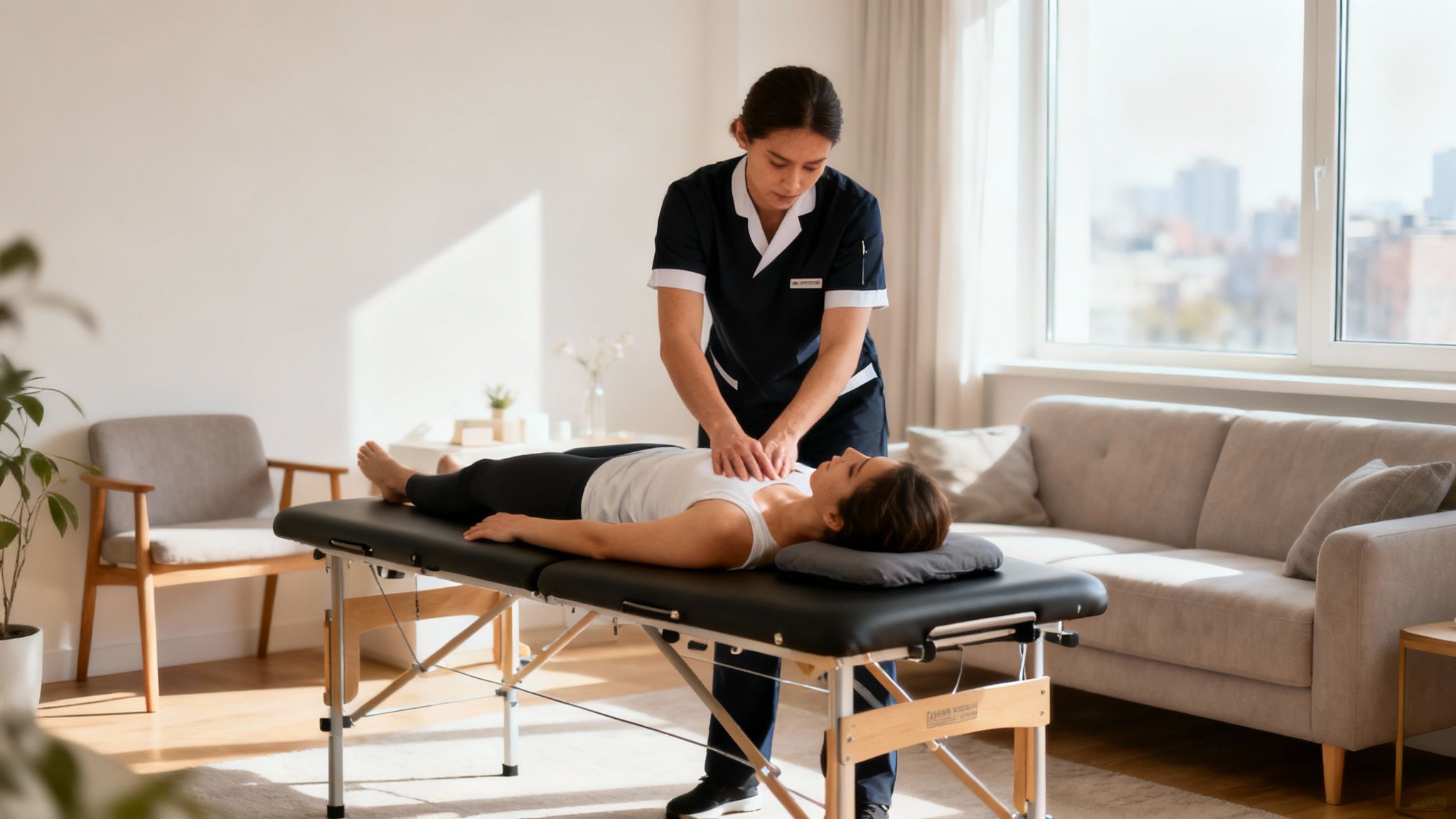
A client receives a sports remedial massage targeting their back muscles.

Think of it less as a general treatment and more as a detailed roadmap. A skilled therapist can identify your specific pain points and map out a clear path to lasting relief, moving way beyond temporary fixes by tackling the underlying muscular imbalances causing the problem in the first place.

Tackling Modern Ailments

So many of the chronic pains we put up with are a direct result of our modern lives. Long hours slumped at a desk, the constant downward gaze at a phone, or even repetitive daily movements can create serious musculoskeletal strain.

Here are a couple of the most common issues that remedial massage is brilliant at treating:

  • ‘Tech Neck’ and Shoulder Pain: That constant forward head posture we adopt for screens puts immense strain on the neck and upper back. A therapist uses precise techniques to release tension in the upper trapezius and levator scapulae muscles, helping to restore better alignment and ease that nagging ache.
  • Tension Headaches: These debilitating headaches often start from tightness in the neck and shoulders. By zeroing in on trigger points at the base of the skull and across the upper back, a therapist can relieve the muscular tension that is so often the real culprit.

Relieving Persistent Lower Back Pain

A nagging lower back is one of the most common complaints among adults, often tied to prolonged sitting, poor posture, or muscular imbalances from physical activity. It’s the kind of pain that can seriously disrupt your quality of life, making even simple tasks feel like a chore.

Sports remedial massage gets to the heart of the issue by assessing the entire kinetic chain—from your glutes and hamstrings to your hip flexors—to find and treat the source of the imbalance, not just the spot that hurts.

This intelligent approach helps release tight muscles, improve pelvic alignment, and bring back functional, pain-free movement. If you're struggling with this all-too-common problem, it's worth exploring the seven reasons why remedial massage is so effective for lower back pain in our detailed guide.

The use of massage therapy for these kinds of issues is incredibly common in Australia. Some studies show that usage rates can be as high as 56% among younger Australian women managing chronic pain conditions. This just goes to show how many people are turning to therapies like massage for real, effective relief. Whether your pain comes from a corporate office or a busy weekend, a skilled therapist can design a treatment that gets you moving freely again.

Your Sports Remedial Massage Questions Answered

Stepping into the world of sports remedial massage can bring up a few practical questions. To give you the confidence to book your first session, we’ve put together direct answers to some of the most common queries we hear. This way, you’ll feel fully prepared and know exactly what to expect, whether our therapist is visiting your office, hotel room, or home.

How Often Should I Get a Sports Remedial Massage?

Honestly, there's no single answer that fits everyone. The ideal frequency really comes down to your specific goals, your lifestyle, and what your body is telling you. But there are some solid guidelines we can follow.

For an athlete deep in a heavy training block, a weekly or fortnightly session can be a game-changer for speeding up recovery and catching potential injuries before they sideline you. It becomes a core part of the training cycle itself.

If you're looking to manage chronic pain or postural issues from long hours hunched over a desk, a session every three to four weeks is often the sweet spot. It's enough to maintain the benefits and keep those familiar aches from creeping back in. However, if you're dealing with a fresh, acute injury, your therapist will likely suggest more frequent sessions at the start—maybe once or twice a week—before tapering off as you start to heal. The key is to map out a personalised plan with your therapist during that first assessment.

Will a Sports Remedial Massage Hurt?

It's important here to draw a line between 'good pain' and 'bad pain'. A sports remedial massage is a deep and targeted treatment, so you will almost certainly feel some level of discomfort as the therapist gets to work on tight muscle bands and active trigger points.

This is what clients often call a 'good hurt'—a therapeutic discomfort where you can feel it’s productive and leading to relief. It should never be sharp, unbearable, or make you want to leap off the table.

Open communication is absolutely essential. A professional therapist will constantly check in with you about the pressure and adjust their technique to match your tolerance level. You should always feel completely in control of the session, from start to finish.

This constant feedback loop ensures the treatment is effective without ever being overly aggressive, allowing your muscles to release tension safely and efficiently.

What Should I Do After My Massage Session?

What you do after your session is just as important as the treatment itself for locking in the best possible results. Proper aftercare helps your body integrate all that therapeutic work and turbocharges the recovery process.

  • Hydrate Well: This is the most important step. Drink plenty of water to help your system flush out all the metabolic waste that was released from your muscle tissues during the massage.
  • Avoid Strenuous Activity: Give your body about 24 hours before you jump back into any intense exercise. This gives your muscles time to recover and adapt to the changes.
  • Have a Warm Bath: A warm bath, maybe with a good scoop of Epsom salts, can be incredibly soothing for any leftover muscle soreness and helps deepen that sense of relaxation.
  • Perform Gentle Stretches: Light, gentle stretching can also be a huge help, maintaining the new range of motion you’ve just gained. Your therapist will always give you specific aftercare advice tailored directly to your treatment and condition.

How Do I Find a Qualified Therapist in Australia?

Choosing a qualified and insured professional is non-negotiable for a safe and effective treatment, especially when you're inviting a mobile service into your space. In Australia, there are clear standards to look for.

A properly qualified therapist should hold a Diploma of Remedial Massage (HLT52015) or a higher qualification.

They should also be an active member of a recognised professional association, like Massage & Myotherapy Australia (M&MA) or the Association of Massage Therapists (AMT). This membership ensures they stick to a strict code of ethics and are committed to ongoing professional development. Reputable mobile services will always use fully qualified, insured, and vetted professionals, giving you complete peace of mind when you book.


Ready to experience the benefits of expert sports remedial massage in the comfort of your home, hotel, or office? The Royal Masseur delivers premium, five-star wellness treatments tailored to your exact needs. Our certified therapists bring everything required for a restorative session that reduces pain, improves mobility, and leaves you feeling revitalised.

Book your on-demand wellness experience today at https://theroyalmasseur.com.au.